Amoeba (microscopic 3D schematic)

Amoeba (microscopic 3D schematic)

Amoeba is a unicellular animal belonging to the genus Amoeba in the family Proteaceae of the order Proteobacteria. There is only a thin plasma membrane on the surface of the body, and the cytoplasm inside the membrane is relatively transparent, which can be clearly distinguished into two parts: endoplasmic and extracellular; Pseudo feet are shaped like fingers, leaves, or needles; Insects can undergo special deformation movements through pseudopodia, which change with the expansion and contraction of pseudopodia; Pseudo foot not only has the function of movement, but also has the function of feeding. After wrapping food, it undergoes intracellular digestion. Named after the constant changes in body shape caused by the movement of the parasite's cytoplasm.
Chemical formula of sucrose (3D schematic diagram of molecular structure)

Chemical formula of sucrose (3D schematic diagram of molecular structure)

Chemical formula of maltose (molecular structure 3D schematic diagram)

Chemical formula of maltose (molecular structure 3D schematic diagram)

Maltose is a disaccharide composed of two glucose molecules. It is usually generated when starch is broken down by enzymes. Maltose exists in sprouted grains in nature and is also produced during beer brewing and other fermentation processes. The chemical formula for maltose is C ₁₂ H ₂ O ₁₁. Maltose is a colorless crystal that usually contains one molecule of crystalline water. It has a melting point of 102 ℃ and is easily soluble in water. Its sweetness is 40% that of sucrose.
The life cycle of butterflies

The life cycle of butterflies

Formation process of metamorphic rocks (3D topographic profile)

Formation process of metamorphic rocks (3D topographic profile)

The formation process of igneous rocks (3D topographic profile)

The formation process of igneous rocks (3D topographic profile)

Divergent (constructive) crustal boundaries (3D demonstration animation)

Divergent (constructive) crustal boundaries (3D demonstration animation)

This boundary refers to the area where crustal plates move away from each other, usually forming new crustal materials such as oceanic ridges.
Blue algae (microscopic 3D schematic diagram)

Blue algae (microscopic 3D schematic diagram)

Cyanobacteria, also known as blue-green algae, are a type of large single-cell prokaryotic organism with a long evolutionary history, Gram negative staining, no flagella, containing chlorophyll-a but not chloroplasts (different from eukaryotic algae), and capable of oxygen producing photosynthesis. The difference from photosynthetic bacteria is that photosynthetic bacteria (red snails) undergo more primitive photosynthetic phosphorylation and do not release oxygen during the reaction process, making them anaerobic organisms, while cyanobacteria can carry out photosynthesis and release oxygen.
Archimedes' Law - True and False Golden Crowns (3D Demo Animation)

Archimedes' Law - True and False Golden Crowns (3D Demo Animation)

According to legend, King Hera II of Syria suspected that the gold crown he ordered might have been mixed with other cheap metals, so he asked Archimedes to verify its composition without damaging the crown. Archimedes determined the density of the golden crown by measuring its mass in air and water, using the principle of buoyancy, and found that it was not pure gold.
Quartz crystal coated with chalcedony

Quartz crystal coated with chalcedony

Usually refers to the phenomenon where the surface or interior of a quartz crystal contains a layer of chalcedony. It is a microcrystalline quartz, a variant of quartz, characterized by a waxy luster and a semi transparent appearance. Highly popular in gemology and mineralogy due to its unique appearance and aesthetic appeal. It usually has a sharp hexagonal columnar shape, while the jadeite layer may appear in different colors such as blue, green, red, or yellow, which are usually determined by trace impurity elements. Not only does it have scientific research value, but it is also favored among collectors and jewelry designers due to its unique aesthetic features. Can be cut and polished, used as decorations or artworks
Orthoclase ore

Orthoclase ore

It is a common potassium aluminum silicate mineral with the chemical formula KAlSi3O8. Belonging to the framework silicate mineral, it is a member of the feldspar family. It usually appears as pink, yellow, green, or white, but the most typical color is light yellow or orange red, which comes from trace amounts of iron and manganese impurities. The crystal structure is monoclinic, with various crystal shapes, commonly including short columnar or plate-like structures. It has two sets of complete cleavage, which allows it to easily crack along a specific direction. Widely distributed in nature, commonly found in granite, syenite, gneiss, and some metamorphic rocks. It is also an important mineral formed during many metamorphic processes.
Silver ore

Silver ore

The chemical symbol is Ag, with an atomic number of 47, and it is a white, glossy transition metal. The content in the crust is relatively low, mainly existing in the form of sulfide ores, and often coexisting with other metal ores. Known for its excellent conductivity, thermal conductivity, and reflectivity, it is a material second only to copper in electrical and thermal conductivity applications. These characteristics make it very important in the electronics industry, especially in high-precision instruments and high reliability circuits. Another important use is as a metal for investment and currency. Silver bars and silver coins are common forms for investors to preserve their value and invest in precious metals. In addition, silver is widely used in jewelry manufacturing.
Copper ore

Copper ore

The chemical symbol is Cu, with an atomic number of 29, and it is a red metallic element with high conductivity and thermal conductivity. It is relatively abundant in the Earth's crust and is one of the earliest metals used by humans, with a long history. Its physical properties make it widely used in various industrial fields. It is an indispensable material in electrical engineering, used for manufacturing wires, cables, and motors. The conductivity is second only to silver, but it is more common in practical applications due to its lower cost and ease of processing. In addition to electrical applications, copper is also used to manufacture pipes, roofing materials, coins, and various decorations. Equally important in both industrial and artistic fields
Antimony ore

Antimony ore

The chemical symbol is Sb, with an atomic number of 51, and it is a silver gray metallic element. The content in the Earth's crust is relatively low, mainly existing in sulfide minerals such as antimonite and antimonite. The physical properties are relatively unique, brittle at room temperature, but become soft and easy to process after heating. Low melting point, low conductivity and thermal expansion make it suitable for specific industrial applications. The main applications include manufacturing alloys, such as antimony lead alloys, to enhance the hardness and corrosion resistance of metals. Antimony as an additive can improve the performance of batteries, especially lead-acid batteries. In addition, it is also used in the production of flame retardants.
The process of wound healing (microscopic 3D sectional view)

The process of wound healing (microscopic 3D sectional view)

Volcanic Lake Geomorphic Structure

Volcanic Lake Geomorphic Structure

Chemical formula of vitamin D2 (molecular structure 3D schematic diagram)

Chemical formula of vitamin D2 (molecular structure 3D schematic diagram)

Vitamin D2, chemically known as ergocalciferol, is an open-loop steroid formed by the breaking of chemical bonds in steroids under photochemical action, especially through the action of ultraviolet light and ergosterol.
Chemical formula of vitamin B1 (molecular structure 3D schematic diagram)

Chemical formula of vitamin B1 (molecular structure 3D schematic diagram)

Vitamin B1 (VB1), also known as thiamine, is the earliest water-soluble vitamin purified by humans. Its chemical name is 3- [(4-amino-2-methyl-5-pyrimidinyl) - methyl] -5- (2-hydroxyethyl) -4-methylthiazolium chloride, which has the function of maintaining normal glucose metabolism.
Chemical formula of vitamin A (molecular structure 3D schematic diagram)

Chemical formula of vitamin A (molecular structure 3D schematic diagram)

Vitamin A is a fat soluble vitamin, an organic compound with the chemical formula C20H30O. It is stable to heat, acid, and alkali, and is easily oxidized. Ultraviolet radiation can promote its oxidative damage. Vitamin A includes A1 and A2, with A1 being retinol. Vitamin A2, also known as 3-dehydroretinol, has a physiological activity that is 40% of that of vitamin A1.
Honeycomb quartz

Honeycomb quartz

Also known as honeycomb quartz or honeycomb crystal, it is a quartz mineral with a unique honeycomb like texture. This texture is due to the formation of hexagonal honeycomb like voids or cracks inside quartz crystals during the formation process, which are usually filled with other minerals such as iron oxides or other minerals. The surface usually presents a smooth glass texture, while the honeycomb structure inside gives a unique beauty. The formation is usually related to hydrothermal activity in geological processes, where hydrothermal fluid flows in the cracks of rocks and gradually deposits to form quartz crystals with changes in temperature and pressure. Under suitable geological conditions, it can grow into large crystal clusters.
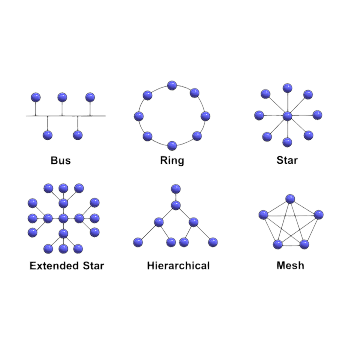
Network topology type (conceptual 3D diagram)

Network topology type (conceptual 3D diagram)

Network topology refers to the arrangement of different elements (such as nodes, links, or devices) in a computer network. It defines how these components are connected and interact with each other. Understanding various network topologies can help design efficient and reliable networks.
Different types of coasts

Different types of coasts

The coastal type and topography of the coastal zone are material responses to the interaction between land and sea. According to their causes, coasts can be divided into three types: erosive coasts, accumulative coasts, and balanced coasts. According to land landforms, coasts can be divided into plain coasts, mountainous hilly coasts, and biotic coasts.
Smoking and non-smoking lungs (3D model of medical pathology comparison)

Smoking and non-smoking lungs (3D model of medical pathology comparison)

Cadmium sulfide ore

Cadmium sulfide ore

The chemical formula is CdS, which is a sulfide mineral mainly composed of cadmium and sulfur. It usually appears in the form of yellow to orange crystals or powders, with a metallic luster, and is an important source for extracting cadmium. It is not common in nature and usually coexists with zinc minerals, lead minerals, and other sulfide minerals. Mainly formed in mid to low temperature hydrothermal veins or sedimentary rocks, especially in sulfate layers in sedimentary rocks. Due to the low content of cadmium in the Earth's crust, the reserves of cadmium sulfide minerals are relatively small. The industrial application of cadmium sulfide ore mainly focuses on the production of cadmium compounds. In addition, cadmium compounds are also used for control rods in batteries, electroplating, and nuclear reactors.
Oscillator Principle Experiment (3D Experimental Animation)

Oscillator Principle Experiment (3D Experimental Animation)

The LC circuit mainly consists of capacitors and inductors, which oscillate freely through the mutual conversion of electric field energy and magnetic field energy. To maintain oscillation, an amplification circuit with positive feedback is required. LC oscillators are divided into transformer coupled and three-point oscillators. Many quartz crystal oscillators are used, and LC oscillators composed of integrated operational amplifiers are also used. Due to the fact that the parameters of the device cannot be exactly the same, the states of the two transistors change at the moment of power on. This change, due to the increasingly strong positive feedback effect, leads to reaching a temporary steady state.
Joule Meter Principle Experiment (3D Experimental Animation)

Joule Meter Principle Experiment (3D Experimental Animation)

In 1847, Joule designed a more ingenious experiment by placing water in a calorimeter, installing a rotating shaft with blades in the middle, and then letting a descending weight drive the blades to rotate. Due to the friction between the blades and water, both the water and the calorimeter heated up. Based on the height of the heavy object falling, the converted mechanical work can be calculated; Based on the temperature rise of water in the calorimeter, the increase in internal energy of water can be calculated. By comparing two numbers, the accurate value of thermal energy equivalent can be obtained.
Comparison of properties between strong and weak acids

Comparison of properties between strong and weak acids

Graphite ore

Graphite ore

It is a naturally occurring allotrope of carbon, known as "black lead" or "pencil lead" in its high-purity form. The chemical formula is C and the atomic number is 6. It has a layered structure, in which carbon atoms form a hexagonal planar network structure with sp ² hybridized orbitals, and are stacked on top of each other through weak van der Waals forces. Due to its low hardness, it can leave marks on paper and is therefore used as a lead material for pencils. Graphite has good electrical and thermal conductivity, which makes it widely used in fields such as battery electrodes, electric brushes, and lubricants. Lubrication also makes it an ideal material for manufacturing mechanical parts and seals.
Sum of interior angles of a triangle (mathematical 3D model animation demonstration)

Sum of interior angles of a triangle (mathematical 3D model animation demonstration)

The prototype of Galileo's pendulum clock (3D experimental animation)

The prototype of Galileo's pendulum clock (3D experimental animation)

The Denard currency during the Roman Republic period
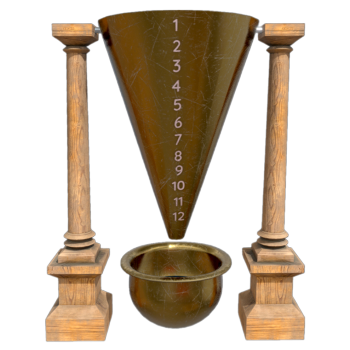
The Denard currency during the Roman Republic period

Denarius is an ancient Roman silver coin that was first introduced around 211 BC. Widely used during the Roman Republic and Roman Empire, it became the main currency unit at that time. Octavianus, later known as Augustus, was the first emperor of the Roman Empire and ruled from 27 BC to 14 AD. On the Denard coins issued between 44 BC and 27 BC, his portrait and various symbols of Roman power and victory were usually engraved.
Water Clock Physics Experiment (3D Experimental Animation)

Water Clock Physics Experiment (3D Experimental Animation)

Siberian Gold
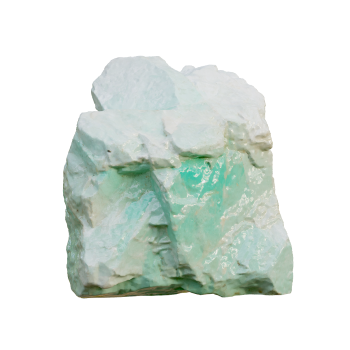
Siberian Gold

As an important mineral resource in the Russian Far East, it has always been a significant component of the global precious metal market. Siberia has a long history of gold mining, and its abundant gold resources have played a key role in the development of the local economy. Gold, as a precious metal, not only holds significant economic value, but also holds an important position in culture and history. Chemical stability and resistance to oxidation make it widely used in various fields such as jewelry production, industrial applications, and financial reserves. Ductility and malleability make it an ideal material for making various jewelry and crafts.
Beryllium ore

Beryllium ore

The chemical symbol is Be, with an atomic number of 4, and it is a lightweight, steel gray alkaline earth metal. The content in the crust is relatively low, about the 97th most abundant element in the crust. It usually exists in the form of compounds in minerals, such as beryl and siliceous beryllium. Low density, high hardness, and good thermal stability and electrical conductivity. Beryllium is very important in many high-tech applications, especially as a neutron reflector and neutron absorber in nuclear reactors. It is also used as a structural material for manufacturing aircraft and spacecraft, as it provides a combination of high strength and lightweight.
Manganese ore

Manganese ore

The chemical symbol is Mn, with an atomic number of 25, and it is a gray white, hard, and brittle transition metal. It is relatively abundant in the Earth's crust and is the twelfth most abundant element. In nature, it usually exists in the form of compounds, such as manganese ore, mainly including manganese carbonate, manganese oxide, and manganese silicate. It has a wide range of applications in industry, especially in steel production, which can improve the strength and hardness of steel while enhancing its processing performance. Adding can prevent corrosion and wear of steel, thus playing an important role in the manufacturing of wear-resistant steel, stainless steel, and alloy steel. It is also used to manufacture products such as dry batteries, dyes, glass, and ceramics.