Popular Science Education
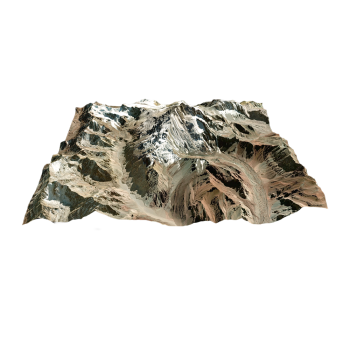
Argentina's Avacagua Mountain
Mount Aconagua (6960 meters above sea level) is located in the province of Mendoça, Argentina. It is the highest peak on Earth outside the Himalayas, and therefore the highest peak in the Americas.
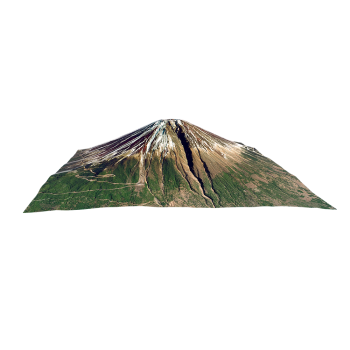
Mount Fuji
Japan's Mount Fuji is an active volcano located about 100 kilometers southwest of Tokyo. It is commonly known as "Mount Fuji" and is the highest mountain in Japan at 3776 meters above sea level. It has been a place of pilgrimage for centuries and is considered one of the three sacred mountains in Japan, and the summit remains a popular activity today. Its iconic mountain shapes are the subject of numerous works of art, especially the Edo period prints by Katsushika Hokusai and Kogawa Hiroshi.
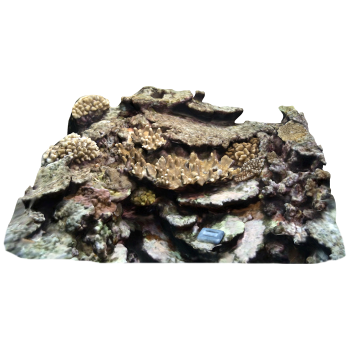
mastoid staghorn coral
The papillomatous staghorn coral is a typical reef-building coral of the family Staghorn Corals (Acroporidae) in the order Stony Corals (Scleractinia), a new species (or revised species) officially described in 2014 by the Russian taxonomist Yuri Latypov. The scientific name "papillare" is derived from the Latin "papilla" (papillae), which directly refers to the most prominent morphological feature of the species-the dense papillae on the surface of bones or polyps.
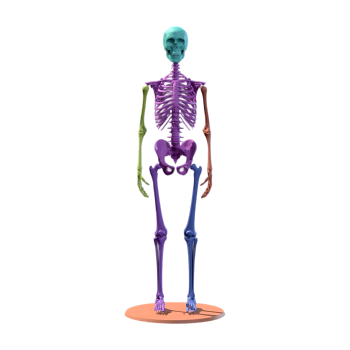
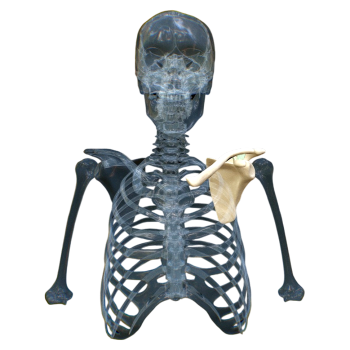
High Detail Human Bones
It can be used in anatomy teaching in medical colleges and universities to help students understand the structure and function of human bones more intuitively. It can also be used in medical training, such as orthopedic surgery simulation, rehabilitation training, etc., to provide medical professionals with a reference model for practical operation.
Wilder T4 astronomical theodolite
"Wilder T4 astronomical theodolite" is a high-precision angle measuring instrument designed for astronomical observation. It is mainly used to determine the position, trajectory and atmospheric refraction of celestial bodies (such as stars, planets, comets). In its name, "Wild" usually refers to the manufacturer of traditional astronomical instruments in Germany or Switzerland. "T4" is the model code and represents its technical iteration version. "Astronomical Theodolite" defines its core function-to realize precise measurement of azimuth and altitude of celestial bodies through telescope and dial system.
conus snail shell
Conus scientific name: Conus princeps, belonging to the mollusk gastropod conus conus family conus genus. It is one of the largest species of conus (the largest shell length can reach 20cm), mainly distributed in the Atlantic Ocean (Caribbean Sea, Brazil) and Indian Ocean (East Africa, northwest Australia). Mainly distributed in the Atlantic Ocean (Caribbean Sea, Brazil) and the Indian Ocean (East Africa, northwest of Australia), water depth of 1-50 meters.
Specimen of Fa
The moa is a bird of the family Ostryiidae. The abdominal feathers are yellow, and the other parts are yellow and black. The body is hypertrophy, the upper limbs are degraded, and the lower limbs are thick and short; the neck is covered with feathers and is short; there are 3 toes. In 1843, Owen named it a terror bird, meaning a large bird that frightens people. In the middle of the 18th century, it was preyed on by European immigrants; by the late 18th century, it was becoming more and more difficult to be caught; 1800 was the last year that people could catch it. The North Island population of New Zealand became extinct in the 17th century and the South Island population became extinct in 1850.
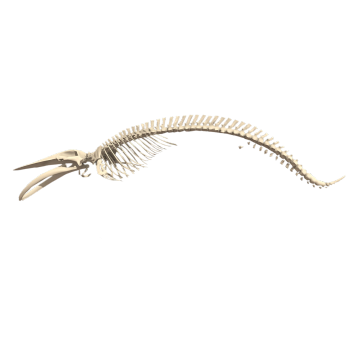
blue whale skeleton
The blue whale (scientific name: Balaenoptera musculus) is a marine mammal in the family baleen whales. There are 4 subspecies. The blue whale is considered to be the largest animal known to have ever lived on the earth, reaching a length of 33 meters and weighing 181 tons. The blue whale has a long, thin body and a bluish gray back, but it sometimes looks lighter in the water. The blue whale's flippers are 3-4 meters long. Gray above, white on narrow sides. All white below. The head and caudal fins are generally gray. But the back and sometimes the flippers are usually variegated.
green vortex screw shell
The scientific name of the green vortex snail is Turbo viridus, which belongs to the medium-sized marine shellfish of the genus Vortex Snail family. It is named after the green or yellow-green markings on the shell. The spiral part is short (accounting for 1/3 of the total shell length), the body spiral layer (lower part of the shell) is wide and conical, the shell length is 8-20cm, the shell is thick and hard (the main component is calcium carbonate), and the surface is smooth but with fine growth lines; The shell surface is covered with green or yellowish green stripes (some individuals have white or brown stripes), and the overall color is mainly emerald green and olive green.
Oriental Angel Wing Screw Shell
The scientific name of the Oriental Angel Wing Snail is Pterynotus orientalis (Oriental Wing Snail), which belongs to the large marine shellfish of the genus Angel Wing Snail family. It is named after its shell is as wide as wings and has angelic elegant lines. Fan-shaped or wing-shaped, the shell length is 20-40cm (up to 50cm), the shell height is about 1.5 times of the shell length, the shell is thick and hard (the main component is calcium carbonate), and the surface is smooth but with fine growth lines; The shell surface is covered with radial ribs (about 3-5 per cm), with light brown or white spots between the ribs, and the overall color is mainly milky white and light yellow.
Nanyang Baby Screw Shell
Nanyang baby snail scientific name is Cypraea tigris (tiger baby). The deep and shallow tiger-shaped pattern of its shell mask is one of the most representative tropical marine shellfish in the Baby Division. It is named after its widespread distribution in the Nanyang Ocean (Southeast Asia). Tiger-spotted baby is one of the larger and most gorgeous types of shell patterns in the baby family. Oval or pear-shaped, the shell length is 5-15cm, the shell height is about 2/3 of the shell length, the shell is thick and hard (the main component is calcium carbonate), and the surface is smooth but with fine growth lines. The shell surface is covered with tiger spot patterns with alternating shades, and the overall color is mainly golden and orange.
spider screw shell
The spider's scientific name is Lambis chiragra. Its unique shell shape, shell mouth slender curved like spider legs, is the spider snails (Vermetidae) in the highly recognizable tropical marine shellfish. The spiral part is short, the body spiral layer (lower part of the shell) is wide and conical, the shell length is 10-25cm (up to 30, cm) slender and curved, the edge has a fine tooth-like structure (to enhance the tightness of closure), the shell surface extends downward from the top of the shell, such as "spider legs" with dense and thick ribs, dark brown or green spots between the ribs, and the overall color is mainly gray brown and brown, some individuals are light green due to the attachment of algae.
black abalone shell
The scientific name of the black abalone is Haliotis discus hannai, which belongs to the large marine shellfish of the genus Abalone (Haliotis) of the family Abalone (Haliotidae). It is named for its dark (black brown or dark brown) shell and its disc-shaped shape. Black abalone is one of the largest and most unique shell species in the genus Abalone, with 6-8 short antennae, developed into fleshy lumps ("abalone meat"), mucous glands on the surface, covering the shell mouth, and thin tubular protrusions on the edge.
australia angle screw shell
The Australian horn screw is named Turritella australiensis. Its slender shell resembles a horn. It is a large marine shellfish unique to the east coast of Australia. Because it often inhabits shallow rocky areas and has unique shell patterns, it has become a landmark species of local marine ecology. The spiral part is extremely long, the body spiral layer is short and wide, the whole is slender conical or tower-shaped, and the shell length can reach 30-50cm. The shell surface is densely covered with dense longitudinal ribs and fine growth lines, with light brown or white stripes between the ribs, the overall color is mainly milky white and light yellow, and some individuals are light green due to algae attachment.
Tapestry Vortex Shell
The tapestry vortex conch (Turbo setosus) belongs to the genus Vortex conch family Vortex conch of the mollusk phylum gastropod. The spiral part is short, the body spiral layer (lower part of the shell) is wide and conical, and the shell length is 10-30cm (up to 40cm); The shell surface is densely covered with dark and light brown, yellow or orange stripes, and some individuals have radial or grid patterns, which are similar to handmade brocade or tapestry as a whole. The shell is thick and hard (mainly composed of calcium carbonate), with pearl luster on the surface, the edge of some types of shells has a fine tooth-like structure (to enhance the tightness of the closure).
French screw shell
The French snail (Tritonia) belongs to the genus French snail family of the mollusca gastropod, which is about 200 species in the world and widely distributed in tropical to temperate waters. The shell length can reach 40cm (the maximum record is 60cm), conical or tower-shaped, with short spiral part and wide body spiral layer (lower part of the shell); The shell surface is densely covered with thick ribs (about 5-7 per cm), with fine growth lines between the ribs, mostly grayish white or light brown in color, some individuals with purple or orange spots, and the shell mouth is nearly round, the edges have a strong tooth-like structure (to enhance the tightness of the closure).
Prince Conus snail shell
Prince conus scientific name: Conus princeps, belonging to the mollusk phylum gastropod conus conus family conus. It is one of the largest species of conus (the largest shell length can reach 20cm), mainly distributed in the Atlantic Ocean (Caribbean Sea, Brazil) and Indian Ocean (East Africa, northwest Australia). Mainly distributed in the Atlantic Ocean (Caribbean Sea, Brazil) and the Indian Ocean (East Africa, northwest of Australia), water depth of 1-50 meters.
ship octopus shell
The octopus is an animal of the genus octopus, known locally as the white seahorse nest. The female body has a calcareous secondary shell, which is secreted by the interstitial membrane of the first pair of carps. The shell is very thin, translucent and brittle. There are many densely arranged radiating ribs on both sides of the shell. Some ribs have bifurcations. Each rib is connected with one wart process. The two rows of wart processes are very close to each other. The wart processes are sharp and small, about 50 or so. The shell surface is Milky White and the periphery of wart processes is brown. The male has no shell and winged wrists and is small in size. Floating when the shell mouth upward, when the winglike back wrist out, like a sail boat sailing in the sea, it is also known as "Nautilus.
Black Lip Mussel Shell
Black-lipped mussel scientific name: Brachidontes pharaonis, belonging to the genus Mussel of the clam clam clam family, the shell is medium in size (5-10cm long), oblong, thin but tough; The top of the shell is blunt, located at the front end, and the shell surface extends from the top of the shell to the ventral edge with fine concentric growth lines; the edge of the shell (lip) is dark black ("black lip" feature), and the inner surface of the shell is pearl luster (white or pale pink). Prefer tropical to subtropical coastal intertidal zones (high tide line to 5 m water depth), attached to rocks, coral reefs or artificial structures (e. g. piers).
African large snail snail shell
African giant snails (Achatina fulica) gastropod-stemmed ophthalmidae African giant snails, also known as "black field snails" (but not field snails), native to East Africa. The African giant snail is one of the largest existing terrestrial snails. Its adult shell is 10-20cm high (up to 30cm), its shell width is 8-15cm, conical or top-shaped, its shell surface is dark brown or yellowish brown, and it has 5-6 dark longitudinal ribs. It is artificially introduced, the current invasion is distributed in tropical/subtropical regions such as Asia (India, Southeast Asia), Pacific Islands (Hawaii), and America (Brazil, Florida).
Random Model
FBX Model Wolf 3D Model Animation
179 View
chevrolet Chevelle1964
221 View
Wagall
108 View
Easy outdoor drying rack
156 View