Eighteenth-century astronomical instrument cube sundial

Eighteenth-century astronomical instrument cube sundial

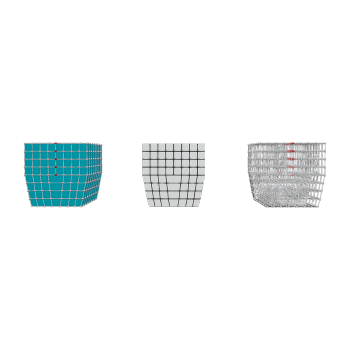
The cube sundial is a scientific instrument used to determine time. In the 18th century, the sundial was an important time-measuring tool that scientists and explorers relied on for astronomical observation and navigation.
Cicada shell specimen

Cicada shell specimen

The cicada shell, or cicada slough, is the shell that falls off when the larvae of the cicadae black grasshopper are feathered. The whole shape is like cicada and hollow, slightly curved, about 3~4cm long and 1.5~2cm wide. The surface is tea brown, translucent, shiny, black brown or yellow brown fine hair. Sweet and salty in nature, cool in nature, and return to the lung and liver. Has a variety of effects, including the evacuation of wind and heat, pharynx open sound, rash and itching, eyesight, wind and spasm. In traditional Chinese medicine, it is often used to treat wind-heat cold, sore throat, mute sound, impervious measles, rubella pruritus, erythematous phallitis, acute and slow convulsed wind, tetanus syndrome, etc. Cicada shell can also be used for children night cry restless.
Snail

Snail

The snail is a terrestrial taxon of the mollusk phylum gastropod, which belongs to the group of invertebrates. The body is soft and usually protected by a spiral hard shell. The head has two pairs of antennae, the longer one for sensing the environment and the shorter one associated with smell and taste. The foot is muscular and moves slowly on various surfaces by secreting mucus. The shell is one of its distinctive features. The shape and color of the shell vary from type to type. It is not only a protective device for snails, but also helps them retain moisture and adapt to a dry environment. It is an omnivorous animal that feeds on the leaves, stems and fruits of plants, and some species also eat humus or small insects.
Snail 3D Model

Snail 3D Model

The snail is a terrestrial taxon of the mollusk phylum gastropod, which belongs to the group of invertebrates. The body is soft and usually protected by a spiral hard shell. The head has two pairs of antennae, the longer one for sensing the environment and the shorter one associated with smell and taste. The foot is muscular and moves slowly on various surfaces by secreting mucus. The shell is one of its distinctive features. The shape and color of the shell vary from type to type. It is not only a protective device for snails, but also helps them retain moisture and adapt to a dry environment. It is an omnivorous animal that feeds on the leaves, stems and fruits of plants, and some species also eat humus or small insects.
African Snail

African Snail

The African giant snail, also known as the brown cloud agate snail, is a large terrestrial snail native to East Africa. The shells are long-ovoid, slightly thick and glossy, usually yellow or dark yellow, with a pyrobrown haze pattern. Adult individuals generally 7-8cm long, up to 20cm, weight up to 800 grams. It has the habit of nocturnal and nocturnal, likes humid environment, and often inhabits vegetable fields, orchards, overgrown areas and humus soil. It is an omnivorous animal that feeds on vegetables, flowers, fruits and other crops, causing certain harm to agriculture. The reproductive ability is extremely strong, the life span is generally 5-6 years.
Monarch butterfly group 3D animation model

Monarch butterfly group 3D animation model

Monarch butterfly is a large butterfly, belonging to the family Papilionidae. The wings are orange with blackish veins and margins, and a row of small white spots along the edges. This unique color combination makes it very eye-catching when flying. The life cycle includes four stages: egg, larva, pupa and adult. The larvae feed on milkweed, a plant that contains toxins that gives monarch butterflies a certain defense against natural enemies after they become adults. The adults mainly feed on nectar, have strong flight ability and long migration distance. The most famous feature is its large-scale migratory behavior. This migratory behavior is one of the most spectacular phenomena in the insect world.
Snail in vivo structure 3D model

Snail in vivo structure 3D model

The snail is a general term for the terrestrial taxa of the mollusk phylum gastropod, which belongs to invertebrates. The body is soft and usually protected by a spiral hard shell. The head has two pairs of antennae, the longer one for sensing the environment and the shorter one associated with smell and taste. The foot is muscular and moves slowly on various surfaces by secreting mucus. The shell is one of its distinctive features. The shape and color of the shell vary from type to type, from simple conical to complex spiral. It is a protective device for snails, and it can also help them retain moisture and adapt to dry environments. It's an omnivorous animal. It is often used for scientific research, ecological education or as a food.
Antique Prototype Wired Telephone

Antique Prototype Wired Telephone

Beating human heart (3D animated model)

Beating human heart (3D animated model)

Vintage copper shell astronomical telescope

Vintage copper shell astronomical telescope

Nazca Culture Ritual Scene Slate

Nazca Culture Ritual Scene Slate

This artifact is from the Nazca culture, from about AD 200 to 600. The Nazca culture is known for its complex rituals and religious practices, and this ceramic plate shows an important aspect of the social and cultural life of the time.
Pyrolusite with limonite inclusions

Pyrolusite with limonite inclusions

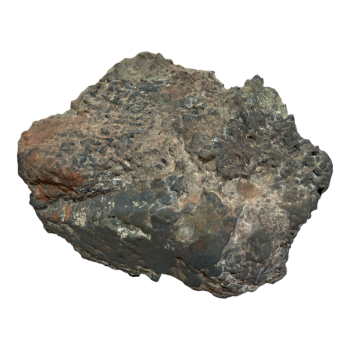
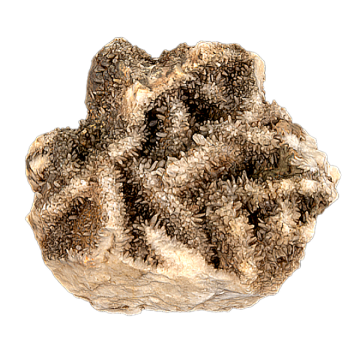
Pyrolusite (pyrolusite), the composition of manganese dioxide, is a common manganese mineral. Pyrolusite containing 63.19% manganese is an important manganese ore. Pyrolusite is very soft, its color is light gray to black, with a metallic luster. Pyrolusite is generally massive or kidney-like or earthy, sometimes with a radioactive fibrous morphology. Interestingly, some pyrolusite also exhibits a dendritic attachment to the rock surface, known as pseudoliths. Pyrolusite is other manganese ore into, in the swamps, lakes and other sediments can also form pyrolusite.
High Purity Peruvian Pyrite

High Purity Peruvian Pyrite

This pyrite is known for its brass-colored luster and distinctive striated surface. Pyrite derives its name from the Greek word pyr, which means fire, because it produces sparks when it collides with other minerals or metals. This pyrite is usually in the shape of a cube, with a highly glossy surface, giving a mirror-like visual effect. Not only are they of great value in mineralogical research, they are also favored by collectors and mineral lovers for their beautiful appearance.
South African Sword Antelope Skull Specimen

South African Sword Antelope Skull Specimen

South African gazelle is about 150-200cm long and has a shoulder height of about 110-130cm. Weighing about 100-200kg, it is the largest species in the genus Sword Antelope. Both males and females have long, straight horns, with males having larger horns, up to about 120cm in length. The hair covering the body is grayish brown, but the hair on the face, abdomen and lower limbs is white. There are black hair distributions in the center of the face, around the eyes to the mouth, on the side of the body between the forelimbs and the hind limbs, on the shins of the limbs and on the tail. Inhabit in dry grassland and desert areas, dusk activities, during the day when the temperature is higher in the shade to rest.
Mica

Mica

Mica (mica) is a rock mineral, is made of potassium, aluminum, magnesium, iron, lithium and other layered structure of aluminum silicate. Its English name mica comes from the Latin micare, which means "shiny. In ancient China, mica was called "Tianpi" and "Dijin", and Tianpi Mountain, the origin of mica in Inner Mongolia, was named after it. Polytypic mica is prevalent, of which monoclinic is common, followed by trigonal, and the rest are rare. Mica is usually false hexagonal or rhombohedral plate, flake, columnar crystal form. The color varies with the change of chemical composition, mainly with the increase of Fe content. The characteristics are insulation and high temperature resistance.
Liver model and liver tissue model (medical 3D section model)

Liver model and liver tissue model (medical 3D section model)

Gabon red soil samples

Gabon red soil samples

Gabonese laterite is an important mineral resource, mainly distributed in the Gabonese region of Africa. Llaterite is a type of soil rich in iron and aluminum that is commonly formed in tropical and subtropical regions. Gabonese laterite is mainly composed of iron oxides and aluminum oxides and is rich in minerals such as hematite and bauxite. Due to the large amount of iron oxides, Gabonese laterites are usually red or brownish red. The laterite is formed by long-term weathering and leaching under tropical climatic conditions. The parent rock on the surface gradually decomposes in an alternating wet and dry environment, forming a soil layer rich in iron and aluminum.
William III Statue

William III Statue

William III (William III, 4 November 1650-8 March 1702), also known as William of Orange, was king of the Netherlands, England, Scotland, and Ireland. He ascended to the throne of England in 1689 through the "Glorious Revolution" and ruled with his wife Mary II until her death in 1694. In 1688, William III launched the "Glorious Revolution" with the support of the English nobility, overthrowing his father-in-law James II and becoming king of England, Scotland and Ireland. His rule marked the triumph of Protestantism and parliamentary power.
Grigore Kobaltescu bust

Grigore Kobaltescu bust

Gregoré Kobarzescu is a famous Romanian geologist and paleontologist, known as the founder of Romanian geology and paleontology. The research of Grigore Kobalzescu not only laid the foundation of Romanian geology and paleontology, but also provided unique insights into petroleum geology. His work had a profound influence on later scientific research.
Grant gazelle skull specimen

Grant gazelle skull specimen

The Gazella gazelle, also known as the great gazelle, is a species of gazelle that lives in East Africa and is known for its elegance and speed. Grant's gazelle has a beige to orange fur with a white belly. Shoulder height is about 75-95cm (30-37 inches). Males weigh between 50-80kg (110-180 lb) and females are slightly lighter, weighing about 35-50kg (77-110 lb). Both males and females have horns, but males have more prominent horns, measuring 45-81cm (18-32 in) in length, presenting a parabolic shape with a thicker base.
Types of Garnet Minerals

Types of Garnet Minerals

This model summarizes the types of garnet group minerals, in which the aluminum garnet is usually red, and the calcium member is usually green. General formula: X, Y (SiO) X² = Mg², Ca², Fe², Mn², etc. Y³ = Al³, Fe³, Cr³, V³, etc. PyrAlSpites: aluminum garnet (Pyrope, Almandine, Spessartine) aluminum at the Y³. UGrAndites: Calcium at the X² locus of calcium garnet.
diorite

diorite

Diorite is a representative rock of neutral deep crystal rock, and it is also one of the main rock types in granite stone. It is mainly composed of plagioclase (medium-more feldspar) and one or several dark minerals, of which the total amount of dark minerals is generally about 20-35%. No or only a small amount of potassium feldspar, generally not more than 10% of the total feldspar. Does not contain or contains very little quartz, the amount of which does not exceed 5% of the total amount of light-colored minerals. Dark minerals are mainly amphibole, sometimes pyroxene and biotite. The accessory minerals are mainly apatite, magnetite, ilmenite and titanite.
synenite

synenite

It is a kind of magmatic rock, which belongs to neutral deep intrusive rock. light gray, with grainy, porphyritic structure. The content of silica (about 60%) and the diorite is quite, but the alkali (sodium oxide, potassium oxide) is slightly higher than the diorite. It is mainly composed of feldspar, hornblende and biotite, with no or very little quartz. Alkaline feldspar (usually orthoclase, microcline, striated feldspar) accounts for more than 70% of the feldspar. It is often a small rock strain, which forms a complex with basic rocks and alkaline rocks.
The orthostone of the alkaline massif
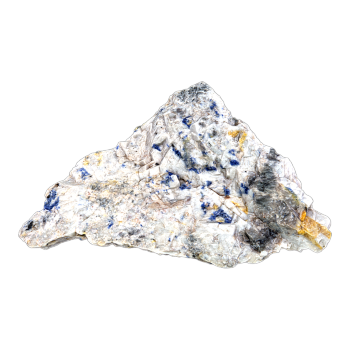
The orthostone of the alkaline massif

Syenite is a kind of magmatic rock, which belongs to neutral deep intrusive rock. light gray, with grainy, porphyritic structure. The content of silica (about 60%) and the diorite is quite, but the alkali (sodium oxide, potassium oxide) is slightly higher than the diorite. It is mainly composed of feldspar, hornblende and biotite, with no or very little quartz. Alkaline feldspar (usually orthoclase, microcline, striated feldspar) accounts for more than 70% of the feldspar. It is often a small rock strain, which forms a complex with basic rocks and alkaline rocks.
Syenite in alkaline rock mass

Syenite in alkaline rock mass

Syenite is a kind of magmatic rock, which belongs to neutral deep intrusive rock. light gray, with grainy, porphyritic structure. The content of silica (about 60%) and the diorite is quite, but the alkali (sodium oxide, potassium oxide) is slightly higher than the diorite. It is mainly composed of feldspar, hornblende and biotite, with no or very little quartz. Alkaline feldspar (usually orthoclase, microcline, striated feldspar) accounts for more than 70% of the feldspar. It is often a small rock strain, which forms a complex with basic rocks and alkaline rocks.
Crystal structure defects (3D schematic diagram of microscopic particles)

Crystal structure defects (3D schematic diagram of microscopic particles)

In nature, crystals are never perfect and contain various types of defects (defects). In this 3D model, a screw dislocation defect is shown. Edge dislocations occur due to the introduction or elimination of additional atomic rows/planes in the crystal.
Sika Deer Skull Specimen

Sika Deer Skull Specimen

Sika deer (scientific name: Cervus nippon) belongs to the genus Cervidae, with a body length of 140-170cm, a shoulder height of 85-100cm, a tail length of 12-13cm, and a weight of 100-150kg. Males have horns, while females have no horns. The horns of stags are usually divided into 3-4 forks. The sika deer has large, erect ears, slender limbs, a well-proportioned trunk, and a short tail. The fur is red, with multiple rows of irregular white spots along the sides of the spine, the lower jaw is white, the nasal surface and cheeks are sandy yellow, the back of the tail is dark brown, the lower part of the tail and the groin are white, and the abdominal hair is pale brown.
Ezo Deer Skull Specimen

Ezo Deer Skull Specimen
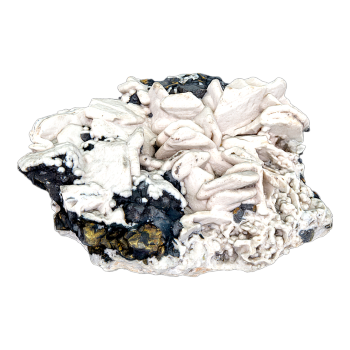
Ezo deer or known as Hokkaido sika deer, is a subspecies of sika deer, mainly found in the Hokkaido region of Japan. Bucks are large in size, weighing more than 200kg in autumn. The length of their horns is usually more than 35 inches (about 0.89 meters), and the longest record is 44 inches (about 1.12 meters). Hokkaido sika deer are social animals, usually in small groups.
Ore-bearing fibrous calcite

Ore-bearing fibrous calcite

Calcite is a calcium carbonate mineral, the most common natural calcium carbonate is it. Therefore, calcite is a widely distributed mineral. Calcite is a stable form of calcium carbonate under normal temperature and pressure, soft, white or gray or transparent, calcite crystal shape is varied, their aggregates can be a cluster of crystals, can also be granular, massive, fibrous, milky, earthy and so on. Knocking calcite can get a lot of square pieces, hence the name calcite.
Color-differentiated waist and lower limb skeleton (medical 3D model)

Color-differentiated waist and lower limb skeleton (medical 3D model)

banded aralite containing silicon carbide

banded aralite containing silicon carbide

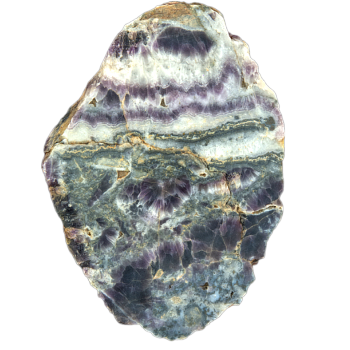
Acid salt minerals. The composition is CaCO3. Also known as aragonite, and calcite into a homogeneous multi-like. The orthorhombic crystal system, the crystal is columnar or spear-shaped, common false hexagonal symmetry of the three-linked crystal. The aggregate is mostly shell-like, oolitic, bean-like, spherical, etc. Usually white, yellow-white. Glass luster, the fracture is grease luster. with incomplete plate cleavage. Shell-shaped fracture. Mohs hardness 3.5~4.5. Specific gravity 2.9~3.0. In the nature of the unstable arangite, often transformed into calcite. Silicon carbide is a semiconductor that occurs in nature in the form of the extremely rare mineral moissanite.
The formation of new blood vessels (3D medical schematic)

The formation of new blood vessels (3D medical schematic)

High-horned gazelle skull specimen

High-horned gazelle skull specimen

The high-horned antelope (scientific name: Aepyceros melampus) is a mammal of the cloven-hoofed bovine family high-horned antelope, also known as wide-angle antelope and impala. There are vertical black spots on both sides of the buttocks and black spots on the back heel. The female has no horns; the male's horns are long and harp-like, reaching 0.5-0.8 metres. The average life expectancy is 12 years. The high-horned antelope is distributed in Kenya, Uganda and South Africa in central and southern Africa. Likes to live in grasslands and open woodlands. Usually form a small group of 15-25 live together. In the dry season, small groups will gather together to form large groups of more than a few hundred.
Fossilized Tooth of Hornosaurus

Fossilized Tooth of Hornosaurus

Caueratosaurus is also translated as Cryptocoratosaurus, which means "face with slender horns" in Greek. Like all the lower order dinosaurs, the hornophorosaurus was a herbivorous dinosaur. During the Cretaceous period, flowering plants spread across the continent, and Coriolus probably fed on dominant flowering plants, as well as ferns, cycads, and coniferous plants. Coriatops may have used their sharp beak-like beaks to bite off leaves or needles. The fiber-hornosaurus is 2 meters long and may weigh between 68kg and 200kg.
Fossil teeth of Triceratops

Fossil teeth of Triceratops

Triceratops, a herbivorous dinosaur of the genus Triceratops, is a bird-buttock hornosaurus. Triceratops is a kind of dinosaur like rhinoceros. It has heavy appearance, thick legs, three horns on its head, a large bone plate extending backward at the back of its skull to form a neck shield, a short horn above its beak and two long horns above its orbit. Triceratops horns are defensive weapons and can scare off predators. Its tail is short and sharp, and its feet are like hooves.