Ancient vase

Ancient vase

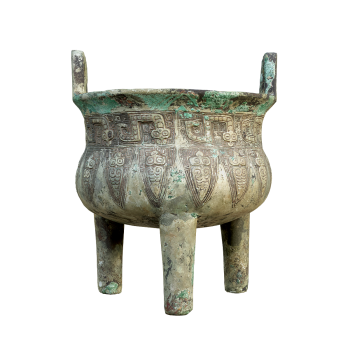
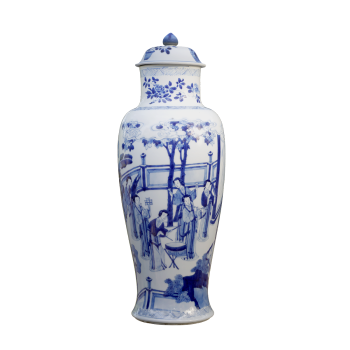
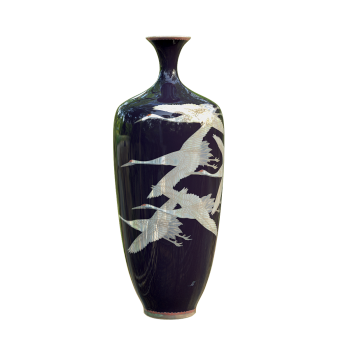
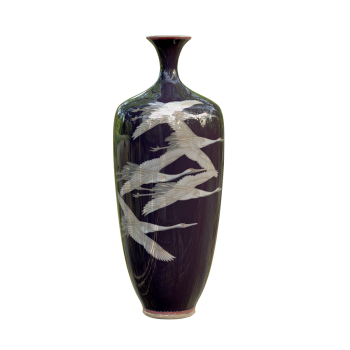
Ancient vases are works of art in the long river of history. They not only carry practical functions, but also contain rich cultural and artistic values. These vases may be made of different materials such as ceramics, bronze, glass, or stone, and their form and decorative style reflect the aesthetic taste and craftsmanship level of a specific era. In ancient times, vases were commonly used to hold flowers, spices, or as ritual vessels for religion and ceremonies. Over time, many ancient vases have become valuable discoveries in archaeological excavations, providing important clues for us to understand the lifestyle, social customs, and artistic achievements of ancient civilizations.
The Virgin Mary

The Virgin Mary

The Virgin Mary is depicted on a sphere embedded in intricately carved scrolls. The main body of the statue is made of lime wood, while the sphere and base are made of walnut wood. The size is 40.5 centimeters high and was created around 1750. This statue showcases the characteristics of 18th century European woodcarving art, in which basswood is often used to create intricate sculptures due to its ease of carving. Walnut wood was chosen to make the sphere and base of the statue due to its hard texture and beautiful texture, increasing the texture and durability of the work.
The male lion gazing out

The male lion gazing out

The statue is located on the Schmel Bridge, spanning the Danube Canal. The construction period of the bridge was from 1894 to 1899. Bridge designer Otto Wagner. Rudolf Weyr designed two lions on the bridge. The Schmel Bridge also serves as a dam, as part of the Nussdorf dam and lock system, regulating the flow of Danube water into the Danube Canal. Schmel Bridge is an important landmark in Vienna, renowned not only for its architectural aesthetics and functionality.
Lion Carving "

Lion Carving "

This lion carving is a lion statue collected by the Austrian Museum of Folk Life. The lion statue opened its mouth, with a young lion tightly grasping its mane. The source is Val Gardena, located in South Tyrol. This lion statue, as part of its collection, not only showcases the woodcarving techniques of the South Tyrol region, but also reflects the value and significance of folk art in contemporary culture.
Statue of Queen Elizabeth of Hungary

Statue of Queen Elizabeth of Hungary

The statue is located at Vienna West Station. The creator is Hans Gassel. Created in 1860. In 1945, this statue was severely damaged. The statue was successfully restored in 1984. On December 15, 1858, with the opening of the "Royal Queen Elizabeth Railway" from Vienna West Station to Linz, the station was officially put into use. The new station hall opened in 1951. Queen Elizabeth, also known as Princess Sissy, was the queen of Austria and Hungary, and the daughter of Duke Maximilian Joseph of Bavaria and Princess Ludovica. She is renowned for her beauty, tragic life, and place in Austrian history.
Portrait of Joseph II on horseback

Portrait of Joseph II on horseback

The statue is located at the Emperor Joseph Memorial in the first district of Vienna. Based on the equestrian portrait of Marcus Aurelius. The creator is Franz Anton Zauner, who was elevated to nobility for creating this monument. Joseph II was an Austrian emperor in the 18th century, known for his enlightened rule and numerous reforms. This equestrian statue, as part of the Emperor Joseph Memorial, not only showcases the majestic image of Joseph II, but also symbolizes his governing philosophy and contributions to the country.
15th century medieval semi glazed clay wine pot - Hunter Museum in Limerick

15th century medieval semi glazed clay wine pot - Hunter Museum in Limerick

It is a precious ceramic artwork. It has a ribbon shaped handle, with glazed covers on the upper part, handle, and neck inside and outside. This work is currently housed in the Hunter Museum in Limerick. In the Middle Ages, it was a common daily item with a simple and practical design. The ribbon shaped handle is convenient for carrying and pouring wine, while the glazed surface on the neck may be used to protect the pottery from liquid erosion, while also increasing its aesthetic appeal. Although it has been a long time, this semi glazed wine pot is still well preserved, providing us with valuable information for studying medieval ceramic craftsmanship and daily life.
Maiolica Italian style medicine jar - Hunter Museum in Limerick

Maiolica Italian style medicine jar - Hunter Museum in Limerick

It is a type of painted pottery originating from the Italian Renaissance period, known for its bright colors and exquisite decorations. Its shape is cylindrical at the waist, which makes it easy to carry and store medication. The center front of the medicine jar is decorated with an oval shaped portrait of a man, surrounded by exquisite leaf shaped patterns and carving techniques. These decorations are mainly in blue, yellow, and white, showcasing the unique colors and artistic style of Majorica pottery. Portrait painting emphasizes the personality traits of characters, rather than traditional beauty or handsomeness, reflecting the Renaissance's emphasis on character and inner qualities.
Hugo Bretner Monument

Hugo Bretner Monument

The monument is located in the 14th district of Vienna. The creator is Siegfried Charoux, created in 1954. Hugo Bretner, formerly served as a city finance councilor and city councilor. Hugo Bretner resigned from his positions as a city councilor and city councilor in 1932 and 1933 due to health reasons. On February 12, 1934, he was arrested by the Austrian fascist regime and detained for several weeks. Due to his Jewish heritage, Breitner was forced to flee to the United States with his family after the Nazis came to power. He passed away in California in 1946.
Archangel St. Michael

Archangel St. Michael

The statue is located in Klingenbach, where Archangel St. Michael defeated the demon transformed into a dragon. The Vlasic family donated this monument in 1959. St. Michael is one of the famous angels in Christianity, Judaism, and Islam, often depicted as a symbol of defeating evil, especially Satan or demons. As a donation from the Vlasich family, this statue is not only an artwork, but also a symbol of the local community's faith and spirit.
Greek neck bottle

Greek neck bottle

It is a ceramic container from ancient Greece, with an iconic long neck and two vertical handles, usually located on the shoulders. This dual ear bottle design is very suitable for carrying and pouring liquids such as oil, wine, or water. Greek necklaces not only have a wide range of uses in daily life, but also play an important role in religious ceremonies and funerals. They are often used as burial objects in tombs to hold liquids for worship. The surface of Greek neck vases is often painted with exquisite patterns, including mythological scenes, battle scenes, or daily life scenes, providing us with a window to understand ancient Greek culture and art.
Saint Anne

Saint Anne

Saint Anne sat on a pedestal shaped like a pedestal, wearing a red dress, a silver plated veil, and a gilded cloak. Saint Mary stood beside her. The mother supported her daughter's left shoulder with her right hand. This work is from the collection of Heiligenkreuz Abbey. The size is 51 centimeters high, dating back to the first half of the 18th century. Saint Anne is the grandmother of Jesus, also known as the mother of the Virgin Mary, and her image is often depicted in Christian art. This set of statues showcases the intimate relationship between Saint Anne and Saint Mary, as well as the traditional image of Saint Anne in religious art.
Jerusalem Ceramic Pomegranate

Jerusalem Ceramic Pomegranate

It is a traditional handicraft with Middle Eastern characteristics, originating from ancient Eastern culture, especially in the region centered around Jerusalem. This type of handicraft is usually based on pomegranates and handmade using ceramic materials. The surface is often painted with exquisite patterns and colors, representing the beautiful meaning of prosperity and many children and blessings. Pomegranate is a highly symbolic fruit in Middle Eastern culture, representing not only the continuation of life and the reproduction of families, but also health and longevity. Therefore, ceramic pomegranate has become a popular decoration, often placed in homes and public places to express wishes for a better life.
Hercules carrying a stick on his shoulder

Hercules carrying a stick on his shoulder

The statue is called Hercules carrying a club on his shoulder and is located in the Heiligenkreis Monastery Museum. Hercules carried a stick on his shoulder and leaned against a half pole, with lion skin covering his head. The creator is Giovanni Giuliani, and the signature is located on one side of the pillar. The signature behind it is: 'Jo GiulliaiJ Ficit in S.+1735 AEtatis Suane LXXI 1/2 An. Mensis Octobris', indicating that Giuliani created this work in October 1735 when he was 71 and a half years old.
Greek Vase

Greek Vase

Greek vases are a type of ceramic container in ancient Greek civilization, known for their exquisite decoration and historical value. These vases are usually made of clay and have black or red patterns painted on the surface, reflecting the life scenes, mythological stories, and religious rituals of ancient Greeks. The design of Greek vases is diverse, including double ear vases, water bottles, oil tanks, etc., each with its specific purpose. They are not only daily necessities, but also carriers of art and cultural heritage. The exquisite painting and carving techniques on Greek vases showcase the superb skills of ancient Greek artists. These vases are still important resources for studying ancient Greek culture and art to this day.
Hercules and the Hellhound

Hercules and the Hellhound

Regarding the sandstone statues of Heracles and the hellhound Kerberos located in Austerlitz Palace Gardens. Greek hero Hercules, dressed in lion skin, is depicted fighting with the guardian dog of hell, Cerberus. The creator is Giovanni Giuliani. Sandstone. This statue depicts a scene from the mythological story of Hercules, who completed the last of his twelve tasks - bringing back the three headed dog Cerberus from the underworld to the human world.
Hercules captures Cretan bull

Hercules captures Cretan bull

This statue is located in front of the Imperial Chancellery wing in the Baroque expansion of Hofburg, facing the entrance of the passage on Sch ö ffler Street. The creator is Lorenzo Mattielli. Created in 1728. This statue showcases Hercules' heroic feat of capturing a Cretan bull, which is one of his twelve heroic deeds. Lorenzo Matieri created a series of commemorative sculptures commemorating the heroic deeds of Hercules for the Baroque expansion of Hofburg during the reign of Charles VI.
Chinese snuff bottles from the Qianlong period of the Qing Dynasty - Cleveland Museum of Art

Chinese snuff bottles from the Qianlong period of the Qing Dynasty - Cleveland Museum of Art

It is a precious collection of the Cleveland Museum of Art, belonging to the Qianlong period of the Qing Dynasty in China (1736-1795). Emperor Qianlong is one of the famous emperors in Chinese history. This snuff bottle is made of copper and features painted enamel craftsmanship, which was highly valued at the time and typically only possessed by royalty and nobility. It is depicted with European figures, indicating that it may have been influenced by Western art or catered to the European market. This work is not only a practical container, but also a witness to the exchange of Chinese and Western cultures. By Noah L Mrs. Butkin donated it as a gift for the 75th anniversary of the museum's establishment.
The eagle shaped statue in the central cemetery of Vienna

The eagle shaped statue in the central cemetery of Vienna

The eagle shaped statue of the Vienna Central Cemetery is located in the central cemetery of Vienna. The eagle shaped stone carving sits on a stone and is a decorative sculpture in the cemetery.
Bronze water basin from the Goryeo period in South Korea - Cleveland Museum of Art

Bronze water basin from the Goryeo period in South Korea - Cleveland Museum of Art

It is a bronze water basin from the Goryeo period in Korea (918-1392), made around the 1100-1200s. The exquisite craftsmanship not only showcases the typical characteristics of Goryeo bronze ware in form, but also has exquisite character patterns and calligraphy engraved on its inner walls. These patterns and calligraphy not only have high artistic value, but also reflect the culture and aesthetic taste of the society at that time. This artwork is currently housed in the Cleveland Museum of Art and donated by the Leonard C. Hanna Foundation in 1985.
Christ Mourning Gypsum Relief

Christ Mourning Gypsum Relief

The work is titled "Christ Mourning Gypsum Relief" by Raphael Donner. Created in the 19th century. This work is one of the collections of the Heiligenkreuz Abbey Museum. Raphael Dona is a renowned artist whose works hold an important position in art history. This plaster relief replica showcases Raphael Dona's artistic style and skills, as well as reflecting the rich art collection of the Heiligenkreis Monastery Museum.
Musico Moche Civilization Ceramic Container

Musico Moche Civilization Ceramic Container

During the pre Columbian period, music and dance were an indispensable part of the local cultural tradition in the Musico Moche civilization (200-850 AD). Musical instruments made by cultures such as Moche provide rhythm and atmosphere for religious ceremonies and community activities such as farming, channel cleaning, or sowing. This pottery container depicts the image of a Moche musician. He was wearing a long robe decorated with natural element patterns, such as waves, cats, and snakes. Under focused gaze, he was playing the Andean flute or panpipe, playing the melody.
Half body portrait of Friedrich von Amelin

Half body portrait of Friedrich von Amelin

The statue is located in the City Park of Vienna's first district. The statue was made by Johannes Benk. Created in 1902. The statue character is Friedrich Ritter von Amerling, who lived from 1803 to 1887 and was one of the most respected portrait painters in 19th century Austria, alongside Ferdinand Georg Waldm ü ller.
Muse Erato Fountain

Muse Erato Fountain

The fountain is located in Theater Square in Baden, and the statue was designed by Josef Valentin Kassin and built in 1902. Erato is the Muse who plays the lira, and she is one of the nine Muses in Greek mythology. Erato is the muse of love poetry, lyric poetry, song, and dance, and the daughter of Zeus and Menemosine. This fountain and statue are not only works of art, but also part of the cultural heritage of the city of Baden, reflecting the rich history and mythological traditions of the region.
Egyptian Lotus Vase

Egyptian Lotus Vase

Egyptian lotus vase is a decorative item inspired by ancient Egyptian art. Lotus symbolizes the rebirth of life and the rise of the sun in ancient Egyptian culture, often seen in tomb murals, sculptures, and decorative arts. The design of such vases usually combines lotus patterns with typical elements of Egyptian art, such as hieroglyphics or pharaoh patterns. They may be made of ceramics, stone, or other materials, and their surfaces may be coated with gold or colored decorations to imitate the magnificent style of ancient Egypt. The Egyptian lotus vase is not only a tribute to ancient Egyptian civilization, but also an exploration and application of classical aesthetics in modern design.
Ancient Twin Body Bottle Ceramic Container

Ancient Twin Body Bottle Ceramic Container

It is a container with a dual body structure, usually having a bridge shaped handle and a straight neck. The front part is sculptural, while the back part is a side pressed spherical shape decorated with goose skin texture and a personified figure wearing a hat, earmuffs, collar, and anku (an ancient Egyptian scepter). The sculpture depicts a female figure sitting on her lap, breastfeeding a baby sitting on her left knee. This woman has long hair and neck decorations.
The God of the Danube River

The God of the Danube River

The name of this statue is the God of the Danube, who sits on three stretched dolphins with his elbows resting on the fins of their tails. A flower wreath decorated with leaves of aquatic plants on the top of the head. The back of the statue bears the artist's signature: "Giuliani Ficit 1738". Giovanni Giuliani was an Italian sculptor active in Heiligenkreis, Austria, whose works were influenced by the late Italian Baroque style and made significant contributions to Austrian Baroque sculpture.
Dragon Cloud Pattern Porcelain Jar - Cleveland Museum of Art

Dragon Cloud Pattern Porcelain Jar - Cleveland Museum of Art

It is a Korean porcelain from the late Joseon Dynasty (late 1600s). It belongs to the Joseon Dynasty period (1392-1910) and was made using underglaze iron color technology. It is currently housed in the Cleveland Museum of Art and donated by the Leonard C. Hanna II Foundation in 1986. Not only does it showcase the exquisite craftsmanship of porcelain during the Joseon Dynasty, but its dragon cloud pattern design also reflects the aesthetic style and cultural characteristics of that time.
Statue commemorating the 100th anniversary of the establishment of Sopron Brewery

Statue commemorating the 100th anniversary of the establishment of Sopron Brewery

This statue was built to commemorate the 100th anniversary of the establishment of Sopron Brewery. The statue is located in Ogabona Square in Sopron and was designed by Joseph Kampfel. It has been decorating this square since 1995. Sopron Brewery was founded in 1895 by town merchants and owners of Brno Brewery, relying on Czech brewing traditions. This statue is to commemorate this important historical moment. Now, Sopron Brewery is a Hungarian subsidiary of the international Heineken Group, Heineken Hungary Brewery.
C à ntir Glazed Sandstone Container - Sabadel Art Museum

C à ntir Glazed Sandstone Container - Sabadel Art Museum

It is a unique artwork from the Sabadel Art Museum, created by the renowned local artist Francesc Elias Bracons between 1955 and 1965. Made of glazed sandstone, with rich colors including green, purple, and brown, giving people a deep and mysterious visual experience. The spout is cleverly designed in the shape of an animal's head, adding a touch of liveliness and fun. Not only is it a practical container, but it is also an exquisite artwork that showcases the artist's love for nature and animals, as well as their clever use of color and shape.
Apache Tray - Cleveland Museum of Art

Apache Tray - Cleveland Museum of Art

It is a tray from the Apache tribe in the early 20th century, belonging to the Western style of the southwestern United States. This tray is made using weaving technology, with specific dimensions of 13.3 cm x 52.4 cm. It was donated by William Albert Price to the Cleveland Museum of Art in memory of his wife. This collection not only showcases the weaving skills of the Apache people, but also reflects the level of craftsmanship and cultural characteristics of the early 20th century. It is currently housed in the Cleveland Museum of Art.
Glazed Sandstone Vase - Savadell Art Museum

Glazed Sandstone Vase - Savadell Art Museum

Created by Catalan artist Francesc Elias Bracons (born in Savodel in 1892 and passed away in Reus in 1991) in the 1950s. Known for its exquisite craftsmanship and sensitivity to color. This work is a handle vase made of glazed sandstone, with colors including green, brown, sky blue, and dark blue. The pot body is round and exquisitely decorated. This artwork has now become a part of the Savadell Art Museum.
Portable Altar from the Roman Era - Cleveland Museum of Art

Portable Altar from the Roman Era - Cleveland Museum of Art

It is an 11th century Romanesque art piece, produced around 1045, possibly from Lower Saxony, Germany. Made of precious materials such as gold, enamel, porphyry, gemstones, pearls, black lacquer, and wood cores, it is collected at the Cleveland Museum of Art and is a gift from the John Huntington Institute of Art and Technology Trust Fund. It was commissioned by Countess Gertrude to commemorate her husband, Count Leopold, shortly after his death. There are four apostles worshiping the cross on the front, seven apostles on each side, and five apostles at the back. There is also a mechanism at the bottom to open and store items.
Dragon patterned vase

Dragon patterned vase

It is a common traditional Chinese ceramic artwork. These types of vases are usually themed around dragons and use exquisite craftsmanship to depict the image of dragons, symbolizing strength, nobility, and good luck. As an important symbol in traditional Chinese culture, the dragon is often depicted as a hovering or flying posture, surrounded by elements such as cloud patterns and waves, exhibiting a majestic and mysterious atmosphere. The unique oriental charm of dragon patterned vases has also made them a favorite among collectors and art enthusiasts around the world. These vases blend traditional and modern elements, suitable for adding a cultural atmosphere indoors, and are often used as gifts to convey beautiful meanings in various cultural and commercial exchanges
Silver Raft Cup - Cleveland Museum of Art

Silver Raft Cup - Cleveland Museum of Art

Made around 1345. This work is attributed to Zhu Bishan, welded from hammered silver pieces and decorated with chisels. It is now collected at the Cleveland Museum of Art. By JohnL Severance Fund was acquired in 1977. The figure on the cup is believed to be the messenger Zhang Qian. Legend has it that he got lost in the Milky Way and met the Weaver Girl, who gave him a stone from a loom. Zhang Qian actually holds a stone tablet with the inscription 'Weaving Machine Stone'. The production date, inscription, and seal of silversmith Zhu Bishan are all clearly visible on this silverware, demonstrating its historical and artistic value.