Queen Mary's Scottish Treasure Chest

Queen Mary's Scottish Treasure Chest

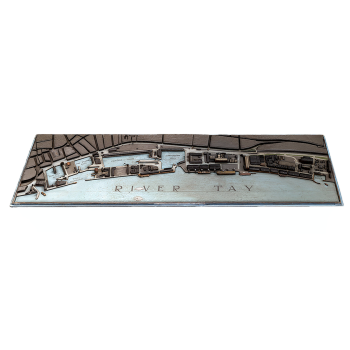
Queen Mary's Scottish Treasure Chest is a beautifully decorated gold-plated silver box, made in Paris between 1490-1510, believed to have belonged to Queen Mary of Scotland. This is an extremely rare example of French silverware from the Renaissance period, as many silverware were melted down to extract precious metals from them. Its preservation proves its association with Mary, and as a relic of this unfortunate queen, it has been cherished by the Duke of Hamilton's family for over 340 years.
Tiger patterned Stone Wine Pot - Hunter Museum in Limerick

Tiger patterned Stone Wine Pot - Hunter Museum in Limerick

It is called tiger patterned stone tool due to its mottled surface. There is a circular bottom, spherical body, long neck, and single handle, without decorative accessories. It is a Laelen product from the Rhineland region of Germany, made in the 16th century. Currently housed in the Hunter Museum in Limerick. The surface is mottled, presenting a unique tiger pattern effect, which is caused by the special glaze and firing techniques used in the production of stone tools. It showcases the ceramic production techniques and artistic styles of that time, and also provides us with an understanding and research of people's daily lives and social habits during that era.
Late Middle Period Ceramic Cup

Late Middle Period Ceramic Cup

The products of the late middle period civilization (1000-1470 AD) returned by France in 2022 represent the high level of ceramic craftsmanship at that time. It is a historical stage between the late Middle Ages and the early Renaissance, during which ceramic art had significant developments in both technology and aesthetics. The ceramic front end is in the shape of a cat's head, and the tail end is a short tail. This unique shape reflects the cultural characteristics and social life of that time. The return by France also demonstrates the international emphasis on the protection and return of cultural heritage, as well as the respect and protection of historical relics.
Green glazed Islamic pottery jar - Real City Museum

Green glazed Islamic pottery jar - Real City Museum

It is a precious medieval Islamic ceramic artwork unearthed from the Alarcos archaeological site in the Castile La Mancha region of Spain. This pottery jar is a witness to the spread and influence of Islamic culture in the region, and has significant historical and cultural value. The shape is round and covered with a smooth layer of green glaze, which is very common in Islamic art and symbolizes life and prosperity. The surface decoration is simple and elegant, without excessive ornamentation, reflecting the aesthetic concept of pursuing simplicity and harmony in Islamic art. Currently housed in the Real City Museum, it is a masterpiece in the museum's collection of Islamic ceramics.
Ancient Greek style pottery - Igleio Archaeological Museum

Ancient Greek style pottery - Igleio Archaeological Museum

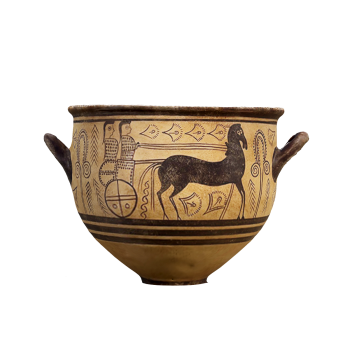
It is an ancient Greek style wine glass, characterized by a red patterned decoration on the cup body. Originating from classical Greece, around the 5th century BC. The red painted wine cup discovered at the Kamarina site in Sicily is a product of the classical era, specifically from the Kamarina region, located in the province of Ragusa, Italy. Currently housed in the Igleio Archaeological Museum in Ragusa. It provides us with a window to understand ancient Greek culture and art, and also showcases the connection between ancient Sicily and Greek culture. It is a valuable resource for studying ancient civilizations.
Zapotec Pottery - American Collection, University of Bonn

Zapotec Pottery - American Collection, University of Bonn

It is an ancient art form originating from the Oaxaca Valley in Mexico, and this humanoid pottery embodies the craftsmanship and creativity of the Zapotec civilization craftsmen. It can be traced back over two thousand years and is known for its diverse styles, including animal forms and humanoid patterns, as well as geometric and symbolic designs that incorporate the Zapotec cosmology. It is a proof of Zapotec's technical skills and a bridge to understand their society, beliefs, and intimate relationships with the environment. Formally, it usually appears in animal form or human form, sometimes associated with gods, ancestors, animals, or individuals of prominent status. It is currently housed in the American Collection at the University of Bonn.
The Three Legged Cauldron of the Shang Dynasty in China - Cleveland Museum of Art

The Three Legged Cauldron of the Shang Dynasty in China - Cleveland Museum of Art

The tripod collected by the Cleveland Museum of Art is a bronze artifact from the Shang Dynasty in China, dating back to approximately 1200 to 1100 BC. With its exquisite craftsmanship and unique design, it showcases the superb skills of bronze ware production during the Shang Dynasty. The tripod was not only a practical tool for cooking and storing food at that time, but also had important ceremonial and symbolic significance, often used in religious and sacrificial activities. Exquisite attention to detail reflects the aesthetic characteristics and cultural value of Shang Dynasty bronze art. Donated by the John Huntington Institute of Art and Technology Trust to the Cleveland Museum of Art.
Setriel Ceramic Container - Mansa Museum

Setriel Ceramic Container - Mansa Museum

It is a ceramic oil pot from the early 14th century, decorated mainly in green and manganese colors. The spout is designed in the shape of a deer's head, which may indicate that it was once used as an oil pot for pharmacists. This precious ceramic work is now preserved in the Mansa Museum. Exquisitely crafted, the green and manganese decorations on the pot body present a classical beauty, while the deer head shaped spout adds a lively and artistic touch. It is an artwork that showcases medieval craftsmanship techniques. It reflects a part of medical practice at that time, as well as people's pursuit of beauty and imitation of natural elements. It is a part of Catalonia and even the entire European cultural heritage.
Pre Romanesque Sacred Box - Museum of Mireza

Pre Romanesque Sacred Box - Museum of Mireza

It is a precious artifact from the pre Romanesque period, consisting of a container and a lid, with a handle on top of the lid. The St. Mary's Delilet Church is located in the town of Lapo Bradley in the Begda region. It is currently preserved in the museum in Manza. This artifact box is a representative of pre Romanesque art, with a unique design that showcases the artistic style and craftsmanship of that era. Not only is it a religious artifact, but it is also an important physical material for studying the social, cultural, and religious life of that time. Through this work, people can better understand and appreciate the ancient civilization and artistic achievements of Catalonia and even the entire Europe.
Porcelain from the Qianlong period of the Qing Dynasty in China - Cleveland Museum of Art

Porcelain from the Qianlong period of the Qing Dynasty in China - Cleveland Museum of Art

It is a porcelain piece from the Qianlong period of the Qing Dynasty in China (1736-1795), with the mark of the Qianlong period. Decorated with colorful franc glaze, belonging to the style of Gu Yue Xuan. The Cleveland Museum of Art belongs to the John L. Severance Foundation. This porcelain represents the high level of porcelain production in the Qing Dynasty, and its exquisite franc glaze decoration and delicate craftsmanship showcase the prosperity of porcelain art at that time. The Qianlong period was one of the golden ages of Chinese porcelain development, and the porcelain of this period was famous for its exquisite craftsmanship and rich decoration.
Mayolinca Potion - Hunter Museum in Limerick

Mayolinca Potion - Hunter Museum in Limerick

It is a Majorica medicine jar from the 16th century in Italy, currently housed in the Hunter Museum in Limerick. The medicine jar is made of Majorica material, equipped with a pair of gorgeous handles shaped like seahorses and a short nozzle. The jar is decorated with the emblem of the Franciscan Order, surrounded by patterns of fruits and flowers. The back is decorated with stylized pine cones, which are in the form of Persian palm leaves. Majorica is a type of pottery that was very popular during the Italian Renaissance, known for its exquisite decoration and colors. It showcases the artistic style and aesthetic taste of that time.
Maiolica Medicine Jar - Hunter Museum in Limerick, Ireland

Maiolica Medicine Jar - Hunter Museum in Limerick, Ireland

Also known as albarello, it is a ceramic container with a long history. Made of Maiolica material, it has a cylindrical shape with a slightly contracted waist, gradually narrowing at the bottom and neck, and curling outward at the mouth. The decoration is very exquisite, with blue as the main color tone and various floral patterns painted. The central position is engraved with the inscription "COMM7", which is related to the purpose or contents of the medicine jar. The decorative style is similar to the medicine cans imported from Spain in the 15th century, indicating that it may have been influenced by trade and cultural exchanges at that time. The Hunter Museum in Limerick, Ireland, is a precious heritage of ceramic art and decorative art.
Nazca Painted Cup - American Collection, University of Bonn

Nazca Painted Cup - American Collection, University of Bonn

It is a pottery artwork from the Nazca culture period in Peru, currently collected in the American Collection series at the University of Bonn in Germany. The Nazca culture is located on the southern coast of present-day Peru, around the early middle period of 200 BC to 600 AD. Known for its colorful paintings, typically using four or more colors. Early pottery in Nazca was typically limited to open bowl shaped or double mouthed pots with flat handles and relatively simple yet bold painted designs; The later style included other forms of vessels, including some sculptural shapes, incorporating more intricate details into the design.
Chullpavessel pottery - Bonn American Collection, University of Bonn

Chullpavessel pottery - Bonn American Collection, University of Bonn

It is a double conical spherical pottery with human morphological characteristics, which was donated as a gift to A. in the American Collection of the University of Bonn in 2005 Elmer's collection. This pottery comes from the Chuquisaca region of Bolivia and has been painted with colorful colors. It is an important material for studying ancient culture and religious beliefs. Known for its unique double conical spherical design and decorative figures, this design may be related to funeral towers in ancient Andean regions. As part of the American collection at the University of Bonn, it provides us with a unique perspective on understanding ancient Andean civilization.
Nazca Double Mouth Bridge Pottery - American Collection, University of Bonn

Nazca Double Mouth Bridge Pottery - American Collection, University of Bonn

It is an ancient pottery with unique design and decoration, representing the artistic achievements of the Nazca culture in Peru. Made of clay, it is characterized by two cylindrical pipes connected by a flat middle horizontal bar, forming a double mouth structure. This design is not only practical, but also has high artistic value. The surface decoration is rich and colorful, using multi-color paintings, which indicates that the Nazca culture has superb painting and decoration skills in pottery production. The Nazca culture existed approximately between 200 BC and 700 AD, mainly distributed in the Nazca Valley region of southern Peru. It is currently housed in the American Collection at the University of Bonn.
Jingdezhen Baluste Vase (Part 2)

Jingdezhen Baluste Vase (Part 2)

It is one of the five piece decoration set, characterized by the use of cobalt pigment under transparent colorless glaze. Belonging to Jingdezhen style, it is a ceramic container produced in Jingdezhen City, Jiangxi Province, China. The production period was from 1662 to 1722, belonging to the Qing Dynasty. Not only is it a representative of Chinese ceramic craftsmanship, but it also showcases the exquisite craftsmanship and aesthetic style of Jingdezhen porcelain during the Qing Dynasty. Jingdezhen, as the hometown of Chinese porcelain, has been renowned for its exquisite porcelain since ancient times. During the Qing Dynasty, the porcelain craftsmanship of Jingdezhen reached a new height, producing many porcelain pieces with high artistic and historical value.
Jingdezhen Ballust Vase

Jingdezhen Ballust Vase

It is one of the five piece decoration set, characterized by the use of cobalt pigment under transparent colorless glaze. Belonging to Jingdezhen style, it is a ceramic container produced in Jingdezhen City, Jiangxi Province, China. The production period was from 1662 to 1722, belonging to the Qing Dynasty. Not only is it a representative of Chinese ceramic craftsmanship, but it also showcases the exquisite craftsmanship and aesthetic style of Jingdezhen porcelain during the Qing Dynasty. Jingdezhen, as the hometown of Chinese porcelain, has been renowned for its exquisite porcelain since ancient times. During the Qing Dynasty, the porcelain craftsmanship of Jingdezhen reached a new height, producing many porcelain pieces with high artistic and historical value.
Riverbank Chrysanthemum Screen - Cleveland Museum of Art

Riverbank Chrysanthemum Screen - Cleveland Museum of Art

It is a work created by a follower of Mitsuru Ogata, a famous painter of the Edo period in Japan. This painting was created in the late 18th to early 19th century and is part of a set of works. It is a pair of six fold screens, using gold foil as the canvas, drawn with ink and color. The painting depicts chrysanthemums by the stream, showcasing the delicacy and elegance of traditional Japanese painting. Kobayashi Ogata himself lived between 1658 and 1716, and this artwork was created shortly after his death by his followers, reflecting his artistic style and influence. Currently collected at the Cleveland Museum of Art
Nanman Screen - Kobe City Museum

Nanman Screen - Kobe City Museum

It is a type of screen made in Japan from the late 16th century to the mid-17th century, mainly depicting scenes of communication with Portugal and Spain. This important cultural property created by Kano Uchiyama uses the technique of coloring gold on paper and consists of six pieces. It is currently collected at the Kobe City Museum. The creative background is closely related to Japan's foreign exchanges at that time. In the late 16th century, with the colonial expansion of Portugal and Spain in Asia, Western European countries began to enter Japan's trading circle, and the Japanese at that time referred to them as the "Southern Barbarians". From this work, we can see how Japanese people at that time understood and expressed their communication and interaction with foreign countries through art.
Japanese Egret Tea Cup

Japanese Egret Tea Cup

A traditional Japanese tea set with the theme of white egrets, usually depicting the scene of white egrets fishing by the water's edge. It embodies the aesthetics of Japanese ink painting and also contains a longing for natural harmony and peaceful living. Designs are often concise and full of artistic conception, outlining the elegant posture of herons with a few strokes, especially the sharp brushstrokes on the head, leaving a deep impression on people. Not only used in daily tea ceremonies, but also often collected and appreciated as art. The creation can be traced back to the Muromachi period, around the 15th to 16th centuries. At that time, artists used delicate brushstrokes and ink colors to create many works with nature as the theme.
Kano Nagatoku's "The Cypress Screen" (right) - Tokyo National Museum

Kano Nagatoku's "The Cypress Screen" (right) - Tokyo National Museum

It is one of the representative works of the famous Japanese painter Nagatoku Kano during the Momoyama period, known for its magnificent obstacle screen painting style. Created in the late 16th century, it is an outstanding representative of art from the Azuchi Momoyama period in Japan. The background of the painting is almost covered with gold foil, highlighting the vigorous branches of the cypress tree. Kano Nagatoku inherited the painting style of his grandfather Kano Motonobu, blending ink paintings from China with colorful paintings from Japan, creating a powerful yet magnificent painting style that was deeply loved by military commanders at that time., Currently housed in the National Museum of Tokyo, it is an indispensable and valuable resource for studying the history of Japanese painting.
Kano Nagatoku's "The Cypress Screen" (left) - Tokyo National Museum

Kano Nagatoku's "The Cypress Screen" (left) - Tokyo National Museum

It is one of the representative works of the famous Japanese painter Nagatoku Kano during the Momoyama period, known for its magnificent obstacle screen painting style. Created in the late 16th century, it is an outstanding representative of art from the Azuchi Momoyama period in Japan. The background of the painting is almost covered with gold foil, highlighting the vigorous branches of the cypress tree. Kano Nagatoku inherited the painting style of his grandfather Kano Motonobu, blending ink paintings from China with colorful paintings from Japan, creating a powerful yet magnificent painting style that was deeply loved by military commanders at that time., Currently housed in the National Museum of Tokyo, it is an indispensable and valuable resource for studying the history of Japanese painting.
Exquisite lotus ceramic made by Zhou Haiqing

Exquisite lotus ceramic made by Zhou Haiqing

Zhou Haiqing is a ceramic artist from Hebei Province, specializing in the technique of making clear mud pottery, which has been listed as a municipal intangible cultural heritage. He not only inherited the traditional tire making techniques of his ancestors, but also had the courage to innovate, forming his own unique artistic style. There is a wide variety of works, including clay pots, pottery bottles, pen holders, etc., and I am particularly skilled in making clear mud cricket jars. The work is known for its rustic and natural style, smooth lines, and jade luster, and has received widespread praise from peers and collectors. This work embodies the beauty of lotus flowers, with a hollow design on the top flower ball and three small rabbits on the base. Highlighting Zhou Haiqing's superb skills.
The Wind God and Thunder God Screen (Wind God Screen) - Tokyo National Museum

The Wind God and Thunder God Screen (Wind God Screen) - Tokyo National Museum

The "Wind God and Thunder God Screen" by Mitsuru Ogata is an important cultural property of the Edo period in the 18th century and is currently housed in the Tokyo National Museum. It was created by Mitsunari Ogata imitating the national treasure of Muneda Biaya. Using paper-based gold coloring techniques. One of the prominent features of this work is the intersection of the gaze of the Wind God and the Thunder God. The images of the Wind God and the Thunder God are vivid and powerful, with the Wind God holding a wind bag and the Thunder God holding a drum, both of which have dynamic movements and expressions. In addition, after the death of Mitsuhide, Sakai Takaichi added the "Summer Autumn Sketch Screen" to the back of the screen, but for preservation reasons, these two works are now stored separately in different screens.
Wind God and Thunder God Screen (Thunder God Screen) - Tokyo National Museum

Wind God and Thunder God Screen (Thunder God Screen) - Tokyo National Museum

The "Wind God and Thunder God Screen" by Mitsuru Ogata is an important cultural property of the Edo period in the 18th century and is currently housed in the Tokyo National Museum. It was created by Mitsunari Ogata imitating the national treasure of Muneda Biaya. Using paper-based gold coloring techniques. One of the prominent features of this work is the intersection of the gaze of the Wind God and the Thunder God. The images of the Wind God and the Thunder God are vivid and powerful, with the Wind God holding a wind bag and the Thunder God holding a drum, both of which have dynamic movements and expressions. In addition, after the death of Mitsuhide, Sakai Takaichi added the "Summer Autumn Sketch Screen" to the back of the screen, but for preservation reasons, these two works are now stored separately in different screens.
Japanese Red crowned Crane Black Ceramic Bottle (Right) - Krakow Japan Art and Technology Center, Poland

Japanese Red crowned Crane Black Ceramic Bottle (Right) - Krakow Japan Art and Technology Center, Poland

The Japanese Art and Technology Center, located in Krakow, Poland, is renowned for its exquisite craftsmanship and traditional themes, showcasing the level of Japanese craftsmanship during the Meiji period (1868-1912). Adopting cloisonn é enamel technology, silver wire is used to outline the pattern of flying cranes flying on a dark blue background, and the white crane body is embellished with gray and red elements, presenting a continuous style. At the edge of the bottle mouth and near the base, a red circular pattern border can be seen. Under the base, you can see the symbol of the "ヨ" syllable in a form similar to Japanese katakana. He is a representative of Japanese culture and craftsmanship.
Japanese Red crowned Crane Black Ceramic Bottle (left) - Krakow Japan Art and Technology Center, Poland

Japanese Red crowned Crane Black Ceramic Bottle (left) - Krakow Japan Art and Technology Center, Poland

The Japanese Art and Technology Center, located in Krakow, Poland, is renowned for its exquisite craftsmanship and traditional themes, showcasing the level of Japanese craftsmanship during the Meiji period (1868-1912). Adopting cloisonn é enamel technology, silver wire is used to outline the pattern of flying cranes flying on a dark blue background, and the white crane body is embellished with gray and red elements, presenting a continuous style. At the edge of the bottle mouth and near the base, a red circular pattern border can be seen. Under the base, you can see the symbol of the "ヨ" syllable in a form similar to Japanese katakana. He is a representative of Japanese culture and craftsmanship.
Lednica Castle Garden Zeus Statue

Lednica Castle Garden Zeus Statue

The 17th century Zeus statue located in Lednice Castle Garden. Zeus is the highest god in Greek mythology, in charge of the sky and thunder, and is the leader of the Olympian gods. The history of the gardens of Ledernitz Castle can be traced back to the 12th century, initially as a fortress used to defend against foreign crossing of rivers. Later, it became the private property of the Liechtenstein family and was transformed into a magnificent courtyard between the 17th and 20th centuries.
Xenophon Statue

Xenophon Statue

Xenophon (approximately 430 BC-354 BC) was a renowned historian, philosopher, and military leader of ancient Greece. He is known for his work Anabasis, which details his experiences during military expeditions in the Persian Empire. Xenophon also wrote works about Socrates, which had a profound impact on later philosophical thought. The statue is located on the slope of the first district council building in Vienna
Traditional Carving of Chinese City Walls (Part 2)

Traditional Carving of Chinese City Walls (Part 2)

Traditional Carving of Chinese City Walls (Part 1)

Traditional Carving of Chinese City Walls (Part 1)

Dragon head stone carving decoration

Dragon head stone carving decoration

Japanese Ghost Warrior Mask

Japanese Ghost Warrior Mask

It is a part of traditional Japanese samurai culture, often associated with Noh drama and warrior battle scenes. These masks typically depict images of ghosts or evil spirits, playing important roles in traditional Japanese theatrical art. One of the most famous ghost masks is the "Prajna" mask, which symbolizes jealous and resentful female monsters, transformed into ghosts due to jealousy. The production of masks is very particular, usually carved from wood and colored, and this process is called "face slapping". These masks are an important part of Japanese culture and history, reflecting the Japanese people's reverence for supernatural phenomena and their unique pursuit of beauty.
The Pine Forest Screen Painting - Tokyo National Museum

The Pine Forest Screen Painting - Tokyo National Museum

The Pine Forest Painting "is one of the representative works of famous Japanese painters such as Hasegawa. Created in the late 16th century during the Azuchi Momoyama period, it is a large screen painting consisting of six panels. The painting is drawn in ink on paper and then pasted onto a wooden frame, depicting a pine forest shrouded in mist, with snow capped mountains faintly visible in the distance. Using black ink, create rich visual effects by mixing and combining different stroke lengths, intensities, and humidities. With its unique composition and style, it reflects an important contribution to the traditional Japanese ink painting and is a milestone in the history of Japanese art. The painting is currently housed in the National Museum of Tokyo.
Opium pipe

Opium pipe

Also known as opium pipe or opium smoking gun, it is a device used for smoking opium. Usually made of metal or bamboo, equipped with a long and thin tube, one end used for smoking and the other end connected to a container containing opium. Opium is heated in a container during use, and smoke is inhaled into the user's mouth through a tube. During the Opium War, the opium trade not only caused serious social problems, but also triggered conflicts between China and Britain, ultimately leading to the outbreak of the Opium War. It also reflects the society's dependence and abuse of opium at that time. Be vigilant against any form of drug abuse and committed to protecting people's health and social stability