Tang colored ceramic vase

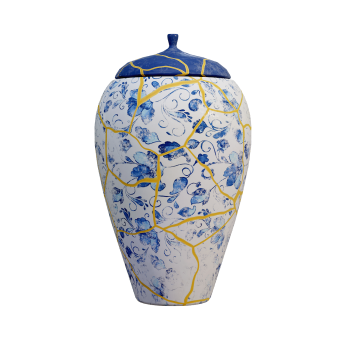
Tang colored ceramic vase

Tang colored ceramic vases are a common decoration and artwork made of ceramic materials, which are fired at high temperatures from clay and have a hard, durable, and usually glossy surface. The history of ceramic vases is long, and their origins can be traced back to ancient civilizations such as China, Egypt, and Greece. There are various types of ceramic vases, with different shapes and sizes, ranging from simple cylindrical shapes to complex sculptural forms, with rich colors and patterns. They can be monochrome or multi-color, with surface decorations including hand drawn patterns, stickers, or underglaze colors
Alabast bottle

Alabast bottle

It is a small pottery or glass container used to hold oil. Originating from ancient Egypt in the 11th century BC, it was originally a container carved from snowflake plaster, which is also the origin of the name "Alabast Bottle". Over time, this type of container began to be made using more materials besides snowflake gypsum. Most Alabast bottles have a similar shape, with a slender body and a circular bottom. Usually there is an opening with a lip at the top, and there may be small handles on both sides of the container neck.
Kero ceremonial drinking device

Kero ceremonial drinking device

In the main indigenous language of Peru, Quechua, this container is called Kero. Used to drink chicha, a beer made from corn, consumed in important public ceremonies and social events. Forms have been discovered from Ecuador to Chile, spanning over 2500 years of history. The geographical distribution and long history have proven the importance of drinking chicha in ceremonies, and it remains a core part of ritual activities and social gatherings to this day.
Frog shaped ceramic container

Frog shaped ceramic container

This frog shaped container has its body carved into a crouching posture, with a handle and water outlet on its back. Decorated with black, yellow, brown, and red paint, with horizontal black lines on the surface to represent the rough skin of frogs. The dots on the back and chin may represent the markings of the Marangon Poison Frog, named after the toxic chemicals it secretes as weapons against predators. The strong substance secreted by Poison Arrow Frog has also been used as medicine. Usually lives in rainforests, near rivers and lakes. Due to the destruction of its natural habitat, the Malan Weng Poison Frog is considered an endangered species.
Alves Magic Fountain

Alves Magic Fountain

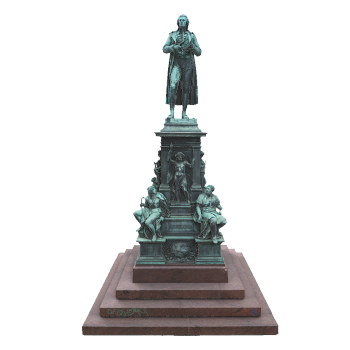
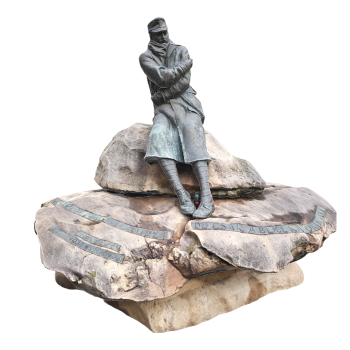
The statue is called the Arcus Magic Fountain, designed by sculptor Karl Philipp and unveiled on June 5, 1932. It is located on Eltrein Square, just above the arched riverbed of Als Creek. The statue of the quartet was melted down during World War II, recast using a plaster model in 1981, and unveiled again by city councilors in 1982. A central pedestal rises from the fountain with a circular stone basin, on which a little angel stands. Surrounding the pedestal are four bronze seated figures of musicians: John Schrammer, Paul Fibrich, Alfred Randolph, and Willie Strommel.
19th century square tin bottle

19th century square tin bottle

A square tin bottle with a screw cap. There are emblems of various families on both sides. The bottle is part of the collection of the Heiligenkreis Monastery Museum. The bottle is 25.5 centimeters high; Produced in the 19th century.
Augsburg Gorgeous Silver Vase

Augsburg Gorgeous Silver Vase

A beautifully decorated silver vase from the collection of the Heiligenkreis Abbey Museum. Handmade and hand chased vases are used to hold silk flowers. The silver vase bears the owner's mark of David Weinold, which is DW. The emblem on the vase is the Augsburg coat of arms.
Borgese vase

Borgese vase

The Borgese vase is a giant bell shaped wine vessel carved from Pantelic marble in Athens in the second half of the first century BC. This ancient Greek artwork is renowned for its intricate carvings and grand scale, featuring scenes of the Dionysus ritual, showcasing the ancient Greeks' worship of Dionysus, the god of wine. The Borgese vase was originally used for outdoor garden decoration and was later collected in the Borgese Museum, becoming one of the museum's iconic collections. It is not only an artwork, but also an important physical material for studying ancient Greek sculptures and religious rituals.
Pietro Dabano

Pietro Dabano

Pietro d'Abano, also known as Petrus de Amono (c. 1250-1315), was an Italian philosopher, astrologer, and medical professor in Padua. He was born in a small town in Italy, and his name came from here. Now he is Abanoterme. In the end, he was accused of heresy and atheism and brought before a religious tribunal. He died in prison before the end of his trial in 1315. The statue is located in the United Arab Emirates and was built in 1723.
The statue jar that blows the whistle

The statue jar that blows the whistle

It is an ancient American ceramic artwork, a double mouthed bottle with a bridge. This jar has a straight opening located at the top of one side, connected to the closed opening on the other side through a bridge like handle. The closed mouth is shaped into a human figure playing an instrument. This container is designed as a water tank that can force air through a whistle inside a chamber. When water pours out from it, the air will make a whistle. It was created around 200 BC by an unknown artist in the Salina culture of Peru.
Apulia wine vessel

Apulia wine vessel

Produced in Apulia between 400-390 BC and manufactured in Taranto (southern Italy), attributed to the birth of the painter Dionysus, possibly originating from Barry's ceramics. This huge Apulian wine vessel, originally used for mixing wine and water at banquets, seems to have been made for funerals. The scene depicts Hercules being taken to Mount Olympus by Athena's chariot after his death, marking his immortal status as a god. Dionysus was one of the leading figures in the ancient Apulian decorative style, who created intricate compositions on large vases in a rich style. It is currently housed in the Brussels Museum of Art and History in Belgium.
Erberg relief

Erberg relief

The Erberg relief is a relief of the Mount of Olives on the south side of the sturdy church of St. Michael. The colorful relief depicts Christ on the Mount of Olives, whose history can be traced back to 1510.
Concrete vase

Concrete vase

Concrete vase is a modern and practical decoration that uses concrete as the main material, showcasing a unique industrial style and modernity. This type of vase is not only sturdy and durable, but also has good texture and plasticity. Designers can create concrete vases with different shapes and styles through different molds and surface treatment techniques. They can be smooth and delicate, or rough and textured, suitable for various interior decoration styles. Concrete vases are increasingly favored by modern homes and commercial spaces due to their simple yet elegant design, as well as their ease of maintenance.
Neptune

Neptune

Neptune (Latin: Nept ū nus, English: Neptune), also known as Neptune, is a sea god in Roman mythology and revered as the god of horses, managing horse racing activities. One of the twelve main gods of Rome. Corresponding to Poseidon in Greek mythology, there is his temple in Rome, which is the world-famous Trevi Fountain. The Latin name Neptunus originates from him.
Ancient ceremonial wine vessels - Minneapolis Institute of the Arts

Ancient ceremonial wine vessels - Minneapolis Institute of the Arts

This ceremonial wine vessel is an antique dating back to the 12th to 11th centuries BC and is now housed in the Minneapolis Museum of Art. It represents the drinking culture and etiquette of ancient civilization, reflecting the social hierarchy and religious beliefs of that time. This type of wine vessel is usually used in religious ceremonies or banquets to show respect and honor. Its exquisite craftsmanship and design not only showcase the superb skills of ancient craftsmen, but also provide us with a window to understand ancient society and culture.
ParrotEffigy parrot shaped container

ParrotEffigy parrot shaped container

It is an ancient American artwork inspired by parrots. This container is shaped like a parrot, with its tail feathers cleverly designed as a practical outlet. In ancient American art, parrots held significant symbolic importance. For example, in Mexican tradition, parrots symbolize fire and the sun due to their bright feathers. This work not only showcases the creativity and craftsmanship of ancient artists, but also reflects their profound understanding and reverence for the forces of nature and the universe.
Ancient Chinese vases

Ancient Chinese vases

Chinese ancient vases are treasures of Chinese culture, with a long history and unique artistic charm. These vases are mostly made of ceramics, as well as materials such as bronze and jade, with various shapes, rich colors, and exquisite decorations. They are not only practical containers, but also works of art that showcase craftsmanship and aesthetic taste. The patterns on ancient Chinese vases are diverse, ranging from geometric shapes to flowers, birds, fish, and insects, from myths and legends to historical stories, reflecting the culture and life of ancient society. Over time, these vases have become sought after by collectors and art enthusiasts, as well as important materials for studying ancient Chinese history and culture.
Moses

Moses

This is an artwork created by Giovanni Giuliani, which is a clay sculpture model of Jupiter designed for the collection of the Heiligenkreis Monastery. The height of this work is 43.7 centimeters, created in 1720. Moses was a Hebrew teacher and leader, considered the most important prophet in Judaism, and also one of the most important prophets in Christianity, Islam, the Bah á 'í Faith, and other Abrahamic religions. According to the Bible and the Quran, Moses was the leader and legislator of the Israelites, and the prophetic author of the Five Books of Moses belongs to him.
Austrian Tourist Club 25th Anniversary Commemorative Medal

Austrian Tourist Club 25th Anniversary Commemorative Medal

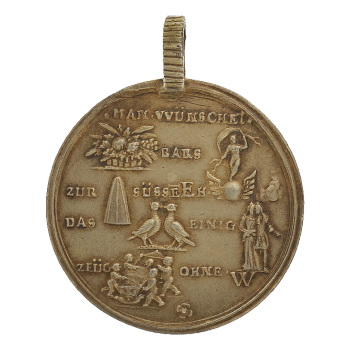
This commemorative medal is the 25th anniversary medal of the Austrian Tourist Club. The front depicts the personification of Austria, sitting in front of a landscape adorned with the Vienna emblem and the emblem of the Austrian Tourist Club. The Austrian Tourist Club celebrated its 25th anniversary in 1894. Heart and hand for the Alps. On the back, there are five grand dukes, including Archduke Karl Ludwig.
Clepsydra Water Clock - Waldpenias Museum

Clepsydra Water Clock - Waldpenias Museum

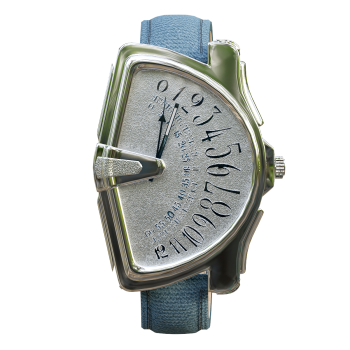
It is a timing tool invented in ancient Greece that measures time by measuring the flow of water. A ceramic water clock from the Iberian period has been discovered at the Cerro de las Cabezas archaeological site in Vald é Penias, Castile La Mancha region, Spain. This ceramic decoration features ribbon, circular, and seal patterns, and was made during the Iron Age from the 4th to 3rd centuries BC. At present, it is collected in the Valdepernias Museum and is an important physical material for studying ancient Iberian culture and craftsmanship. The Cerro de las Cabezas site is an important archaeological site for understanding the life and social structure of the Iberian people.
Bronze alloy vase

Bronze alloy vase

Antique bronze vases are a type of art with a long history, usually carefully crafted from bronze alloy. This vase not only has practical functions for flower arrangement or holding liquids, but is also often used as a decoration to showcase exquisite craftsmanship and artistic value. The design of bronze vases is diverse and may include various patterns, decorations, and carvings, reflecting the cultural characteristics and aesthetic styles of their production period. They are cherished objects by collectors and art enthusiasts, and also important windows for understanding ancient civilization craftsmanship and technology.
Iberian Colored Pottery Valdepenas Museum

Iberian Colored Pottery Valdepenas Museum

It is an important discovery at the Vald é Penias archaeological site in the Castile La Mancha region of Spain. Made in the Iron Age, approximately from the 4th century BC to the 3rd century BC, it is known for its decorative patterns of bands, circles, and seals. These painted pottery not only showcase the daily life of Iberians, but also reflect their artistic aesthetics and cultural characteristics. The pattern design is diverse, including horizontal lines, geometric shapes, and animal images, with bright colors and exquisite craftsmanship. Collected in the Valdepernias Museum, it provides valuable physical materials for studying the lifestyle, religious beliefs, and social structures of ancient Iberians
Bohemian Czech Glass Vase

Bohemian Czech Glass Vase

Bohemian Czech glass vases are renowned for their unique craftsmanship and artistic style, representing the traditional Czech glass manufacturing process. The Bohemian region, especially in the northern part of the Czech Republic, has become the center of world glass art due to its abundant silicon mineral resources and exquisite glass blowing techniques. These vases are usually hand blown and have unique colors and shapes. In terms of color, Bohemian glass is known for its deep and rich hues, such as ruby red, cobalt blue, forest green, etc., which often give people a warm and comfortable feeling.
Cloisonn é enamel three legged incense burner

Cloisonn é enamel three legged incense burner

Cloisonn é enamel is a traditional metal craft originating from China, which combines metal craftsmanship and enamel painting technology. This technique was introduced to China around the Yuan Dynasty and further developed during the Ming Dynasty. The production process involves using copper wire to create various patterns on the copper body, then filling the compartments enclosed by these copper wires with enamel paint. After multiple firing and polishing processes, the final product is colorful and exquisitely patterned. The three legged incense burner is a common form of incense burner in ancient China, characterized by three supporting legs. The production of cloisonn é enamel three legged incense burners reached a peak during the Qianlong period of the Qing Dynasty.
Antique bronze vase

Antique bronze vase

Antique bronze vases are a type of art with a long history, usually made of corrosion-resistant alloys such as bronze, and have high artistic and collectible value. These vases not only showcase the superb casting skills of ancient craftsmen, but are often decorated with exquisite patterns and decorations, reflecting the cultural characteristics and social aesthetics of the time. Bronze vases were often used in ancient times to hold wine, water, or as sacrificial offerings, and their design and decoration were often related to religious beliefs and social status at that time. Over time, these antique bronze vases have become valuable materials for studying ancient civilizations, arts and crafts, and historical cultures.
Saint Pulten Savings Bank 50th Anniversary Commemorative Medal

Saint Pulten Savings Bank 50th Anniversary Commemorative Medal

This is a medal made to celebrate the 50th anniversary of the establishment of St. Pulten Savings Bank. The diameter of the medal is 7 centimeters and it was made in 1904. On the front of the medal, there is a view of the savings bank building designed by Eugene Cener, as well as a cinnamon tree branch. The inscription reads: 'SAVE TO WORK'. On the reverse side of the medal, there are beehives and cinnamon branches. The inscription reads: "THE SAVING BANK IN ST. P Ö LTEN ON THE OCCASION OF ITS 50TH ANNIVERSARY1854-1904.
Franz Golden Wedding Commemorative Medal

Franz Golden Wedding Commemorative Medal

This commemorative medal was made to celebrate the golden wedding anniversary of Maria Theresa Frein Leibzeltern and Joseph Franz Hieronymus Prince Koloredo Mansfield. This commemorative medal has a diameter of 8.3 centimeters and was made around 1891. On the front of the commemorative medal, there is a pair of side portraits of two people with the inscription: "JOSEPHUS PRINCEPPS DE COLLOREDO MANNSFELD - MARIA THERESIA PRINCEPPS E.
Nazca period pottery jars

Nazca period pottery jars

It is a ceramic artwork from the Nazca culture period collected by the Cleveland Museum of Art, approximately made between 450 and 600 AD. This ceramic vessel comes from the Nazca region on the southern coast of Peru and belongs to the 5th to 7th centuries. It is made of colored clay board and has an overall size of 19.4 x 14 centimeters (7 5/8 x 5 1/2 inches). This work is known for its vivid sculptural decoration, showcasing the ancient Nazca people's worship of war and human heads as spoils of war, and is an outstanding representative of pre Columbian South American art.
Lekisos Ancient Greek Ceramic Bottles - Hunter Museum in Limerick

Lekisos Ancient Greek Ceramic Bottles - Hunter Museum in Limerick

It is a container used in ancient Greece to hold oil and is often used as burial objects in tombs. It has a circular base, a high and wide body, wide shoulders and narrow bottom, a high neck, and a deep opening that extends outward. There is a high and narrow handle on the bottle that extends all the way to the shoulder. The bottle was originally painted with a pattern, but now it is severely worn and difficult to recognize. The production date is approximately the 4th century BC. The Hunter Museum currently exists in Limerick.
St. Mary Magdalene

St. Mary Magdalene

St. Mary Magdalene is a group of cross sculptures located in Perkhtoltsdorf Hohberg, Austria, which includes a statue of St. Mary Magdalene. This group of cross sculptures can be traced back to the early 18th century. The assistant characters surrounding the 5.25-meter-high cross were replaced with replicas after being repeatedly destroyed. St. Mary Magdalene is an important figure in the New Testament, one of Jesus' loyal followers and the first person to see him after his resurrection. In art, she is often depicted as a repentant sinner who has spent many years in the wilderness.
French painted ceramic pilgrim bottle - Limerick Hunter Museum

French painted ceramic pilgrim bottle - Limerick Hunter Museum

It is a product of 17th century French culture, made of pottery coated with tin glaze. It is currently housed in the Limerick Hunter Museum. The surface is coated with white glaze, equipped with four handles and a slender neck. It is decorated in green, blue, and yellow, with a bishop or saint depicted holding a scepter and wearing a halo, blessing. He stood in front of the background of two volcanic hills. The scene is surrounded by a scroll frame. The rest of the bottle is decorated with flowers, leaves, and linear patterns. It showcases the exquisite craftsmanship of 17th century French ceramics and also reflects the artistic expression of religion and natural landscapes at that time.
The Abyss

The Abyss

The Abyss "(L'Ab î me) is a marble statue that is 180 centimeters high, 260 centimeters wide, and 120 centimeters deep. This statue was purchased at a salon exhibition in 1901 and is now housed in the Osay Museum. Just Becquet was a French sculptor who was born in Besan ç on, Doubs, France in 1829 and passed away in Paris in 1907. His father was a goldsmith, and Beck initially received a classical education at a school in Besan ç on, earning a Bachelor of Philosophy degree before registering for study at a local art school.
Jupiter

Jupiter

This is an artwork created by Giovanni Giuliani, which is a clay sculpture model of Jupiter designed for the collection of the Heiligenkreis Monastery. The height of this work is 43.7 centimeters, created in 1720. Jupiter is the main god in Roman mythology, in charge of the sky and thunder. In this work, Jupiter is depicted with an eagle at his feet as a symbol of power. There is an inscription on the back of the eagle's wings: 'Johan Giullian (i) Ficit 1720'. However, the upper part of the eagle's beak and a portion of its base have already broken.
Lizard patterned pottery jar

Lizard patterned pottery jar

This pottery jar features a flanged design and a central lizard shaped pattern, belonging to the Lagarto style, which also includes negative and cookie textured ceramics. Lagarto style ceramics are known for their tricolor painted decorations, with black and red on a white or beige background. This style includes a variety of ceramic items such as whistles, pots, jars, as well as sculptures in humanoid and animal forms, showcasing the aesthetic and cultural characteristics of the society at that time.
Tonosi style pottery jar

Tonosi style pottery jar

It was produced in the region of Dakolai between 250 and 500 AD. This pottery style is characterized by three colors of decoration: red, black, and white. It usually features human figures, animals, or natural elements as decorative themes, separated by stripes, lines, or dot patterns. The typical types of this style are plates or double walled jars. This pottery jar displays a rich decoration, with the main pattern being a human form of a bird, whose features suggest it may be a heron or flamingo.