Exquisite Stone Carvings on Temple Walls in Taiwan (Part 2)

Exquisite Stone Carvings on Temple Walls in Taiwan (Part 2)

The stone carving art on the walls of Taiwanese temples is a traditional craft with a long history, integrating religious beliefs, cultural arts, and local characteristics. Carving usually uses locally unique stones from Taiwan, such as marble from Hualien and black stone from Taichung, which are carefully selected and processed. The content is rich and colorful, including Buddhist stories, myths and legends, historical figures, classic poems, and various auspicious patterns. The carving craftsmanship is exquisite, and the craftsmen use traditional manual skills. Each stone carving embodies the wisdom and sweat of the craftsmen, demonstrating their persistent pursuit of art and respect for traditional culture.
Chinese Kirin Statue

Chinese Kirin Statue

The Qilin is a auspicious beast in ancient Chinese mythology, symbolizing auspiciousness, peace, and prosperity. In traditional culture, it occupies a pivotal position and is known as one of the "Four Spirits" along with the dragon, phoenix, and turtle. There are various forms of imagery, some described as sheep heads, wolf hooves, and domes, with colorful bodies, while others are described as bodies resembling musk deer, tails resembling dragon tails, covered in dragon scales and horns. As a traditional Chinese handicraft, it showcases the charm of Chinese traditional culture, with exquisite carving skills and unique design. It has rich cultural connotations, occupies an important position in folk beliefs and artistic creation, carries the wisdom and craftsmanship of the Chinese nation, and has become a treasure of traditional Chinese culture
Chinese Porcelain Salt Bottles - Krakow Salt Museum

Chinese Porcelain Salt Bottles - Krakow Salt Museum

It is a Chinese porcelain item collected in the Krakow Salt Museum. It is a representative of early white blue porcelain, decorated with cobalt blue, and is a rare form of Far Eastern porcelain imported to Europe. Created during the Kangxi reign of China (1662-1722), it is an outstanding representative of ancient Chinese porcelain art. The porcelain of the Kangxi period is famous for its exquisite craftsmanship and unique aesthetics. This porcelain not only showcases the traditional craftsmanship of Chinese porcelain, but also reflects the cultural exchange and trade between China and Europe at that time.
Chinese bronze incense burner

Chinese bronze incense burner

It is a traditional Chinese incense burner, not only a religious ritual tool, but also an important component of Chinese traditional culture. Usually made of bronze, it has high artistic and collectible value. Bronze incense burners come in various shapes, including tripod, round cauldron, square cauldron, etc. Their surfaces are often carved with exquisite patterns, symbolizing auspiciousness and sacredness. In ancient times, bronze incense burners were mainly used for religious ceremonies, sacrificial activities, and the daily lives of the court and nobles. People express their admiration for the gods and pray for their protection by burning incense. It also reflects the ancient Chinese people's reverence for the nature of heaven and earth and their yearning for a better life.
Exquisite stone carvings on temple walls in Taiwan

Exquisite stone carvings on temple walls in Taiwan

The stone carving art on the walls of Taiwanese temples is a traditional craft with a long history, integrating religious beliefs, cultural arts, and local characteristics. Carving usually uses locally unique stones from Taiwan, such as marble from Hualien and black stone from Taichung, which are carefully selected and processed. The content is rich and colorful, including Buddhist stories, myths and legends, historical figures, classic poems, and various auspicious patterns. The carving craftsmanship is exquisite, and the craftsmen use traditional manual skills. Each stone carving embodies the wisdom and sweat of the craftsmen, demonstrating their persistent pursuit of art and respect for traditional culture.
Chinese camphor wood box

Chinese camphor wood box

It is a traditional furniture known for its unique fragrance and insect repellent properties. Usually made from the wood of camphor tree, which is a widely distributed evergreen tree in China. This type of wood contains natural camphor components, which have the characteristics of insect prevention, mold prevention, and deodorization. The design is usually very exquisite, and the surface may be carved with various traditional patterns such as dragons, phoenixes, flowers, birds, etc. These patterns are not only beautiful, but also full of auspicious meanings. In traditional Chinese culture, it is not just a piece of furniture, but also carries the memories and emotions of the family. Many families pass on camphor wood boxes to the next generation as part of their family inheritance.
Beijing carved lacquer wooden box - Yagailong University Museum

Beijing carved lacquer wooden box - Yagailong University Museum

Beijing carved lacquer craftsmanship, as one of the "Three Treasures" of Chinese arts and crafts, is renowned alongside Hunan embroidery and Jingdezhen porcelain in Jiangxi for its unique skills and exquisite carving. The art of carved lacquer originated in Yunnan and Sichuan in southern China and was widely known during the Tang and Song dynasties. In the Yuan Dynasty (1271-1368), it was introduced to Beijing, and many skilled craftsmen in lacquer carving migrated here as Beijing became the capital. The Jagiellonian University Museum houses a carved lacquer box from the Qianlong period of the Qing Dynasty, which embodies the exquisite craftsmanship and pursuit of beauty of royal workshops in the Qing Dynasty. It is a precious heritage of traditional Chinese arts and crafts.
Chinese Qing Dynasty Incense Burner - Jimei National Museum of Asian Art

Chinese Qing Dynasty Incense Burner - Jimei National Museum of Asian Art

It is a utensil used for burning spices, commonly used in religion, worship, and daily life for incense burning. During the Qing Dynasty in the 18th century (1644-1912), this type of incense burner was widely produced and used in China. It is a copper, gilded, and enamel decorated artwork. The decorative theme includes the head of a glutton and the image of a lion, which have symbolic significance in ancient Chinese art. Gluttons are usually associated with power and mysterious power, while lions symbolize majesty and courage. It is currently housed in the National Museum of Asian Art in Jimei, France, showcasing the exquisite metal and enamel craftsmanship of the Qing Dynasty in China.
Bird shaped incense burners from the Six Dynasties period in China

Bird shaped incense burners from the Six Dynasties period in China

Also known as bird shaped aromatherapy or bird shaped incense burners, it is an ancient tool used for burning incense. Usually made of metal materials such as bronze, it mimics the shape of birds and has unique artistic beauty and practical functions. In Chinese history, the bird shaped incense burners during the Six Dynasties period (220-589 AD) are particularly famous. During this period, incense burners not only pursued exquisite and meticulous design, but also reached a considerable level of craftsmanship. The production and use are closely related to the religious beliefs and cultural customs of ancient China. In Buddhist rituals, incense burners are often used for worship and worship, with cigarettes swirling around them, symbolizing the devotion of believers and their reverence for the Buddha.
Betel Nut Scissors - Shevelin Udila Museum of Ethnology

Betel Nut Scissors - Shevelin Udila Museum of Ethnology

Betel nut scissors, also known as kacip, are one of the collections of the renowned Polish zoologist Professor Mihaw Szczyrzky. He lived in Java from 1907 to 1908, located in the famous Buetenzor Botanical Garden (now known as Bogor). He was interested in Javanese culture and brought many ethnographic exhibits back to his homeland Poland. This is a tool specifically designed for cutting nuts from betel nut and palm trees. Now housed in the Shevelin Udila Museum of Ethnology in Krakow, Poland, it serves as a witness to cultural exchange and fascination with the Javanese way of life in the early 20th century.
Japanese antique lacquer box

Japanese antique lacquer box

It is a unique artwork with Asian style, usually used to store tea or other precious items. Known for its exquisite craftsmanship and unique cultural significance. It is usually made of high-quality wood and coated with multiple layers of paint on the surface. After careful polishing, it presents a smooth texture and deep colors. Decorations are usually very intricate and may include traditional patterns, landscape paintings, or calligraphy, reflecting the creator's superb skills and ultimate pursuit of details. Antique lacquer boxes are highly favored by collectors due to their historical value, artistic value, and scarcity. Not only a collection, but also a window to understand and appreciate traditional Asian art and crafts.
Japanese Peony Ceramic Container - Cleveland Museum of Art

Japanese Peony Ceramic Container - Cleveland Museum of Art

It is a porcelain piece created by Seif ū Yohei III (Japan, 1851-1914), approximately made in 1914. Green glaze was used, and molding and carving techniques were employed in the design. This porcelain is collected by the Cleveland Museum of Art and was a gift donated by James and Christine Heusinger. It showcases the exquisite craftsmanship and aesthetic characteristics of Japanese porcelain art. Not only is it a practical water container, but it is also an exquisite artwork. The peony pattern on it symbolizes wealth and prosperity, reflecting the pursuit of beauty and appreciation of natural beauty in Eastern culture
A pile of old Japanese coins known as "Kan'ei Tongbao"

A pile of old Japanese coins known as "Kan'ei Tongbao"

It is an important currency in the early Edo period of Japan (1603-1868), named after the era name "Kan'ei" at that time. This type of coin was first minted in the third year of Kan'ei (1626) by the Tokugawa shogunate in order to standardize the monetary system and maintain sufficient supply of copper coins. The casting of Kan'ei Toho marks an important period in the history of Japanese currency, with a huge amount of casting, a long casting time span, numerous versions, and materials including copper, iron, etc. Over time, the Kan'ei Tongbao gradually withdrew from circulation, but it held an important position in the currency history of Japan and even East Asia.
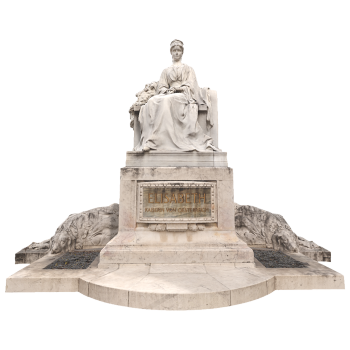
The statue of Saint Elizabeth in St. Margaret's Church

The statue of Saint Elizabeth in St. Margaret's Church

This is a statue of St. Elizabeth erected in front of the St. Margaret Parish Church in Marchegg in 1953. She was the daughter of King Andrew II of Hungary and spent her childhood in Bratislava Castle. Her husband was Louis of Thuringia, and after his death, Elizabeth swore to live in poverty. She devoted her life to God, the sick, and the poor. Elizabeth was officially canonized as a saint in 1235.
St. John the Baptist

St. John the Baptist

Information about the statue of St. John located in Heiligenkreuz on the Baroque style Fourteen Hardroads. The statue of St. John holds a book and a lamb. Production began in 1731. John the Baptist was a Jewish repentance preacher who appeared around 28 AD in Galilee and Judea. He works in Palestinian Judaism and also has followers in Jewish Diaspora.
Saint Joachim

Saint Joachim

The statue of St. Joachim is located in the Baroque style of the Fourteen Hardroads in Heiligenkreuz. The statue is located on fourteen winding roads in Heiligenkreis. Production began in 1731. According to several pseudo canonical Gospels from the 2nd to 6th centuries, Joachim was Mary's father and therefore the grandfather of Jesus Christ. Joachim is revered as a saint in Catholicism, Eastern Orthodoxy, and the Church of England. The Heiligenkreis Monastery is an important religious and cultural landmark in Austria, renowned for its rich history and religious art works.
Saint Florian

Saint Florian

Saint Florian is the patron saint of firefighters, construction workers, and people affected by fires. He is often depicted wearing Roman or medieval military attire, holding a bucket of water to pour into burning buildings, symbolizing the legend of him extinguishing the entire town's fire with a bucket of water. The statue of Saint Florian was common in fire stations in Austria and Bavaria in the 18th century, and was often depicted as the guardian deity of firefighters.
Saint Elizabeth

Saint Elizabeth

This is the statue of Saint Elizabeth in Bratislava Castle. Elizabeth was a saint from Hungary, born in 1207 and died in 1231. She was the daughter of King Andrew II of Hungary and spent her childhood in Bratislava Castle. Her husband was Louis of Thuringia, and after his death, Elizabeth swore to live in poverty. She devoted her life to God, the sick, and the poor. Elizabeth was officially canonized as a saint in 1235.
Hermes and Dionysus

Hermes and Dionysus

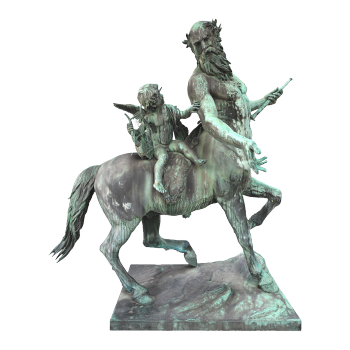
The sculpture "Hermes and Dionysus" at the Danube Art Museum was created by the French artist Arman Pierre Fernandes Arman (1928-2005). The creation of the museum was initiated by Vincent Polakovic, who received financial support from Dutch art collector and entrepreneur Gerard Murenstein. Arman is a renowned French artist known for his "accumulated art", often exploring the combination of form, color, and material in his works.
Ancient Japanese Warrior Armor - Spanish National Army Museum

Ancient Japanese Warrior Armor - Spanish National Army Museum

Also known as Japanese armor, it was a type of armor in Japan during the Edo period (1603-1868). It is part of the collection of Romero Ortiz, and its 1888 catalog is related to the background of Daniel Dato and the Philippine War. In ancient Japan, warriors or samurai were military elites who served daimyos or feudal lords. Their armor, as the foundation of their defensive clothing, consisted of different components covering the entire body, which evolved into forms of great display and precious decoration, especially during the Edo period. It is currently housed in the National Army Museum of Spain.
Hercules

Hercules

This statue is a statue of the Greek hero Hercules, located in the courtyard of Feldsburg. Hercules is a hero in Greek mythology, known for his extraordinary strength and heroic twelve acts of labor. After completing these arduous tasks, he was bestowed with the honor of God. Hercules in the statue is depicted wearing the skin of a Nemean lion and holding a club. The skin of the Nemean lion is the first of his twelve tasks, and the stick is his signature weapon. The image of Hercules is often used in art and culture to symbolize strength, courage, and indomitable spirit.
Roman vase

Roman vase

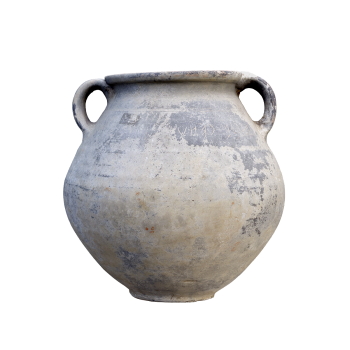
They are common ceramic containers in ancient Roman civilization, not only daily necessities, but also symbols of art and culture. These vases are usually made of clay and fired at high temperatures, possessing strong and durable characteristics. The design of Roman vases is diverse, ranging from simple practical shapes to complex decorative shapes, reflecting the aesthetic taste and craftsmanship level of Roman society. Decorative patterns may include mythological scenes, historical events, geometric shapes, or plant patterns, which are not only aesthetically pleasing but also convey the religious beliefs and social values of the time. Some Roman vases are used to store liquids, while others are used for decoration or as burial objects at funerals.
The statue of Hera in the garden of Lednica Castle

The statue of Hera in the garden of Lednica Castle

The statue of Hera located in the garden of Lednica Castle. In Greek mythology, Hera is Zeus' wife and sister, belonging to one of the twelve Olympian gods. Hera in the statue holds a scepter, and in Greek mythology, Hera is the goddess of marriage and family, as well as the protector of women. She is known for her jealousy and revenge for Zeus' infidelity, and is also the queen of gods and humans. In art works, Hera is often depicted as a majestic figure wearing a veil and holding a scepter, symbolizing her authority as a goddess. The gardens of Ledernich Castle are a historic place known for their romantic and picturesque landscapes.
Hans Christian Andersen

Hans Christian Andersen

This is the Hans Christian Andersen Memorial in Bratislava. The creator was created by sculptor Tibor Batfay. In 2006, it was unveiled to commemorate the 200th anniversary of Hans Christian Andersen's birth. This monument showcases the poet Hans Christian Andersen and some of his fairy tale characters. Hans Christian Andersen is the most famous poet and writer in Denmark. Through his fairy tales such as "The Emperor's New Clothes," "The Little Mermaid," "The Steadfast Tin Soldier," or "The Pea Princess," he became a world-renowned fairy tale writer. His works are not only popular and admired in Denmark, but also globally.
Statue of Count Nicolas Salem

Statue of Count Nicolas Salem

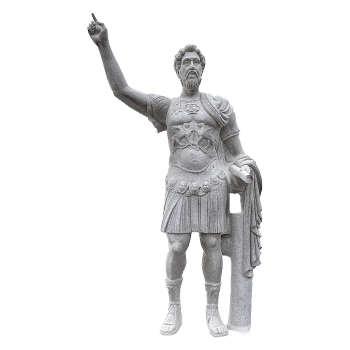
The statue of Count Nicholas Salm is located on the City Hall Square in the first district of Vienna. The Count was wearing armor with a helmet placed at his feet. Created in 1867. The creator is Matthias Purkathofer. Count Nicolas Salm (1459-1530) was a general during the Renaissance period. The most important achievement was that in 1529, he successfully commanded the defensive war of Vienna against the siege of Türkiye. He was one of the commanders in the early stages of the First Ottoman Habsburg War. During the first siege of Vienna by Türkiye in 1529, he was named Earl of the Neuburg Empire in the same year.
Anton Menger

Anton Menger

Anton Menger's tomb, as well as the Vienna Central Cemetery. Anton Menger (1841-1906) was a jurist and social theorist. Menger's paper was proposed in the context of the constantly changing social order since the mid-19th century, marked by the economic crisis and social issues of 1873, seeking answers to liberal policies and striving for more social justice. Richard Coffin designed this tombstone. The tomb of Anton Menger is not only a commemoration of this jurist and philosopher, but also a symbol of social change and political thought development in the late 19th century.
Ferdinand Raimonde

Ferdinand Raimonde

Ferdinand Raimonde was born in 1790 and passed away in 1836. He was an Austrian actor and playwright. Along with Johann Nestorius, he is a major representative figure of the Old Vienna Folk Theatre. The monument was designed by Franz Vogel. The unveiling date was June 1st, 1898. Raymond sat in a corner of the bench, with his right arm resting on the backrest. I hold a theater brochure in my left hand. His gaze looked into the distance, as if inspired by the winged Muse on the rocks behind him. Originally located in front of the German People's Theatre. Moved to its current location in 1938. It was repaired after the war damage in 1947.
Edo Scene Screen - Edo Tokyo Museum

Edo Scene Screen - Edo Tokyo Museum

This screen painting collected by the Edo Tokyo Museum depicts Edo (now Tokyo) before the Great Fire of the Ming Dynasty in 1657. In addition to depicting the scenery of Edo, the painting also showcases daily life in Edo and specifically depicts traditional activities related to General Tokugawa Iemitsu, such as the groom's head ceremony in Kawagoe and eagle hanging and pig hunting activities in the suburbs. These activities reflected the social culture and the life of the samurai class at that time. There are various speculations in the academic community about the creation time of this screen painting, but there is still no consensus.
Bust of Baron William I Rogdorf

Bust of Baron William I Rogdorf

Baron Wilhelm I Rogdorf (1481-1541), as the chief battlefield commander, suffered fatal injuries during the siege of Ofen (now part of Budapest) in 1571. Created by artist John Baptiste Fisler, they used zinc casting techniques to create these monuments. This material was chosen at the time for durability considerations. As a historical figure, Baron William I Rogdorf's contributions and sacrifices in military affairs have been permanently recorded through the hands of these artists, becoming an object of understanding and commemoration for future generations.
Trajanas Coin

Trajanas Coin

This is an AS coin with Trajan printed on it, minted in Rome and used for Syria. On the front of this coin, there is a portrait of Trajan. His portrait is facing to the right, and when viewed from the back, there is light shining on the portrait and it is covered by a cloak. Next to the avatar is the inscription "IMP CAES NER TRAIANO OPTIMO AVG GER", which is Latin and means "Supreme Commander, Caesar, Nilva Trajan, the best emperor, conquered the Germanic people". Trajan, the second emperor of the Antonic dynasty in ancient Rome, was one of the Five Wise Emperors of Rome and reigned from 98 to 117.
Adam Smith

Adam Smith

The statue of Adam Smith located at the entrance of the Vienna Business School in the first district of Vienna was erected to commemorate this Scottish moral philosopher and philosopher of the Enlightenment era. Adam Smith was born in 1723 and passed away in 1790. The main work is' The Wealth of Nations', first published in 1776, which achieved great success and was quickly translated into multiple languages. Adam Smith is considered the father of modern economics, and his ideas have had a profound impact on later economists and economic policies. He emphasized the importance of market mechanisms and free competition, believing that these are key factors in improving production efficiency and economic growth.
Crane and Snake from the Warring States Period in China - Cleveland Museum of Art

Crane and Snake from the Warring States Period in China - Cleveland Museum of Art

It is a painted wooden carving from 475 BC to 221 BC, during the Warring States period of China, in the state of Chu (approximately 1046 BC to 223 BC). This work is said to come from Changsha, Hunan Province, China. Made of lacquered wood and using multi-color painting technology. Currently housed in the Cleveland Museum of Art, it was acquired by J. in 1938 H. Purchased by Wade Fund. Not only does it showcase the exquisite lacquerware craftsmanship and painting art of ancient China, but it also reflects the cultural characteristics and aesthetic style of the Chu state at that time, making it a valuable material for studying the history of ancient Chinese art.
Triangle Double Dragon Wedding Vase

Triangle Double Dragon Wedding Vase

Chinese vases are not only elegant and exquisite in shape, but also highly distinctive in decorative arts. They are usually painted with patterns such as landscapes, flowers, birds, and figures, reflecting the aesthetic taste and painting skills of ancient China. There are many types of glazes and glazes for Chinese vases, from the famous blue and white porcelain of the Ming Dynasty to the celadon glaze of the Song Dynasty. Each color and glaze reveals its era and dynasty. As an important part of ancient Chinese civilization, Chinese vases not only showcase the luxury of ancient Chinese society and the vitality of the Maritime Silk Road, but also witness the development of Chinese porcelain making techniques.
Martin Kuchin

Martin Kuchin

Martin Kuku čí n, whose real name is Matej Benc ú r, is a Slovak writer, playwright, journalist, and doctor. Martin Kuchin's life and work experience reflects the life trajectory of many Central European intellectuals and professionals from the late 19th century to the early 20th century, who left their hometowns for various reasons and sought better life and work opportunities in other countries and continents.
Marian Pillar

Marian Pillar

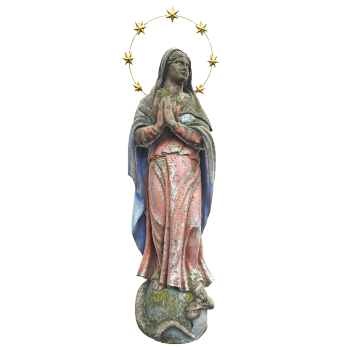
The Marian Column is a common monument in Central Europe during the Baroque period, used to express admiration and gratitude for the Virgin Mary. These pillars are usually decorated with elaborate decorations, with a statue of the Virgin Mary at the top. The Marian Column, established in 1736, was not only a reflection of religious beliefs at the time, but also an important symbol of local community culture and history. The establishment of such monuments is often related to local religious festivals, celebrations, or events.