Esquifo Ancient Greek Ceramic Containers - Metropolitan Museum of Art

Esquifo Ancient Greek Ceramic Containers - Metropolitan Museum of Art

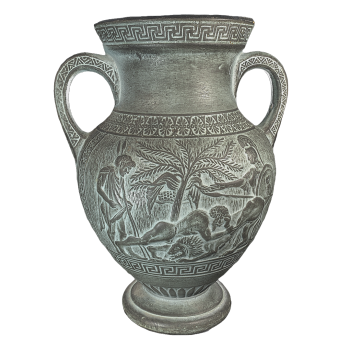
It is an ancient Greek container with a deep bowl, wide mouth, and handles on both sides. A cup used for drinking liquids. Originating from Attica region, it was made around 500 BC. Belonging to the Athenian painters, the scene depicts two male characters engaged in a Greek wrestling competition called "pancr á tio", with the other two watching as spectators or coaches. It is currently collected at the Metropolitan Museum of Art.
Ganymede Ascending to Heaven

Ganymede Ascending to Heaven

This is a sculpture located in Austerlitz Castle Park, depicting scenes of Jupiter and Ganymede. Jupiter embraced Ganymede and led him to heaven. At his feet was Cupid, with a quiver filled with arrows of love, and an eagle holding a beam of lightning in its claws. This statue carved from sandstone was created by Giovanni Giuliani in 1702. Jupiter is the main god in Roman mythology, in charge of the sky and thunder. Ganymede was the prince of Troy, chosen by Jupiter to become the god of wine among the gods, and thus transformed into an eagle and brought to heaven by Jupiter. Cupid is the goddess of love in Roman mythology, and his arrows can make people fall in love.
Enochoe Ancient Greek Ceramic Wine Vessels - Louvre Museum

Enochoe Ancient Greek Ceramic Wine Vessels - Louvre Museum

It is an ancient Greek wine vessel, named after the Greek words oinos (wine) and kheo (pour), meaning "pouring wine vessel". The feature is a wide mouth, usually in the shape of a clover, with a deep mouth and a thick vertical handle at the back. Based on its size and decoration, it can be inferred that its main function is to hold liquids, most likely wine. The place of origin is Mileto, manufactured around 600 to 575 BC. The decoration includes blooming lotus flowers and flower buds, as well as goat and rose patterns. Showcasing the exquisite craftsmanship of ancient Greek art. Currently housed in the Louvre Museum
Joseph Ressel Memorial

Joseph Ressel Memorial

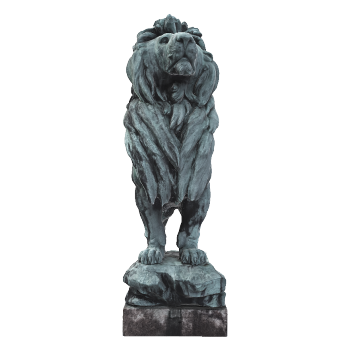
This is the Joseph Reissel Memorial located in the eponymous park in the fourth district of Vienna. This monument displays a bronze statue of Reysol, located on a stepped pedestal. This monument was created by Anton Dominik Fernkorn in 1863 and unveiled on January 18, 1863. Joseph Ressel was one of the inventors of ship propellers, and together with John Erickson, Francis Pettit Smith, Robert Fulton, and David Bushnell, he brought it to a stage of technological maturity.
Antique Chinese Vase

Antique Chinese Vase

Chinese vases are outstanding representatives of traditional Chinese craftsmanship, usually made of materials such as ceramics, jade, lacquerware, or metal, with a long history and profound cultural heritage. These vases are not only elegant and exquisite in shape, but also highly distinctive in decorative arts, often depicting patterns such as mountains, waters, flowers, birds, and figures, reflecting the aesthetic taste and painting skills of ancient China. The production skills of antique Chinese vases are exquisite, especially the porcelain of the Ming and Qing dynasties, such as Jingdezhen's blue and white porcelain, pink porcelain, etc., which are famous for their delicate painting, rich colors, and unique shapes.
L é cito Ancient Greek Ceramic Container - Metropolitan Museum of Art

L é cito Ancient Greek Ceramic Container - Metropolitan Museum of Art

It is a container used in ancient Greece to store oil, especially olive oil. This type of container typically has a slender body, a handle connecting the neck and body, and a narrow mouth without a pouring port. In ancient Greek culture, it was not only a daily necessity, but also commonly used as burial objects. Now collected in the Metropolitan Museum of Art, it is a red painted pottery belonging to the painter Tithonus, made around 480 BC. The scene depicts Athena holding a spear and helmet, showcasing the exquisite craftsmanship of ancient Greek art.
John the Baptist

John the Baptist

The artwork created by Giovanni Giuliani is a clay sculpture of John the Baptist sitting in the collection of the Heiligenkr ö tz Monastery. The height is 27.5 centimeters, created in 1733. John the Baptist is an important figure in the New Testament, who prophesied the arrival of Jesus and baptized him in the Jordan River. John the Baptist is depicted sitting with a lamb to his left. The lamb usually represents Jesus in Christian symbolism, as Jesus is known as the "Lamb of God" and was sacrificed for the sins of humanity. Giovanni Giuliani is an Italian sculptor active in Heiligenkreis, Austria.
Calix Ancient Greek Shallow Bowl - Madrid

Calix Ancient Greek Shallow Bowl - Madrid

It is a type of liquid used in ancient Greece for drinking, usually for drinking wine, and is commonly seen in banquets. This container is characterized by two horizontal side handles and a large-diameter shallow bowl. The Calix created by the "Hipocontista" painter is classified as a "handleless cup". This Calix depicts scenes in Greek mythology where Pelops and Hippodamia are pulled by winged carriages, and Ennomarus and Myrtilos are pulled by another carriage. Made around 520-510 BC. Currently collected in Madrid.
Isis Fountain

Isis Fountain

This is the Aess Fountain located in the 8th district of Vienna, which was built in 1833. The fountain consists of a four sided base with a lion's head spraying water. The base rises from an eight sided cast iron basin decorated with rose patterns. It began supplying water in 1804, mainly for the suburbs at that time. Inscriptions are attached to both the front and back of the base. At the top is a statue of Isis. This fountain was built to commemorate the opening of the Albertine water pipeline. Isis was a goddess in ancient Egypt, known in Egyptian mythology as the goddess of magic, childbirth, death, and resurrection.
Isaac

Isaac

This is a clay sculpture model with Isaac as the theme designed for the Cross Road Station at Heiligenkreuz Abbey Museum. The height of this artwork is 28.7 centimeters, created between 1740-1745. In this work, Isaac is depicted as completely naked except for a cloth around his waist. He held a bundle of wood in both hands and placed it on a tree stump. Next to it is a burning brazier.
Anfu Lagu Greek Ceramic Container - Baltimore

Anfu Lagu Greek Ceramic Container - Baltimore

It is a container from ancient Greece, named after the Greek words "Amphi" (meaning "both sides") and "Pero" (meaning "to carry"). This container has two vertical handles on each side, connecting the bottle mouth or neck to the bottle body. It is mainly used for storing and transporting solids and liquids, especially closely related to the transportation of wine and olive oil. In the Attica region around 400 to 375 BC, an Athenian painter created an artwork depicting the struggle between Poseidon and Athena for Attica land. This work is currently stored in Baltimore.
Saint Peter Verona

Saint Peter Verona

St. Peter Verona was a 13th century Italian Catholic priest, a Dominican monk, and a famous preacher. He served as an interrogator in Lombardy, but was later killed by assassins. 11 months after his death, he was canonized as a Catholic saint, the fastest canonization in history. It was created by Gioan Pietro Giuliani. Giovanni Pietro Giuliani was an Italian Austrian plaster sculptor and sculptor.
Saint Neopomouc

Saint Neopomouc

St. Nepomuk is a respected Czech saint and local idol of Prague. He was fatally thrown into the Vltava River by Wenceslaus IV for refusing to disclose Maria von Trak's confession. It is said that when Nepomok fell into the water, five stars appeared in the sky. Therefore, Nepomuk is often depicted as a halo of five stars surrounding his head. Due to his martyrdom, Nebomok is regarded as a guardian saint to prevent drowning and floods.
Hidria Ancient Greek Ceramic Container - Paul Getty Museum

Hidria Ancient Greek Ceramic Container - Paul Getty Museum

Greek for ὑδρία, it is an ancient Greek ceramic container primarily used for storing and transporting water. The characteristic of this ceramic is that it has three handles: two horizontal side handles for lifting the container, and a vertical rear handle for pouring the contents. Around 550 BC, a hidria was produced in the Attica region, depicting scenes of Dionysus, Ariadne, and Poseidon. This artwork is currently housed in the Paul Getty Museum. This ancient Greek ceramic work not only showcases the craftsmanship of the time, but also reflects Greek mythology and religious beliefs.
CopticVessel Ancient Egyptian Coptic pottery - Metropolitan Museum of Art

CopticVessel Ancient Egyptian Coptic pottery - Metropolitan Museum of Art

It is a pottery from the Coptic period in Egypt, belonging to the cultural product of the Byzantine Egyptian period. Produced in the 4th to 7th centuries, specifically in the Kaga Oasis of Egypt. Made of homemade materials, it belongs to the category of ceramic artworks. This artwork is currently housed in the Metropolitan Museum of Art and is part of the medieval art and monastery collections. It showcases the artistic style and ceramic production techniques of the Copts at that time, providing valuable physical evidence for us to understand the culture and lifestyle of this period.
Antique brass vase

Antique brass vase

Antique brass vases are decorative items with historical value and artistic charm. Brass material, due to its durability and the exquisite craftsmanship of these vases, such as carving, hollowing out, or hammering, demonstrates superb metalworking skills. The design of brass vases may include classical patterns, geometric patterns, or natural elements, reflecting the artistic styles and aesthetic characteristics of different historical periods. The unique luster is highly favored, and over time, the brass surface gradually forms a charming antique bronze color, adding a retro charm.
L é cito Ancient Greek Ceramic Small Bottle Container - Yale University

L é cito Ancient Greek Ceramic Small Bottle Container - Yale University

It is a term used in ancient Greece to refer to various types of small bottles, which share the common feature of being used as containers for holding oil. It is a jar with a narrow bottleneck and a deep mouth. This container is not only used to store oil, ointment and perfume in the family, but also the l é cito decorated with a white background is used as a sacrifice to the dead. This work was produced in the Attica region around 500 BC and belongs to the Athenian painter. The scene depicts the sea god Poseidon riding a seahorse. Now collected at Yale University.
P í xie Ancient Greek Small Container

P í xie Ancient Greek Small Container

It is a small container from ancient Greece, usually used to store personal belongings. During the period of 490-480 BC, this container was decorated with the technique of "black pattern". It depicts a mythological scene of Athena and Poseidon competing for land in Attica. In the scene, Kekropus serves as a witness, accompanied by two knights, while a female figure runs towards the olive tree created by Athena. This scene not only showcases the mythological stories of ancient Greece, but also reflects the identity and cultural values of the Athenians.
Saint Neopomouc

Saint Neopomouc

This statue of St. Nepomuk is located in Tribuswinkel, Lower Austria, Austria. This Baroque style statue holds a cross and a palm branch of a martyr, standing on a pedestal with a relief of the coat of arms of the Walsegg family, an imperial count. This statue can be traced back to 1722. Saint Nebomok was a Czech saint who was ordered to drown in the Vltava River by Bohemian King Wenceslas IV in 1393.
Quadrupedal pottery jar

Quadrupedal pottery jar

This ceramic style is characterized by three color painted decorations (black and red on a white or beige background). The Lagarto style pottery has a wide variety of types, including whistles, pots, jars, as well as sculptures in human and animal forms, such as the stylized quadrupedal animal image shown in this example. These pottery not only have practical functions, but also reflect the aesthetic taste and cultural characteristics of the society at that time.
Ancient pottery jars in Panama

Ancient pottery jars in Panama

It is a type of ceramic container commonly found in Panamanian archaeology, whose history can be traced back to multiple cultural stages before Columbus. These pottery pieces are renowned for their diverse shapes, decorations, and uses, including for storage, cooking, or ceremonial purposes. It usually has unique aesthetic features, such as three legged design, circular base or mouth closure, and rich decorative patterns, which may include geometric shapes, shaping and carving of human or animal forms. These ceramic works not only reflect the skills of ancient craftsmen, but also reflect the culture and religious beliefs of the society at that time.
Seal of the coat of arms of the Russian Empire

Seal of the coat of arms of the Russian Empire

This seal is known as the "Great Seal of the Russian Empire", with a diameter of about 4 centimeters and a height of about 7.8 centimeters. Its seal field is engraved with the emblem of Russia, and below it is a line of inscriptions written in Cyrillic letters. This seal is made of wood and brass.
Seal of the Great Emblem of the Kingdom of Prussia

Seal of the Great Emblem of the Kingdom of Prussia

This is a seal with the emblem of the Kingdom of Prussia engraved on it. There are 4 central shields and 48 main domain shields on the coronal shield, with 2 male shield holders. The inscription reads "FRIEDERRICUS GUILIELMUS IV D. G. REX BORUSSORUM MARCH. Below the horizontal bar on the opposite side, there is the first mining foreman H W. The Berlin silver emblem of Zamack and goldsmith Heinrich Wilm Jun. This seal has a diameter of 7.8 centimeters and was made in 1817.
Ancient Greek Cantalos ceramic wine vessel

Ancient Greek Cantalos ceramic wine vessel

It is a common ceramic wine vessel in ancient Greece, with a unique design that features double ear handles and a wide mouth, making it easy to pour and drink. The design aims to facilitate drinking, while its artistic and decorative qualities also reflect the aesthetic pursuit of ancient Greek culture. Often used in banquets and religious ceremonies, it was an indispensable part of ancient Greek social life. The decorative patterns are rich and diverse, including mythological stories, battle scenes, and daily life scenes. These patterns not only beautify wine vessels, but also convey the culture and values of ancient Greece.
Maria helps with the district seal

Maria helps with the district seal

This is a stamp on the iron handle of the Maria Help Zone, with a copper stamp plate engraved with fasces and laurel branches, and "Cuique Sum" written in cursive script below, surrounded by "VIERTEL MARIA HILF". This seal has a height of 5.2 centimeters and was made in the 18th or 19th century.
Amphibian Tripod Ceramic Jar

Amphibian Tripod Ceramic Jar

It is a three legged ceramic jar, made around 500 to 800 AD. This ceramic style features hollow three legged pottery jars, decorated with shaping and carving techniques. Especially, it showcases the shaping of human and animal forms, possibly representing a certain type of amphibian and reptile. The discovery of this ceramic style indicates a connection between the Gran Chiriqu í region and the Gran Cocl é region, as Cubit á and Conte style ceramics related to it have been found in the background of Gran Chiriqu í.
Guardian Angel

Guardian Angel

This statue is located at the Heiligenkreis Monastery in Lower Austria, Austria. It is named "Schutzengel" (meaning "guardian angel") and was created by sculptor Giovanni Giuliani in 1720. It is surrounded by a sandstone statue with a white lead frame. The angel raised his right hand and used his left hand to pull the child closer to him. The Heiligenkreis Monastery is the second oldest monastery in the world and one of the oldest and most continuously active monasteries. Located near the Austrian capital Vienna, nestled in the beautiful Vienna forest, it is a beautiful medieval style monastery.
Traditional Korean Incense Burner

Traditional Korean Incense Burner

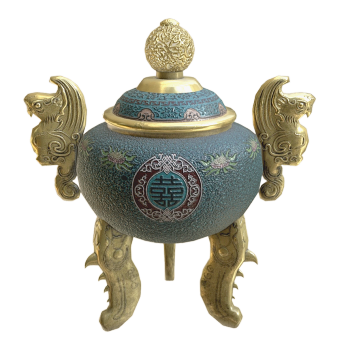
It is a traditional Korean incense burner known for its exquisite design and craftsmanship. Usually made of ceramics or metal, with elegant curves and decorative details, reflecting the pursuit of beauty in Korean culture. The design aims to evenly spread the aroma while emitting a peaceful and tranquil atmosphere. This type of incense burner is not only used in religious ceremonies, but also commonly used in daily life, such as meditation, yoga, or tea ceremony, to create a peaceful and relaxing environment. The production combines traditional craftsmanship with modern design elements, making it one of the representatives of Korean culture and art.
The Horse Trainer

The Horse Trainer

This statue is located at the bottom of the ramp of the Vienna Parliament building and is called the 'Horse Trainer'. It was created by sculptor Josef Lax in 1899 and erected in 1901. This statue is located outside the Parliament building in Vienna, Austria, situated on the Ringstrasse. The layout concept of the Vienna Parliament Building was designed by Von Hansen, reflecting the structure of the Imperial Diet (Reichsrat), as stipulated in the 1861 "February Edict" which established the constitutional structure of the empire.
Iberian painted pottery jar - Waldpenias Museum

Iberian painted pottery jar - Waldpenias Museum

Iberian painted pottery jar, from the Cerrodela Cabezas archaeological site in Vald é Penias, Castile La Mancha region, Spain. This pottery jar is decorated with horizontal lines and seal patterns, belonging to the Iron Age (4th century BC to 3rd century BC). Currently housed in the Waldpenias Museum. Not only does it showcase the daily life of Iberians, but it also reflects their aesthetic and craftsmanship level.
Monument to the Battle of Durnstein

Monument to the Battle of Durnstein

The Battle of Duinstein (also known as the Battle of Krems) occurred on November 11, 1805, as part of the Third Coalition War against France during the Napoleonic Wars. Austria's D ü nsten (modern-day D ü nsten) is located in the Wahau region of the Danube River Valley, approximately 73 kilometers (45 miles) upstream of Vienna, Austria. This battle took place on a flood plain between rivers and mountains.
Iberian Orinoco Ceramic Wine Pot - Waldpenias Museum

Iberian Orinoco Ceramic Wine Pot - Waldpenias Museum

Iberian Oenochoe, also spelled as oenochoe, is a ceramic wine jug with a finely curved handle and a clover shaped mouth. This type of wine pot comes from the archaeological site of Cerrodela Cabezas in Vald é Penias, Castile La Mancha region of Spain, dating back to the Iron Age (3rd century BC). This cultural relic is collected in the Waldpenias Museum. Not only is it a practical container, but it is also a showcase of art and craftsmanship. Its intricate curves and unique mouth design reflect the aesthetic concepts and pottery making techniques of ancient Iberians.
Saint Leopold

Saint Leopold

The clay sculpture of Saint Leopold depicts him wearing a ducal hat and holding a flag. This clay sculpture model is now housed in the Heiligenkreis Monastery Museum and later became the prototype for the statue carved on stone along the Heiligenkreis Cross Road. It has a height of 32.5 centimeters and was made between 1740-1745.
Iberian High Foot Plate - Waldpenias Museum

Iberian High Foot Plate - Waldpenias Museum

It is a pottery from the ancient Iberian cultural period, characterized by high foot support. A Iberian high footed plate dating back to the Iron Age (4th century BC to 3rd century BC) was discovered at the Cerrod de las Cabezas archaeological site in the Vall é e Pe ñ as region of Castile La Mancha, Spain. This cultural relic is currently housed in the Waldpenias Museum.
Spherical pottery jar

Spherical pottery jar

It is a type of spherical pottery jar discovered in Panamanian archaeology, with unique aesthetic and cultural significance. This type of pottery jar is known for its rounded shape and decorative details, usually with a flat bottomed or slightly raised base. There are various decorative techniques, which may include painting, carving, or additional decorative elements such as small protrusions. These pottery jars are not only used for daily purposes such as storing and transporting water, but may also play an important role in religious ceremonies or social activities. In some cultures, similar spherical pottery jars are believed to be closely related to water and life, and may be used in worship or rituals to pray for rain and harvest.