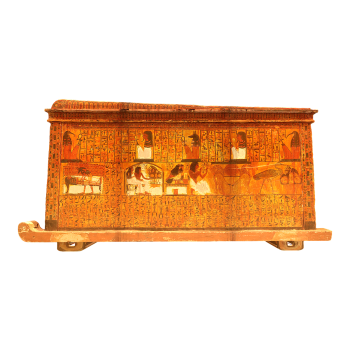
Pharaoh Tutankhamun wood carving

Pharaoh Tutankhamun wood carving

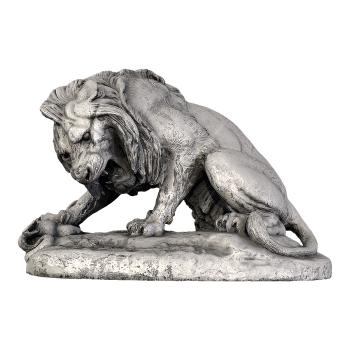
Tutankhamun was a pharaoh during the 18th dynasty of ancient Egypt. He was located between 1332 BC and 1323 BC. The tomb of Pharaoh Tutankhamun was discovered in 1922 by British archaeologist Howard Carter, a discovery of great historical significance. This Tutankhamun wood carving was found in the antechamber of his grave, sitting behind a pile of gilded chariot parts, covered in plaster and paint. This wood carving is currently on display at the Egyptian Museum in Cairo, Egypt.
The Second Coffin of Yuya in Ancient Egypt

The Second Coffin of Yuya in Ancient Egypt

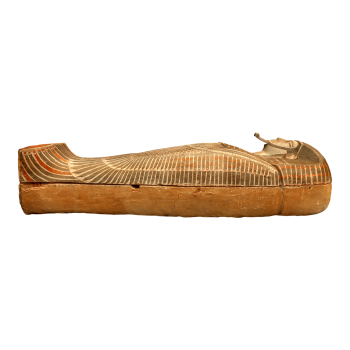
Yuya was an important figure in the 18th Dynasty of ancient Egypt (15th century BC). His second coffin was found in tomb KV46 in the Valley of the Kings of Egypt and is now preserved in the Luxor Museum. The second coffin is usually an inner or outer coffin used to protect the mummy. The inner coffin (inner coffin) is a smaller coffin located inside the outer coffin, while the outer coffin is a larger and more ornate coffin. These coffins are usually made of wood and are carefully decorated and carved to show the art and religion of ancient Egypt.
Classical Indian period igneous statue "Yoga goddess holding a jar (Yogini with a jar)"

Classical Indian period igneous statue "Yoga goddess holding a jar (Yogini with a jar)"

The statue is known as the "Yoga goddess holding a jar" and was made during the classical Indian period in the early 10th century AD. In the Indian subcontinent and many indigenous beliefs, the goddess is seen as the embodiment of life-giving energy. The goddess known here as yoga gracefully demonstrates complete control over the body. She holds a jar in her hand that may contain drugs, demonstrating her healing powers. Her now fractured left lower limb used to hold a skull cup for drinking. The sculpture was once enshrined in a circular open-air temple, along with at least 15 other goddesses, each believed to have unique powers, and is now in the collection of the Minneapolis Museum of Art.
The Canopus Box of Yua in Tomb KV46, Egypt

The Canopus Box of Yua in Tomb KV46, Egypt

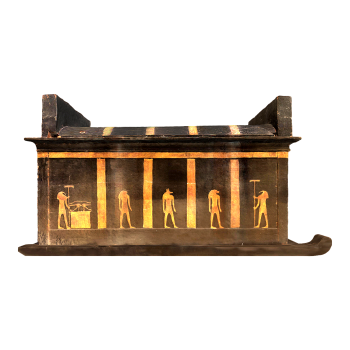
Yua was an important figure of the New Kingdom period (15th century BC), the father-in-law of the ancient Egyptian pharaoh Thutmose III (Tutmosis III) and the father of the Egyptian queen Tiye. Yua's canopus box preserves Yua's internal organs, including lungs, stomach, liver and kidneys. In ancient Egyptian burial rituals, the organs were placed in four separate canopus boxes for use in the afterlife. Yuya's Canopus box, currently in the Luxor Museum, is a valuable work of art and archaeological artifact, representing the exquisite craftsmanship and cultural traditions of the high Egyptian society of the time.
Vessel in the Form of a Fish from the Middle Nazca Period

Vessel in the Form of a Fish from the Middle Nazca Period

Fish-shaped vessels were made from about 100 BC to 600 AD and are part of the Nazca culture. NASCAR artists are known for their bold, colorful designs. They are keen observers of the world around them and depict many plants and animals in their work, but they seem more concerned with capturing the spirit and vividness of the subject than naturalism. The image of this fish is highly abstract, the scales are suggested by strokes, and the gills are represented by streamlined lines. It is round and fat, proving a rich food supply. Fish is a key component of the Nazca diet and often appears in their art.
Lower Cretaceous nautilus fossils (Madagascar ammonites)

Lower Cretaceous nautilus fossils (Madagascar ammonites)

The Lower Cretaceous is about 0.112 billion to 0.1 billion years old. Nautilus (Ammonite) is a class of paleontology, belonging to a cephalopod. They are a group of extinct marine invertebrates with a spiral shape. This ammonites is in the Mahajanga basin of northwest Madagascar, also known as Madagascar ammonites fossils. The Museum of Natural History in Vienna
Wooden statue from Bali, Indonesia

Wooden statue from Bali, Indonesia

Bali is the largest Hindu island in Indonesia, and religious rituals and sacrifices are very important in the local community. Bali's sculptures include stone, wood and metal sculptures in many forms. These sculptures usually depict gods, legendary figures, animals and natural elements in religious and mythological stories, and are closely related to local religious beliefs and culture. Bali is the largest Hindu island in Indonesia, and religious rituals and sacrifices are very important in the local community.
Easter Island Moai Stones (Hoa Hakananai'a)

Easter Island Moai Stones (Hoa Hakananai'a)

The name Hoa Hakananai'a means "stolen friend" in Rapa Nui ". The stone statue is about 2.42 meters high and weighs 4.2 tons. It is made of basalt. It presents typical moai features, with a long nose, deep concave eyes and closed lips. There are carved patterns and symbols on the back of the stone statue. This huge stone statue was originally erected on the Oru Stone Altar in the village of Oru Mehta on Easter Island. However, during an expedition by British explorers in 1868, it was brought to England and eventually displayed in the British Museum.
Hidden in the Berlin Museum Pharaoh Sitting Colossus

Hidden in the Berlin Museum Pharaoh Sitting Colossus

This pharaoh sitting colossus is 10 feet high and weighs nearly 9 tons. It is 4000 years old. It was discovered in Tanis in the early 19th century and entered the Berlin Museum collection in 1837. The statue is thought to be likely Amenim Hat II. Amunim Hat II was the third king of the 12th dynasty, circa 2010 BC to 1640 BC, the heyday of ancient Egyptian art.
The statue of the Song Dynasty in the Korean Dynasty

The statue of the Song Dynasty in the Korean Dynasty

This work demonstrates the persistence of Buddhism and its religious practice during the Joseon Dynasty (1392-1910), even after Neo-Confucianism became the state religion. It is difficult to determine which Buddhist deity this statue represents due to the lack of a crown, but it can undoubtedly be classified as a bodhisattva (meaning "awakening person"). This work is from the Joseon Dynasty (1392-1910) period. The Joseon Dynasty was the last feudal dynasty in the history of the Korean Peninsula. The capital of the Korean dynasty was in Kajing, the old capital of Koryo (now Kaesong; Also known as Songdu), the capital was set in Hanyang (now Seoul) in 1394 and was renamed Seoul the following year.
Moai Statue of Easter Island, Chile

Moai Statue of Easter Island, Chile

The Moai stone statue is a famous stone statue on Easter Island in Chile. It is a huge portrait sculpture made of volcanic rock. The height is usually between 10 and 20 feet, but the largest Moai stone statue is as high as 33 feet and weighs tens of tons. They usually depict a male figure with concise facial features, with a prominent forehead, long nose and closed lips. The body of the stone is usually not fully presented, showing only the head and part of the upper body. Moai is considered to be part of Easter Island's cultural and religious rituals, possibly representing a symbol of ancestors or gods, and becoming one of the symbols of Easter Island.
Ramses III Sitting Basalt Statue

Ramses III Sitting Basalt Statue

This basalt-carved statue is of Ramses III, a pharaoh of the 20th dynasty of ancient Egypt who ruled Egypt in the late New Kingdom period, circa 1186 to 1155 BC. Ramses III is considered one of the greatest pharaohs in Egyptian history. During his reign, he implemented many important political and military reforms and protected Egypt from foreign invasion. The statue is now in the Israel Museum.
Statue of Joan of Arc, French national hero

Statue of Joan of Arc, French national hero

This equestrian statue is located in Piazza Piramides in Paris and was made by French sculptor Emmanuel Flemmite (1824 -1910). The statue depicts a woman named Joan of Arc, alias French Joan of Arc (1412-1431). She played an important role in France during the 15th century and became a national hero and religious symbol of France. Her courage, faith and firmness have made her an important part of French history and have influenced many cultural works and artistic images. She is portrayed as a military leader on horseback and is also seen as a symbol of women's rights and strong will.
Marble Steles of Sakyamuni and Maitreya in the Northern Qi Period

Marble Steles of Sakyamuni and Maitreya in the Northern Qi Period

The stele is a marble carving from the Northern Qi period. The Northern Qi Dynasty (550-577) was one of the Northern Dynasties in the Southern and Northern Dynasties in Chinese history. During the Northern Qi period, Buddhism spread and developed widely in China. Buddhist art works in this period often show a unique artistic style. The Sakyamuni on this stone tablet represents the past and future of Buddhism respectively. The Buddha Sakyamuni shows a kind smile with fearless and alms gestures, flanked by two Bodhisattvas and two disciples. Sakyamuni, also known as Gautama Siddhartha, was the founder of Buddhism and founded Buddhism in ancient India in the 6th century BC.
Moai Island Boulder Like Head

Moai Island Boulder Like Head

This huge head statue is now hidden in the Louvre Museum in France. It is a copy of the famous megalithic statue on Easter Island in Chile, also known as the giant statue of Moai. The original moai giants are carved from the island's volcanic rocks and can reach tens of feet in height. These statues are an icon of Easter Island culture and have important religious and social significance.
Qing Dynasty Ivory Sitting Pier "Small Ivory Characters Embroidered Pier"

Qing Dynasty Ivory Sitting Pier "Small Ivory Characters Embroidered Pier"

The work is from the Qianlong period (1736-95) of the Qing Dynasty (1644-1911). At the age of the Qing dynasty, luxury goods became more popular and affordable, including merchants and literati in unofficial positions. The growing urban population has encouraged the consumption of luxury goods and local crafts. This piece of ivory carved and painted to imitate a small garden chair shows the exquisite skills of the talented craftsmen of the Qing Dynasty, the craft of embroidering figure patterns, which combines embroidery and furniture making, showing the unique charm of traditional Chinese handicrafts. This sill is currently in the collection of the Cleveland Museum of Art.
Hannifer granite sarcophagus during the reign of Ramses II in 1225 BC

Hannifer granite sarcophagus during the reign of Ramses II in 1225 BC

This sarcophagus is a granite sarcophagus from the reign of Ramses II in 1225 BC. It was found in Hannifer, Egypt, hence the name Hannifer sarcophagus. This sarcophagus is carved from a huge granite monomer. Its dimensions are very large, measuring about 3.7 meters (12 feet) long and weighing about 120 tons. The inside of the sarcophagus was originally empty and no body was found. However, its design and decoration suggest that it was once a funeral vessel for an important person. The exterior of the sarcophagus is decorated with fine reliefs depicting religious and mythological scenes of ancient Egypt. It was given to the Fitzwilliam Museum in Cambridge, England in 1835.
Painted Wood Carving of the Northern Song Dynasty "Eleven-sided Guanyin Bodhisattva"

Painted Wood Carving of the Northern Song Dynasty "Eleven-sided Guanyin Bodhisattva"

"Eleven-sided Guanyin Bodhisattva" is a wood carving art from the late Northern Song Dynasty to the Jin Dynasty in China. It is currently in the Cleveland Museum of Art. The sculpture is 218.5cm high and is carved from willow made of painted and cut gold. This statue is the Avalokitesvara in Buddhism, symbolizing the Buddha's steps to enlightenment. The historical and artistic value of sculpture is very high, and it is the treasure of ancient Chinese art. It shows the carving techniques of the Song Dynasty, reflecting the religious beliefs and aesthetic concepts of the time.
The Beauty of Palmyra (200-250 AD)

The Beauty of Palmyra (200-250 AD)

In 1929, Danish archaeologist Harald Ingholt obtained this statue of the Beauty of Palmyra during an excavation in Palmyra, Syria. The statue's sculpted jewels and clothing are startling in the richness of detail. The statue was used to enclose the tomb of a carved woman, and there are often inscriptions on the tomb stating who the deceased were, but the inscriptions on the tomb have been lost. As a result, it is still impossible to confirm the real name of the tomb owner.
Pottery Figurines of the Zodiac in the Northern Wei Dynasty: Pottery Figurines Pig

Pottery Figurines of the Zodiac in the Northern Wei Dynasty: Pottery Figurines Pig

The Terracotta Warriors of the Twelve Palaces is a work of the Northern Wei Dynasty in China, made in the 500 AD era. This terracotta figure is made of gray terracotta, and there are traces on the surface that show that it was coated with slippery soil. This pottery figurine is part of the Zodiac series, and the animals represent the traditional concept of time in ancient China. This group of pottery figurines is currently in the collection of the Cleveland Museum of Art. The pottery figurines of the Northern Wei Dynasty showed the great confluence of the farming culture of the Han nationality in the Central Plains and the nomadic culture of the northern grassland at that time, as well as the new look of ancient pottery under the influence of the flourishing Buddhist statues and sculptures.
Pottery Figurines of the Zodiac in the Northern Wei Dynasty: Pottery Figurines Chicken

Pottery Figurines of the Zodiac in the Northern Wei Dynasty: Pottery Figurines Chicken

The Terracotta Warriors of the Twelve Palaces is a work of the Northern Wei Dynasty in China, made in the 500 AD era. This terracotta figure is made of gray terracotta, and there are traces on the surface that show that it was coated with slippery soil. This pottery figurine is part of the Zodiac series, and the animals represent the traditional concept of time in ancient China. This group of pottery figurines is currently in the collection of the Cleveland Museum of Art. The pottery figurines of the Northern Wei Dynasty showed the great confluence of the farming culture of the Han nationality in the Central Plains and the nomadic culture of the northern grassland at that time, as well as the new look of ancient pottery under the influence of the flourishing Buddhist statues and sculptures.
Pottery Figurines of the Zodiac in the Northern Wei Dynasty: Pottery Monkey

Pottery Figurines of the Zodiac in the Northern Wei Dynasty: Pottery Monkey

The Terracotta Warriors of the Twelve Palaces is a work of the Northern Wei Dynasty in China, made in the 500 AD era. This terracotta figure is made of gray terracotta, and there are traces on the surface that show that it was coated with slippery soil. This pottery figurine is part of the Zodiac series, and the animals represent the traditional concept of time in ancient China. This group of pottery figurines is currently in the collection of the Cleveland Museum of Art. The pottery figurines of the Northern Wei Dynasty showed the great confluence of the farming culture of the Han nationality in the Central Plains and the nomadic culture of the northern grassland at that time, as well as the new look of ancient pottery under the influence of the flourishing Buddhist statues and sculptures.
Pottery Figurines of the Zodiac in the Northern Wei Dynasty: Pottery Figurines and Sheep

Pottery Figurines of the Zodiac in the Northern Wei Dynasty: Pottery Figurines and Sheep

The Terracotta Warriors of the Twelve Palaces is a work of the Northern Wei Dynasty in China, made in the 500 AD era. This terracotta figure is made of gray terracotta, and there are traces on the surface that show that it was coated with slippery soil. This pottery figurine is part of the Zodiac series, and the animals represent the traditional concept of time in ancient China. This group of pottery figurines is currently in the collection of the Cleveland Museum of Art. The pottery figurines of the Northern Wei Dynasty showed the great confluence of the farming culture of the Han nationality in the Central Plains and the nomadic culture of the northern grassland at that time, as well as the new look of ancient pottery under the influence of the flourishing Buddhist statues and sculptures.
Holy water basin in the church of Launceston, Cornwall, UK

Holy water basin in the church of Launceston, Cornwall, UK

The holy water basin, also known as the baptismal basin, is used to hold holy water in Christian churches and is used for baptism ceremonies. It is usually located at the entrance of the church or in the baptismal hall for believers to use when entering or leaving the church. Believers can dip their fingers in holy water and then cross themselves or make personal prayers. It is usually made of stone or metal and has a shallow basin-like or bowl-like shape, often with carvings and decorations. These holy water basins not only have religious significance, but also are one of the important elements of Romanesque architecture.
Pottery Figurines of the Zodiac in the Northern Wei Dynasty: Pottery Figurines Horse

Pottery Figurines of the Zodiac in the Northern Wei Dynasty: Pottery Figurines Horse

The Terracotta Warriors of the Twelve Palaces is a work of the Northern Wei Dynasty in China, made in the 500 AD era. This terracotta figure is made of gray terracotta, and there are traces on the surface that show that it was coated with slippery soil. This pottery figurine is part of the Zodiac series, and the animals represent the traditional concept of time in ancient China. This group of pottery figurines is currently in the collection of the Cleveland Museum of Art. The pottery figurines of the Northern Wei Dynasty showed the great confluence of the farming culture of the Han nationality in the Central Plains and the nomadic culture of the northern grassland at that time, as well as the new look of ancient pottery under the influence of the flourishing Buddhist statues and sculptures.
Pottery Figurines of the Zodiac in the Northern Wei Dynasty: Pottery Figurines Snake

Pottery Figurines of the Zodiac in the Northern Wei Dynasty: Pottery Figurines Snake

The Terracotta Warriors of the Twelve Palaces is a work of the Northern Wei Dynasty in China, made in the 500 AD era. This terracotta figure is made of gray terracotta, and there are traces on the surface that show that it was coated with slippery soil. This pottery figurine is part of the Zodiac series, and the animals represent the traditional concept of time in ancient China. This group of pottery figurines is currently in the collection of the Cleveland Museum of Art. The pottery figurines of the Northern Wei Dynasty showed the great confluence of the farming culture of the Han nationality in the Central Plains and the nomadic culture of the northern grassland at that time, as well as the new look of ancient pottery under the influence of the flourishing Buddhist statues and sculptures.
Pottery Figurines of the Zodiac in the Northern Wei Dynasty: Pottery Figurines Rabbit

Pottery Figurines of the Zodiac in the Northern Wei Dynasty: Pottery Figurines Rabbit

The Terracotta Warriors of the Twelve Palaces is a work of the Northern Wei Dynasty in China, made in the 500 AD era. This terracotta figure is made of gray terracotta, and there are traces on the surface that show that it was coated with slippery soil. This pottery figurine is part of the Zodiac series, and the animals represent the traditional concept of time in ancient China. This group of pottery figurines is currently in the collection of the Cleveland Museum of Art. The pottery figurines of the Northern Wei Dynasty showed the great confluence of the farming culture of the Han nationality in the Central Plains and the nomadic culture of the northern grassland at that time, as well as the new look of ancient pottery under the influence of the flourishing Buddhist statues and sculptures.
Olaf Oak Statue of the Guardian of Norway

Olaf Oak Statue of the Guardian of Norway

This sculpture depicts King Saint Olaf of Norway (995-1030), also known as "the patron saint of Norway". The statue, dating from the early 14th century, is carved in oak and is located in Bunge Church on the Swedish island of Gotland. Religious sculpture in the Gothic style. In the deep folds of St. Olaf's sculpture, traces of red, green and blue paint and gilding can be seen. The statue of St. Olaf in Bunge Church may have been created to commemorate St. Olaf's exploits and his influence in the Swedish region. This statue is not only a work of art, but also a religious and cultural symbol, representing the connection between faith and history.
Pottery Figurines of the Zodiac in the Northern Wei Dynasty: Pottery Tiger

Pottery Figurines of the Zodiac in the Northern Wei Dynasty: Pottery Tiger

The Terracotta Warriors of the Twelve Palaces is a work of the Northern Wei Dynasty in China, made in the 500 AD era. This terracotta figure is made of gray terracotta, and there are traces on the surface that show that it was coated with slippery soil. This pottery figurine is part of the Zodiac series, and the animals represent the traditional concept of time in ancient China. This group of pottery figurines is currently in the collection of the Cleveland Museum of Art. The pottery figurines of the Northern Wei Dynasty showed the great confluence of the farming culture of the Han nationality in the Central Plains and the nomadic culture of the northern grassland at that time, as well as the new look of ancient pottery under the influence of the flourishing Buddhist statues and sculptures.
Pottery Figurines of the Zodiac in the Northern Wei Dynasty: Pottery Figurines Cattle

Pottery Figurines of the Zodiac in the Northern Wei Dynasty: Pottery Figurines Cattle

The Terracotta Warriors of the Twelve Palaces is a work of the Northern Wei Dynasty in China, made in the 500 AD era. This terracotta figure is made of gray terracotta, and there are traces on the surface that show that it was coated with slippery soil. This pottery figurine is part of the Zodiac series, and the animals represent the traditional concept of time in ancient China. This group of pottery figurines is currently in the collection of the Cleveland Museum of Art. The pottery figurines of the Northern Wei Dynasty showed the great confluence of the farming culture of the Han nationality in the Central Plains and the nomadic culture of the northern grassland at that time, as well as the new look of ancient pottery under the influence of the flourishing Buddhist statues and sculptures.
Shang Dynasty Bronze Vessel "Sacrifice to Tripod"

Shang Dynasty Bronze Vessel "Sacrifice to Tripod"

This tripod is a relic of China's Shang Dynasty (1600 BC -1046 BC) and was made from 1200 BC to 1100 BC. The overall size of this bronze vessel is 14.3 x 12.5cm and is currently in the collection of the Cleveland Museum of Art. This tripod has a pattern composed of silkworms and cicadas, which is a typical form and decoration of the late Shang Dynasty. In ancient China, bronze vessels such as the tripod were used to worship the food and meat of ancestors in sacrifices. These bronzes have become the main academic research objects in Chinese history and are precious art treasures.
[Statue] Head of Amenhotep III of the 18th Dynasty of Ancient Egypt

[Statue] Head of Amenhotep III of the 18th Dynasty of Ancient Egypt

Amenhotep III (between 1403 BC and 1397 BC to 1353 BC) was the ninth pharaoh of the 18th dynasty of ancient Egypt. He reigned for 38 years. Amenhotep III ascended the throne between the ages of 6 and 12, and the XVIII dynasty reached its heyday during his reign. During the reign of Amenhotep III, all of Egypt was rich and stable. There is only one record of military activities. In the early days of his accession to the throne, the war against the Nubians was aimed at ensuring the safety of the Nubian region. The statue was donated by the Hanna Foundation in 1952 and is currently in the collection of the Cleveland Museum of Art.
New Assyria Period Gypsum Relief "Salute Guardian Spirit Saluting Protective Spir"

New Assyria Period Gypsum Relief "Salute Guardian Spirit Saluting Protective Spir"

The "Patron Saint of Tribute" is a plaster relief dating from the Neo-Assyrian period (911-609 BC). Found at the Northwest Palace in Nimrud, Iraq, currently in the collection of the Cleveland Museum of Art. The relief, which depicts a winged god and an agricultural harvest, was created during the reign of Ashur Nasir Pal II, the second king of the Neo-Assyrian Empire, from 883 BC to 859 BC. This relief was made under his leadership to decorate the palace. It is one of hundreds of similar reliefs.
Fang Ding, now in the collection of the Minneapolis Institute of Art, USA

Fang Ding, now in the collection of the Minneapolis Institute of Art, USA

Fang Ding is an ancient Chinese bronze ware. It is a kind of food vessel with a special shape. The production began in the late Shang Dynasty (11th century BC) in China. Fang Ding played an important role in the social and religious life of ancient China. It is often used as a sacrificial feeding vessel for the worship of gods or ancestors. Fang Ding not only has practical value, but also has artistic value. Its exquisite craftsmanship and exquisite relief patterns show the high technical level of ancient Chinese bronze ware production, and it is one of the precious heritages of ancient Chinese society and culture.
Statue of the famous Slovak poet Janko Kráǐ in Bratislava

Statue of the famous Slovak poet Janko Kráǐ in Bratislava

Janko Klar (24 January 1822-23 May 1876) was a famous Slovak poet and writer, and one of the most important figures in the history of Slovak literature. He is known for his poetic works in the Romantic style and is considered one of the pioneers of the Slovak National Revival movement. His collections include a multi-volume collection of poems "Songs of Slovakia" and "Gardens of Slovakia". He is also a translator, translating works of world literature into Slovak. The statue is located in Bratislava, the capital of Slovakia.