Bronze Buddha Avatar

Bronze Buddha Avatar

Bone Buddha

Bone Buddha

Guanyin Statue

Guanyin Statue
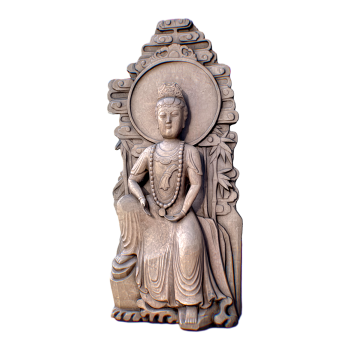
Guanyin Bodhisattva is one of the four great bodhisattvas in Chinese Buddhism. According to legend, his birthday is on the 19th day of the second lunar month, the day of enlightenment is on the 19th day of the sixth lunar month, and the day of Nirvana is on the 19th day of the ninth lunar month. It is said that the Taoist temple is Mount Putuo. The belief in Guanyin has had a profound influence in China, leading to various folk legends about Guanyin Bodhisattva, such as the widely circulated belief that Guanyin is Princess Miaoshan, the third princess of King Miaozhuang of Xinglin Kingdom. This kind of female Guanyin legend can first be seen in Zhu Ben's "Qu Yu Jiuwen" during the Song Dynasty. Afterwards, Guan Daosheng's biography "Biography of Guanyin Bodhisattva" became a complete biography during the late Song and early Yuan dynasties.
Guanyin Statue

Guanyin Statue

Guanyin Bodhisattva is one of the four great bodhisattvas in Chinese Buddhism. According to legend, his birthday is on the 19th day of the second lunar month, the day of enlightenment is on the 19th day of the sixth lunar month, and the day of Nirvana is on the 19th day of the ninth lunar month. It is said that the Taoist temple is Mount Putuo. The belief in Guanyin has had a profound influence in China, leading to various folk legends about Guanyin Bodhisattva, such as the widely circulated belief that Guanyin is Princess Miaoshan, the third princess of King Miaozhuang of Xinglin Kingdom. This kind of female Guanyin legend can first be seen in Zhu Ben's "Qu Yu Jiuwen" during the Song Dynasty. Afterwards, Guan Daosheng's biography "Biography of Guanyin Bodhisattva" became a complete biography during the late Song and early Yuan dynasties.
【 Wood Carving 】 Avalokitesvara Bodhisattva (3D printable)

【 Wood Carving 】 Avalokitesvara Bodhisattva (3D printable)

Avalokitesvara Bodhisattva, also known as Avalokite ś vara in Sanskrit, is a transliteration of the Sanskrit word Avalokite ś vara. It is also translated as "Avalokitesvara" or "Avalokitesvara" and transliterated as "Avalokitesvara" or "Avalokitesvara". Amitabha Buddha's left attendant, one of the "Three Saints of the West". Buddhism believes that Avalokitesvara Bodhisattva is a compassionate and benevolent bodhisattva. When suffering beings recite his name, the Bodhisattva immediately observes his voice and goes to save and liberate them, hence the name. During the Tang Dynasty, due to the taboo of using the name of Emperor Taizong Li Shimin, the character "shi" was removed and he was briefly referred to as "Guanyin".
Shuiyue Guanyin

Shuiyue Guanyin

Shuiyue Guanyin, also known as Water Auspicious Guanyin or Water Auspicious Bodhisattva, is the corresponding incarnation of Guanyin's thirty-three phases of observing water with one heart. The name 'Shuiyue' is not derived from early Buddhist scriptures, but rather from the fusion of Buddhism with local culture after it was introduced to China. There are different theories about the origin of Shuiyue Guanyin, but it is currently unanimously believed to be related to the mid Tang painter Zhou Fang. According to Xuanzang's "Records of the Western Regions of the Great Tang Dynasty", Zhou Fang created the body of Guanzi Bodhisattva in the Bu'luojia Mountain, which is described as "a marvelous creation of water and moon". This painting depicts a full moon surrounding Guanyin, surrounded by a bamboo forest. Since the Tang Dynasty, the image of Shuiyue Guanyin has been constantly evolving, and its sitting posture has also undergone several changes.
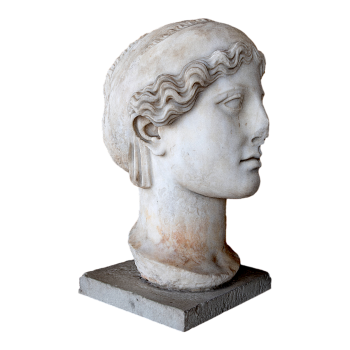
Statue of Nike, the Greek goddess of victory

Statue of Nike, the Greek goddess of victory

Niki (Greek: Νίκ η, "victory"; Latin transliteration: Nike) is the goddess of victory in Greek mythology, corresponding to Victoria in Roman mythology. According to Hesiod's Theogony, she was the daughter of the Titan gods Pallas and Styx, as well as the sister of Kratos (power), Biya (strength), and Zeros (passion), all of whom were companions of the main god Zeus. Despite coming from the Titan tribe, she still stood by the side of the Olympian gods in the Titan Wars, bringing them victory.
Sun Wukong Bamboo Root Carving Crafts (available for download in STL format and 3D printing)

Sun Wukong Bamboo Root Carving Crafts (available for download in STL format and 3D printing)

Sun Wukong (also known as the Monkey King, the Monkey King, the Monkey King, the Monkey King, and the Fighting Buddha) is a character in the classical Chinese mythological novel "Journey to the West". The inspiration for the origin of the Monkey King predates novels and can be traced back to the Indian epic Ramayana and the Song Dynasty monkey god Hanuman. In the novel, he is a stone born monkey who has gained supernatural powers through Taoist cultivation. After resisting the Way of Heaven and being imprisoned by the Buddha at the foot of the mountain, he subsequently accompanied Tang Sanzang to the West (Indian subcontinent) where the Buddha and his followers lived to retrieve Buddhist scriptures.
Philippine deity - Rice Protector

Philippine deity - Rice Protector

The Filipino deity, known as Bul ul (Rice Protector), crouches naked. His elbows are on his knees, and his hands are on his cheeks. It sits on a small pedestal with an irregular hemisphere shape. Black wood grain.
Buddha sculpture

Buddha sculpture

The highest fruit of Buddhist practice. Buddha is a transliteration of Sanskrit, abbreviated as Buddha, also translated as Futu or Futu, originally meaning enlightenment. Perception has three meanings: one is self-awareness, which is the so-called self realization of one's nature; The second is called Jue He, which means to speak and guide people; The three are called perfect perception and action. Those who possess these three points of enlightenment can be called Buddha. It is said that Shakyamuni attained enlightenment at the age of 35, gaining insight into the true essence of the universe and life, achieving liberation, and began to proclaim the true meaning of his enlightenment to the public, earning him the title of "Buddha". So, Buddha or Buddha often became synonymous with Shakyamuni, but not only Shakyamuni is named after Buddha.
Sculpture - "Monkey King" Sun Wukong

Sculpture - "Monkey King" Sun Wukong

Sun Wukong is naturally intelligent, lively, loyal, and resentful of evil, representing wit and bravery in folk culture. The legend of Journey to the West emerged in the Tang Dynasty and continued until the Ming and Qing Dynasties. The collection of these legends in the Ming Dynasty is known as "Journey to the West". In these folk myths of the past dynasties, Sun Wukong was worshipped as a god by the Chinese people.
Sun Wukong 3D Printing

Sun Wukong 3D Printing

Sun Wukong (also known as the Monkey King, the Monkey King, the Monkey King, the Monkey King, and the Fighting Buddha) is a character in the classical Chinese mythological novel "Journey to the West". Born from the creation of immortal stones, the birthplace is located on Huaguo Mountain in Dongsheng Shenzhou. He is revered as the "Monkey King" for leading a group of monkeys into the Water Curtain Cave. In order to learn the art, he crossed the sea and became a disciple of the founder of Subhuti, named "Sun Wukong". He learned advanced spells such as the Great Immortal Technique, the Seventy Two Transformations, and the Cloud Dance.
Maitreya Buddha Stele

Maitreya Buddha Stele

The Maitreya Buddha Stele, dating back to 563 AD, is currently housed at the Minneapolis Institute of the Arts.
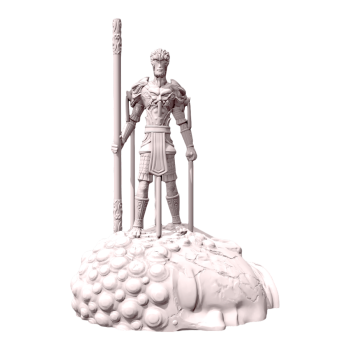
The Monkey King - Sun Wukong (3D printed model)
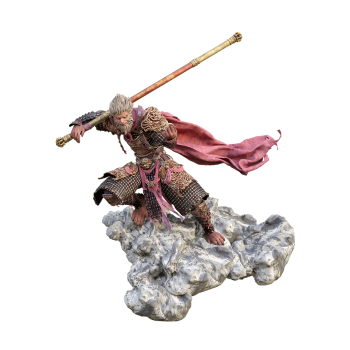
The Monkey King - Sun Wukong (3D printed model)

The exquisite 3D model of Sun Wukong, the Monkey King of the Sky, in "Black Myth: Wukong"
The exquisite 3D model of Sun Wukong, the Monkey King of the Sky, in "Black Myth: Wukong"

It is one of the main characters in the Chinese classical novel "Journey to the West", written by Wu Chengen. Renowned for his wit, bravery, and ever-changing abilities, he was an important protector of Tang Monk and his disciples on their journey to the West to obtain Buddhist scriptures. Born in Shuilian Cave of Huaguo Mountain, he calls himself the Monkey King. Having the power of seventy-two transformations, it can transform into any creature or object at will. He is also proficient in soaring through clouds and mist, and can jump up to 108000 miles in one leap. Once caused chaos in the Heavenly Palace, challenged the authority of the Heavenly Court, and was ultimately suppressed by the Buddha at the foot of the Five Elements Mountain. Later, under the guidance of Guanyin Bodhisattva, Sun Wukong became the great disciple of Tang Sanzang and began his journey to the West to obtain Buddhist scriptures.
The Old Centaur and the Love God Eros

The Old Centaur and the Love God Eros

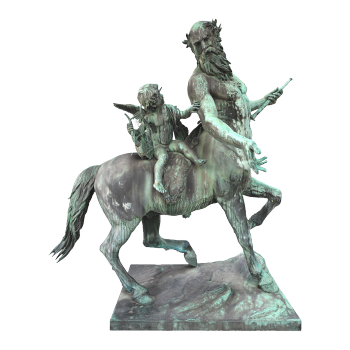
The bronze statues of the centaur and the riding goddess Eros, located in front of the Academy of Fine Arts in Vienna, were created in 1892. This statue represents the characteristics of old age through the image of an old centaur and the riding of Eros, and is a typical example of the combination of art and mythology.
Lednica Castle Garden Zeus Statue

Lednica Castle Garden Zeus Statue

The 17th century Zeus statue located in Lednice Castle Garden. Zeus is the highest god in Greek mythology, in charge of the sky and thunder, and is the leader of the Olympian gods. The history of the gardens of Ledernitz Castle can be traced back to the 12th century, initially as a fortress used to defend against foreign crossing of rivers. Later, it became the private property of the Liechtenstein family and was transformed into a magnificent courtyard between the 17th and 20th centuries.
Dragon head stone carving decoration

Dragon head stone carving decoration

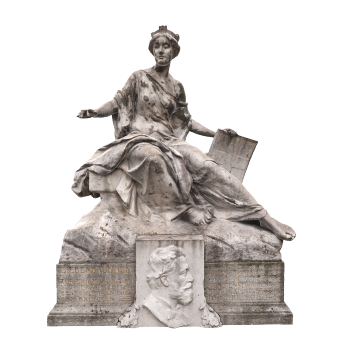
Vienna Fifth District Vienna Goddess Fountain

Vienna Fifth District Vienna Goddess Fountain

This statue is the Vindobona statue of the Viennese goddess on the Siebenbrunen fountain in the Fifth District of Vienna. To commemorate the palace canal built in 1562 on the orders of King Ferdinand I, which supplied water to Hofburg in Vienna. Vindobona is the Latin name for Vienna during the Roman period. As part of the fountain, this statue not only beautifies the city landscape but also reflects Vienna's rich historical and cultural heritage.
Chinese Loong Sculpture in Tianhou Palace

Chinese Loong Sculpture in Tianhou Palace

Tianhou Temple is located in Shekou District, Shenzhen, Guangdong Province, China. It is a long-standing Taoist temple that enshrines the sea goddess Mazu. In the courtyard, there is a striking dragon sculpture. This dragon is presented in the image of a traditional Chinese Loong, beautifully carved and rich in details. The dragon's body winds and spirals, its scales are clearly visible, and its claws are strong and powerful, showcasing the majesty and mystery of the dragon. The dragon's head lifted high, its eyes shining brightly, as if guarding this temple and the people who came to worship. Not only is it a display of art, but it also contains profound cultural significance. In traditional Chinese culture, the dragon is a symbol of auspiciousness, representing strength, wisdom, and good luck.
Mercury Bronze Statue - Depuras Archaeological Museum

Mercury Bronze Statue - Depuras Archaeological Museum

The bronze statue of Mercury is a messenger of the gods in Roman mythology, as well as a god of livestock, thieves, commerce, transportation, tourism, and sports. It is one of the twelve main gods of Rome. Corresponding to Hermes in Greek mythology. He was Jupiter's most loyal messenger, delivering messages to Jupiter and completing various tasks entrusted to him by Jupiter. He is agile, energetic, and versatile. Usually a middle-aged man wearing a hat with wings, flying shoes, holding a wand, and walking like flying. It is currently housed in the De Plath Archaeological Museum.
Chinese Kirin Statue

Chinese Kirin Statue

The Qilin is a auspicious beast in ancient Chinese mythology, symbolizing auspiciousness, peace, and prosperity. In traditional culture, it occupies a pivotal position and is known as one of the "Four Spirits" along with the dragon, phoenix, and turtle. There are various forms of imagery, some described as sheep heads, wolf hooves, and domes, with colorful bodies, while others are described as bodies resembling musk deer, tails resembling dragon tails, covered in dragon scales and horns. As a traditional Chinese handicraft, it showcases the charm of Chinese traditional culture, with exquisite carving skills and unique design. It has rich cultural connotations, occupies an important position in folk beliefs and artistic creation, carries the wisdom and craftsmanship of the Chinese nation, and has become a treasure of traditional Chinese culture
Hermes and Dionysus

Hermes and Dionysus

The sculpture "Hermes and Dionysus" at the Danube Art Museum was created by the French artist Arman Pierre Fernandes Arman (1928-2005). The creation of the museum was initiated by Vincent Polakovic, who received financial support from Dutch art collector and entrepreneur Gerard Murenstein. Arman is a renowned French artist known for his "accumulated art", often exploring the combination of form, color, and material in his works.
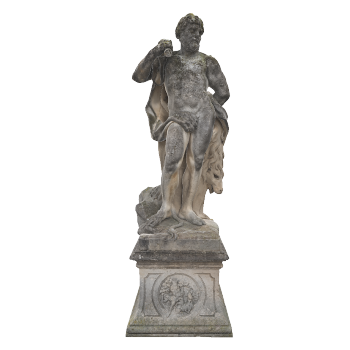
Hercules

Hercules

This statue is a statue of the Greek hero Hercules, located in the courtyard of Feldsburg. Hercules is a hero in Greek mythology, known for his extraordinary strength and heroic twelve acts of labor. After completing these arduous tasks, he was bestowed with the honor of God. Hercules in the statue is depicted wearing the skin of a Nemean lion and holding a club. The skin of the Nemean lion is the first of his twelve tasks, and the stick is his signature weapon. The image of Hercules is often used in art and culture to symbolize strength, courage, and indomitable spirit.
The statue of Hera in the garden of Lednica Castle

The statue of Hera in the garden of Lednica Castle

The statue of Hera located in the garden of Lednica Castle. In Greek mythology, Hera is Zeus' wife and sister, belonging to one of the twelve Olympian gods. Hera in the statue holds a scepter, and in Greek mythology, Hera is the goddess of marriage and family, as well as the protector of women. She is known for her jealousy and revenge for Zeus' infidelity, and is also the queen of gods and humans. In art works, Hera is often depicted as a majestic figure wearing a veil and holding a scepter, symbolizing her authority as a goddess. The gardens of Ledernich Castle are a historic place known for their romantic and picturesque landscapes.
Marian Pillar

Marian Pillar

The Marian Column is a common monument in Central Europe during the Baroque period, used to express admiration and gratitude for the Virgin Mary. These pillars are usually decorated with elaborate decorations, with a statue of the Virgin Mary at the top. The Marian Column, established in 1736, was not only a reflection of religious beliefs at the time, but also an important symbol of local community culture and history. The establishment of such monuments is often related to local religious festivals, celebrations, or events.
Archangel St. Michael

Archangel St. Michael

The statue is located in Klingenbach, where Archangel St. Michael defeated the demon transformed into a dragon. The Vlasic family donated this monument in 1959. St. Michael is one of the famous angels in Christianity, Judaism, and Islam, often depicted as a symbol of defeating evil, especially Satan or demons. As a donation from the Vlasich family, this statue is not only an artwork, but also a symbol of the local community's faith and spirit.
Hercules carrying a stick on his shoulder

Hercules carrying a stick on his shoulder

The statue is called Hercules carrying a club on his shoulder and is located in the Heiligenkreis Monastery Museum. Hercules carried a stick on his shoulder and leaned against a half pole, with lion skin covering his head. The creator is Giovanni Giuliani, and the signature is located on one side of the pillar. The signature behind it is: 'Jo GiulliaiJ Ficit in S.+1735 AEtatis Suane LXXI 1/2 An. Mensis Octobris', indicating that Giuliani created this work in October 1735 when he was 71 and a half years old.
Hercules and the Hellhound

Hercules and the Hellhound

Regarding the sandstone statues of Heracles and the hellhound Kerberos located in Austerlitz Palace Gardens. Greek hero Hercules, dressed in lion skin, is depicted fighting with the guardian dog of hell, Cerberus. The creator is Giovanni Giuliani. Sandstone. This statue depicts a scene from the mythological story of Hercules, who completed the last of his twelve tasks - bringing back the three headed dog Cerberus from the underworld to the human world.
Hercules captures Cretan bull

Hercules captures Cretan bull

This statue is located in front of the Imperial Chancellery wing in the Baroque expansion of Hofburg, facing the entrance of the passage on Sch ö ffler Street. The creator is Lorenzo Mattielli. Created in 1728. This statue showcases Hercules' heroic feat of capturing a Cretan bull, which is one of his twelve heroic deeds. Lorenzo Matieri created a series of commemorative sculptures commemorating the heroic deeds of Hercules for the Baroque expansion of Hofburg during the reign of Charles VI.
Christ Mourning Gypsum Relief

Christ Mourning Gypsum Relief

The work is titled "Christ Mourning Gypsum Relief" by Raphael Donner. Created in the 19th century. This work is one of the collections of the Heiligenkreuz Abbey Museum. Raphael Dona is a renowned artist whose works hold an important position in art history. This plaster relief replica showcases Raphael Dona's artistic style and skills, as well as reflecting the rich art collection of the Heiligenkreis Monastery Museum.
Muse Erato Fountain

Muse Erato Fountain

The fountain is located in Theater Square in Baden, and the statue was designed by Josef Valentin Kassin and built in 1902. Erato is the Muse who plays the lira, and she is one of the nine Muses in Greek mythology. Erato is the muse of love poetry, lyric poetry, song, and dance, and the daughter of Zeus and Menemosine. This fountain and statue are not only works of art, but also part of the cultural heritage of the city of Baden, reflecting the rich history and mythological traditions of the region.
The God of the Danube River

The God of the Danube River

The name of this statue is the God of the Danube, who sits on three stretched dolphins with his elbows resting on the fins of their tails. A flower wreath decorated with leaves of aquatic plants on the top of the head. The back of the statue bears the artist's signature: "Giuliani Ficit 1738". Giovanni Giuliani was an Italian sculptor active in Heiligenkreis, Austria, whose works were influenced by the late Italian Baroque style and made significant contributions to Austrian Baroque sculpture.
Erberg relief

Erberg relief

The Erberg relief is a relief of the Mount of Olives on the south side of the sturdy church of St. Michael. The colorful relief depicts Christ on the Mount of Olives, whose history can be traced back to 1510.
Neptune

Neptune

Neptune (Latin: Nept ū nus, English: Neptune), also known as Neptune, is a sea god in Roman mythology and revered as the god of horses, managing horse racing activities. One of the twelve main gods of Rome. Corresponding to Poseidon in Greek mythology, there is his temple in Rome, which is the world-famous Trevi Fountain. The Latin name Neptunus originates from him.