South Indian Religious Cultural Heritage Sumerskanda Statue
South Indian Religious Cultural Heritage Sumerskanda Statue

A statue of Sumo Scanda (Somaskanda), dated from about the 14th to 15th centuries AD. "Sumoskanda" is a religious scene in Hindu mythology that depicts the image of Shiva (Shiva) together with the goddess Parvati (Parvati) and their child Skanda (also known as Murugan Murugan). This scene usually symbolizes the harmony and divine strength of the family. In such statues, Shiva and Parvati sit in the center, showing majesty and solemnity, while Skanda stands in the center or near between the two as their children.
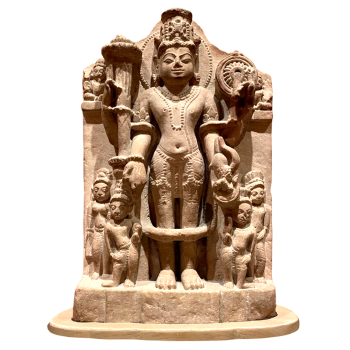
Hindu Cultural Heritage Vishnu God and Servant

Hindu Cultural Heritage Vishnu God and Servant

This is a statue of the god Vishnu and his attendants, dated from the 16th century AD, made of sandstone and produced in central India. The creator is unknown. The statue depicts a scene surrounded by the Hindu god Vishnu and his attendants, showing the loftiness and solemnity of religious art. Vishnu is one of the three main gods of Hinduism and is regarded as the maintainer of the universe.
Hindu Heritage Krishna (Krishna) Bronze Statue

Hindu Heritage Krishna (Krishna) Bronze Statue

This is a bronze statue of Krishna (Krishna) from the southern Indian state of Tamil Nadu. According to the Indian epic Mahabharata (Mahabharata), Krishna is one of the incarnations of Vishnu. The statue was created between the 13th and 14th centuries AD and is currently in the collection of the Museum of World Cultural Ethnology in Barcelona. This statue reflects the high integration of exquisite metal craftsmanship and religious art in Tamil Nadu, and also bears witness to the prosperity of South Indian culture and belief in the 13th and 14th centuries.
Hindu Heritage Ganesh Statue

Hindu Heritage Ganesh Statue

This statue of Ganesh is an important symbol in Hindu culture, and Ganesh is famous for its elephant head and kind face. He is regarded as the "master of the beginning of all things", both the maker of obstacles and the remover of obstacles. This statue is carved from stone. Ganesh sits in an elegant "lazy sitting position" (Lalitāsana) with the goddess Lakshmi (Lakṣmī) on his lap, symbolizing the transcendence of spiritual power.
Vietnam during the Li Dynasty cultural relics occupy the city deification king statue
Vietnam during the Li Dynasty cultural relics occupy the city deification king statue

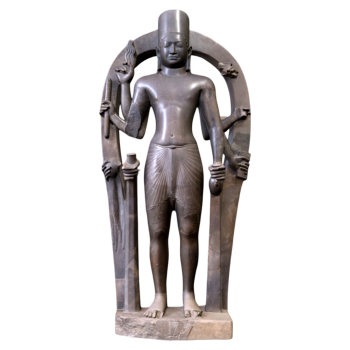
"Zhancheng Atheification of the King" was created in the late 10th century AD, made of sandstone. The statue is similar in style to the sculptures in ancient temple sites such as Mishan and Toyo in Vietnam's central highlands (south of Da Nang). As a classic representative of Zhancheng sculpture, this work of art has rarity and typicality. Zhancheng is a kingdom influenced by Indian culture that flourished in southern Vietnam between the 3rd and 15th centuries AD. The statue depicts a deified king who sits in a yoga-sitting position (Satvaparyankasava), holding a lotus flower with both hands outstretched.
12th Century Cambodian Artifacts

12th Century Cambodian Artifacts

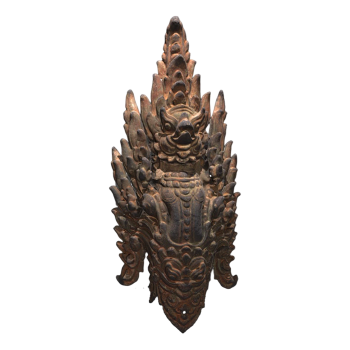
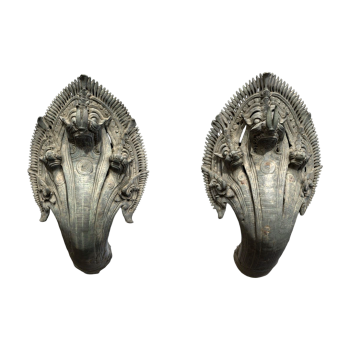
This pair of works is "The Snake God (Naga) Decorative Top", created in the 12th century AD (Angkor Wat period). This artwork is from Cambodia and is made of bronze. The overall size is 29.2 x 15.2 x 15.2cm (about 11 1/2 x 6 x 6 inches). It is currently in the Cleveland Museum of Art.
12th Century Cambodian Cultural Relics Portable Statues of Sakyamuni Buddha

12th Century Cambodian Cultural Relics Portable Statues of Sakyamuni Buddha

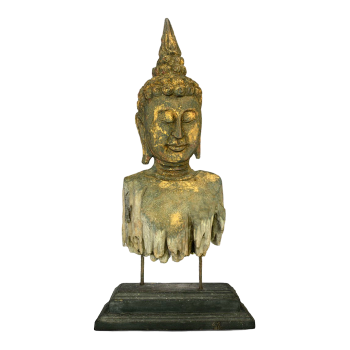
This work is a portable icon of Shakyamuni Buddha, with a gesture of touch-the-ground seal. The creation time is about from the late 1100 to the early 1200 s. It comes from Cambodia and belongs to the artworks of the seventh generation of jayavarma (Jayavarman VII). The material is bronze and measures 42 x 18.5 x 3cm (about 16 9/16 x 7 5/16 x 1 3/16 inches), which is in the Cleveland Museum of Art.
Indian marble temple pillars

Indian marble temple pillars

Indian marble temple pillars are from Jain temples in India. It is now located at the British Museum in London. Production and twelfth century.
Gilded Stone Carving of Hindu Elephant Head God

Gilded Stone Carving of Hindu Elephant Head God

The elephant-headed god, Ganisavan, Ganesha in name, Ganapati, is the god of wisdom and the god of breaking down obstacles in Hindu and Hindu mythology. It is a combination of the wisdom of man and the elephant, especially the Shiva and Vishnu sects of Hinduism. Because it is a group of small gods (Gana) who are good at serving Shiva, it is also called "group masters", that is, the Lord of Gana. Its shape is like a person with a big belly and a single tooth. It holds an axe, candy, rosary and lotus. Its long teeth have great divine power. A single blow will turn Gachamuha into a giant mouse and its mount. His character is kind and kind, but he is brave and firm in war.
Dan Bi Stone-Panlong Sculpture

Dan Bi Stone-Panlong Sculpture

12th Century Cambodian Cultural Relics Buddha Tempted by Magic Ro

12th Century Cambodian Cultural Relics Buddha Tempted by Magic Ro

This work is called "Buddha Tempted by Magic Luo". It was created in Cambodia from the end of the 12th century to the beginning of the 13th century. It belongs to the reign of Jayavarma VII. It is a bronze sculpture with overall dimensions of 42 x 18.5 x 3cm and top section of 22 x 17 x 3cm, currently in the collection of the Cleveland Museum of Art. This sculpture depicts the Buddha under the Bodhi tree to resist the temptation of the magic Luo scene. The Buddha is surrounded by a ring of burning gems and blossoms of lotus petals, symbolizing enlightenment and divine radiance. The right hand points to the ground and makes a gesture of "touching the ground", symbolizing the call to the earth.
12th Century Cambodian Heritage Buddha Tempted by Moreau Tower Top Ornament

12th Century Cambodian Heritage Buddha Tempted by Moreau Tower Top Ornament

This work is called "Buddha Tempted by Magic Luo". It was created in Cambodia from the end of the 12th century to the beginning of the 13th century. It belongs to the reign of Jayavarma VII. It is a bronze sculpture with overall dimensions of 42 x 18.5 x 3cm and top section of 22 x 17 x 3cm, currently in the collection of the Cleveland Museum of Art. This sculpture depicts the Buddha under the Bodhi tree to resist the temptation of the magic Luo scene. The Buddha is surrounded by a ring of burning gems and blossoms of lotus petals, symbolizing enlightenment and divine radiance. The right hand points to the ground and makes a gesture of "touching the ground", symbolizing the call to the earth.
18th Century European Porcelain Ceramic Guanyin Statues

18th Century European Porcelain Ceramic Guanyin Statues

This ceramic Guanyin statue was made by Johann Gregorius Höroldt, a German painter and porcelain painter. Holdert is known for his Chinese style decoration (Chinoiserie) designs.
18th Century European Porcelain Guanyin Statues

18th Century European Porcelain Guanyin Statues

This Guanyin image is one of the early works of the Mason Porcelain Factory and is based on a Chinese prototype. The porcelain was made by Johann Gregorius Höroldt, a German painter and porcelain painter. Holdert is known for his Chinese style decoration (Chinoiserie) designs.
Eighteenth-century sculpture of Santa Anna

Eighteenth-century sculpture of Santa Anna

This sculpture was created in the 18th century and is on display at the Katia Lexander Klosinski Museum. The sculpture depicts the image of Santa Anna, the mother of the Virgin Mary and an important figure in the Christian tradition. The sculpture is carved using wood in the style of the Baroque period, showing the artistic style and craftsmanship of the time.
16th century wood carving of Santa Ana
16th century wood carving of Santa Ana

This sculpture was created in the 16th century and is on display at the Biyates Land Museum. The sculpture depicts the image of Santa Anna, the mother of the Virgin Mary and an important figure in the Christian tradition. The sculpture is carved using wood in the Renaissance style, showing the artistic style and craftsmanship of the time.
Esther's Scroll and Its Envelope

Esther's Scroll and Its Envelope

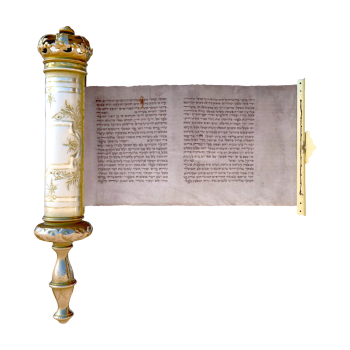
This Esther scroll and its envelope is an important exhibit in the Historical Museum of the City of Kraków. The Esther Scroll is one of the important artifacts of Judaism. The Book of Esther is written on the scroll, which is a scroll in the Hebrew Bible. The envelope of the scroll is made of gilded silver wire and coral, and is richly decorated, showing the religious art and culture of Judaism. The scrolls are from Jewish communities during the Ottoman period, and the Esther scrolls are usually read in synagogues during the Jewish festival of Purim.
Holy Sepulchre Cathedral Jesus crucifixion statue in Miecheów

Holy Sepulchre Cathedral Jesus crucifixion statue in Miecheów

The Cathedral of the Holy Sepulchre was built in the early 14th century and is a fine example of the Gothic architectural style. Its design was inspired by the Church of the Holy Sepulchre in Jerusalem, one of the most important places of pilgrimage in the Christian world. This cathedral of Miecheów also became an important pilgrimage site in Poland. The cathedral contains many precious works of art and artifacts, including exquisite Gothic crosses, sculptures and frescoes. These works of art not only demonstrate the power of religious belief, but also reflect the artistic style and craftsmanship of the Middle Ages.
Mummy Osiris in a Silver Mask

Mummy Osiris in a Silver Mask

"Maize mummy Osiris with silver mask" is a unique sacrificial object in ancient Egypt. These mummies are usually made using corn cobs or corn kernels, symbolizing harvest and rebirth. During the production process, the ancient Egyptians decorated the corn cobs in a mummy-like shape, wrapped them in linen, and then put a silver mask on the head to represent Osiris (Osiris), the god of the underworld in Egyptian mythology. Osiris played an important role in ancient Egyptian religion, where he was considered the patron saint of the dead and a symbol of resurrection. By making such corn mummies, the ancient Egyptians hoped to pray for a good harvest and the continuation of life.
Kirin Statue in Qing Dynasty

Kirin Statue in Qing Dynasty

Japanese Red Ghost Wooden Mask

Japanese Red Ghost Wooden Mask

Japanese fox wooden mask

Japanese fox wooden mask

Japanese Red Ghost Wooden Mask
Japanese Red Ghost Wooden Mask

Hangzhou Ancient Temple Relief Mural

Hangzhou Ancient Temple Relief Mural

South China Sea Guanyin Stone Carvings

South China Sea Guanyin Stone Carvings

Japanese Togou Wooden Mask

Japanese Togou Wooden Mask

A dog is a type of monster in Japanese folklore that has the shape of a half-human, half-bird, usually with a long nose and a red mask. The dog has a rich symbolic meaning in Japanese culture. It is regarded as a mountain god and protector, and is also regarded as a troublemaker and disaster-causing existence.
Statue of Goddess Tralock

Statue of Goddess Tralock

In Aztec culture, the name of Chalchiutlikue means "the woman in the jade dress", and she is not only Trellock's wife, but is sometimes considered his sister. Her image often appears in water-related sculptures and artifacts, symbolizing the vitality and purifying power of water. These sculptural artifacts usually show her wearing an ornate jade skirt, symbolizing her deep connection to water. She is believed to be able to trigger storms and whirlpools, protect navigators, and is worshipped in agricultural rituals as a goddess who can make the land fertile.
Stone Statues of Marta

Stone Statues of Marta

It is a statue in Brno, Czech Republic, known for its early Classical style and residual Rococo elements. Dating back to 1789, it is an important cultural symbol and historical witness. Appreciated for its artistic value, it is also valued for its environmental shaping role in the city park, which is located in front of the Mitrovsky summer house. It not only provides an aesthetic enjoyment for the citizens and tourists of Brno, but also gives people a glimpse of the artistic style and cultural atmosphere of that era. As a historical relic, it bears witness to the rich historical and cultural heritage of Brno and the entire Czech region.
Wooden devil statue-Jiří Nekola

Wooden devil statue-Jiří Nekola

It is one of the wood carvings by Czech artist Jiří Nekola, which was exhibited in Frymburk in the exhibition "Wecutwoodforchildren2014. He mainly focuses on the creation of human figures, but also on sculptures with animal and fairy-tale themes. Not only are exhibitions organized every year, such as the Art Space Gallery in Prague 1 and the Šeberák restaurant in Prague Kunratice, but his works can also be seen in several public places, including zoos and parks. The statue shows his deep understanding of wood and his skill in wood carving.
Konopiště Castle Park Mini Sphinx

Konopiště Castle Park Mini Sphinx

It is one of the most famous tourist attractions in the Czech Republic. This small replica of the Sphinx is located in the castle's grounds and offers visitors a unique viewing experience. It is part of the castle's history and culture, adding to the park's mystery and historical depth. Although it is a mini version, this replica of the Sphinx also shows the style of ancient Egyptian art, allowing visitors to get a glimpse of this symbol of ancient civilization even if they do not go abroad. Located in the gardens of Konopiště Castle, the gardens here are among the most beautiful in the Czech Republic and are known for their beautiful layouts and sculptures.
Veles Statues

Veles Statues

Is an important god in Slavic mythology, mainly in charge of the earth, water and the underworld. It is regarded as the protector of domestic animals, especially cattle, and the ruler of the dead. In Slavic cultures, he was closely associated with death and the cycle of nature and was considered a powerful god, in charge of the end of life and the destination of the soul. The image is changeable, sometimes depicted as a god with horns and long beard, sometimes as a giant snake or half-man and half-snake, symbolizing his strength and wisdom. Known for his cunning and wisdom, he is often opposed to Perron, the god of thunder and lightning, and the confrontation between the two symbolizes storms and lightning in nature.
Angel Stone Carving

Angel Stone Carving

It is a mysterious existence derived from many religions and myths and legends. It is usually regarded as the messenger or servant of the gods, with supernatural power and purity. In Christianity, Judaism, and Islam, angels are depicted as messengers of God responsible for communicating God's will and protecting believers. It is often depicted as a human figure with wings, symbolizing purity and divinity. In art and literature, angels are often depicted as symbols of tenderness, compassion and protection, in a variety of images, from classical white robes to modern expressions. It is also often associated with music and is considered a singer of heaven.
Zeus head stone carving

Zeus head stone carving

It is the king of the gods in ancient Greek mythology and the head of the twelve gods of Olympus. The god of the sky and thunder and lightning, with thunderbolt as a weapon, maintains the order between heaven and earth. He is the son of the second generation god king Cronus of the Titan clan, whose mother is Ria. To avoid the fate of being devoured by Cronus, he was hidden by his mother and raised in Crete or by the Goddess Nimve. As an adult, Zeus rescued his brothers and sisters who had been devoured by his father and fought with them against Cronus, eventually overthrowing the rule of the Titans. Known for his wisdom and strength, his reign symbolized the rise of the new theocracy and the fall of the old. play a supreme role in mythology
Cloth bag monk stone statue

Cloth bag monk stone statue

The original name of this, is a tourist monk in the Five Dynasties period. Its prototype legend is a monk who behaved grotesquely and beamed alms in Zhejiang. He often uses a wooden stick to carry a pocket to beg around and put the begging items in his pocket, hence the name "cloth bag monk". It is said that the monk Buca is the incarnation of Maitreya. His actions and words are full of Zen. His image and stories are widely circulated among the people and become an important figure in Buddhist culture. The image is often depicted as potty-bellied and smiling, which is related to the tolerant, optimistic and humorous image he gives. His stories and images have an important place in Buddhist culture.
Stone carving of fire-breathing dragon

Stone carving of fire-breathing dragon