Dancing King Kong Hai Mother

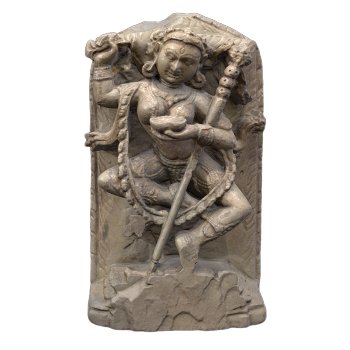
Dancing King Kong Hai Mother

This is a small stone tablet called "Dancing King Kong Hai Mother", created in Nepal from 1000 to 1100 AD. The overall size of the statue is 9.6 x 5.3cm. The statue is now in the collection of the Cleveland Museum of Art. King Kong Hai Mother, also known as King Kong Yoga Mother, is one of the Buddhist King Kong (Tantra) statues and belongs to the system of empty mothers. The Ming concubine of Shengle King Kong and Great Compassion Red Guanyin originated in India from the 8th to the 12th centuries. The mother-to-mother revered by the four major sects is mainly used to make the spirit of the treasure bottle and the concept of self-determination.
Bamboo root carving of 'Kirin'

Bamboo root carving of 'Kirin'

Bamboo root carving is a traditional handicraft made from bamboo roots, mainly produced in Nanjing, Jiangsu and Jiading, Shanghai. It was once divided into the "Jiading School" and the "Jinling School". Chinese artworks made from bamboo include bamboo carvings, bamboo root carvings, bamboo bonsai, bamboo armrests, etc. In the southern region, there are dense bamboo forests growing. Bamboo, as a plant, had extraordinary significance for ancient literati. The phrase 'It is better to eat without meat than to live without bamboo' was used by the Song dynasty literary giant Su Dongpo to express his spiritual world, but it also reflects the great poet's love for bamboo.
Longmen Grottoes in Henan, China

Longmen Grottoes in Henan, China

Located on both sides of the Yishui River in the southern suburbs of Luoyang City, Henan Province, China, it is one of the four major grottoes in China and a world-renowned treasure trove of Buddhist art. Excavated from the Northern Wei Dynasty to the Tang Dynasty, it lasted for more than 400 years and showcased the peak of ancient Chinese Buddhist sculpture art. Known for its grand scale, exquisite art, and rich content. There are over 2100 caves, more than 100000 Buddha statues, as well as a large number of inscriptions and pagodas in the grotto complex. The most famous among them is the Lushena Buddha, which is 17.14 meters high and has a solemn and dignified face. It is an iconic sculpture of the Longmen Grottoes. In 2011, it was listed as a World Cultural Heritage site by UNESCO.
Statue of Japanese Daozu God

Statue of Japanese Daozu God

A traditional symbol of faith on the Izu Peninsula in Shizuoka Prefecture, Japan. Daozu gods are deities who protect roads and travelers. In Japanese culture, they are often placed on both sides of roads, especially at intersections in mountainous areas, to bless the safety of passing pedestrians. These stone statues usually appear in pairs, with ancient and rustic images, reflecting the characteristics of Japanese folk art. Known for its long history and unique style. Not only is it an object of local faith, but it has also become a tourist attraction that attracts visitors. Often using rounded carving techniques, it showcases a primitive and mysterious charm, reflecting the ancient Japanese reverence for nature and gods.
The Blue faced Vajra Buddha statue at Shengman Temple in Japan
The Blue faced Vajra Buddha statue at Shengman Temple in Japan

A Buddha statue enshrined in Shengman Temple, Shinbori 1-chome, Edogawa ku, Tokyo, Japan. Qingmian Diamond, also known as Qingshi Big Diamond. Known for its unique blue face, it is one of the iconic cultural relics of Shengman Temple. Representing the Vajrayana in Buddhism, symbolizing fearlessness and strength, it is often depicted as a protector deity, protecting Buddhism from evil spirits. Shengman Temple is a Buddhist temple with a long history, and the blue faced Vajra statue inside is not only a symbol of religious belief, but also a manifestation of artistic and cultural heritage. The existence of this Buddha statue not only attracted many believers to come and worship, but also provided valuable physical materials for the study of Buddhist art.
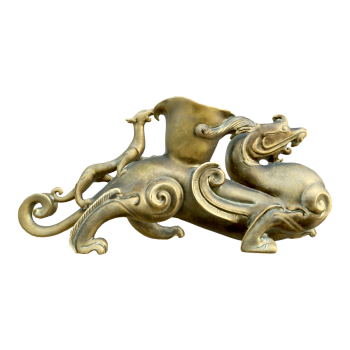
Bronze Pixiu

Bronze Pixiu

Triceratops

Triceratops

Uma Maheshwara Limestone Indian Sculpture

Uma Maheshwara Limestone Indian Sculpture

Uma Mahshvara is a form in Hindu Buddhism that represents the divine couple, Maheshvara and Uma. This image symbolizes the union of male and female aspects of the universe, representing the unity of all things.
brave troops

brave troops

Pixiu (p í xi ū) is a fierce and powerful divine beast in ancient Chinese mythology, with "Pixiu" being male and "Pixiu" being female. Pixiu, also known as Tianlu, Bixie, and Baijie, is related to the beliefs of ancient people. In Volume 10 of the Ming Dynasty's Zhou Qi's "Examination of Names", it is mentioned that Pixiu is called Bixie because it can dispel bad luck, and Tianlu because it can attract wealth. In the south, people often refer to it as Pixiu, while in the north it is often called Pixie. Pixiu has a body shape like a tiger or leopard, with a dragon like head and tail. Its color is also golden and jade, and it has a pair of wings on its shoulders that cannot be spread. It is known as one of the five great auspicious beasts along with the dragon, phoenix, turtle, and qilin.
Buddha statue

Buddha statue

Renneisance Church Angel Statue
Renneisance Church Angel Statue

The angel statues in churches during the Renaissance period are a type of artwork with unique aesthetic and religious significance. These angel statues often appear in art works such as murals, sculptures, and stained glass in European churches. Known for its elegant and refined image. They are usually presented in the form of beautiful women or children, showcasing the purity and elegance of angels through soft lines and intricate carvings. The angel statues in churches usually symbolize religious beliefs and the spiritual world. They showcase the purity and elegance of angels with exquisite images and exquisite craftsmanship, while playing an important religious role in churches, bringing comfort to people's religious beliefs and spirits
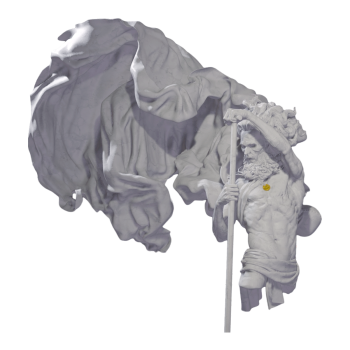
Charon, a marble sculpture of a ferryman from the underworld in Greek mythology

Charon, a marble sculpture of a ferryman from the underworld in Greek mythology

Charon is a ferryman in Greek mythology responsible for transporting the souls of the deceased from Earth to the underworld. He was described as a pale faced old man, dressed in a black robe, standing on the edge of the Styx River, ready to cross the river with the deceased. According to ancient Greek beliefs, every deceased person was required to pay a token to Charon as a ferry fare. In some legends, this token is a coin, while in other legends, it may be a magical copper coin placed in the mouth of the deceased. If the deceased did not pay the ferry fare, they would be trapped on Earth and unable to enter the underworld.
Eight Immortals Crossing the Sea Han Zhong Li Clay Carving Ornament
Eight Immortals Crossing the Sea Han Zhong Li Clay Carving Ornament

The Eight Immortals Crossing the Sea by Han Zhongli "is an ancient Chinese legend that tells the story of the Eight Immortals embarking on a cross sea adventure to help Han Zhongli search for immortal grass. The Eight Immortals are Han Xiangzi, Tie Guai Li, Cao Guojiu, Zhang Guolao, He Xiangu, Lv Dongbin, Lan Caihe, and Fairy Sister. They each have unique immortal skills and talents, and through cooperation, they overcame numerous difficulties and helped Han Zhongli successfully find the immortal grass. This story inherits the values of friendship, courage, and teamwork in ancient Chinese culture, and the image of the Eight Immortals crossing the sea has become one of the well-known figures in Chinese culture, often quoted and praised by people.
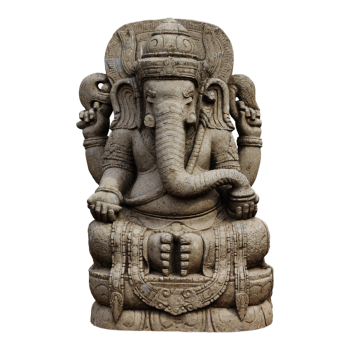
Stone sculpture of Ganesha, the Hindu god of elephant heads

Stone sculpture of Ganesha, the Hindu god of elephant heads

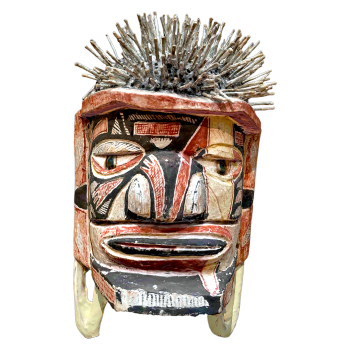
3D scanning of Maya solid wood masks

3D scanning of Maya solid wood masks

The Bamboo Root Carving Arhat, a Lucky Lion, was created by Liang Fengzhu
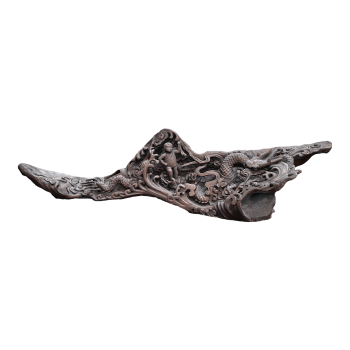
The Bamboo Root Carving Arhat, a Lucky Lion, was created by Liang Fengzhu

Ruishi Luohan Bamboo Root Carving, a 1999 work by Liang Fengzhu, a master of Chinese arts and crafts. It is currently collected in the Liangfengzhu Arts and Crafts Museum in Nanyue, Hengyang, China, with a height of 21 cm and a width of 23.2 cm
Nezha's Chaos in the Sea "created by Liang Fengzhu
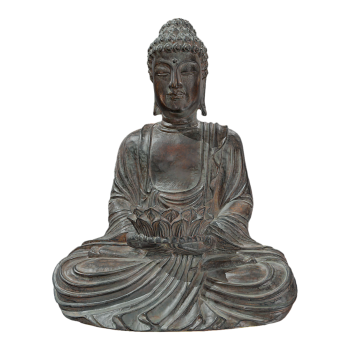
Nezha's Chaos in the Sea "created by Liang Fengzhu

The gloomy wood carving, made by Chinese master of arts and crafts Liang Fengzhu in 2001, is now collected at the Liang Fengzhu Arts and Crafts Museum in Nanyue, Hengyang, China. Nezha is a protector deity in Chinese folk religion. His official Taoist name is' Marshal of the Middle Altar '. After he became a deity, he was bestowed with the title of "Third Lotus Prince".
The sitting statue of Shakyamuni Buddha during the Guishuang Empire period

The sitting statue of Shakyamuni Buddha during the Guishuang Empire period

The Kushan Empire was an ancient prosperous country that existed in Central and South Asia. During its peak period (105-250 AD), its territory extended from present-day Tajikistan to the Caspian Sea, Afghanistan, and the Ganges River basin. Guishuang is a branch of the Dayue people who lived in the Amu Darya and Syr Darya river basins in the 2nd century BC. In 130 BC, the Yue people migrated south to conquer Daxia and divided it into five tribes, each with a chief called the Marquis of Xi. The Guishuang Xiahou Qiu, one of the Five Xiahou, eliminated the other Xiahou, unified the five tribes, and established the Guishuang Kingdom. However, Qiu defeated Anxi and attacked the Kabul River Basin and Kashmir region southward, eventually establishing the capital as Gaofu.
Chinese white ceramic birthday star painted statue

Chinese white ceramic birthday star painted statue

Shouxing, also known as the Antarctic Elder Star, is the god of longevity in ancient mythology. He is also a deity in Taoism, originally named Xingxing and one of the three stars of fortune, fortune, and longevity. After Emperor Qin Shi Huang unified the world, he built the Shouxing Temple in Du County near Chang'an. The late birthday star evolved into the name of an immortal. The Ming Dynasty novel "Journey to the West" depicts the birthday star holding a lingzhi mushroom, with a long head, large ears, and a short body. The "Warning to the World" has a mythological story of "three stars of fortune, wealth, and longevity". The birthday star in the portrait is an old man with white beard, holding a staff and a raised forehead. The ancients symbolized the longevity of the elderly. Often accompanied by deer, cranes, immortal peaches, etc., symbolizing longevity.
The sculpture "Aphrodite" from the ancient Roman Empire period

The sculpture "Aphrodite" from the ancient Roman Empire period

Aphrodite, also known as Aphrodite in Greek, is the goddess of love and beauty in ancient Greek mythology. She is also the goddess of sexuality and one of the twelve Olympian gods. Because it was born in the ocean, it is sometimes revered as a patron saint for navigation. Aphrodite was born on the waves of the sea, with porcelain like skin, blonde hair and blue eyes, and the perfect figure and appearance of ancient Greek women, symbolizing the beauty of women and considered the highest symbol of female physical beauty. It is currently housed in the Capitoline Museum.
The cast iron statue of the Sphinx in front of the French Military Museum

The cast iron statue of the Sphinx in front of the French Military Museum

The Sphinx statue stands between museums and streets in Paris. Made by Ducel Foundry, which was one of the most important foundries in France at that time.
The marble statue "Ugolino and His Sons" collected in the Rodin Museum in Paris

The marble statue "Ugolino and His Sons" collected in the Rodin Museum in Paris

Ugolino and his sons are Ugolino marble sculptures made by Jean Baptiste Carpeaux in Paris in the 1860s. It depicts the story of Ugolino in Dante's Inferno, where a 13th century Count is imprisoned and starving with his children. This work is known for its expressive details, which opened up Karbo's career. It is currently housed in the Rodin Museum in Paris.
Chinese white ceramic painted sculpture of the God of Wealth

Chinese white ceramic painted sculpture of the God of Wealth

In Chinese Taoism, the God of Wealth is the deity responsible for managing the wealth of the world. In Chinese folk customs, New Year's Eve is the busiest day of the Spring Festival. On New Year's Eve, people eat dumplings and stay up all night, waiting to pick up the God of Wealth. Some even bring the God of Wealth to their doorstep, and on the second day of the lunar new year, they also offer sacrifices to the God of Wealth. Nowadays, it is most popular to welcome the God of Wealth on the fifth day of the first lunar month. The God of Wealth worshipped includes the God of Wealth, the God of Wealth, and the God of Wealth, such as Zhao Gongming and Guan Gong; The God of Wealth is Bi Gan, Fan Li, and others. The gods of wealth that people believe in include the Five Saints, Chai Rong, Caigong Caimu, Hehe Erxian, Lishi Xianguan, Wenchang Emperor, and Living God of Wealth Shen Wansan. Among them, the belief in the Wenwu God of Wealth and the Five Saints is the most widespread.
7th century Tang Dynasty gilded bronze sculpture "A Pair of Xianglong - Left"

7th century Tang Dynasty gilded bronze sculpture "A Pair of Xianglong - Left"

This Chinese cultural relic is named "A Pair of Xianglong" and was made during the Tang Dynasty in the 7th century. It is made of gold-plated bronze. The dragon is a universal symbol of glory in Chinese culture. As early as the Neolithic Age, the Chinese believed that this mythical creature was an auspicious animal, living in heaven, providing rain and nourishing life. In the late Bronze Age, dragons were equated with emperors. In 221 BC, the great unifier of China and builder of the Great Wall, Qin Shi Huang, declared himself a descendant of dragons. Since then, almost every ruler has been referred to as the "True Dragon Emperor", and the Chinese court is known as the Dragon King constellation, with the official court attire being dragon robes.
Sandstone sculpture from the Northern Wei Dynasty titled 'Stone Statue of Buddha Sitting in Four Sided Shrine'

Sandstone sculpture from the Northern Wei Dynasty titled 'Stone Statue of Buddha Sitting in Four Sided Shrine'

This Chinese cultural relic is a seated Buddha statue in a four sided shrine, made during the Northern Wei Dynasty and carved from sandstone. Unearthed in 1957 in Nanguoshui, Qin County, with severe weathering on the surface, it is collected by the Nanguoshui Stone Carving Museum in Qin County. A total of 4 niches were unearthed, each engraved with 4 Buddha statues.
The plaster statue of Avalokitesvara Bodhisattva sitting in Pakistan in the third century

The plaster statue of Avalokitesvara Bodhisattva sitting in Pakistan in the third century

This statue, known as the seated statue of Avalokitesvara Bodhisattva, was made in the 3rd to 4th century AD and originated from Pakistan. It is currently housed in the Jingci Art Museum and is made of plaster material. This sitting Avalokitesvara Bodhisattva wears a tall Tibetan style crown on his head, earrings hanging from his earlobes, his eyes slightly closed, and he meditates with a calm and relaxed facial expression, showcasing the unique charm of the plaster statue.
Shale statue of Shakyamuni half body from Peshawar, Pakistan in the third century

Shale statue of Shakyamuni half body from Peshawar, Pakistan in the third century

The half body statue of Buddha, made of shale in the 2nd and 3rd centuries, originated from Peshawar and is currently housed in the National Museum of Pakistan. Shakyamuni was like turning a wheel with both hands, wearing a huge bun on his head. He has regular facial features, a high nose, deep eyes, and a small beard on his lips. Wearing a robe with exposed right shoulder, the folds are very smooth. Strong in physique, it is the pinnacle of the Jiandala statue.
Statue of Bodhisattva Half Body during the Northern Wei Dynasty

Statue of Bodhisattva Half Body during the Northern Wei Dynasty

The statue is named a half body statue of a Bodhisattva and was made during the Northern Wei Dynasty. The site in front of the Yungang Grottoes was unearthed in 992 and collected by the Yungang Research Institute.
Statue of the Virgin Mary in Kitt Lake Village, Russia during the Tsarist period

Statue of the Virgin Mary in Kitt Lake Village, Russia during the Tsarist period

Colorful statue of the Virgin Mary of Lake Kitt. This Marian pillar was erected in the middle of the village green space around 1770. The sage stood with his hands clasped together on half of the globe, which was entwined by a snake.
The marble statue of Venus de Milos from the ancient Roman Empire period

The marble statue of Venus de Milos from the ancient Roman Empire period

The Venus de Milos, also known as the Broken Arm Venus, was discovered on Milos Island in 1820 and immediately caused a sensation throughout Europe. It was contested by several countries, and the arms of the sculpture were unfortunately destroyed during the chaos. After many twists and turns, it was finally purchased by France as a birthday gift to King Louis XVIII of France, who then gave it to the Houston Museum of Fine Arts. From then on, Venus became a broken arm goddess. However, the lost arms instead interpret a flawed beauty.
During the Tang Dynasty, the white stone sculpture "Changyang Taizun Stone Statue" was created

During the Tang Dynasty, the white stone sculpture "Changyang Taizun Stone Statue" was created

The Changyang Taizun stone statue was first carved in the seventh year of the Tang Kaiyuan era (719 AD) and is a precious resource for studying Taoism, ancient sculpture, and calligraphy art. The statue is made of white stone, one meter high, dressed in court attire, wearing a crown, with one hand supporting the knee and the other holding a belt, sitting on a stone seat with a dignified expression and smooth clothing patterns. Fuxi is one meter tall, with a bun on his head and curly long hair draped over his shoulders. He is wearing a shoulder and apron connected by leaves, holding the Bagua Taiji diagram in his hand, symbolizing Fuxi's creation of the Book of Changes.
Bronze Dragon Statue in Hue Royal City, Vietnam

Bronze Dragon Statue in Hue Royal City, Vietnam

The dragon of the inner city of Hue, Vietnam The bronze dragon was cast in 1842 and is located in front of the Yueshi Hall in Da Nei Fu, Hue City, Vietnam. The bronze dragon was cast in front of the Shunhua Imperial City in 1842.
Japanese Heian period woodcarving 'Shintoism'

Japanese Heian period woodcarving 'Shintoism'

God is the name of a deity related to the traditional Shinto religion in Japan. It is said that they were originally created for the Usa Hachiman Shrine in Oita, Kyushu. The Usa Hachiman Shrine has four main deities: Himeji Daisen, who helps those engaged in agriculture and sea travel; The legendary Emperor Chongjun of the 5th century was deified as the Divine Hachiman; Empress Jin Gu; And the deity of Kawahara Mountain who helped copper miners. The identities of these two characters are not yet clear, but they belong to a larger group that includes at least three other deities. The wooden carvings were first collected at the Cleveland Museum of Art.
Buddhist Ksitigarbha Bodhisattva clay sculpture

Buddhist Ksitigarbha Bodhisattva clay sculpture

Ksitigarbha Bodhisattva, a Buddhist bodhisattva name, is a transliteration of the Sanskrit K ṣ itigarbha, transliterated as "Qichadi Lianpo". In the Ten Wheel Sutra of Ksitigarbha, it is said that Ksitigarbha Bodhisattva is "as calm and composed as the earth, and as deep and secret as a secret treasure, hence its name. Ksitigarbha Bodhisattva is an important Bodhisattva in Buddhist tradition, revered as the savior and protector of sentient beings. His full name is Ksitigarbha Bodhisattva, also known as Ksitigarbha Bodhisattva King or Ksitigarbha Bodhisattva King. He is considered the ruler of hell, with the mission of protecting sentient beings and saving the souls. With infinite compassion and wisdom, Ksitigarbha Bodhisattva promises not to retreat from the suffering of sentient beings until they are all liberated from the cycle of suffering.
The Divine Wood Statue of Shintoism in Japan

The Divine Wood Statue of Shintoism in Japan

This sculpture represents a god of Shintoism, produced during the Heian period in Japan (794-1185). It is carved from a piece of wood and represents the image of a courtier during the Heian period. At that time, the royal family was endowed with divinity, to the extent that some nobles were deified and revered as gods after their death. This sculpture measures 53.3 x 47 cm and was purchased from the Cleveland Museum of Art in 1978.