Nepal Cultural Heritage Frog God

Nepal Cultural Heritage Frog God

It is a mythical animal, with parts that look like frogs and other parts that look like puppies. It is a special statue in Nepalese culture. These statues are often built around wells, hand pumps and ancient faucets, and are symbolically associated with rain and harvest. People used to worship them in times of drought, hoping for more rain and crop yields through prayers and rituals.
Paris, France Dolly Garden Statue of the Nile God

Paris, France Dolly Garden Statue of the Nile God

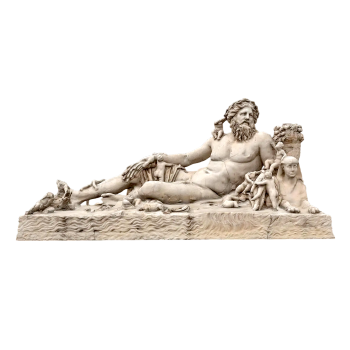
"God of the Nile", a sculpture made by Lorenzo Ottoni (Lorenzo) (1648-1736) around 1688-1692, the original of the statue is the Greco-Roman statue "Statua del Dio Nilo" found in the temple of Isis, dating from the 2nd to 3rd centuries AD. The original sculpture is located in the Vatican Museums, and since 1720 the statue has been placed in the Tuileries Garden in Paris.
Nepal Cultural Heritage Golden Temple Bodhisattva Statues

Nepal Cultural Heritage Golden Temple Bodhisattva Statues

The statue is located inside the Hiranya Varna Mahavihar Temple. The temple is also known as the Golden Temple because all the statues and structures are painted in gold. Unlike other Mahayana Buddhist temples (Mahavihar), this temple is larger and has a three-story golden pagoda dedicated to the "Sakyamuni Buddha". The stupa was built by King Bhaskar Varman in the 12th century.
Bronze Buddha Statues at Bagramushi Temple in Patan, Nepal

Bronze Buddha Statues at Bagramushi Temple in Patan, Nepal

Bagramushi Temple (Baglamukhi Temple) is a famous temple in the city of Patan, Nepal, which is of great religious and cultural significance. It is a meeting point of Hindu and Buddhist faiths and attracts many believers and tourists.
Nepal Bagramushi Temple Buddha Buddha Calling for the Earth

Nepal Bagramushi Temple Buddha Buddha Calling for the Earth

The name of this sculpture is Buddha calling the earth. It is located outside the main entrance of Bagramushi temple in Patan, Nepal. It shows the scene of "Buddha calling the earth as proof. Such statues are usually made of bronze and may be plated with additional metals such as gold or copper. This statue of the Buddha shows the posture of the Buddha sitting with his left hand on his lap, his right hand pointing to the ground, and his palm facing inward, facing himself.
Nepal Kathmandu 16th century statue of a monk riding an elephant

Nepal Kathmandu 16th century statue of a monk riding an elephant

This stupa sculpture is located in the Swatambnath temple (Swayambhunath) in Kathmandu, Nepal.
Nepal Kathmandu 16th century building four-sided stupa

Nepal Kathmandu 16th century building four-sided stupa

This stupa sculpture is located in the Swatambnath temple (Swayambhunath) in Kathmandu, Nepal. The sculpture, which features four statues of Buddha, was carved on a stupa and was built in the 16th century. "Swayambhu" in Sanskrit means "self-born" or "self-emerging", indicating that it was not artificially constructed, but naturally generated. Therefore, the locals believe that the entire hill, including most of the sculptures in it, was raised by natural forces.
Hindu Cultural Heritage Gods and Couples on Mount Ganrinbozi

Hindu Cultural Heritage Gods and Couples on Mount Ganrinbozi

Hindu couple: The image of Lord Shiva (Maheshvara) nestling with his wife Parvati (Uma), surrounded by gods and animals, depicts their scenes on the sacred Mount Gangrinpozi. In Hindu tradition, Mount Gangin Bozi is considered the abode of Shiva, where he lived with Parvati and his children. Mount Gangrinpoche is located in western Tibet (now in China), near Lake Marjongcho and Lake Laangcho, and near the source of several of Asia's longest rivers, including the Indus, Satlej, Brahmaputra and Kanali, a tributary of the Ganges.
Nepal Cultural Heritage Swatambuenat Monastery Buddha Statues

Nepal Cultural Heritage Swatambuenat Monastery Buddha Statues

The sculpture is a standing statue of the Buddha, carved from a single huge granite stone. It is located in the Swatambuenat (Swayambhunath) temple in Kathmandu, Nepal. Built in the 10th century, this is one of the oldest sculptures in Swayambu. The sculpture is located on the front of the hill, along the ancient road leading to the stupa.
Statue of the god Vishnu outside the palace of Patan, Nepal
Statue of the god Vishnu outside the palace of Patan, Nepal

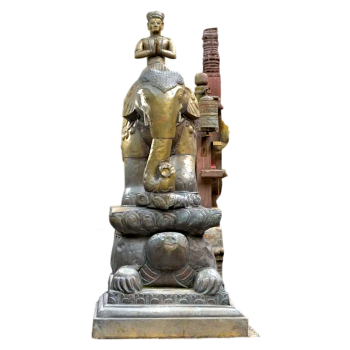
The statue is located outside the Patan Durbar Palace in Nepal. This statue was set up by the Mara kings because they were faithful followers of the god Vishnu.
Nepal Kathmandu Golden Monastery Buddha riding an elephant

Nepal Kathmandu Golden Monastery Buddha riding an elephant

This Buddha statue is located in the largest temple in Kathmandu, Nepal-Hiranya Varna Mahavihar (Golden Monastery). The temple is named "Golden Temple" because all its statues and buildings are painted in gold ". It is very unique, not only because of its large scale, but also because of the three-story golden pagoda of "Shakyamuni Buddha", which is said to have been built by the 12th century king Bhaskar Varman.
The Golden Buddha Statues of Sakyamuni at the Great Temple of Yejandhara, Nepal

The Golden Buddha Statues of Sakyamuni at the Great Temple of Yejandhara, Nepal

The Great Temple of Yeshidhara (Yasodhar Mahavihar) is an important Buddhist temple in the Patan region of Nepal with deep historical and cultural significance. It is one of the religious centers of the New Val community and carries a unique tradition of blending Buddhist and Hindu cultures.
Nepal Svolta Square Statue Garuda Statue

Nepal Svolta Square Statue Garuda Statue

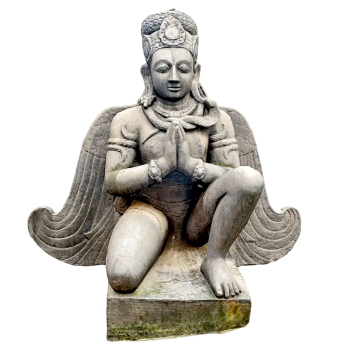
Garuda (Garuda) is a famous mythological creature in Hindu, Buddhist and Javanese religious cultures, often depicted as half human and half eagle. As a sacred being, it has traditionally been described as having the torso and limbs of a human being, as well as the wings and head of an eagle. Originally derived from Hindu mythology, it was Vishnu's mount and faithful retinue. It symbolizes speed and power, and is also considered a symbol of light, used to dispel darkness and evil.
Nepal Cultural Heritage Elephant Head God Buddha

Nepal Cultural Heritage Elephant Head God Buddha

The elephant-headed god, Ganisavan, Ganesha in name, Ganapati, is the god of wisdom and the god of breaking down obstacles in Hindu and Hindu mythology. It is a combination of the wisdom of man and the elephant, especially the Shiva and Vishnu sects of Hinduism. Because it is a group of small gods (Gana) who are good at serving Shiva, it is also called "group masters", that is, the Lord of Gana. Its shape is like a person with a big belly and a single tooth. It holds an axe, candy, rosary and lotus. Its long teeth have great divine power. A single blow will turn Gachamuha into a giant mouse and its mount. His character is kind and kind, but he is brave and firm in war.
Chimera Statue of Saint-Michel Fountain in Paris

Chimera Statue of Saint-Michel Fountain in Paris

It is one of two Chimera s located in the Saint-Michel Fountain (Saint-Michel Fountain) in Paris, created by the sculptor Henri-Alfred Jacqumar (Henri-Alfred Jacquemart). He created many famous animal sculptures in the 19th century.
Art statue of Diana in the city of Blois, France
Art statue of Diana in the city of Blois, France

The statue was created by American sculptor Anna Hyatt Huntington. She presented two statues to the French city of Blois: Diana and Joan of Arc. The statue of Diana was presented in 1931. Diana, the Roman goddess, absorbed most of the legends of her Greek counterpart, Artemis. She is the goddess of the hunt and the moon.
Buddhist Cultural Heritage BINDROO BACHROA

Buddhist Cultural Heritage BINDROO BACHROA

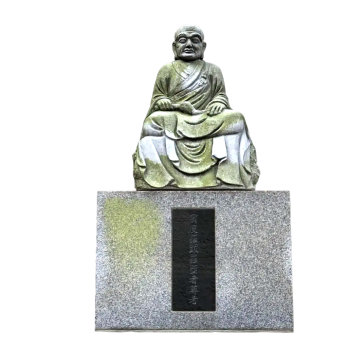
Bindu Luo Duoza (Pindola Bharadvaja) is an arhat in Buddhism. According to the earliest Buddhist scriptures in India, Bindu Rojama was one of the four arhats who the Buddha asked to remain on earth to promote the Dharma. Each of the four arhats corresponds to the four directions. Binduro is known for his mastery of occult and supernatural powers. Together with Ananda, he preached to women twice in the palace of Yutuoyan in Sami. In later centuries, the number of arhats increased from four to sixteen and eventually to eighteen. In Tibetan thangka paintings, Binduo Luo Luoga usually hands
French 19th Century Statue of the Triumph of Salenos
French 19th Century Statue of the Triumph of Salenos

The sculpture, The Triumph of Cellenos, is the work of one of the most iconic French sculptors of the 19th century, Jules Dalou. In this scene of Dionysus carnival, you can see Salenos, the adoptive father of the Greek god Dionysus, riding drunk on a struggling donkey. The figures at the bottom of the sculpture, including a fanatical follower of the female god of wine (Minard), do their best to try to carry Salenos. Dallou did not want his works to be displayed in museums, so the group of sculptures has been housed in the Luxembourg Park in Paris since 1897.
Nepal Cultural Heritage Kathmandu Gryphon Stone Carving

Nepal Cultural Heritage Kathmandu Gryphon Stone Carving

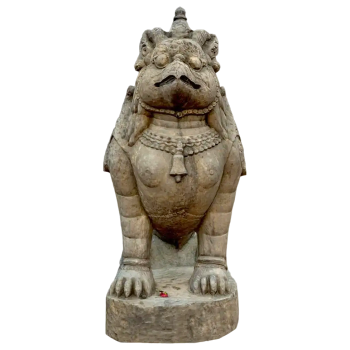
A griffin is a legendary creature that has the body, tail and hind legs of a lion, as well as the head and wings of an eagle, sometimes with its front claws as the claws of an eagle.
French sculptor Vital Dubre, The god of the sea, Neptunus

French sculptor Vital Dubre, The god of the sea, Neptunus

The representative work of the French sculptor Vital Dubre (Vital-Dubray) "Neptunus" was created in 1856. The work was produced by the Dussel Foundry (1823-1878) in Pocé-sur-Cisse. Neptunus: an ancient Roman god in charge of fresh water and the sea. From the time of the Punic War (264-146 BC), when the Romans demonstrated their naval superiority, Neputunus was gradually equated with the Greek god Poseidon. He is not only the god of fresh water, but also the god of the sea.
Khmer Empire Cultural Heritage Shiva-Vishnu Statues
Khmer Empire Cultural Heritage Shiva-Vishnu Statues

This statue was created around 600 AD and unearthed in the Phnom Da region of Cambodia. Its material is sandstone with gilded decoration, showing the delicacy and splendor of Khmer art at that time. This artistic style conveys the profound influence of Indian culture in Southeast Asia, while also reflecting the unique aesthetic and religious beliefs of the Khmer Kingdom. It is 173cm high, 75cm wide and 23cm thick. It is now in the Gimmy Museum of Asian Art, Paris, number MG 14910
Indian statue of god Vishnu FBX model

Indian statue of god Vishnu FBX model

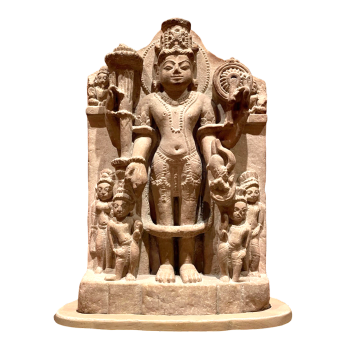
The statue of Vishnu and his attendants, dated from the 16th century AD, is made of sandstone and originated in central India. The creator is unknown. The statue depicts a scene surrounded by the Hindu god Vishnu and his attendants, showing the loftiness and solemnity of religious art. Vishnu is one of the three main gods of Hinduism and is regarded as the maintainer of the universe.
Hindu Cultural Heritage Lakshmi Statues

Hindu Cultural Heritage Lakshmi Statues

Lakshmi (Lakshmi) is the Hindu goddess of wealth, luck, beauty and prosperity. She is not only the wife of Vishnu, but also an important object of worship for Hindus. Lakshmi is often depicted as a beautiful woman sitting on a lotus flower, symbolizing purity and holiness. This model may be produced by modern three-dimensional technology, showing the artist's portrayal of this classic god image.
Indian 13th Century Sculpture Krishna Bronze Statue

Indian 13th Century Sculpture Krishna Bronze Statue

This is a bronze statue of Krishna from the southern Indian state of Tamil Nadu. This statue reflects the image of Krishna, one of the incarnations of the Hindu god Vishnu. Krishna is not only a deeply worshipped god in Hinduism, but also an important role in the epic Mahabharata. This sculpture has been identified as a cultural relic from the 13th to 14th centuries and is currently preserved in the Museum of World Cultures and Peoples in Barcelona, Spain. It is not only a symbol of Indian culture, but also an important heritage of cross-cultural communication.
Hindu cultural heritage stealing butter Krishna

Hindu cultural heritage stealing butter Krishna

Krishna (Krishna) is one of the widely worshipped gods in Hinduism, known for its mischievous, intelligent and charismatic. In Hindu mythology, Krishna's childhood often appears as a playful image, with the story of stealing butter being one of the most widely circulated episodes.
Kara Barawa Painted Stone Statues in Kathmandu, Nepalese Cultural Heritage

Kara Barawa Painted Stone Statues in Kathmandu, Nepalese Cultural Heritage

Kala Bhairava is a terrible incarnation of Shiva, associated with the power of destruction. As a Hindu deity, Kara Bailawa is believed by worshippers to help overcome disease, fight enemies, escape poverty, and eradicate hardship. His image is common in Hindu culture, and this statue in Kathmandu, Nepal is particularly famous and is part of the cultural heritage of the place.
Hindu Cultural Heritage Vishnu Sculpture

Hindu Cultural Heritage Vishnu Sculpture

Vishnu is the god of protection and maintenance in Hinduism. In many myths, he often appears in different incarnations to maintain the balance and justice of the universe. This "eight-armed statue of Vishnu" may depict a certain mythological image of him, in which the eight arms often symbolize his extraordinary ability and versatility.
Nepal Heritage Indra Square Brass Stone Lion

Nepal Heritage Indra Square Brass Stone Lion

This pair of brass sculptures is located at the gate of the "Akash Bhairav" temple in Indra Square, Kathmandu. Indrachowk is an ancient market square, historically a place where merchants traveling to and from India and Tibet often passed. This square is named after Indra, the Lord of Heaven in Hindu mythology. Today, the temples and markets here still attract a large number of pilgrims and shoppers.
Hindu Heritage Garuda Stone Carvings

Hindu Heritage Garuda Stone Carvings

Garuda is a bird (usually an eagle) in Hindu mythology, a mount (vahana) of the god Vishnu. Garuda unfolded in two forms. One is an animal form (such as a huge bird with half-spread wings), and the other is an anthropomorphic form (such as a human form with wings and some bird features).
Nepal's Cultural Heritage

Nepal's Cultural Heritage

a Hindu deity worshipped by Hindus. In Hinduism, he is a kind of incarnation of Shiva, associated with destruction. Bhairava means "terrifying form". This statue shows an important part of Nepalese culture and religious art.
Thai cultural heritage gilded Buddha head wood carving

Thai cultural heritage gilded Buddha head wood carving

The highlight of this work of art is that it combines the charm of hand carving with traditional craftsmanship. The making of Buddha statues in Thailand is an expression of religious belief and a manifestation of cultural history.
Top of 12th Century Cambodian Relic Sakyamuni Buddha icon

Top of 12th Century Cambodian Relic Sakyamuni Buddha icon

This work is a portable icon of Shakyamuni Buddha, with a gesture of touch-the-ground seal. The creation time is about from the late 1100 to the early 1200 s. It comes from Cambodia and belongs to the artworks of the seventh generation of jayavarma (Jayavarman VII). The material is bronze and measures 42 x 18.5 x 3cm (about 16 9/16 x 7 5/16 x 1 3/16 inches), which is in the Cleveland Museum of Art.
Hindu Cultural Heritage Shiva and Parvati

Hindu Cultural Heritage Shiva and Parvati

This is a Shiva and Parvati (Uma-Maheshvara) statue, made of sandstone, was created from the 10th to 11th centuries AD, and is currently in the collection of the Minneapolis Art Institute. In South Asian sculpture, Shiva (Shiva) and Parvati (Pārvatī) appear in a variety of image forms and incarnations. In this sculpture, Shiva is depicted as the 'Great God' (Maheshvara), while Parvati appears in the image of 'Uma' (Uma), the daughter of the mountain king.
Cambodian Angkor Period Cultural Heritage Bronze Garuda Sculpture

Cambodian Angkor Period Cultural Heritage Bronze Garuda Sculpture

This is the top decoration of the Garuda sculpture, created in the 12th to 13th century AD, made of Cambodian bronze, currently collected at the Minneapolis Institute of Art. Garuda is a sacred bird figure in Hinduism and Buddhism, symbolizing strength, courage and divine protection. This bronze decoration may have been part of a temple or religious building, used to decorate the top of a column or other important location. Its exquisite design shows the artistic style and craftsmanship of the Angkor period in Cambodia. The image of Garuda is often associated with the god Vishnu, symbolizing the victory over the forces of evil and the guardianship of faith.
India's Andaman and Nicobar Islands exorcism wood carving

India's Andaman and Nicobar Islands exorcism wood carving

This is an exorcism wood carving, created around 1900 AD, from the Andaman and Nicobar Islands near India. This wood carving is called kareau, which means "exorcist". Ceremonial healers made the statues, and local islanders believe they have magical protective powers. The Kareau statue is an important symbol of Andaman and Nicobar culture. These statues are usually carved from wood and are believed to be able to expel evil spirits or bad energy. They are often used in religious ceremonies or as amulets for families and communities. This statue reflects the deep belief of the islanders in the power of nature and spirituality.