Jupiter

Jupiter

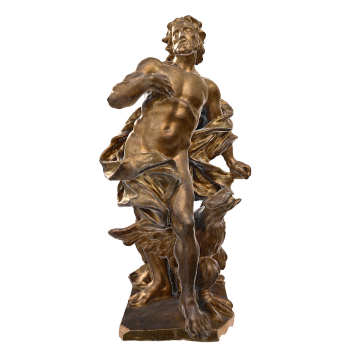
This is an artwork created by Giovanni Giuliani, which is a clay sculpture model of Jupiter designed for the collection of the Heiligenkreis Monastery. The height of this work is 43.7 centimeters, created in 1720. Jupiter is the main god in Roman mythology, in charge of the sky and thunder. In this work, Jupiter is depicted with an eagle at his feet as a symbol of power. There is an inscription on the back of the eagle's wings: 'Johan Giullian (i) Ficit 1720'. However, the upper part of the eagle's beak and a portion of its base have already broken.
Ganymede Ascending to Heaven

Ganymede Ascending to Heaven

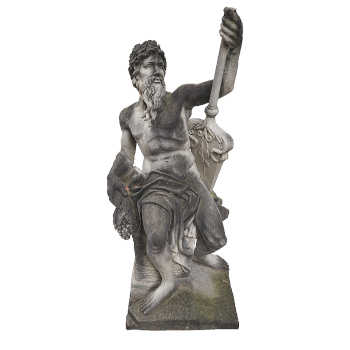
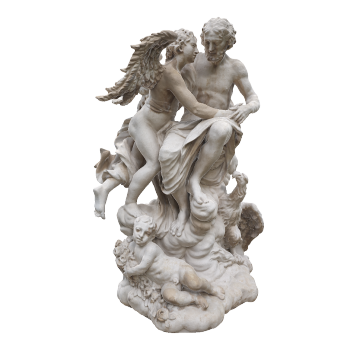
This is a sculpture located in Austerlitz Castle Park, depicting scenes of Jupiter and Ganymede. Jupiter embraced Ganymede and led him to heaven. At his feet was Cupid, with a quiver filled with arrows of love, and an eagle holding a beam of lightning in its claws. This statue carved from sandstone was created by Giovanni Giuliani in 1702. Jupiter is the main god in Roman mythology, in charge of the sky and thunder. Ganymede was the prince of Troy, chosen by Jupiter to become the god of wine among the gods, and thus transformed into an eagle and brought to heaven by Jupiter. Cupid is the goddess of love in Roman mythology, and his arrows can make people fall in love.
Isis Fountain

Isis Fountain

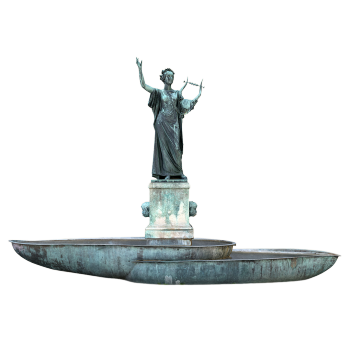
This is the Aess Fountain located in the 8th district of Vienna, which was built in 1833. The fountain consists of a four sided base with a lion's head spraying water. The base rises from an eight sided cast iron basin decorated with rose patterns. It began supplying water in 1804, mainly for the suburbs at that time. Inscriptions are attached to both the front and back of the base. At the top is a statue of Isis. This fountain was built to commemorate the opening of the Albertine water pipeline. Isis was a goddess in ancient Egypt, known in Egyptian mythology as the goddess of magic, childbirth, death, and resurrection.
Guardian Angel

Guardian Angel

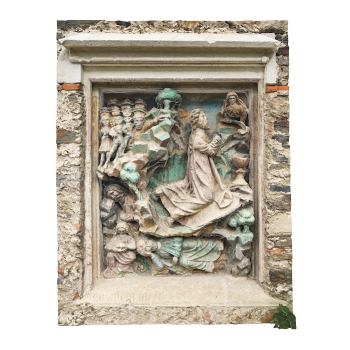
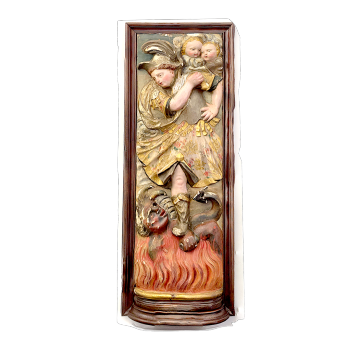
This statue is located at the Heiligenkreis Monastery in Lower Austria, Austria. It is named "Schutzengel" (meaning "guardian angel") and was created by sculptor Giovanni Giuliani in 1720. It is surrounded by a sandstone statue with a white lead frame. The angel raised his right hand and used his left hand to pull the child closer to him. The Heiligenkreis Monastery is the second oldest monastery in the world and one of the oldest and most continuously active monasteries. Located near the Austrian capital Vienna, nestled in the beautiful Vienna forest, it is a beautiful medieval style monastery.
Hercules

Hercules

The statue of Hercules (a hero in Greek mythology) is located in front of the royal palace wing in Vienna, Austria, near the passage leading to Hofburg. This statue was created by Italian sculptor Lorenzo Matieri as part of the Baroque style Hofburg expansion project. This statue depicts the heroic feat of Hercules capturing a Cretan bull and was created in 1728.
Hercules and the Lion Fight

Hercules and the Lion Fight

Hercules and the Lion Fight "is a set of sculptures depicting the scene of Hercules and the lion fighting, depicted in a clay sculpture by John Giuliani collected in the Heiligenkreis Monastery Museum in Austria. This scene originates from one of the twelve tasks completed by Hercules: he bravely defeated the lion sent by his archenemy, King Oresteos, to threaten the southern region of Bohemia. This clay sculpture model has a height of 32.5 centimeters and a width of 24 centimeters, and was made around 1735.
Archangel Michael

Archangel Michael

Archangel Michael "is a statue of Archangel Michael located on the path of the cross at the Holy Cross Monastery. This clay design was created by Josef Schnitzer. The archangel held a burning sword and a shield. The right forearm, hand, and sword have been partially broken and replaced. The height of this clay design is 32.8 centimeters, created between 1740-1745.
Offering bronze sculptures of Bodhisattvas

Offering bronze sculptures of Bodhisattvas

The bronze sculpture dedicated to Bodhisattva was created in 596 AD and is now housed in the Minneapolis Museum of Art in the United States. This cultural relic represents the formation stage of Chinese Buddhist sculpture, which is a small, portable copper religious sacrificial statue. The characteristics of this cultural relic are linear clothing folds and a mandala (body halo) with flame patterns, which are only represented by engraved lines. These characteristics suggest that artists may have worked based on paintings or sketches brought back from holy sites in India.
Odysseus

Odysseus

Odysseus, also known as Ulysses in Latin, is the legendary king of Ithaca in western Greece, son of Laertes and grandson of Alceus. My wife is Penelope. He participated in the Trojan War and captured the city in the tenth year of the war using the Trojan horse strategy. Afterwards, he went through a long journey of ten years and finally returned to his hometown to reunite with his family after enduring numerous hardships. This story is recorded in the epic poem 'Odyssey'.
Arhat ceramic art with bird

Arhat ceramic art with bird

Arhat Bird Riding is a ceramic artwork created by Master Liu Zizhen, the first generation of "clay figurine Liu" in the Tongguan Kiln in Changsha, China, in the 1980s. Liu Zizhen, known as the "clay figurine Liu", is a famous Chinese ceramic art master known for his exquisite skills and profound understanding of traditional ceramic art. His works not only embody the traditional craftsmanship of the Tongguan kiln, but also incorporate his personal artistic style and innovative spirit. With its vivid shape and fine workmanship, it shows the shape of Arhat holding a bird, implying the idea of harmony and natural coexistence. In Buddhism, Arhat is the symbol of a person who has achieved spiritual accomplishment, while birds often represent freedom and peace.
Dragon Subduing Arhat - Chinese Bronze Official Kiln

Dragon Subduing Arhat - Chinese Bronze Official Kiln

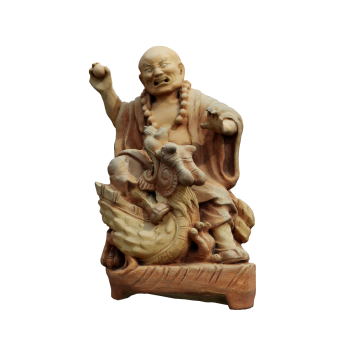
Dragon Subduing Arhat, also known as the Buddha of Jiaye, is one of the eighteen Arhat in Buddhism, and is famous for its profound cultivation and superb magic power. This statue was created by Master Liu Zizhen, the first generation "clay figurine Liu" from the Tongguan Kiln in Changsha, China, in the 1980s. Liu Zizhen, with his exquisite ceramic skills and profound cultural heritage, successfully shaped this legendary figure in Buddhism. The Arhat who subdues the dragon in the statue has a calm demeanor, showing an extraordinary and refined temperament and internal tranquility and strength. Every detail appears lifelike, from the smooth flow of clothing patterns to the subtle facial expressions, reflecting the author's profound understanding of traditional craftsmanship and superb artistic accomplishment
Happy Arhat Ceramic Statue

Happy Arhat Ceramic Statue

Happy Arhat (Venerable Xu Bojia) is a ceramic statue created by Liu Zizhen, the first generation master of "clay figurine Liu" in the Tongguan Kiln in Changsha, China, in the 1980s. Renowned for his outstanding ceramic skills and profound understanding of traditional sculpture art, he is known as the "clay figurine Liu" and is one of the important representatives of Chinese ceramic art. Through exquisite craftsmanship and vivid artistic expression, the image of Venerable Xu Boga in Buddhism is presented. In Buddhist culture, Arhat is the sage who reaches the nirvana, while happy Arhat, with his optimistic and open-minded image, conveys the positive spiritual connotation. He is an outstanding representative of the ceramic art of Changsha Tongguan Kiln.
Miguel's Arrival

Miguel's Arrival

Miguel is an archangel in religious doctrine, appearing in Judaism, Christianity, and Islam. The Catholic Church, Anglican Church, Eastern Orthodox Church, and Lutheran Church all refer to him as Archangel Miguel or simply Miguel. In Hebrew, Miguel means' the person who is like God '(Mi -' who ', kha -' like ', El -' God '), which is usually interpreted as a rhetorical question:' Who is like God? 'The expected answer is negative, meaning that no one is like God. Therefore, Miguel was reinterpreted as a symbol of humility towards God
Zhong Kui - Bamboo Root Carving

Zhong Kui - Bamboo Root Carving

Zhong Kui, also known as Zhong Kui, is a famous ghost catching hero in Chinese and Japanese mythology. Legend has it that he can drive away demons and lead 80000 ghost soldiers. His image is often painted on the lintel of households as a guardian deity, and is also common in commercial places to protect valuable items. Through the technique of bamboo root carving, the majestic image of Zhong Kui is vividly depicted, reflecting the exquisite skills and cultural connotations of traditional Chinese arts and crafts. It is the inheritance of traditional Chinese culture and folk beliefs. Produced by Chinese arts and crafts master Liang Fengzhu in 2013, it showcases the image of the deity Zhong Kui in traditional Chinese culture. It is currently collected in the Liangfengzhu Arts and Crafts Museum in Nanyue, Hengyang, China.
Hecate

Hecate

Hecate is an important Titan goddess in Greek mythology, also known as the "Moon Yin Goddess" or "Black Moon Goddess" symbolizing the night of the dark moon. Hecate is always associated with the waning moon, night, ghosts, underworld, elves, magic, witchcraft, and soul summoning. She is a famous irresistible god of death, an unbeatable or unparalleled queen, and also the guardian goddess of sorcery, spells, and witches. This statue is collected in the Bodaro Pinheiro Ceramic Museum.
Zhang Guolao - Bamboo Root Carving

Zhang Guolao - Bamboo Root Carving

Zhang Guo is a character in ancient Chinese mythology and is also one of the Eight Immortals of Taoism. In traditional Chinese culture, the Eight Immortals each have their own characteristics, and Zhang Guolao is famous for his longevity and miracles, and is considered one of the real figures in history. The story began around the mid to late 7th century and ended in the mid-8th century. The word 'old' in a name means elder or respectful. Created by Chinese arts and crafts master Liang Fengzhu in 1989, it is now collected at the Liang Fengzhu Arts and Crafts Museum in Nanyue, Hengyang, China. Through exquisite carving techniques, the image depicted showcases Zhang Guolao's demeanor and characteristics, making it vivid and lifelike.
Chiwan Tin Hau Temple Dragon Pillar

Chiwan Tin Hau Temple Dragon Pillar

The granite dragon pillar of Tianhou Temple in Shekou, Shenzhen. The establishment of Tianhou Temple can be traced back to the Song Dynasty, with a magnificent atmosphere. During the Ming and Qing dynasties, the Chiwan Tianhou Palace was located at the foot of Xiaonan Mountain in Shenzhen, nestled by the mountains and the sea, with beautiful scenery. Its establishment dates back to the Song Dynasty, with a magnificent momentum. It was repaired multiple times during the Ming and Qing dynasties, and its scale grew day by day. It became the most important Tianhou Temple along the coast at that time. Whenever imperial envoys went to Southeast Asian countries, they would stop their ships and offer incense here, praying to the gods for protection with great rituals.
Chiwan Tin Hau Temple Dragon Carving

Chiwan Tin Hau Temple Dragon Carving

The granite dragon sculpture at Tianhou Temple in Shekou, Shenzhen. The establishment of Tianhou Temple can be traced back to the Song Dynasty, with a magnificent atmosphere. During the Ming and Qing dynasties, the Chiwan Tianhou Palace was located at the foot of Xiaonan Mountain in Shenzhen, nestled by the mountains and the sea, with beautiful scenery. Its establishment dates back to the Song Dynasty, with a magnificent momentum. It was repaired multiple times during the Ming and Qing dynasties, and its scale grew day by day. It became the most important Tianhou Temple along the coast at that time. Whenever imperial envoys went to Southeast Asian countries, they would stop their ships and offer incense here, praying to the gods for protection with great rituals.
Carlo de Apollo

Carlo de Apollo

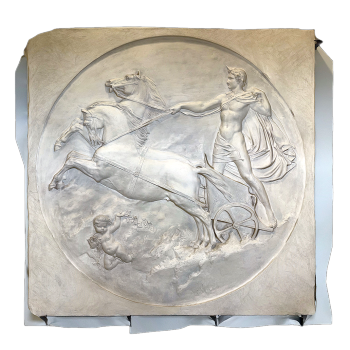
Carlo de Apollo, created by Ant ó nio Soares Dos Reis (1847-1889), was originally produced in 1870. Currently housed in the National Museum of Soares Dos Reis in Porto. Antonio Soares dos Reis was one of the most important Portuguese sculptors of the late 19th century. His works include some very important sculptures, such as "Exiles" or "Count Ferreira", as well as a set of low reliefs and a travel and annotation album.
Arhat Woodcarving

Arhat Woodcarving

This is a wood carving work by Chinese arts and crafts master Liang Tieqiu from 2015. It is currently collected at the Liangfengzhu Arts and Crafts Museum in Nanyue, Hengyang, China. It shows a scene where a Arhat subdues a fierce dragon with fearless courage and strength. In Buddhist legend, Arhat is a saint who has reached nirvana but has not entered nirvana in order to educate all beings. The dragon subduing Arhat symbolizes infinite magic power and wisdom with his magic tools - Ruyi beads and holy bowls. The image is majestic and solemn, full of bravery and strength, successfully conquering the dragon, which symbolizes overcoming the troubles and obstacles in human hearts in Buddhist art.
Liuhai Opera Golden Toad Bamboo Root Carving

Liuhai Opera Golden Toad Bamboo Root Carving

Liu Hai playing with the Golden Toad is a classic image in traditional Chinese mythology. Liu Hai is one of the ancestors of the Quanzhen School of Taoism and a master of inner alchemy techniques. Often appearing together with Zhong Liquan and Lv Dongbin among the Eight Immortals of Taoism. In traditional art works, bangs are often depicted as holding a string of square hole copper coins and a three legged golden toad, which is a symbol of wealth and auspiciousness in Chinese culture. The bamboo root carving work was created by Chinese arts and crafts master Liang Fengzhu in 2000 and is now collected at the Liang Fengzhu Arts and Crafts Museum in Nanyue, Hengyang, China. Using exquisite bamboo root carving techniques, the classic scene of Liu Hai playing with the Golden Toad is showcased.
The statue of Afaya on Ejina Island

The statue of Afaya on Ejina Island

Apha í a (Greek: Ἀπαία, Apha í a) is a Greek goddess worshipped only at a sacred site on the island of Aegina in the Saronic Gulf. She was worshipped as a local god related to fertility and agricultural cycles as early as the 14th century BC. Under the later Athenian hegemony, she was recognized as the goddesses Athena and Artemis, as well as Nymphon Britomatis. In the 2nd century AD, during the time of Pausanias, people would pass by the holy site of Afaea when traveling to the mountain of Zeus, the god of all Greece.
Red sandstone statue of Shiva

Red sandstone statue of Shiva

The mentioned artwork is called 'Shiva God Made of Red Sandstone', created in the late 10th century AD, and is now collected at the Minneapolis Museum of Art in the United States. Shiva is the god of destruction and regeneration in Hinduism. The god Shiva on this statue is depicted in an elegant posture, with jewelry decorations hanging from the belt, pendants hanging from the ears, and a carefully crafted dome hairstyle on the hair. Shiva is depicted as a celestial couple worshipped. The dynamic triple bending posture of Shiva, known as tribhanga, is closely related to the prescribed movements of the body, limbs, and gestures in classical Indian dance.
Raft Tuomo statue

Raft Tuomo statue

The statue of Vajrayana was created in 1108 AD and is now housed in the Minneapolis Museum of Art in the United States. The statue of Raft Tuomo is a spiritual victor who was liberated from the world by adhering to strict nonviolent principles and giving up material wealth. Even physical or mental behavior is considered a form of material attachment. Only 24 Buddhas (the last one being the statue of the founder of Jainism in 500 BC) have reached an indestructible, immortal, and omniscient inner soul. This ideal is manifested in the perfect stillness of the characters.
The stone lintel of the Lord God Vishnu

The stone lintel of the Lord God Vishnu

The portrait of this stone lintel is based on Buddhist legend, depicting the monarch god Vishnu holding a stick, wheels, lotus flowers, and conch shells. Produced in the 12th century AD, it is currently housed in the Minneapolis Museum of Art. His two companions stood on either side: Lakshmi holding a lotus flower, and Saraswati holding a stringed instrument. Vishnu's vehicle, the winged Garuda, appeared behind him, with 10 incarnations of Vishnu carved on top.
The Three Graces of Dance, Meihui

The Three Graces of Dance, Meihui

The Three Graces of Dance "is a 19th-century French artwork currently housed in the Minneapolis Museum of Art in the United States. This artwork is a sculpture shaped like three goddesses named 'Three Graces'. In Greek mythology, Charites, also known as Graces, are three or more goddesses who represent charm, beauty, nature, human creativity, kindness, and fertility. They are usually considered daughters of Zeus and the ocean goddess Eurynome. In Roman mythology, they are called Gratiae, which means' grace '
Ming Dynasty Tibetan Green Tara Statue

Ming Dynasty Tibetan Green Tara Statue

The Tibetan style Green Tara statue from the Ming Dynasty is a 15th century Ming Dynasty artwork, currently collected at the Minneapolis Museum of Art in the United States. Green Tara is the incarnation of Avalokitesvara Bodhisattva. Tara, also known as Tara in Sanskrit, is the full name of Saint Salvation Tara Buddha Mother. In ancient China, she was referred to as Tara Bodhisattva or Tara Guanyin. Tara has many different manifestations, including 21 Tara, 500 Tara, and others, all of which are incarnations of Avalokitesvara Bodhisattva. Green Tara is the main deity of all Tara, capturing all the merits of the other 20 incarnations.
Maitreya Bodhisattva Stele

Maitreya Bodhisattva Stele

The Maitreya Bodhisattva Stele is a Chinese cultural relic dating back to 563 AD, currently housed in the Minneapolis Museum of Art in the United States. This cultural relic is made of black limestone and has traces of paint. This exquisitely carved stone tablet, although small in scale, displays a complete image of the same theme as a large Buddha statue. In addition to the Maitreya Buddha statue in the center, the engraved halo, and the bodhisattvas on both sides, there are also flying celestial beings and dragons on the flame shaped backs at the top and bottom. The back of the stone tablet is engraved with a 69 character inscription, listing the names of the donors who commissioned the production of this work and dedicated it in 563.
Longevity Star Woodcarving

Longevity Star Woodcarving

Taoist longevity star wood carving. In Chinese, his name means' Star of Longevity '. The elderly figure leaned against a cane, holding a peach in his left hand and a crane beside him. In this situation, the crane would land on the cane.
New Ireland Malagan Totem

New Ireland Malagan Totem

The Malagan totem from late 19th century New Ireland is decorated with various pigments, including lime, in the form of carved wood. The eyes are made of tiger snail shells, and the hair is made of wooden handles fixed in the head socket. Malagan is a collective term in Northern New Ireland, primarily used for ceremonies commemorating the deceased, as well as for masks and carvings associated with them. This Malagan totem is now housed in the Metropolitan Museum of Art.
Qing Dynasty gilded offerings to Buddha

Qing Dynasty gilded offerings to Buddha

This is a Buddha statue from 1850 AD, currently housed in the Minneapolis Museum of Art in the United States. This Buddha statue sits in the tentacle print on the ground, depicting the scene of Buddha about to awaken under the Bodhi tree. This moment is often described as a powerful battle between good and evil, confusion and insight.
Gilded Bodhisattva Statues of Qing Dynasty

Gilded Bodhisattva Statues of Qing Dynasty

The artifact is one of a pair of gilded bodhisattva statues from 18th century AD China. It is now housed in the Minneapolis Museum of Art. Although the two statues are mirror images of each other, they do not represent the same bodhisattva; they are Maitreya and Guanyin, respectively. They stand in elegant poses, holding the stems of a lotus flower, probably part of a sculptural trinity that surrounds a larger Buddha.
The container of Tibetan sutra in the period of Koryo

The container of Tibetan sutra in the period of Koryo

This relic is a box of sutras known as the "container of Tibetan sutras", from the Korean Koryo period (918-1392) around 1100 AD. It is made of gold-plated copper with embossed decorations, and the overall dimensions are 10.2 x 6.5 x 1.5cm. This sutra box was once used to preserve miniature Buddhist sacred texts. By hammering the reverse side, the front and back of the box are engraved with relief designs depicting a peaceful pond boy holding a huge lotus in his hand and a pair of mandarin ducks swimming. These playing boys may represent the newly born soul in the Pure Land. Collected at the Cleveland Museum of Art.
King Kong Lex Hum

King Kong Lex Hum

The door gods are known in Japan as the Kongers, and their role is to protect the temple and Buddhism. Door gods (Niō) usually appear in pairs, with one mouth open and one mouth closed. Those who open their mouths are called A, and those who close their mouths are called Hum. Corresponds to the second generals of Chinese Buddhism. These two names stand for the first and last syllables in Sanskrit, symbolizing the beginning and end of all things. The pair of statues are now in the collection of the Cleveland Museum of Art.
King Kong, Hercules

King Kong, Hercules

The door gods are known in Japan as the Kongers, and their role is to protect the temple and Buddhism. Door gods (Niō) usually appear in pairs, with one mouth open and one mouth closed. Those who open their mouths are called A, and those who close their mouths are called Hum. Corresponds to the second generals of Chinese Buddhism. These two names stand for the first and last syllables in Sanskrit, symbolizing the beginning and end of all things. The pair of statues are now in the collection of the Cleveland Museum of Art.