Sculpture/Artifacts
Chinese Zodiac - Horse Statue
Symbolizing vitality, resilience, and success. In traditional Chinese zodiac culture, the twelve Earthly Branches corresponding to the horse are called "Wu" and are therefore also known as "Wu Ma". With its elegant posture, fast pace, and loyal nature, it is regarded as a symbol of strength and freedom. In the legends of the twelve zodiac animals, it appears in the image of loyalty and diligence. According to legend, in the process of selecting zodiac animals, he won people's respect and admiration with his indomitable spirit and outstanding endurance, thus occupying an important position in the zodiac. In Chinese culture, it is often associated with heroes and warriors, symbolizing courage and fighting spirit. It is a year full of vitality and motivation
Chinese Zodiac - Snake Statue
The snake in the Chinese zodiac symbolizes wisdom, prudence, and mystery. In traditional Chinese zodiac culture, the twelve earthly branches corresponding to snakes are "Si", hence also known as "Si Snake". In Chinese culture, there are complex and ever-changing symbols of both negative cunning and toxicity, as well as positive wisdom and healing power. In the legends of the twelve zodiac animals, snakes appear in their clever and agile form. According to legend, in the competition for selecting zodiac animals, snakes successfully obtained their position in the zodiac through their wisdom and strategy. In Chinese culture, the Year of the Snake is often considered a year that requires caution, but it is also seen as a period full of changes and opportunities.
Chinese Zodiac - Dragon Statue
It is a symbol of great mystery and high status in Chinese culture, representing power, nobility, and good luck. In the Twelve Earthly Branches, the dragon corresponds to "Chen" and is therefore also known as "Chenlong". In traditional Chinese culture, it is a symbol of auspiciousness and also a symbol of emperors, representing supreme status and authority. In the legends of the twelve zodiac animals, the dragon is known for its extraordinary power and magical ability to change, and is regarded as a divine beast that can summon wind and rain and control the weather. Legend has it that in the process of selecting zodiac animals, dragons, with their extraordinary abilities and divinity, have won people's respect and worship, thus occupying a prestigious position in the zodiac.
Twelve Zodiac Animals - Rabbit Statue
Symbolizing gentleness, caution, and wit. In traditional Chinese zodiac culture, the twelve earthly branches corresponding to the rabbit are "mao", hence also known as "mao tu". With its gentle nature and agile movements, it is regarded as a symbol of harmony and beauty. In the legend of the twelve zodiac animals, rabbits have won people's love for their wit and kindness. Legend has it that in the competition for selecting zodiac animals, the rabbit, with its wit and agility, successfully overcame obstacles and obtained a position in the zodiac. In Chinese culture, it is often associated with the moon because there is a story in ancient Chinese mythology about the jade rabbit pounding medicine, which is considered an auspicious and beautiful year.
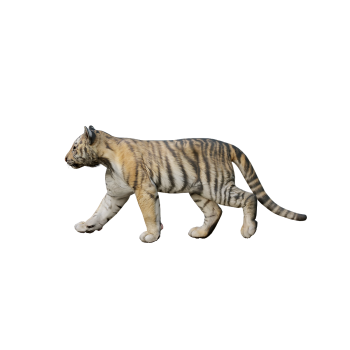
Chinese Zodiac - Tiger Statue
Representing courage, strength, and majesty, it is one of the highly symbolic animals in Chinese culture. In the Twelve Earthly Branches, the tiger corresponds to "Yin" and is therefore also known as "Yin Hu". In Chinese culture, bravery and nobility are often associated as symbols of power and honor. In the legends of the twelve zodiac animals, the tiger appears in the image of bravery and courage, and is regarded as the king of the mountains and forests. According to legend, in the process of selecting zodiac animals, tigers have won people's respect and worship with their fearless spirit and powerful strength, thus occupying an important position in the zodiac. In Chinese culture, it is not only a symbol of strength, but also a symbol of protection and security.
Chinese Zodiac - Ox Statue
It is an important symbol in Chinese culture, representing the qualities of diligence, resilience, and stability. In the Twelve Earthly Branches, the cow corresponds to "Chou", and is therefore also known as "Chou Niu". Plays a crucial role in agricultural society and is a symbol of cultivation and productivity. In the legends of the twelve zodiac animals, cows are known for their diligence and endurance, and are loyal companions of farmers. According to legend, in the selection competition for zodiac animals, cows have gained people's respect for their hard work and thus occupy a place in the zodiac. In Chinese culture, it symbolizes diligence and loyalty, representing strength and endurance. Considered an auspicious year, it heralds a bountiful harvest and prosperity
Chinese Zodiac - Rat Statue
It is an important component of traditional Chinese culture and represents one of the twelve zodiac animals. In the ancient Chinese calendar system of heavenly stems and earthly branches, each zodiac sign corresponds to a earthly branch, and the earthly branch corresponding to the rat is "zi", hence also known as "zi shu". In the legends of the twelve zodiac animals, the rat is known for its wit and agility. According to legend, when the Jade Emperor selected the zodiac animals, the rat, with its intelligence and wit, was the first to arrive at the Heavenly Palace and became the head of the zodiac. It embodies the agility and agility traits of mice. It is considered a symbol of wisdom and wealth because mice are good at accumulating food, symbolizing abundance and harvest. But sometimes it is also often associated with negative images.
Triple Pagoda of Faji Temple in Japan
The signboard of Faji Temple is the Triple Pagoda, which is the oldest triple pagoda in Japan, built during the Asuka period in 706 AD. At that time, China was in the Tang Dynasty, and Wu Zetian had just passed away the previous year. Emperor Zhongzong of Tang, Li Xian, succeeded to the throne. The Asuka Era in Japan began in 592 AD, when the first female emperor in Japanese history, Emperor Tsuchigu, ascended to the throne. In this year, the Chinese Mainland was in the 593 year of Emperor Wen of the Sui Dynasty's "Kaihuang Zhizhi", when the ancient emperor appointed the prince of the stables, the son of tomorrow's emperor, as the crown prince and regent. This was the famous "Prince Noble" in Japanese history and Japanese Buddhist history.
Horse Head Marble Carving
A sculpture of a tomb monument or shrine discovered in Taranto, Italy, now located at the British Museum in London, was made around 350-300 BC.
Terra Cotta Warriors
The Terra Cotta Warriors, namely the Terra Cotta Warriors in the the Mausoleum of the First Qin Emperor, also referred to as the Terra Cotta Warriors or the Terracotta Warriors, are the first batch of national key cultural relics protection units and the first batch of Chinese world heritage sites. They are located in the Terra Cotta Warriors pit 1.5 kilometers east of the the Mausoleum of the First Qin Emperor in Lintong District, Xi'an, Shaanxi Province. More than 200 foreign heads of state and government have visited and toured, becoming a golden business card of China's ancient glorious civilization and also known as one of the world's top ten rare ancient tombs.
Sculpture - "Monkey King" Sun Wukong
Sun Wukong is naturally intelligent, lively, loyal, and resentful of evil, representing wit and bravery in folk culture. The legend of Journey to the West emerged in the Tang Dynasty and continued until the Ming and Qing Dynasties. The collection of these legends in the Ming Dynasty is known as "Journey to the West". In these folk myths of the past dynasties, Sun Wukong was worshipped as a god by the Chinese people.
Sun Wukong 3D Printing
Sun Wukong (also known as the Monkey King, the Monkey King, the Monkey King, the Monkey King, and the Fighting Buddha) is a character in the classical Chinese mythological novel "Journey to the West". Born from the creation of immortal stones, the birthplace is located on Huaguo Mountain in Dongsheng Shenzhou. He is revered as the "Monkey King" for leading a group of monkeys into the Water Curtain Cave. In order to learn the art, he crossed the sea and became a disciple of the founder of Subhuti, named "Sun Wukong". He learned advanced spells such as the Great Immortal Technique, the Seventy Two Transformations, and the Cloud Dance.
Maitreya Buddha Stele
The Maitreya Buddha Stele, dating back to 563 AD, is currently housed at the Minneapolis Institute of the Arts.
Terra Cotta Warriors
On March 29, 1974, farmers dug a well about 1.5 kilometers east of the the Mausoleum of the First Qin Emperor in Lishan Mountain and found the Terra Cotta Warriors. Lishan is an area filled with underground springs and waterways. For centuries, there have been occasional reports of pottery figurines and fragments from Qin tombs - roof tiles, bricks, and large blocks of bricks and stones. This discovery prompted Chinese archaeologists, including Zhao Kangmin, to investigate and reveal the largest group of pottery figurines in history. Afterwards, a museum complex was built in the area, with the largest pit surrounded by a roofed structure.
The exquisite 3D model of Sun Wukong, the Monkey King of the Sky, in "Black Myth: Wukong"
It is one of the main characters in the Chinese classical novel "Journey to the West", written by Wu Chengen. Renowned for his wit, bravery, and ever-changing abilities, he was an important protector of Tang Monk and his disciples on their journey to the West to obtain Buddhist scriptures. Born in Shuilian Cave of Huaguo Mountain, he calls himself the Monkey King. Having the power of seventy-two transformations, it can transform into any creature or object at will. He is also proficient in soaring through clouds and mist, and can jump up to 108000 miles in one leap. Once caused chaos in the Heavenly Palace, challenged the authority of the Heavenly Court, and was ultimately suppressed by the Buddha at the foot of the Five Elements Mountain. Later, under the guidance of Guanyin Bodhisattva, Sun Wukong became the great disciple of Tang Sanzang and began his journey to the West to obtain Buddhist scriptures.
Panzhuli Divine Bronze Mask
The "Panzhuli Divine Bronze Mask" describes an artwork that showcases the head of a wild boar, adorned with exquisite headpieces and earrings. The headband is decorated with a row of cobra heads. The earrings on the mask are also decorated with cobra heads, with one earring featuring a character image and the other earring featuring an elephant head.
Christ's Passion Statue
The Passion of Christ depicts a scene of Jesus Christ being crucified on the cross and held in the arms of his mother Mary. This is a common Christian art theme aimed at expressing a mother's pain and sorrow towards her son.
The first globe, the Beheim globe
The diameter of the Beiheim globe is 51 centimeters, and the decoration is luxurious. In records from 1494, the production of this ball was particularly time-consuming and laborious. In 1992, Nuremberg conducted a detailed study on the material of this ball, and its report stated that the production process was indeed quite complex. This is a mixture of old and new geographical knowledge, with ancient Greek speculations about the world, medieval geographical ideas, and new results of maritime exploration all visible. It became a model for drawing world images in central Europe at that time, and one of the few remaining map works in the world that collected different mapping methods and schools.
Antique astronomical theodolite
Theodolites are measuring instruments designed based on the principle of angle measurement to measure horizontal and vertical angles. They are divided into two types: optical theodolites and electronic theodolites, with the most commonly used being electronic theodolites. The theodolite is the mechanical part of a telescope that allows it to point in different directions. The theodolite has two mutually perpendicular axes to adjust the azimuth and horizontal height of the telescope. A theodolite is a type of angle measuring instrument equipped with a sighting section, a horizontal dial and reading indicators, and a vertical dial and reading indicators.
Celestial globe
The celestial globe is a general term for the celestial globe and the celestial globe. The armillary sphere is an instrument used to measure the spherical coordinates of celestial bodies, while the celestial globe was an instrument used in ancient times to demonstrate celestial phenomena. The armillary sphere and the celestial globe are instruments that reflect the theory of the celestial sphere. The inventor of the armillary sphere is said to be Luo Xiahong from the Western Han Dynasty, who was improved by scientist Zhang Heng during the Eastern Han Dynasty. The earliest existing armillary sphere in China was manufactured during the Ming Dynasty and is displayed at the Purple Mountain Observatory in Nanjing.
Random Model
American Football Helmet
163 View
Grilled Sandwich
100 View
Camouflage tent for double camping
165 View
A reef with oyster shells
124 View
Indoor Fireplace
169 View
Specimen of Fa
181 View
Carhart Workwear Boots
118 View