Gail-Anderson Cat

Gail-Anderson Cat

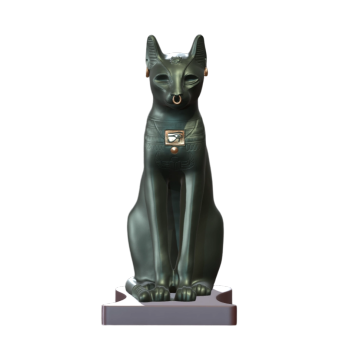
Gail-Anderson Cat is a bronze statue depicting the image of the goddess Buster. The goddess is usually portrayed as a female figure of the head of the cat, or directly in the form of a cat. The main center of worship of the goddess Bast is located in Bubatis, in the Nile Delta. As a maternal goddess, Buster is gentle and kind, in contrast to the more aggressive lioness god, Sehmet. The statue dates back to the late dynasty of ancient Egypt, around 600 BC. Major Robert Grenville Gail-Anderson donated the statue to the British Museum in 1939 and named it in his honor.
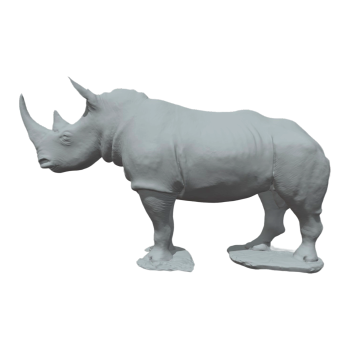
White rhino sculpture ornaments (support 3D printing)
White rhino sculpture ornaments (support 3D printing)

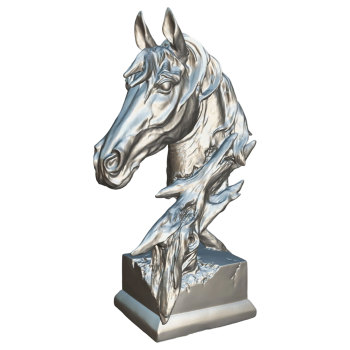
Horse head statue (support 3D printing)
Horse head statue (support 3D printing)

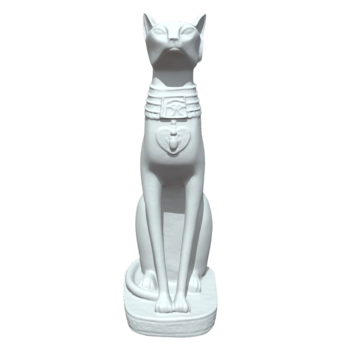
Egyptian cat statue ornaments (support 3D printing)
Egyptian cat statue ornaments (support 3D printing)

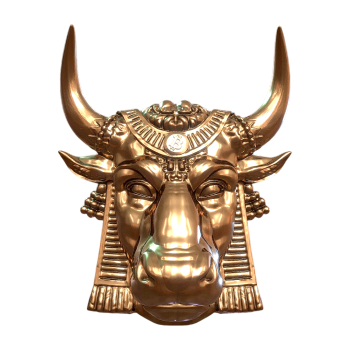
Bull head bronze statue (support 3D printing)
Bull head bronze statue (support 3D printing)

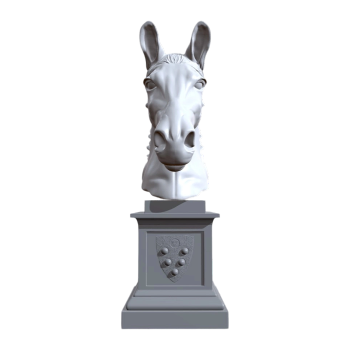
Horse head statue (support 3D printing)
Horse head statue (support 3D printing)

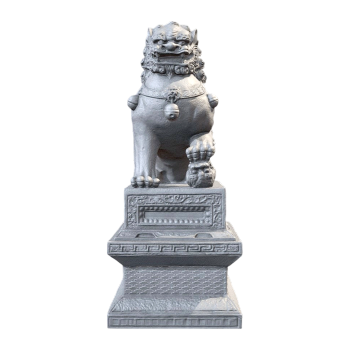
Chinese stone lion (support 3D printing)

Chinese stone lion (support 3D printing)

Stranraer Museum-Boar Skull

Stranraer Museum-Boar Skull

golden cuttlefish specimen
golden cuttlefish specimen

The golden squid is a kind of cephalopod mollusk named because of its golden or orange body color. The scientific name is Sepia esculenta, which belongs to one of the species of economic value in the squid family. Its internal calcareous inner shell, developed water jet propulsion system and unique color change ability. The golden squid is a warm-temperature offshore benthic cephalopod that depends on the complex environment of the shallow sea to complete its life cycle. To be distributed in the Yellow Sea, Bohai Sea, East China Sea (such as Shandong, Liaoning, Fujian coast), as well as Japan's Honda, Kyushu sea. Preference for sandy or muddy seabed with water depth of 20-100 meters (sediment content above 70%).
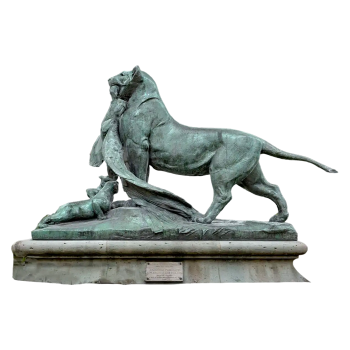
French Cultural Heritage Tigers and Cubs

French Cultural Heritage Tigers and Cubs

The Tiger and the Cub was created by August Nicholas Kane (Auguste Nicolas Cain), a representative of the 19th century French animal sculpture school. The statue was originally located in the Tuileri Garden in Paris. Due to lawn protection regulations (no trampling on the grass), one side of the statue was moved from 30 meters outside the park boundary.
France Paris Tuileri Garden statue rhino attacked by tiger

France Paris Tuileri Garden statue rhino attacked by tiger

This is a famous sculpture created by French sculptor Auguste Cain (Auguste Cain). The work was created in 1884 and has been displayed in the Tuileri Garden in Paris. Auguste Cagin (Auguste) is a famous French sculptor of the Animaliers school who created many portraits of wild and domesticated animals in the 19th century.
Nepal Kathmandu Durbar Square Statue Parvati Temple Stone Lion

Nepal Kathmandu Durbar Square Statue Parvati Temple Stone Lion

The statue is located at the "Shiva-Parvati" temple in Durbar Square, Kathmandu. The temple was built in the late 18th century by Rana Bahadur Shah, son of King Pritwe Narayan Shah of Nepal.
France Paris Louvre Academy Statue Sahara Lion

France Paris Louvre Academy Statue Sahara Lion

A beautiful sculpture made by the famous French sculptor Auguste Kane (Auguste Cain) in 1867. It is located at the entrance to the Louvre School, the Porte Jaujard (Jaujard the door). Jacques Jaujard is the saviour of the Louvre's art collection. Before the arrival of German troops in Paris, and during the German occupation, he organized the transfer and safe storage of French art collections in the provinces, against the orders of the Vichy government.
Statue of the walking lion in the Luxembourg Park, Paris, France

Statue of the walking lion in the Luxembourg Park, Paris, France

Statue of a lion in the Luxembourg Park in Paris. The Luxembourg Park covers an area of 224,500 square meters and has huge phoenix boulevard, gardens, fountains and many statues of ancient wise men. The park also has the French royal palace, the Luxembourg Palace (Palais du Luxembourg), which is the seat of the French Senate.
Bridge statue of Alexander III in Paris, France "Child leads the Lion King"

Bridge statue of Alexander III in Paris, France "Child leads the Lion King"

"lion guidépar un enfant" in French is a sculpture by Jules Dalou, dating back to 1900. This is one of the four lion statues located in each corner of the Alexandre III bridge in Paris
Statue in Duba Square, Bhaktapur, Nepal Bronze Lion in Front of Shiva Temple

Statue in Duba Square, Bhaktapur, Nepal Bronze Lion in Front of Shiva Temple

The bronze lion sculpture is located in front of the Shiva Temple in Bhaktapur Durbar Square, Nepal. Built directly in front of the palace, the temple is said to have been chosen from a dream of King of Bhadgaun. This metal lion sculpture was built in the 18th century and is made of brass. Its surface is covered with a thin layer of other metals as a protective layer. Metal craftsmanship was introduced late in Nepal, and the earliest sculptures were usually made of stone. In the early days, most of the craftsmen of the metal statues were monks serving Buddhist schools. They make religious sculptures for the monasteries (vihara) of Mahayana Buddhism.
Nepal Kathmandu Statue Bronze Lion Statue

Nepal Kathmandu Statue Bronze Lion Statue

In Nepal, these bronze lion statues usually guard the gates of temples or important religious sites, symbolizing majesty and guardian power.
Kathmandu District Shin Var Statue Big House Black Lion

Kathmandu District Shin Var Statue Big House Black Lion

The sculpture is located at the gate of the Shree Padmavhati Mahabihar in Kathmandu, Nepal. There are two sculptures placed on both sides of the gate to guard the temple. The Newars are an important cultural group in Kathmandu, historically residents of the Kathmandu Valley and predominantly Buddhist. An important branch of Buddhism is the "Mahayana Buddhist Temple (Mahavihara)", which is usually built in a courtyard and is about two stories high.
Japan 18th Century Statue Lion Dog Statue

Japan 18th Century Statue Lion Dog Statue

This Japanese stone lion was made in the 18th century. The concept of stone lion originated in Chinese Buddhism and became popular there. This pair of lions is usually one male and one female, the male lion carries a ball, and the female lion is with the young lion, which is believed to protect the building from harmful spiritual influences and potential threats. It later spread to other parts of Asia, including Japan and several other countries.
Chinese Cultural Heritage Fu Lion Statue

Chinese Cultural Heritage Fu Lion Statue

These stone lions are also known as lion dogs or "fu lions" (foo dogs/fu dogs). The concept originated and became popular in Chinese Buddhism and is usually presented as a pair of highly stylized lions-usually a male lion with a ball and a female lion with a cub.
Nepal Siti Lakshmi Temple Statue Mara Dynasty Horse Statue

Nepal Siti Lakshmi Temple Statue Mara Dynasty Horse Statue

The sculpture is located on the stairs of the Sidhi Laxmi Temple (Sidhi Laxmi Temple) in Bader Gangduba Square, Kathmandu, Nepal. It was built by King Jagat Prakash Malla between the 1660 s and the 1670 s. In addition to this sculpture, there are 10 sculptures on both sides of the staircase, including humans, animals (such as horses, dogs, rhinos) and various mythical creatures.
Nepal Cultural Heritage Stone Lions of Svota Krishna Monastery

Nepal Cultural Heritage Stone Lions of Svota Krishna Monastery

This special statue is located at the gate of the Swarta Krishna Monastery (Swartha Krishna Mandir), which is located in Swarta Square. The temple is said to have originally been built by one of the sons of King Siddhi Narasingh Malla (1620-1661), but studies have shown that the sculptures are not that old.
Grand Monastery Statue of Varna, Patanhelan, Nepal Offer Monkey with Jackfruit to Buddha

Grand Monastery Statue of Varna, Patanhelan, Nepal Offer Monkey with Jackfruit to Buddha

The monkey statue was built in the 18th century, and according to Nepalese Buddhist beliefs, it commemorates a monkey who is said to have presented jackfruit to Sakyamuni Buddha at the Swayambunath pagoda. This particular monkey is a species of macaque. As a result of this belief, around the Swayambnath stupa, there was a large number of macaques that were fed and protected, so much so that it is now also known as the "Monkey Temple". An important Buddhist pilgrimage since the 5th century AD, the Swayambnath stupa sits atop the hills of Kathmandu.
Nepal Cultural Heritage Patanduba Square Elephant Statue
Nepal Cultural Heritage Patanduba Square Elephant Statue

Patanduba Square is located in the Kathmandu Valley of Nepal. It is an important historical attraction listed as a world cultural heritage by UNESCO. The square is famous for its unique traditional architecture and stone carvings, and this elephant statue adds a cultural depth. As part of Nepal's long history, elephants have played multiple roles in transport, warfare, ritual and symbolism. The engraving of the "Om" symbol gives the statue a deeper spiritual meaning.
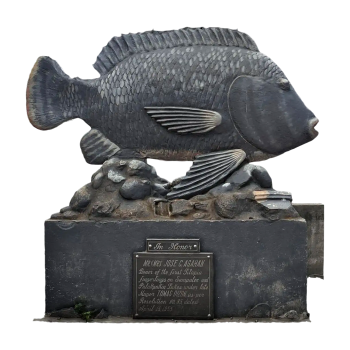
Tilapia statue commemorating Mr. and Mrs. José C. Agahan at the Monument in San Pablo City, Philippines

Tilapia statue commemorating Mr. and Mrs. José C. Agahan at the Monument in San Pablo City, Philippines

This Tilapia statue was built in honor of Mr. and Mrs. Jose C. Agahan. They were the first to donate tilapia fry for Samapaloc Lake and Palakpakin Lake. The statue was built on April 16, 1955, under the auspices of the late Mayor Tomas Dizon.
Japanese Cultural Heritage Fox Statue

Japanese Cultural Heritage Fox Statue

In Japanese folklore, a fox (the original word for "fox" in Japanese means fox) is an intelligent creature with supernatural abilities. Originally, the fox was the messenger of the great god Ina. The great god Inagawa is a Japanese Shinto god responsible for the fox, abundance, rice, tea, wine, agriculture and industry, as well as general prosperity and worldly success.
Nineteenth Century French Sculpture Horse and Rake

Nineteenth Century French Sculpture Horse and Rake

The Horse and the Rake is a sculpture by French sculptor Pierre Rouard, who was born in 1820. The sculpture originally belonged to a four-piece sculpture group used to decorate the Old Trocadero Fountain in Paris. The hosting of the 1937 Paris International Exposition led to the sculpture being removed and transferred in 1935. Today, the sculpture is housed in front of the Musée d'Orsay in Paris.
Nineteenth-Century French Sculpture Wary of Herds Listening

Nineteenth-Century French Sculpture Wary of Herds Listening

"Beware of listening to the deer" by the French sculptor Altul le Dick. This sculpture group was created in the 19th century, when animal art emerged in Europe, mainly in Paris. The stag in the sculpture, which protects the herd while keeping a watchful eye on the hunters chasing them.
The statue of Taurus outside the Mahahaba, Nepalese cultural heritage

The statue of Taurus outside the Mahahaba, Nepalese cultural heritage

The statue is located outside the largest and most important Mahabha, named Hiranya Varna Mahavihar. This Mahabha is unique in that, unlike other Mahabha, it is larger and has a three-story "Shakyamuni Buddha" golden tower, which was built by King Bhaskar Varman in the 12th century. In Hinduism, Nandi (bull) is a vehicle for Shiva (one of the important Hindu gods). Therefore, the cow statue symbolizes the religious and cultural heritage.
Stone Lions in Patanduba Square, Kathmandu, Nepal

Stone Lions in Patanduba Square, Kathmandu, Nepal

This is a pair of lion statues located in Patan Durbar Square in Kathmandu, Nepal. These statues are located at the gates of the royal area and are one of the many historical monuments listed by UNESCO as World Heritage Sites. The word "Durbar" means "palace". Before the unification of Nepal, Patan was an independent kingdom, and the king of the time lived in this palace. Today, these lion statues stand on both sides of the entrance to the museum in Patanduba Square, symbolizing protection and majesty.
Nepalese Cultural Heritage Bronze Lion Statues

Nepalese Cultural Heritage Bronze Lion Statues

In Nepal, these bronze lion statues usually guard the gates of temples or important religious sites, symbolizing majesty and guardian power.
Kathmandu District Shin Var Statue Big House Black Lion

Kathmandu District Shin Var Statue Big House Black Lion

This black lion guardian statue is a representative of the local cultural heritage, beautifully made and has a long history. It is part of Kathmandu's "Newar" culture, and the New Wares are historical residents here, as well as devout Buddhists. This type of monastery is often referred to as the "Grand Mahavihara" ("Grand House") and is usually built in a courtyard. According to records, most of these monasteries were built between the 12th and 15th centuries. Over time, some of these places gradually dilapidated, but the temple was well restored in 1979 through Japanese funding. The majesty and majesty of the statue symbolizes protection and protection.
Eighteenth-century European porcelain greyhound fights bulldog

Eighteenth-century European porcelain greyhound fights bulldog

The porcelain work shows a scene of a greyhound and a bulldog fighting each other, reflecting the attention and love of Meissen's workshop to animal themes in 18th century Europe. Meissen porcelain is known for its high quality and fine details, and this work is likely to be used to decorate aristocratic homes or display collected art. It uses sophisticated sculptural techniques and overglaze painting techniques to demonstrate the artist's keen observation of animal dynamics and detail.
Kakadu Parrot of Mason Porcelain

Kakadu Parrot of Mason Porcelain

John Joachim Candler (Johann Joachim Kaendler) was one of the most famous porcelain sculptors of the first half of the 18th century, who designed many exquisite porcelain works for the Mason Porcelain Factory. Kakadu parrot is one of his masterpieces. This porcelain sculpture shows a lifelike Kakadu parrot sitting on a tree stump decorated with flowers and leaves. The sculpture uses multi-color painting technology to make the parrot's feathers and details on the stump more vivid. Mason Porcelain Factory was one of the first manufacturers of hard porcelain in Europe, founded in 1710.
Eighteenth-century pottery sculpture "The Declining Macaw"

Eighteenth-century pottery sculpture "The Declining Macaw"

The Sliding Macaw, produced by John Joachim Candler at Mason in May 1732. Porcelain, no coloring. The sculpture shows a macaw hanging upside down from a tree trunk, vividly recreating the bird's natural form. The work is currently in the porcelain collection of the National Art Collection (Staatliche Kunstsammlungen Dresden) in Dresden.
1 2 3 4 5 6 Next