
Porcelain from Lyon, France (3D action model)

Porcelain from Lyon, France (3D action model)

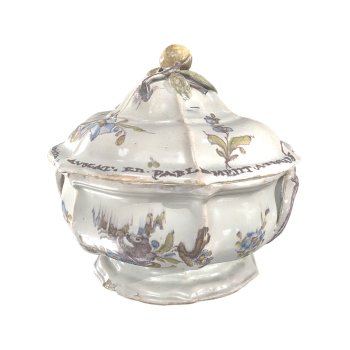
This ribbed round soup bowl is decorated with multi-colored floral decorations. It has two application handles. Its lid takes the shape of a fruit, surrounded by embossed branches. At the bottom of the cover there is a partially illegible inscription "[…] avocat en parlement à Thouars"
Pottery Tilder Pot

Pottery Tilder Pot

This is a pottery tipping pot, often used for brewing tea or boiling water. The body of the pot presents a rough cut effect (Faceted), showing the original texture of the clay. This style is very typical in modern pottery works, such as the works of American pottery master Warren MacKenzie or New Zealand pottery artist Len Castle. The top of the kettle is equipped with a thick rattan or bamboo lifting beam, which is connected by the ear of the kettle. This design not only has the function of anti-scald, but also adds natural flavor to the simple and simple ceramic body.
Enamel yellow flower pattern bowl (China Qing Dynasty Kangxi period)

Enamel yellow flower pattern bowl (China Qing Dynasty Kangxi period)

This exquisite porcelain is an enamel yellow flower pattern bowl from the Kangxi period of the Qing Dynasty. This ware is usually called "enamel yellow flower pattern bowl" or "imperial yellow glaze peony pattern bowl" and belongs to the works of the Kangxi period of the Qing Dynasty (1662-1722). The porcelain body of this kind of bowl is usually fired in Jingdezhen, and its complicated enamel decoration is completed in the imperial workshop (manufacturing office) in the Imperial Palace in Beijing. This kind of bowl is usually made of enamel color, which is characterized by bright colors, filling color full, with a strong court elegant and luxurious style. Because of this kind of enamel porcelain in the early stages of technological development in the Kangxi period, the number of handed down scarce.
Green Glazed Teapot

Green Glazed Teapot

This is Shiwan kiln green glaze teapot, also often referred to as "a finger pot". Produced in Shiwan Town, Foshan, Guangdong Province, Shiwan Kiln is one of the famous folk kilns in the Ming and Qing Dynasties. This type of teapot usually dates from the late Qing Dynasty to the Republic of China, that is, the 19th or early 20th century. In the old Chinese shops, this large teapot was often used to hold tea or rice wine for employees to quench their thirst or entertain customers. Because of its unique way of carrying (only one finger can be inserted into the lift ear), it is vividly called "one finger pot" in Cantonese-speaking areas ".
Southern Song Dynasty Longquan Kiln Green Glazed Hat Bowl
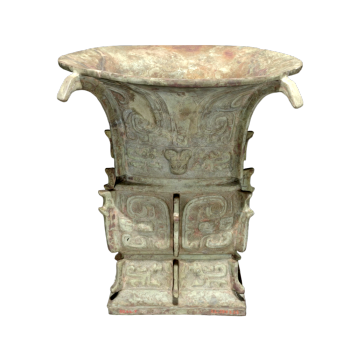
Southern Song Dynasty Longquan Kiln Green Glazed Hat Bowl

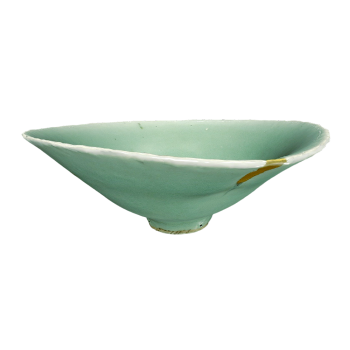
This is a Southern Song Dynasty Longquan kiln green glaze hat-style bowl. Longquan kiln from China, fired during the Southern Song Dynasty (1127-1279). Longquan kiln was a famous celadon producing area in the Song Dynasty, which reached its historical peak in the Southern Song Dynasty. The device is in the shape of a hat, the mouth is skimming outward, the circle is small, and the shape is elegant and generous. There is a fine green glaze, glaze color presents elegant turquoise, "like ice like jade" reputation, in line with the Song Dynasty introverted rational advanced aesthetic. There is an obvious damage along the bowl mouth, which has been repaired using the traditional Japanese gold (Kintsugi) process.
Ancient Chinese bronze square statue

Ancient Chinese bronze square statue

This is an ancient Chinese bronze square statue, a bronze ritual vessel used for wine or sacrifice. The utensils were square, mouth open, neck long, circle foot high, the overall shape dignified and elegant. The body is decorated with mysterious animal patterns such as gluttonous patterns, banana leaf patterns and Kuilong patterns. These decorations are usually symmetrically distributed with the center of the leaf edge, with a majestic and mysterious artistic style. Zun was one of the important bronze ritual vessels in the Shang and Western Zhou dynasties. In ancient times, this type of bronze was a symbol of aristocratic status and power, used to worship ancestors and important rituals.
Oracle Tortoise Shell

Oracle Tortoise Shell

This is a piece of tortoise shell (the tortoise's belly armor) engraved with oracle bones. Oracle bone inscriptions are the earliest ancient characters with a relatively complete system that have been discovered in China. They mainly refer to characters engraved on tortoise shells or animal bones. They prevailed in the late Shang Dynasty (about 14th century BC to 11th century BC). In ancient times, the royal family and nobles of the Shang Dynasty used tortoise shells and ox shoulder blades to make divination, predict good or bad luck or inquire about important matters (such as weather, war, harvest, sacrifice, etc.). During divination, the sorcerer would drill holes in the back of the tortoise's shell, then burn it with fire, judge the good or bad according to the cracks (called "omens") generated on the front, and engrave the divination content or result on the oracle bone.
Ancient Chinese Bronze-Xizun

Ancient Chinese Bronze-Xizun

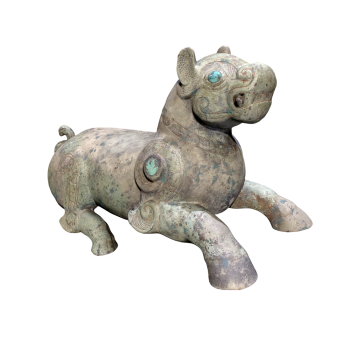
This is an ancient Chinese bronze animal shaped utensils, the specific name is usually Xizun, is a kind of bronze ritual vessel used for wine or sacrifice. This artifact combines a variety of animal features (such as tiger head, Buffalo hoof, etc.), belonging to the mythical Swiss beast. The surface of the body has exquisite decorative patterns, and inlaid with turquoise as eyes and decoration. During the Shang and Zhou dynasties in China, bronzes were used in important sacrificial rites as symbols of power and status. This animal-shaped ritual was very rare and precious at the time. Many similar animal-shaped bronzes, such as tiger statue and rhinoceros statue, have been found in ancient tombs and sites in Hubei, Shanxi and other places in China.
Ancient Chinese Temple Bell

Ancient Chinese Temple Bell

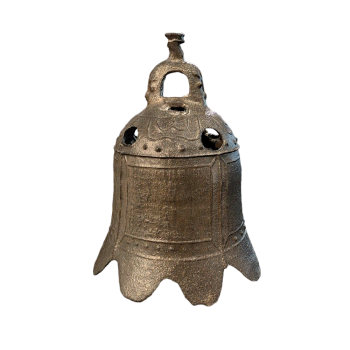
It is a Chinese antique temple bell, usually made of bronze or cast iron. The top of this clock has a double dragon-shaped handle for hanging, and the main body has a raised decorative pattern or inscription box. The lower edge of the bell is usually wavy or scalloped, which is typical of temple bells in East Asia (especially China). This kind of bell is one of the necessary instruments of the temple, used for Buddhist rituals or important activities.
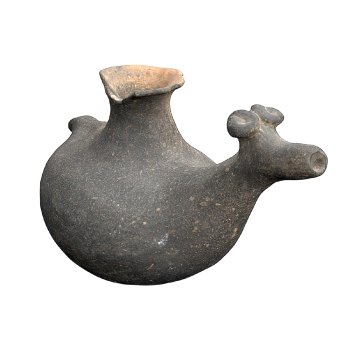
sheep-shaped pottery kettle

sheep-shaped pottery kettle

It is an antique artifact dating from the late Bronze Age to the Iron Age (c. 1350-800 BC), found mainly in western Iran (such as the Amrash or Malik cultural regions) and Mesopotamia. This unique animal-shaped pottery is likely to be used for ritual or religious purposes, such as drinking or pouring sacrificial drinks. The liquid is poured from the opening at the top and out through the drain at the mouth of the sheep. In ancient Near Eastern mythology, sheep were often associated with fertility, power, and auspiciousness, and the item may have had significant symbolic or status value in the societies of the time.
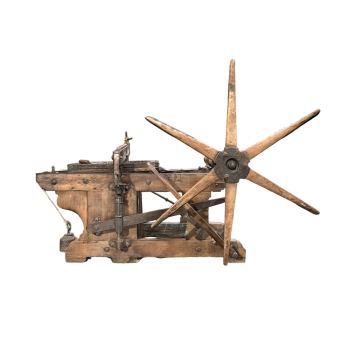
old wooden lithographic printing machine
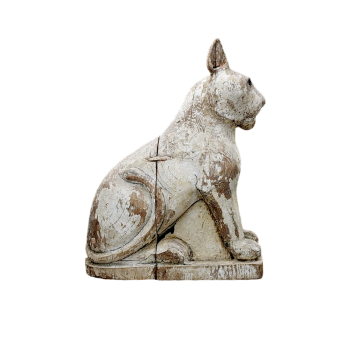
old wooden lithographic printing machine

This item is an ancient wooden lithographic press, also known as a star-wheel press. It is a manually operated lithography equipment. Lithography is a printing technology that uses the principle of oil-water incompatibility, usually using slate as a printing plate. This wooden hand-operated lithographic press was mainly popular in the late 18th to early 19th centuries. After movable type printing, the development of lithography has made it possible to reproduce text and images efficiently and at low cost, playing an important role in education, communication and artistic dissemination.
Ancient Egyptian wooden cat-shaped mummy box

Ancient Egyptian wooden cat-shaped mummy box

This is an ancient Egyptian wooden cat-shaped coffin (or cat-shaped mummy box). In ancient Egypt, cats were seen as incarnations of the gods, especially associated with the goddess Bastet. This hollow wooden sculpture is specially designed to hold the coffin of a cat mummy. X-ray examination confirmed that many of these sculptures contained a complete cat mummy inside. Cats were mummified and placed in elaborate coffins, usually as offerings to the temple, intended to serve as messengers between humans and the divine world through the animal's soul.
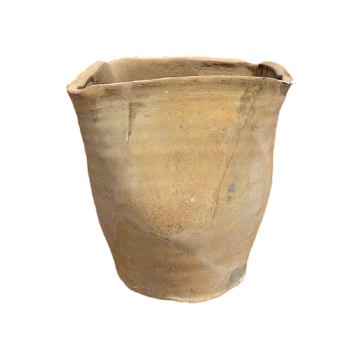
Handmade clay bowl (3D printing)

Handmade clay bowl (3D printing)

This is a handmade clay bowl that can also be used as a flower pot. This type of container is often used as a bonsai pot, succulent plant pot or minimalist style home decoration bowl.
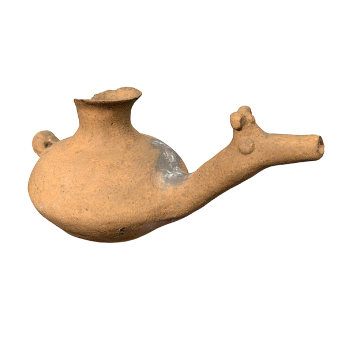
sheep-shaped pottery wine jug

sheep-shaped pottery wine jug

It is a sheep-shaped pottery antique artifact dating from the Late Bronze Age to the Iron Age (c. 1350 BC to 800 BC), found mainly in western Iran (such as the Amrash or Malik cultural areas) and Mesopotamia. This unique animal-shaped pottery is likely to be used for ritual or religious purposes, such as drinking or pouring sacrificial drinks. The liquid is poured from the opening at the top and out through the drain at the mouth of the sheep. In ancient Near Eastern mythology, sheep were often associated with fertility, power, and auspiciousness, and the item may have had significant symbolic or status value in the societies of the time.
Florida Native Four-Lattice Pottery

Florida Native Four-Lattice Pottery

This is a Florida native pottery. This four-compartment pottery is from the Tarrant Collection of the Bishop Museum of Science and Nature (formerly the Museum of South Florida) in Bradenton, Florida. It consists of four connected circular grooves, forming a whole square or plum-shaped container. The surface is rough, the color is yellow and brown, and there are signs of wear. It is speculated that it may be carved from stone. In ancient times, similar four-compartment containers were found in different cultures. For example, four-compartment containers of bronze, marble or pottery used to hold pigments were unearthed at the sites of the late Shang Dynasty in China.
Ancient pottery furnace

Ancient pottery furnace

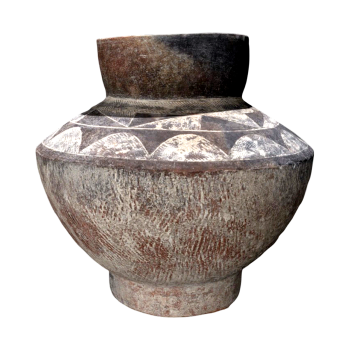
This pottery is probably an ancient pottery jar, similar to the painted pottery jar of the Yangshao culture in China. Such pots are usually made of terracotta clay and are used for storage, cooking or ceremonial purposes. Such large containers are often used as water storage, food containers, and may also be part of the urn.
ivory horn

ivory horn

This is an antique musical instrument called the Ivory Horn (oliphant). The ivory horn is usually carved from a whole piece of ivory. The name "oliphant" comes from Old French, meaning "elephant". In medieval times, ivory horns were used primarily as signal horns in hunting or warfare to communicate over large areas. Many of the extant ivory horns were made in the 10th to 16th centuries by Muslim artisans in southern Italy or Sicily for the European market. They can be seen in museums and church treasures all over Europe (such as France, Germany and the United Kingdom), and are regarded as precious collections.
Red pottery bird-shaped ware from the Mayan period (3D printable)

Red pottery bird-shaped ware from the Mayan period (3D printable)

This is a pottery parrot-shaped object. From the perspective of shape and texture, it has strong artistic characteristics of pre-Columbian or Native American culture (such as Colima culture or Mayan culture). The bird's mouth is large and slightly open, presenting a vivid gesture. The bird's back or tail has an obvious opening (flow mouth), indicating that this may be a kettle, clay vase or sacrificial container. The surface presents a reddish-brown terracotta luster, accompanied by traces of natural wear and mineral deposits, which is the typical appearance of such unearthed artifacts. In ancient times, such artifacts were often not only daily necessities, but also used as burial objects or sacrificial rituals.
Ancient pottery vessels

Ancient pottery vessels

The container is irregular cup-shaped, with a narrow bottom and a wide top, with a ring-shaped handle on one side and a groove or "mouth" on the other side for pouring liquid. This shape is common in ancient and modern handmade pottery and is used to hold liquids such as water, milk, sauce or tea.
ceramic bowl

ceramic bowl

This is a ceramic bowl dating back to the second half of the 14th century. In 1990, it was discovered during archaeological research in the church of Tergovishtgertoglu. The bowl is high and slightly thickened at the edge, straight-walled, and annular at the bottom. The bowl body is coated with graphite inside and outside. Color: green, maroon, yellow. The center of the bowl is decorated with a geometric motif, the Star of David. The arms of the star pattern are decorated with floral patterns. Dimensions: height 8.3cm, diameter 17cm.
Multicolored overglazed porcelain (French First Empire, Sèvres)
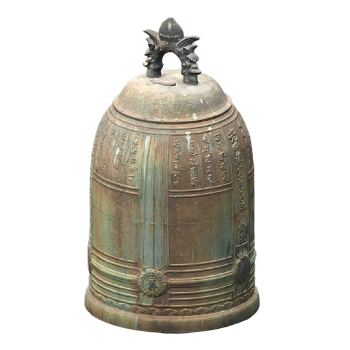
Multicolored overglazed porcelain (French First Empire, Sèvres)

Sevres, France, First Empire 1810 - 1814; size: 7.0 x 23.0cm; material: porcelain; craft: covering; multi-color overglaze painting, gilded. There are reddish-brown markings on the base.
Ancient Bronze Van Bell (Buddhist Temple Bell)
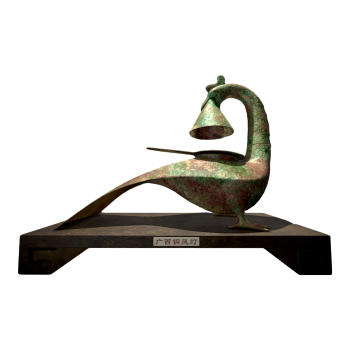
Ancient Bronze Van Bell (Buddhist Temple Bell)

This is a well-preserved ancient bronze Brahma bell (Buddhist temple bell) with important religious and historical value. The inscription on it is key information for studying the age and background of its casting. This large bronze bell with inscriptions of Buddhist scriptures is very common in East Asian Buddhist cultural circles such as China, Japan and South Korea.
Copper Phoenix Lantern in the Late Western Han Dynasty

Copper Phoenix Lantern in the Late Western Han Dynasty

In 1971, a pair of bronze phoenix lanterns, 33cm high, 42cm long and 15cm wide, were unearthed in the No. 1 Han tomb bell of the late Western Han dynasty in Guangxi Zhuang autonomous region. their appearance was similar to that of a phoenix bird. they stood side by side with their feet, looked back with their heads raised, and their tails drooped behind them to support the whole body with their feet. they looked very stable. Fengtong body fine carved feathers, head, crown, neck, wings, tail, foot, well-proportioned, clear outline, lifelike. When the lamp is lit, the soot from the wax torch enters the neck through the phoenix's mouth, and the phoenix's abdominal cavity dissolves into the water to eliminate pollution and purify the indoor air so as not to affect human health. It is a product with similar environmental protection function in the earlier period.
Spanish Antique Toner Box

Spanish Antique Toner Box

the "spanish tinder box" was a gunpowder storage and transportation container widely used in the spanish kingdom (and subsequent spanish empire) in the 15-18th century. it was not only a key carrier of military strategic materials, but also an important witness of the development of spanish gunpowder technology and the expansion of the empire. It is not only a practical "gunpowder warehouse", but also a microcosm of the military, industrial and cultural strength of Spain's Golden Age (1492-1700).
Golden Horn of Kimbayah

Golden Horn of Kimbayah

The "Golden Horn of Golden Baya Culture" is one of the most mysterious golden ceremonial artifacts of the ancient Colombian Golden Baya Culture (Quimbaya culture, about 1000 BC-16th century AD). It is famous for its unique shape, exquisite craftsmanship and profound religious connotation. It is not only the "sound medium" in the sacrificial ceremony of the Kimbayas, but also a vivid witness of the "golden worship" and "natural belief" of the South American civilization in the pre-Columbian period. It is called the "golden totem that can make a sound".
Golden incense burner of Jinba culture

Golden incense burner of Jinba culture

"Golden incense burner of Jinbaya culture" is one of the most representative golden religious artifacts of ancient Jinbaya culture in Colombia. It is famous for its exquisite craftsmanship, mysterious decoration and profound religious connotation. The Kimba culture is mainly distributed in the western Andes of Colombia and is one of the earliest civilizations in South America to master complex metallurgical technology. Its name comes from the 19th century Colombian archaeologist's discovery of the "Kimbaya Cemetery", a culture known for its highly developed gold casting, pottery making and agriculture.
Panamanian Laccano Decorative Paintplate

Panamanian Laccano Decorative Paintplate

"Panama Laccano Decorative Painted Plate" is one of the most representative traditional handicrafts in Laccano, Chiriqui Province, western Panama. It is famous for its colorful painted patterns and unique regional cultural connotations. Lakano is a small town in the Chiriqui province of Panama. It is located in the fertile plains of the Pacific coast. Historically, it was an important area where indigenous Indians and Spanish colonists mingled. Since the pre-Columbian period, the local aborigines have been making pottery for a living; during the colonial period, the Spanish introduced European pottery technology, combined with indigenous craftsmanship, and combined with indigenous craftsmanship, forming a "indigenous-Spanish mixed style" painting tradition.
Attica red painted jug unearthed in Camarina, Sicily

Attica red painted jug unearthed in Camarina, Sicily

"Attic red-figure hydra" (Attic red-figure hydra) is a classic red-painted pottery produced in the ancient Greek Attica region (centered on Athens), while "Sicily" (Camarina, Sicily) was unearthed in an ancient Greek colony in southern Sicily, Italy.
Classical period artifacts Klatt wine
Classical period artifacts Klatt wine

Glass-shaped Kratt wine ware decorated with red figures, Sicily La Gusa. Front: The warrior bids farewell to his family (wife and son in the arms of a nanny); Back: The man, armed with a stick and Himatian, stands between two women. From the site of Kamarina, Lagusa Province, Sicily, Italy. Classical period, 5th century BC. Collected in the Parco Archeologico di Kamarina e Cava d'Ispica Archaeological Park.
Thailand prehistoric period artifacts Thailand prehistoric pottery jar

Thailand prehistoric period artifacts Thailand prehistoric pottery jar

This clay pot is a typical artifact of Thailand's prehistoric period, reflecting the daily life and craftsmanship of human beings in the Neolithic or Bronze Age at that time. This type of pottery is mainly used to store food, liquid or grain, reflecting the needs and skills of an agricultural society.
A pair of Khmer pottery artifacts from early Khmer civilization

A pair of Khmer pottery artifacts from early Khmer civilization

This pottery is one of the representative works of early ceramic art of Khmer culture. It is made of glazed pottery, showing the level of craftsmanship and artistic style at that time. Khmer pottery is usually used in daily life or religious ceremonies, reflecting the exchange and integration of Khmer civilization with surrounding cultures. The design of this pottery is simple and elegant and may be used to hold liquids. It was created from the 1st century BC to the 1st century AD and is currently in the collection of the Minneapolis Art Institute.
18th Century European Porcelain Taoist Theme Bowl

18th Century European Porcelain Taoist Theme Bowl

This mason porcelain bowl is made in imitation of a chinese design. The Mason Porcelain Factory began to imitate Chinese porcelain in the early 18th century to cater to the European market's fondness for oriental art.
Eighteenth Century European Porcelain Porcelain Bowl

Eighteenth Century European Porcelain Porcelain Bowl

This mason porcelain bowl is made in imitation of a chinese design. The Mason Porcelain Factory began to imitate Chinese porcelain in the early 18th century to cater to the European market's fondness for oriental art.
Ancient Greek Pottery Kraut

Ancient Greek Pottery Kraut

A Krater is a large pottery from ancient Greece, often used to mix wine and water. A kraut with a red patterned column refers to a column with a red pattern painted on the pottery. This pottery was made in the Camarina (Camarina) region of Sicily between about the 5th century BC and the 4th century BC. This Klatt style of decoration is known as the Red-figure style, which was very popular in ancient Greek pottery. The red painting style is characterized by the use of red paint to draw patterns on a black background, making the patterns more vivid and detailed.
18th Century European Porcelain Chinese Style Fine Neck Vase

18th Century European Porcelain Chinese Style Fine Neck Vase

This thin-necked vase of Mason porcelain was made by Mason porcelain factory in 1721. Mason Porcelain Factory is one of the earliest hard porcelain factories in Europe, established in 1710. Mason porcelain is famous for its exquisite craftsmanship and unique design, especially its blue and white underglaze decoration. The porcelain was made by Johann Gregorius Höroldt, a German painter and porcelain painter. Holdert is known for his Chinese style decoration (Chinoiserie) designs.
1 2 3 4 5 6 7 8 9 ... 12 Next