Chinese antique bronze wine pot

Chinese antique bronze wine pot

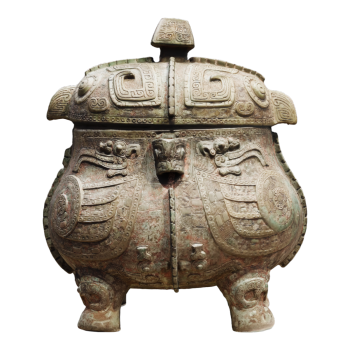
Chinese sacrificial wine vessels bronze square Yi

Chinese sacrificial wine vessels bronze square Yi

Traditional Chinese pouring vessels and toasting cups

Traditional Chinese pouring vessels and toasting cups

Antique Chinese copper square teapots and wine vessels from the Eastern Zhou Dynasty

Antique Chinese copper square teapots and wine vessels from the Eastern Zhou Dynasty

Dragon patterned porcelain vase

Dragon patterned porcelain vase

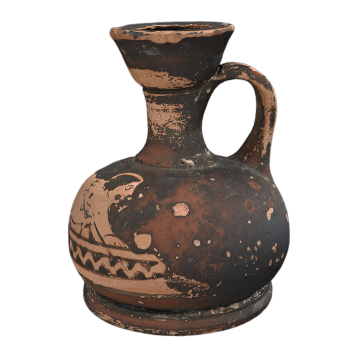
Ancient Greek vase painting pottery with double ears, long neck, high vase

Ancient Greek vase painting pottery with double ears, long neck, high vase

Glazed ceramic basin with black and brown rabbit pattern bloodletting bowl

Glazed ceramic basin with black and brown rabbit pattern bloodletting bowl

The item is a medical device used before the Civil War to collect blood during bloodletting. This artwork is from Dr. Leo J. McCarthy's personal collection and was rented to the Ruth Lilly Medical Library at Indiana University during scanning.
The porcelain "Double Tube Cast Pottery Pot" collected by Teddy Hahn

The porcelain "Double Tube Cast Pottery Pot" collected by Teddy Hahn

The pouring container is spherical in shape and coated with dark brown, beige, terracotta, and green colors. It contains two stirrup like connecting nozzles and is decorated with two animal shaped figures. The subject displays a personified face, possibly depicting a sun. This ship may have come from Moche, and this porcelain was collected by Teddy Hahn.
Bronze ware from the Zhou Dynasty, "Zhou Dynasty Food Utensils - Tripod"

Bronze ware from the Zhou Dynasty, "Zhou Dynasty Food Utensils - Tripod"

The tripod is regarded as a symbol of national importance, power, and prestige. The character "tripod" is also endowed with extended meanings such as "distinguished", "noble", and "grand", such as "one word nine tripods", "famous name", "peak period", "strong assistance", and so on. It is also a ceremonial vessel for recording achievements. During major celebrations or receiving rewards, the rulers or nobles of the Zhou Dynasty would cast cauldrons to record the grand occasion. This kind of etiquette still has a certain influence today.
Bronze ware from the Shang Dynasty, "Wine Vessel Gu"

Bronze ware from the Shang Dynasty, "Wine Vessel Gu"

This wine vessel is currently housed in the Minneapolis Museum of Art in the United States. Gu wine vessel is a tall and elegant wine glass with a compact shape, with a trumpet shaped top, gradually narrowing in the middle, and slightly expanding outward at the bottom. Archaeological evidence shows that bronze wine vessels first appeared during the Erligang Culture period of the Shang Dynasty (1500-1300 BC). Gu wine vessels were most popular during the Shang Dynasty (1600-1046 BC), but became relatively rare in the early Western Zhou Dynasty (1046-977 BC) and gradually disappeared during the Eastern Zhou Dynasty (770-256 BC).
Jingdezhen Ceramic Tabletop Vase Blue and White Porcelain Dragon Pattern Double Eared Four sided Square Vase

Jingdezhen Ceramic Tabletop Vase Blue and White Porcelain Dragon Pattern Double Eared Four sided Square Vase

Turtle shaped Bronze Inkstone Drop

Turtle shaped Bronze Inkstone Drop

Inkstone drops, also known as water droplets or book drops, are an ancient traditional cultural artifact used to store inkstone water for grinding ink. The emergence of inkstones is related to the use of brush and ink and the rise of calligraphy and painting. At the latest during the Eastern Jin Dynasty, various shapes of water bowls appeared. People found that when pouring water into inkstones with water bowls, the water flow was often excessive. Therefore, a tool that was easy to control the amount of water appeared, which was called inkstone drops. Inkstone drops, also known as water droplets, water sprays, book drops, toad sprays, etc. The one with a mouth is called "Shui Zhu", and the one without a mouth is called "Shui Cheng".
Mingxuan De Blue and White Flower Pear shaped Pot

Mingxuan De Blue and White Flower Pear shaped Pot

The blue and white porcelain produced by Jingdezhen Imperial Kiln Factory during the reign of Emperor Xuande of the Ming Dynasty (1426-1435 AD, the reign name of Emperor Xuanzong of the Ming Dynasty Zhu Zhanji) holds a significant position in the development history of Chinese ceramics. It is famous for its ancient and elegant design, crystal clear glaze color, and colorful patterns. Compared with other blue and white porcelain from various dynasties, its firing technology has reached the highest peak, becoming one of the famous porcelain products in China. Its achievements are praised as "unprecedented in the first generation". The pear shaped teapot has an umbrella shaped lid with a precious pearl button on the top, a short neck, and a drooping round belly below. It has short circular legs, curved flow, and a crank, and is shaped like a pear, hence its name.
Bright glazed red jade teapot spring vase

Bright glazed red jade teapot spring vase

The Yuhu Spring Vase, also known as the Yuhu Appreciation Vase, is a typical shape of Chinese porcelain. It is widely popular in various regions and has been used for a long time. After the Song Dynasty, it was fired in kilns in various places throughout history. Its shape evolved from the water purification bottle in Tang Dynasty temples. The basic form is a curved mouth, thin neck, hanging abdomen, and circular feet. It is a type of bottle with a soft curved outline.
The Yangshao Culture of the Neolithic Age in China's "Colored Pottery Basin with Human Face and Fish Pattern"

The Yangshao Culture of the Neolithic Age in China's "Colored Pottery Basin with Human Face and Fish Pattern"

The Shao culture refers to an important Neolithic colored pottery culture in the middle reaches of the Yellow River, which lasted from approximately 5000 BC to 3000 BC (about 7000 years ago, with a duration of about 2000 years) and was distributed throughout the entire middle reaches of the Yellow River from Gansu Province to Henan Province. It was first discovered in Yangshao Village, Mianchi County, Sanmenxia City, Henan Province in 1921, so according to archaeological conventions, this culture is called the Yangshao culture. It is centered around Guanzhong, western Henan, and southern Shanxi, where the tributaries of the Yellow River, such as Wei, Fen, and Luo, and extends north to the Great Wall and Hetao areas, south to northwest Hubei, and east to eastern Henan. It currently exists at the Central Academy of Historical Research.
Seismograph

Seismograph

The seismograph is a masterpiece created by scientist Zhang Heng during the Eastern Han Dynasty in China. The time of the initial construction of the seismometer is unknown, but it was rebuilt in the first year of the Yangjia reign of Emperor Shun of Han (132 AD). It was the world's first seismometer and the first instrument in history to use scientific methods to determine the direction of earthquakes. The seismometer has eight directions, each with a dragon head containing a dragon ball, and below each head there is a toad corresponding to it. If an earthquake occurs on either side, the dragon ball contained in the dragon mouth in that direction will fall into the mouth of the toad, thus determining the direction of the earthquake.
Porcelain bowl with copper edge inlaid with blue and white porcelain from the Qianlong period of the Qing Dynasty

Porcelain bowl with copper edge inlaid with blue and white porcelain from the Qianlong period of the Qing Dynasty

The blue and white porcelain bowls made during the Qianlong period of the Qing Dynasty are now preserved in the Hunt Museum in England. The outer edge of the bowl is decorated with a Pegasus frame,
Song Chai Kiln Dark Lotus Pattern Bowl

Song Chai Kiln Dark Lotus Pattern Bowl

Chai Kiln was the imperial kiln of Zhou Shizong Chai Rong, the emperor of the Five Dynasties and Ten Kingdoms. According to records, the Chai kiln was established in the early years of Xiande in the Later Zhou Dynasty of the Five Dynasties. The porcelain produced by the Chai kiln is "as green as the sky, as clear as a mirror, as thin as paper, as loud as a bell, moist and delicate with fine lines." The exquisite craftsmanship is unparalleled, and it is the best among many kilns at that time.
Shang Siyang Bronze Square Zun

Shang Siyang Bronze Square Zun

The Shang Siyang Bronze Square Zun is a bronze ritual vessel and sacrificial item from the late Shang Dynasty. Unearthed in 1938 on the mountainside of Zhuanerlun, Yueshanpu, Huangcai Town, Ningxiang County, Hunan Province (Tanheli Site), it is now collected in the National Museum of China. The Shang Siyang Bronze Square Zun is the largest existing bronze square Zun from the Shang Dynasty in China, with a side length of 52.4 centimeters, a height of 58.3 centimeters, and a weight of 34.5 kilograms. The entire object of the Shang Siyang Bronze Square Zun was cast using block casting method, which was seamless and exquisite, demonstrating superb casting skills. It is known as the "ultimate bronze model" in the field of history and is listed as one of the top ten national treasures passed down in China.
Ming and Qing blue and white plum vase

Ming and Qing blue and white plum vase

Meiping is a traditional famous porcelain. Meiping is a type of bottle with a small mouth, short neck, ample shoulders, thin bottom, and round feet. It is named after its small mouth that allows only plum branches to be inserted. Due to its slender body, it was called the "Jingping" during the Song Dynasty. It was used as a vessel for holding wine and had a sleek and beautiful shape. After the Ming Dynasty, it was called the "Meiping".
Qing Dynasty blue and white landscape painting incense burner

Qing Dynasty blue and white landscape painting incense burner

Blue and white porcelain is the most rich variety of porcelain with Eastern ethnic customs. It originated in the Tang Dynasty and matured in the Yuan Dynasty, mainly for export porcelain. Since the Ming Dynasty, it has become the mainstream of Chinese porcelain production. By the Qing Dynasty, blue and white porcelain still held a dominant position, serving the imperial family, popularizing among the people, and spreading far and wide to the world. It reached another historical peak in terms of craftsmanship, painting skills, and production.
Ming Yongle Blue and White Moon Embracing Vase

Ming Yongle Blue and White Moon Embracing Vase

The moon hugging bottle is a type of porcelain from the Qing Dynasty. Also known as the "Treasure Moon Bottle". Small mouth, straight neck, two ears on the neck side, named after the round moon like belly of the bottle. The appearance originated from the pottery horse hanging bottle popular in the Western Xia during the Song and Yuan dynasties, with a double series on the left and right sides, used to hang on the side of the saddle, which is highly ethnic. One of the common artifacts in the Yongle and Xuande Jingdezhen kilns of the Ming Dynasty, fired during the early period of Yongzheng and later discontinued. During the reign of Emperor Qianlong, there was also firing, mostly in blue and white.
Yuanlongquan Kiln Blue Glazed Brown Colored Plum Vase, Collection of Shenzhen Museum

Yuanlongquan Kiln Blue Glazed Brown Colored Plum Vase, Collection of Shenzhen Museum

The bottle body is exquisite, with a small mouth, short neck, ample shoulders, gradually converging from the belly to the bottom, and shallow circular feet. The bottle seat has round lips and flat folds, with three small holes on the neck. The seat body has three floral window shaped voids, and four small feet are placed at the bottom of the seat. The bottle body and bottle holder can be moved for loading and unloading. The continuous seated plum vase first appeared in the Song Dynasty and is one of the bottle styles that were first burned in the Song Dynasty. During the Yuan Dynasty, plum wine bottles had wider shoulders and fuller shapes, which were not as slender as those of the Song Dynasty. They were often used as wine vessels. The body of the connected plum vase is thick and fine, with a green glaze throughout the body. The glaze color is blue with a yellowish tint, and there are ice cracks on the glaze surface.
Ming Yongle Blue and White Cloud Dragon Pattern Tianqiu Vase, Hidden in the Palace Museum

Ming Yongle Blue and White Cloud Dragon Pattern Tianqiu Vase, Hidden in the Palace Museum

This cultural relic is 41.5 centimeters high, with a diameter of 9.3 centimeters and a foot diameter of 15.5 centimeters. The old collection of the Qing Palace. This vessel has a large and upright body, a round mouth, a straight neck, a mouth that is about the same size as the neck, a round belly, and shoulders that are about the same size as the bottom. It is commonly known as the "Heavenly Ball Bottle". The whole body is decorated with blue and white patterns, which are divided into two layers from top to bottom. The outer mouth is decorated with honeysuckle patterns, with branches and leaves as the skeleton, extending left and right to form a continuous edge decoration, and the neck is decorated with 6 cloud patterns. The entire abdomen is painted with cloud dragon patterns. The dragon has a large body, opens its mouth with angry eyes, and its mane rushes upwards, forming a back looking posture. Its limbs are extended forward, and its three claws are agile and powerful. Various shapes of cloud patterns are decorated in the gaps between the dragon bodies, highlighting the soaring momentum of the giant dragon. Flat bottomed white glaze without style.
chimes

chimes

The large percussion instrument of the Han ethnic group in ancient China, the chime bell, originated in the Zhou Dynasty and flourished during the Spring and Autumn Period and Warring States Period until the Qin and Han Dynasties. China was the earliest country to manufacture and use musical clocks. It is made of bronze and arranged in order of pitch by flat round clocks of different sizes. It is hung on a huge clock stand and struck with T-shaped wooden hammers and long rods, which can produce different musical sounds. Because each clock has a different pitch, striking according to the music spectrum can play beautiful music. Hang a set of copper bells with different tones on a wooden frame, and have the maid strike and play music with a small wooden mallet.
White pottery beast face pattern xun in the late Shang Dynasty

White pottery beast face pattern xun in the late Shang Dynasty

White pottery refers to a type of plain pottery with a white surface, interior, and texture.. White pottery has been found in the late Longshan Culture and early Erlitou Culture sites in western Henan province. Xun is a wind instrument that originated in the Neolithic Age (over 5000 years ago) and was initially used to transmit signals to each other; Or imitating bird calls as an auxiliary tool for catching.
Northern Song Ru kiln celadon lotus style warm bowl

Northern Song Ru kiln celadon lotus style warm bowl

The lotus shaped warm bowl from the Ru kiln of the Northern Song Dynasty was used to produce porcelain. The original vessel should be paired with a holding pot and was commonly used for warming wine during the late Tang and Song dynasties. Currently housed in the National Palace Museum in Taipei. Ru kiln was once used in the palace, but due to the method of covering and firing, the mouth had defects. Therefore, there was a move to "order Ruzhou to burn celadon in the palace". The selection of Ru kiln and the use of fully glazed support should be one of the reasons.
17th century Polish porcelain "Pear shaped Flower Coffee Pot"

17th century Polish porcelain "Pear shaped Flower Coffee Pot"

This porcelain pot is collected in the Royal Museum of Vail. The handle of the pot is shaped like the letter "J", with volutes on the top and bottom, and raised leaves and palms on the outside. The pot has a dome cap with a collar. The painting style includes randomly arranged flowers and realistic insects, with shadows painted in gray. This type of decoration became popular in the 1730s and was the first typical European porcelain painting style. The designs of flowers, fruits, and insects are taken from plant patterns.
Porcelain "Imperial Yellow Glazed Porcelain Bowl" from the Qianlong period of the Qing Dynasty

Porcelain "Imperial Yellow Glazed Porcelain Bowl" from the Qianlong period of the Qing Dynasty

Yellow glazed porcelain is the most royal style artwork. Since the Han Dynasty, official kilns throughout history have fired yellow porcelain, but before the Ming Dynasty, yellow glazed porcelain did not show true yellow color, but rather yellow brown or dark yellow. Until the Hongzhi period of the Ming Dynasty, the firing of yellow porcelain truly reached its peak, and because the yellow glaze was pure, it was also known as "chicken oil yellow" by later generations. For feudal rulers, yellow was associated with wealth and auspiciousness, gradually transforming into a color used by the royal family and becoming a symbol of power and nobility.
Jingdezhen Blue and White Porcelain Vase "from the Kangxi period of the Qing Dynasty

Jingdezhen Blue and White Porcelain Vase "from the Kangxi period of the Qing Dynasty

This Chinese cultural relic is a porcelain vase from the Kangxi period of the Qing Dynasty (1662-1722). The vase is made of transparent and colorless underglaze blue and white porcelain with cobalt pigment, fired in Jingdezhen, and is now collected in the Smithsonian Museum.
Bronze square cauldrons from the early Western Zhou Dynasty collected by the Minneapolis Institute of Art

Bronze square cauldrons from the early Western Zhou Dynasty collected by the Minneapolis Institute of Art

Ding is a utensil used by ancient Chinese people in some places to cook and store meat, and is one of the most important bronze ware species in ancient times. The "ding" (cooking vessel) is considered by later generations to be the most representative of supreme power among all bronze vessels.
Bronze Tripod of Early Western Zhou Dynasty Collected by Minneapolis Academy of Arts

Bronze Tripod of Early Western Zhou Dynasty Collected by Minneapolis Academy of Arts

Korean Goryeo period celadon teapot

Korean Goryeo period celadon teapot

A celadon teapot from the Goryeo period in Korea (918-1392), made around 1100 AD. The outer diameter of this celadon is 7.2 centimeters, and the overall height is 4.2 centimeters. This celadon is engraved with a scroll design, and many celadon ceramics have been repaired with gold paint. In Japan, this repair method is called "Jinji" (meaning "gold bonding"), which uses a mixture of shiny gold powder and paint to repair damaged parts. This teapot is currently housed in the Cleveland Museum of Art.
Countryside Pool Lakeside Simulation White Swan Ornament Outdoor Garden Courtyard Decoration Flower Pot

Countryside Pool Lakeside Simulation White Swan Ornament Outdoor Garden Courtyard Decoration Flower Pot

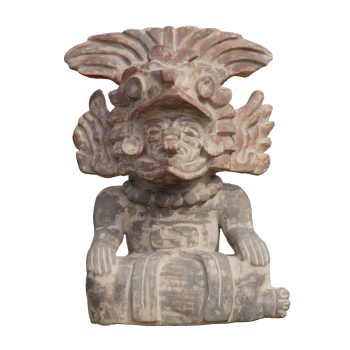
Maya style pottery engraved with golfers

Maya style pottery engraved with golfers

This is a Maya style pottery from Yucatan, Mexico, made around 600-1000 AD. The diameter of this pottery is 18.1 x 15.6 centimeters, and the overall height is 18 centimeters. This pottery depicts the image of a Maya player wearing heavy protective gear to prevent injury during the game. This pottery is currently housed in the Cleveland Museum of Art.