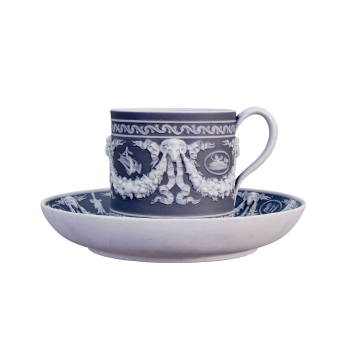
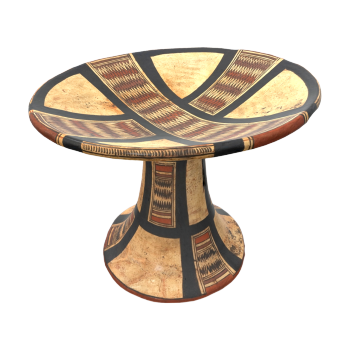
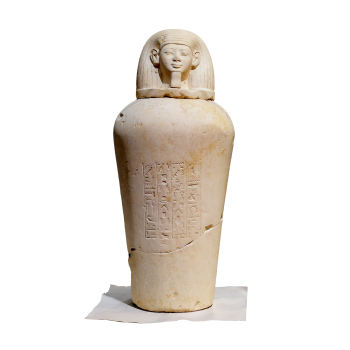
Kiyasos Ancient Greek drinking vessels

Kiyasos Ancient Greek drinking vessels

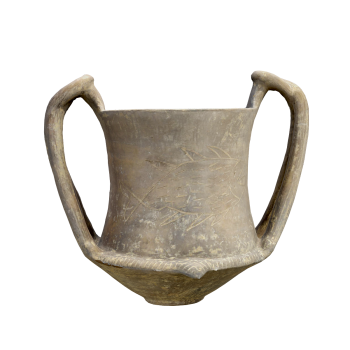
It is a cup-shaped drinking vessel from ancient Greece, dating back to around 550 BC to 500 BC, produced in the Attica region. The location is unknown. The characteristic of Kiassos is that the cup mouth is upturned, originating from the shape of a spoon. The upper end of its handle has a spike to securely fix the vessel. The characteristic is that the cup mouth is upturned, originating from the shape of a spoon. The upper end of its handle has a spike to securely fix the vessel. It is currently housed in the Academic Art Museum of the University of Bonn. Using black painting techniques, the scene depicts the battle between Hercules and Amazon female warriors.
Laconia Kilix Cup

Laconia Kilix Cup

It is an ancient Greek pottery collected in the Academic Art Museum of Bonn University. Made between 550 BC and 530 BC, originating from the ancient Laconia region where Sparta was located. Known for its white coating and decorations concentrated on the inside of the bowl. The outer side of the cup presents a beam of light and several dark stripes of different widths. The inside displays a scene depicting two bearded, naked men talking. The smaller man on the left has a long beard and holds a Cantalos in one hand. The larger man on the right has a short beard and is not carrying any items. The blank space around the man is filled with bird and floral elements
Pilgrimage Bottle

Pilgrimage Bottle

It is a ceramic container with Eastern patterns and golden glaze, produced in the 16th century. This bottle design has two vertical sausage shaped ear handles. This type of bottle is usually used by pilgrims to carry holy water or other liquids, and its golden luster and Eastern style decoration make it not only practical, but also of high artistic value and symbolic significance. Golden glaze is a special ceramic glaze that contains suspended metal particles and typically appears dark brown in color. This glaze needs to be fired again on ceramics that have already been fired and glazed to showcase its unique luster effect. It is not only a manifestation of religious beliefs, but also a showcase of ceramic craftsmanship at that time.
Saint Valentine's Cup

Saint Valentine's Cup

It is an ancient Greek pottery cup collected by the Academic Art Museum of Bonn University, dating back to the late 5th century BC or early 4th century BC. Belonging to the so-called Saint Valentine Cantalos Cup category, it is characterized by a bell shaped body and a vertically installed handle that connects the rim of the cup to the lower part of the cup body. It may have been produced based on the prototype of Attica in Attica or Apulia region. Each side has decorative panels, with Ionic vortex patterns on the upper and lower edges, and the middle area filled with laurel and ivy wreaths and dotted lines. It showcases the exquisite craftsmanship of ancient Greek pottery and reflects the aesthetic style of the time.
Geometric pattern ceramic plate

Geometric pattern ceramic plate

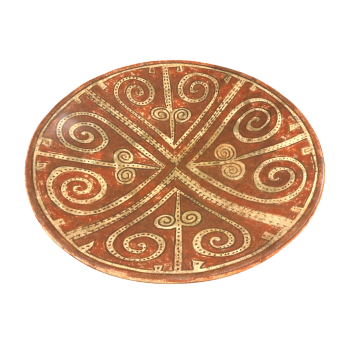
It is a ceramic plate with a circular base and geometric pattern, belonging to the Conte style, made approximately between 700 and 1000 years ago, from the Gran Cocl é region. This ceramic plate is known for its unique Conte style colors (red, black on cream base, and red circular base). There is usually a typical humanoid pattern in the center of the plate, which appears in multiple plates of the same style, suggesting that it may represent some mythical image. This work not only serves as a practical dining utensil, but also reflects the aesthetic taste and cultural symbol of the society at that time.
Caron bottle

Caron bottle

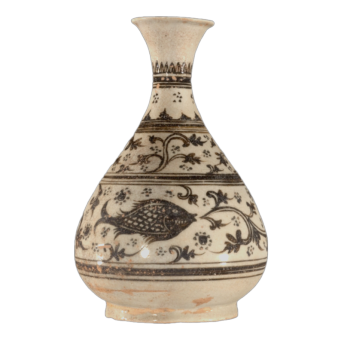
Caron bottles were very popular in Ming Dynasty China, and during this period, Chinese ceramic craftsmanship was highly developed, producing many exquisite ceramic artworks. The design of Karon bottles usually features elegant contours and exquisite decorations. They may have intricate carvings or reliefs, as well as painted patterns, reflecting the artistic style and aesthetics of the time. These vases were usually used as decorations or for storing spices, powders, etc., so they played an important role in daily life during the Ming Dynasty. Caron bottles were very popular in Ming Dynasty China, and during this period, Chinese ceramic craftsmanship was highly developed, producing many exquisite ceramic artworks.
Small story style ceramic disc

Small story style ceramic disc

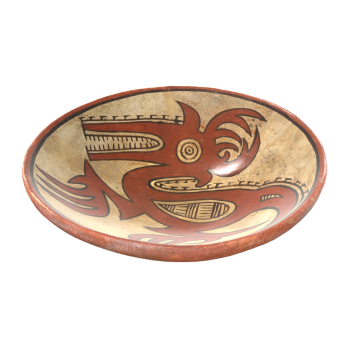
A ceramic plate with a circular base and animal shaped design. This style of ceramic works can be traced back to the Gran Cocl é region between 700 and 1000 years ago, belonging to the Conte style. These ceramics are known for their unique central patterns, often depicting images of animals, half humans, half beasts, or mythical creatures, painted in black and red on a white or cream background, with edges often in red. For example, one of the models displays an image of a bird with bat wings, which may represent some mythical creature. These works are not only used in daily life, but also reflect the aesthetic tastes and cultural symbols of the society at that time.
Japanese Satsuma burnt vase

Japanese Satsuma burnt vase

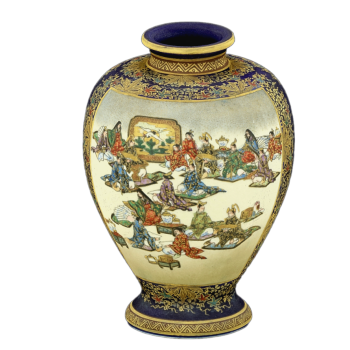
Satsuma yaki is named after its place of origin, located in the Satsuma region of Kyushu Island, Japan (now Kagoshima Prefecture). This ceramic art form reached its peak in the late Edo period (1603-1868). Satsuma yaki is known for its exquisite cracked glaze (known as "Kintsugi") and complex handmade carvings. They are usually decorated with traditional Japanese patterns such as flowers, birds, landscapes, and figures. The production of Satsuma yaki involves multiple steps, including molding, carving, glazing, and firing. The carving technique is particularly delicate, often carving details on white or beige cracked glazes.
Medieval ceramic bowl

Medieval ceramic bowl

It is a pottery bowl from the medieval period, dating back to approximately between the 14th and 15th centuries. This cultural relic was discovered decades ago in a building near the current History Museum. It effectively showcases the appearance of daily necessities in the Girona region during the medieval period. This pottery bowl was modeled by the Pol Guiu and La Tempesta teams, with text provided by MHG and registration number MHG 8314-158. The detailed information of this model can be found on the official website of the Girona Historical Museum.
Danbo fired pottery

Danbo fired pottery

It is a ceramic artwork from the Muromachi period in 15th century Japan, collected by the Cleveland Museum of Art. This pottery jar is made of natural gray glazed stone tools, with a diameter of 39 centimeters and a total height of 45 centimeters. It was once used as a storage container for rice or other grains, and was the work of a potter in the Tanba region, a fertile area located in western Kyoto. This pottery jar is not only practical, but also showcases the aesthetic craftsmanship of Japanese Tanba ceramics. The Cleveland Museum of Art acquired this collection through Severance and Greta Millikin purchase funds.
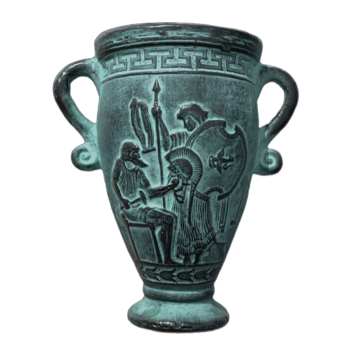
Greek Vase

Greek Vase

Greek vases are very famous works of art in ancient Greek civilization, not only as daily necessities, but also as symbols of art and culture. Greek vases are commonly used to store liquids such as oil, wine, or water, and are also used as burial objects for funerals. They are often decorated with mythological stories, daily life scenes, and geometric patterns, reflecting the artistic aesthetics and cultural beliefs of ancient Greeks. Greek vases are made of clay and coated with a smooth glaze called "talc" on the surface. Formed by hand or wheel, and then fired at high temperatures. Decorative techniques include the drawing of black or red patterns, known as "black painting" and "red painting".
Enamel vase

Enamel vase

A Kashan pottery kettle in the shape of a ram

A Kashan pottery kettle in the shape of a ram

The "Ram shaped Kashan pottery kettle" is a 13th century Iranian artwork currently housed in the Minneapolis Museum of Art in the United States. This artwork is a water kettle shaped like a ram. This work is part of the Kashan pottery, using transparent turquoise colored glaze and black underglaze painted decoration. Although there are relatively few circular ceramic sculptures in Islamic art, decorative patterns were popular on metal and ceramic vessels in Iran and Türkiye during the Seljuk rule. The shape of a bull is the most common, but there are also vessels in the shape of camels, rams, and lions.
African clay jar

African clay jar

It is a clay jar from early 20th century West Africa collected by the Cleveland Museum of Art. This pottery jar is made of red clay material, with a diameter of 35.7 centimeters (14 1/16 inches) and an overall height of 36.9 centimeters (14 1/2 inches). It showcases the artistic characteristics of the Nupe style, crafted by unknown potters. This work is not only a practical item, but also embodies the aesthetics and techniques of traditional African pottery. The Cleveland Museum of Art purchased this item through the John L. Severance Fund, with the serial number 1995.210.
Decorative vase

Decorative vase

Decorative vases are containers primarily used to beautify the environment and enhance the artistic atmosphere of a space. They can be made of various materials such as ceramics, glass, metal, or plastic, and are known for their unique design, color, and shape. The design of decorative vases usually focuses on appearance, aiming to serve as a display of art and add beauty to interior decoration. There are various styles of decorative vases, ranging from classical to modern, from East to West, covering almost all artistic styles. Decorative vases are containers primarily used to beautify the environment and enhance the artistic atmosphere of a space. They can be made of various materials.
Bronze Tripod Cauldron of the Shang Dynasty

Bronze Tripod Cauldron of the Shang Dynasty

The "Shang Dynasty Bronze Tripod" is a tableware from the 12th to 11th centuries BC, currently housed in the Minneapolis Museum of Art in the United States. The prototype of the tripod is a rough pottery of the same shape and name made during the Erlitou Culture period (around 3000-2000 BC). The edge of this tripod has thunder patterns, which is a symbol of copper casting in the Shang Dynasty.
Flower and Bird Vase

Flower and Bird Vase

Flower and bird vases are porcelain from the late Joseon Dynasty and were made around the late 19th to early 20th century. This porcelain vase is decorated with underglaze blue, with an outer diameter of 34.3 centimeters and an overall height of 49.4 centimeters. Its design is themed around birds and flowers, reflecting the delicacy and beauty of the porcelain art of the Joseon Dynasty. The porcelain vase was donated by the Mountain Chamber of Commerce to the Cleveland Museum of Art in memory of Jiro Yamanaka, with donation number 1989.117. This work not only showcases the traditional culture of the Korean Peninsula, but also reflects the craftsmanship of porcelain making at that time, and is one of the important collections of the Cleveland Museum of Art.
Double cup maze cup 1950.83. b

Double cup maze cup 1950.83. b

The Double Cup Maze Cup is a 16th century German made artifact collected by the Cleveland Museum of Art, dating back to approximately 1530. This piece is made of maple wood and decorated with gold and silver plating. The crossbar on its left side measures 10.4 centimeters (4 1/8 inches). It is a double cup-shaped maze cup lid with a clever design that can be used as a sharing cup. This lid is engraved with the emblem of Judaism, indicating that it may be related to Jewish culture. The Cleveland Museum of Art, through J H. Wade Fund purchased this work.
Blue glazed Kashan kettle

Blue glazed Kashan kettle

The blue glazed Kashan kettle is a 12th century Iranian Kashan pottery, currently housed in the Minneapolis Museum of Art in the United States. This work is a type of kettle, featuring a full body, birds, plants, and low relief calligraphic patterns. It is one of the few similar deep blue glazed vessels in the late Seljuk period of the Kashan workshop. Kashan pottery is a type of pottery from the Seljuk period in Iran (1038-1194). This period may be the most creative era in Persian pottery production. In addition to gold-plated vessels, minai vessels, and monochrome blue glaze, underglaze painted pottery was also produced.
During the Spring and Autumn Period and the Warring States Period, wine pots were used

During the Spring and Autumn Period and the Warring States Period, wine pots were used

The Chinese Warring States period wine pot, from the 5th to 4th centuries BC, is now collected at the Minneapolis Museum of Art. During the Warring States period, a new trend of bronze decoration emerged, which used inlay techniques to depict more vivid painting scenes. Generally speaking, inlay involves inserting very thin gold, silver, or copper foil wires into thin lines engraved on the copper surface. The technique of decorating copperware with turquoise or even rarer turquoise has existed since the Erlitou Culture period. In the late Spring and Autumn period and the Warring States period, this technique, which now includes more gold and silver inlay, began to be widely used, and the most exquisite vessels and accessories, such as hooks, were made during this period.
Shang Dynasty wine vessels

Shang Dynasty wine vessels

Gou is a wine vessel from the 12th to 11th centuries BC, currently housed in the Minneapolis Museum of Art in the United States. This work is a tall wine glass, with its trumpet shaped top gradually narrowing to the slender center, and then expanding again to the slightly outward turned bottom. Archaeological evidence shows that bronze spears first appeared during the Erligang period of the Shang Dynasty. The gradual decline of wine vessels may be related to King Zhou's denigration of alcohol consumption, as he believed that excessive drinking led to the collapse of the Shang Dynasty. This temple is decorated with a variant of the gluttonous mask. The entire vessel has a tight spiral background pattern, known as the thunder pattern, which is a symbol of copper casting in the Shang Dynasty.
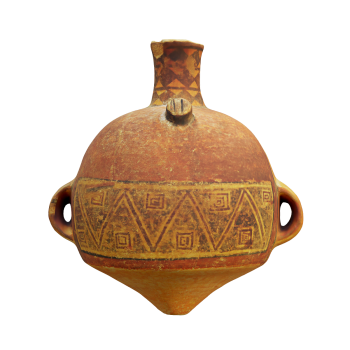
Ceramic containers from the Inca Empire period

Ceramic containers from the Inca Empire period

It is a ceramic container from the Inca Empire (1470 to 1532) period, with distinct Inca cultural characteristics. Usually spherical or elliptical in shape, with a narrow neck and wide mouth at the top and a narrow bottom, making it ideal for storing and transporting liquids. Plays an important role in daily life and is also used as a sacrificial container in religious and ceremonial activities, reflecting the worship and prayers of the Incas towards gods. In 2023, an Inca style Ar í balo ceramic container was returned by the heir of Isabel Pereda from Argentina, completing his journey back home. It is a manifestation of the increasing awareness of international cooperation and cultural heritage protection.
Peruvian Chancay style pottery

Peruvian Chancay style pottery

Known for its unique "black background and white flowers" style, it is one of the most representative works of art in Peru's pre Spanish coastal civilization. Mainly using white as the base, drawing geometric patterns and vivid animal images in black or brown, such as fish, monkeys, cats, birds, as well as complex mesh patterns, squares, and Greek patterns. The production techniques include manual molding, as well as commonly using molds and small sculptures for decoration. Some vessels are decorated with head models on their necks, usually accompanied by headpieces, earrings, and facial paintings, known as "Chinas". In 2023, Swiss authorities returned Chancay style pottery.
Bird shaped vessels at the Minneapolis Museum of Art in the United States

Bird shaped vessels at the Minneapolis Museum of Art in the United States

The bird shaped vessels made between 100 BC and 600 AD are now collected at the Minneapolis Museum of Art in the United States. It occupies an important position in ancient art, has practical functions, and often carries rich symbolic meanings and cultural values. The design reflects the ancient people's observation and imitation of the natural world, as well as their worship and respect for the characteristics of birds.. In many cultures, birds symbolize freedom, sky, spirit, or divinity, so these vessels may be used in religious ceremonies or as ceremonial objects to express social status. It showcases the superb skills of ancient craftsmen and allows us to glimpse the aesthetic taste and spiritual world of ancient society.
Bronze teapots and wine vessels from ancient China

Bronze teapots and wine vessels from ancient China

The bronze teapot from the 5th century BC is an important ancient Chinese bronze wine vessel, currently housed in the Minneapolis Museum of Art in the United States. Belonging to the category of hunting scene pots, it is decorated with four main hunting scenes depicting people using spears, knives, and bows to hunt birds, deer, wild boars, and tigers. The depiction of human activities in bronze art represents a revolutionary transformation, in stark contrast to the strict symmetry and hierarchical sacred symbols and stylized animal patterns of the Shang and Zhou dynasties. The theme of this bronze pot seems to be more secular rather than religious, showing a side of social life at that time.
Chim ú - Lambayeque style ceramic bottle from Peru

Chim ú - Lambayeque style ceramic bottle from Peru

It is a cultural artwork originating from the northern coast of Peru, produced between approximately 1000 and 1470 AD. This ceramic bottle is renowned for its unique artistic style and exquisite craftsmanship, often adorned with rich patterns and symbolic images, reflecting the religious beliefs and daily life of the society at that time. In history, due to various historical reasons, some ceramic bottles have been lost overseas. It was once auctioned by W&H Peacock Auction Company in the UK, but fortunately, it was successfully recovered and returned to its original country in 2023. The return of cultural relics reflects the international community's emphasis and efforts on the protection of cultural heritage.
A Kashan pottery kettle in the shape of a ram

A Kashan pottery kettle in the shape of a ram

The "Ram shaped Kashan pottery kettle" is a 13th century Iranian artwork currently housed in the Minneapolis Museum of Art in the United States. This artwork is a water kettle shaped like a ram. This work is part of the Kashan pottery, using transparent turquoise colored glaze and black underglaze painted decoration. Although there are relatively few circular ceramic sculptures in Islamic art, decorative patterns were popular on metal and ceramic vessels in Iran and Türkiye during the Seljuk rule. The shape of a bull is the most common, but there are also vessels in the shape of camels, rams, and lions.
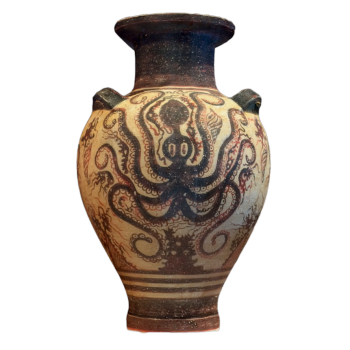
Ancient Greek black painted narrow necked pottery jar

Ancient Greek black painted narrow necked pottery jar

Made around 540 BC, it is a ceramic artwork from the Attica region of ancient Greece. This pottery jar is characterized by black painting techniques and is jointly completed by potters and painters. The black painting technique involves using black pigment to depict images on pottery, then carving details and applying clear paint to create a sharp contrast during the firing process. Usually between 47 and 61 centimeters in height, its surface is painted with mythological scenes, war scenes, or sports competition patterns. Not only for practical purposes such as storing wine or olive oil, but also as an important medium for showcasing the cultural and artistic achievements of ancient Greece.
Minneapolis Museum of Art Double Eagle Wine Jar

Minneapolis Museum of Art Double Eagle Wine Jar

It is an ancient artifact from the 12th to 11th centuries BC, shaped like two eagle heads facing each other. This artifact may have been used in religious ceremonies or as a symbol of power, as eagles symbolize strength and freedom in many cultures. They may be used as containers, and sometimes as decorations or gifts. The design of the Double Eagle not only showcases the superb craftsmanship of the craftsmen at that time, but also reflects the artistic style and social beliefs of that era. These types of artifacts were discovered during archaeological excavations, providing valuable physical evidence for our understanding of ancient civilizations. Now collected at the Minneapolis Museum of Art.
Western Zhou Yu

Western Zhou Yu

Yu "is an ancient Chinese vessel used to hold wine. Its exact appearance time is unknown, but it was popular during the Shang and Western Zhou dynasties. At that time, it was used to hold wine, so most of its appearance was round or oval, with feet or foot rings at the bottom, and exquisite craftsmanship patterns carved around it.
Medieval Double Cup Maazel

Medieval Double Cup Maazel

It is a medieval double cup Mazzel, belonging to the collection of the Cleveland Museum of Art. A type of medieval drinking utensil typically made of tightly textured wood (such as maple) and developed a unique form in Germany in the early 14th century. Composed of two cups, with a smaller cup inverted on top of a larger cup, this design allows both cups to be used for drinking. Not only practical, but also has display value due to its exquisite craftsmanship and decoration. In the Middle Ages, the Maazel cup was often used as a symbol to display wealth and status, and sometimes even engraved with religious or secular inscriptions.
JeanCoulon vase from the Saint Th é es Museum of Decorative Arts in France

JeanCoulon vase from the Saint Th é es Museum of Decorative Arts in France

A ceramic vase created in 1902 for the S è vres National Ceramic Factory in France, measuring 27 centimeters in height and 15.8 centimeters in diameter. This vase, named 'Water Fairy', is renowned for its unique artistic style and exquisite craftsmanship. The painting depicts a water fairy holding a fish with an open mouth in her arms, decorated with yellow, brown, and green brown marble textures. This showcases the artist's bold interpretation of female images, with the water fairy surrounding marine creatures in a twisted, nude posture, giving a strong visual impact. The Decorative Arts Museum in Saintes, France is one of its precious collections
Ulciorul Byzantine period relics

Ulciorul Byzantine period relics

It is a relic from the Byzantine period, with a history dating back to the 11th century. Discovered in 1981 at the Nufarur site located in Turcha County. Collected in the collections of the Turcha Ecological Museum Research Institute. The discovery of this relic is of great significance for studying the culture and history of the Byzantine period. The Byzantine Empire was a continuation of the Eastern Roman Empire, whose cultural influence spanned multiple centuries and had a profound impact on the later Renaissance. Enriched our understanding of Byzantine art and craftsmanship, and provided valuable physical evidence for understanding social life and religious beliefs at that time.
Copper Chinese dragon vase

Copper Chinese dragon vase

The bronze Chinese dragon vase in the late 19th century was a model of the combination of craft and art in that era. Usually made of copper, the surface is finely carved or cast with the image of a dragon, which symbolizes authority and auspiciousness in Chinese culture and is a symbol of imperial power. Due to its sturdy and durable material, as well as the unique patina formed over time, it is highly favored by collectors. Design often combines tradition and innovation, with both classical elegance and popular decorative art styles of the time. Diverse shapes and exquisite decorative techniques, such as using reliefs, hollowing out, or inlaying, make the image of the dragon vivid and lifelike.
Double cup maze cup

Double cup maze cup

The Double Cup (Mazer) is a beautifully crafted 16th century German artifact collected by the Cleveland Museum of Art, dating back to approximately 1530. This piece is made of maple wood material and is decorated with gold and silver plated ornaments on the surface, with the second part measuring 17.4 centimeters in height. It consists of two spherical cups made of mazer wood (a multi jointed wood believed by ancient people to neutralize poison poured into it). The Cleveland Museum of Art, through J H. Wade Fund purchased and collected this artwork with the serial number 1950.83. a.