Borgese vase

Borgese vase

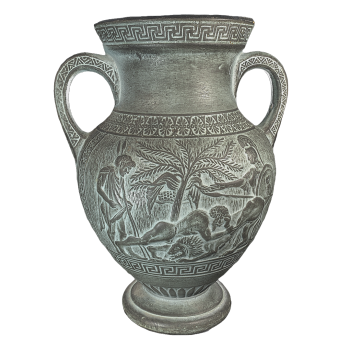
The Borgese vase is a giant bell shaped wine vessel carved from Pantelic marble in Athens in the second half of the first century BC. This ancient Greek artwork is renowned for its intricate carvings and grand scale, featuring scenes of the Dionysus ritual, showcasing the ancient Greeks' worship of Dionysus, the god of wine. The Borgese vase was originally used for outdoor garden decoration and was later collected in the Borgese Museum, becoming one of the museum's iconic collections. It is not only an artwork, but also an important physical material for studying ancient Greek sculptures and religious rituals.
The statue jar that blows the whistle

The statue jar that blows the whistle

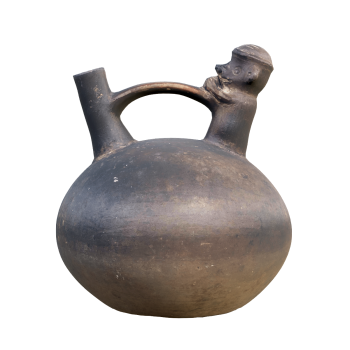
It is an ancient American ceramic artwork, a double mouthed bottle with a bridge. This jar has a straight opening located at the top of one side, connected to the closed opening on the other side through a bridge like handle. The closed mouth is shaped into a human figure playing an instrument. This container is designed as a water tank that can force air through a whistle inside a chamber. When water pours out from it, the air will make a whistle. It was created around 200 BC by an unknown artist in the Salina culture of Peru.
Apulia wine vessel

Apulia wine vessel

Produced in Apulia between 400-390 BC and manufactured in Taranto (southern Italy), attributed to the birth of the painter Dionysus, possibly originating from Barry's ceramics. This huge Apulian wine vessel, originally used for mixing wine and water at banquets, seems to have been made for funerals. The scene depicts Hercules being taken to Mount Olympus by Athena's chariot after his death, marking his immortal status as a god. Dionysus was one of the leading figures in the ancient Apulian decorative style, who created intricate compositions on large vases in a rich style. It is currently housed in the Brussels Museum of Art and History in Belgium.
Concrete vase

Concrete vase

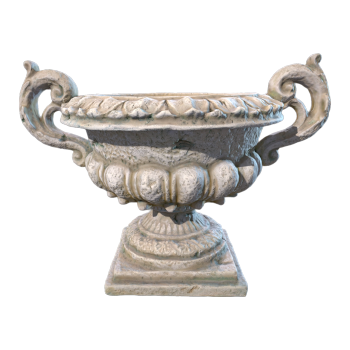
Concrete vase is a modern and practical decoration that uses concrete as the main material, showcasing a unique industrial style and modernity. This type of vase is not only sturdy and durable, but also has good texture and plasticity. Designers can create concrete vases with different shapes and styles through different molds and surface treatment techniques. They can be smooth and delicate, or rough and textured, suitable for various interior decoration styles. Concrete vases are increasingly favored by modern homes and commercial spaces due to their simple yet elegant design, as well as their ease of maintenance.
Ancient ceremonial wine vessels - Minneapolis Institute of the Arts

Ancient ceremonial wine vessels - Minneapolis Institute of the Arts

This ceremonial wine vessel is an antique dating back to the 12th to 11th centuries BC and is now housed in the Minneapolis Museum of Art. It represents the drinking culture and etiquette of ancient civilization, reflecting the social hierarchy and religious beliefs of that time. This type of wine vessel is usually used in religious ceremonies or banquets to show respect and honor. Its exquisite craftsmanship and design not only showcase the superb skills of ancient craftsmen, but also provide us with a window to understand ancient society and culture.
ParrotEffigy parrot shaped container

ParrotEffigy parrot shaped container

It is an ancient American artwork inspired by parrots. This container is shaped like a parrot, with its tail feathers cleverly designed as a practical outlet. In ancient American art, parrots held significant symbolic importance. For example, in Mexican tradition, parrots symbolize fire and the sun due to their bright feathers. This work not only showcases the creativity and craftsmanship of ancient artists, but also reflects their profound understanding and reverence for the forces of nature and the universe.
Ancient Chinese vases

Ancient Chinese vases

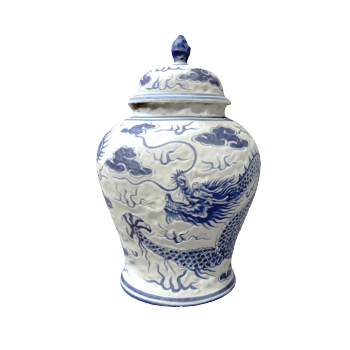
Chinese ancient vases are treasures of Chinese culture, with a long history and unique artistic charm. These vases are mostly made of ceramics, as well as materials such as bronze and jade, with various shapes, rich colors, and exquisite decorations. They are not only practical containers, but also works of art that showcase craftsmanship and aesthetic taste. The patterns on ancient Chinese vases are diverse, ranging from geometric shapes to flowers, birds, fish, and insects, from myths and legends to historical stories, reflecting the culture and life of ancient society. Over time, these vases have become sought after by collectors and art enthusiasts, as well as important materials for studying ancient Chinese history and culture.
Clepsydra Water Clock - Waldpenias Museum

Clepsydra Water Clock - Waldpenias Museum

It is a timing tool invented in ancient Greece that measures time by measuring the flow of water. A ceramic water clock from the Iberian period has been discovered at the Cerro de las Cabezas archaeological site in Vald é Penias, Castile La Mancha region, Spain. This ceramic decoration features ribbon, circular, and seal patterns, and was made during the Iron Age from the 4th to 3rd centuries BC. At present, it is collected in the Valdepernias Museum and is an important physical material for studying ancient Iberian culture and craftsmanship. The Cerro de las Cabezas site is an important archaeological site for understanding the life and social structure of the Iberian people.
Bronze alloy vase

Bronze alloy vase

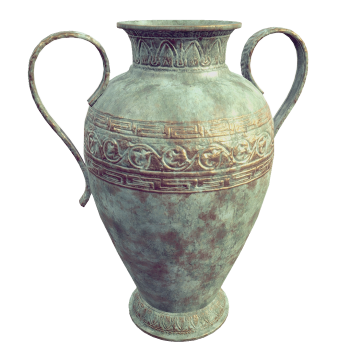
Antique bronze vases are a type of art with a long history, usually carefully crafted from bronze alloy. This vase not only has practical functions for flower arrangement or holding liquids, but is also often used as a decoration to showcase exquisite craftsmanship and artistic value. The design of bronze vases is diverse and may include various patterns, decorations, and carvings, reflecting the cultural characteristics and aesthetic styles of their production period. They are cherished objects by collectors and art enthusiasts, and also important windows for understanding ancient civilization craftsmanship and technology.
Bohemian Czech Glass Vase

Bohemian Czech Glass Vase

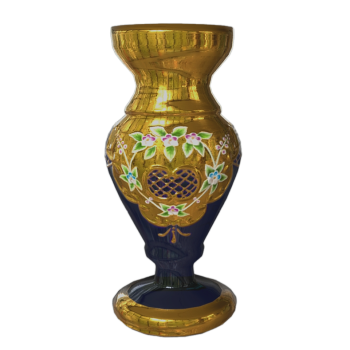
Bohemian Czech glass vases are renowned for their unique craftsmanship and artistic style, representing the traditional Czech glass manufacturing process. The Bohemian region, especially in the northern part of the Czech Republic, has become the center of world glass art due to its abundant silicon mineral resources and exquisite glass blowing techniques. These vases are usually hand blown and have unique colors and shapes. In terms of color, Bohemian glass is known for its deep and rich hues, such as ruby red, cobalt blue, forest green, etc., which often give people a warm and comfortable feeling.
Antique bronze vase

Antique bronze vase

Antique bronze vases are a type of art with a long history, usually made of corrosion-resistant alloys such as bronze, and have high artistic and collectible value. These vases not only showcase the superb casting skills of ancient craftsmen, but are often decorated with exquisite patterns and decorations, reflecting the cultural characteristics and social aesthetics of the time. Bronze vases were often used in ancient times to hold wine, water, or as sacrificial offerings, and their design and decoration were often related to religious beliefs and social status at that time. Over time, these antique bronze vases have become valuable materials for studying ancient civilizations, arts and crafts, and historical cultures.
Nazca period pottery jars

Nazca period pottery jars

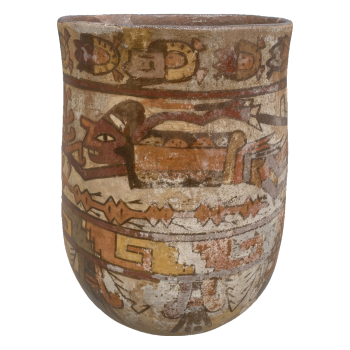
It is a ceramic artwork from the Nazca culture period collected by the Cleveland Museum of Art, approximately made between 450 and 600 AD. This ceramic vessel comes from the Nazca region on the southern coast of Peru and belongs to the 5th to 7th centuries. It is made of colored clay board and has an overall size of 19.4 x 14 centimeters (7 5/8 x 5 1/2 inches). This work is known for its vivid sculptural decoration, showcasing the ancient Nazca people's worship of war and human heads as spoils of war, and is an outstanding representative of pre Columbian South American art.
Lekisos Ancient Greek Ceramic Bottles - Hunter Museum in Limerick

Lekisos Ancient Greek Ceramic Bottles - Hunter Museum in Limerick

It is a container used in ancient Greece to hold oil and is often used as burial objects in tombs. It has a circular base, a high and wide body, wide shoulders and narrow bottom, a high neck, and a deep opening that extends outward. There is a high and narrow handle on the bottle that extends all the way to the shoulder. The bottle was originally painted with a pattern, but now it is severely worn and difficult to recognize. The production date is approximately the 4th century BC. The Hunter Museum currently exists in Limerick.
French painted ceramic pilgrim bottle - Limerick Hunter Museum

French painted ceramic pilgrim bottle - Limerick Hunter Museum

It is a product of 17th century French culture, made of pottery coated with tin glaze. It is currently housed in the Limerick Hunter Museum. The surface is coated with white glaze, equipped with four handles and a slender neck. It is decorated in green, blue, and yellow, with a bishop or saint depicted holding a scepter and wearing a halo, blessing. He stood in front of the background of two volcanic hills. The scene is surrounded by a scroll frame. The rest of the bottle is decorated with flowers, leaves, and linear patterns. It showcases the exquisite craftsmanship of 17th century French ceramics and also reflects the artistic expression of religion and natural landscapes at that time.
Lizard patterned pottery jar

Lizard patterned pottery jar

This pottery jar features a flanged design and a central lizard shaped pattern, belonging to the Lagarto style, which also includes negative and cookie textured ceramics. Lagarto style ceramics are known for their tricolor painted decorations, with black and red on a white or beige background. This style includes a variety of ceramic items such as whistles, pots, jars, as well as sculptures in humanoid and animal forms, showcasing the aesthetic and cultural characteristics of the society at that time.
Tonosi style pottery jar

Tonosi style pottery jar

It was produced in the region of Dakolai between 250 and 500 AD. This pottery style is characterized by three colors of decoration: red, black, and white. It usually features human figures, animals, or natural elements as decorative themes, separated by stripes, lines, or dot patterns. The typical types of this style are plates or double walled jars. This pottery jar displays a rich decoration, with the main pattern being a human form of a bird, whose features suggest it may be a heron or flamingo.
Esquifo Ancient Greek Ceramic Containers - Metropolitan Museum of Art

Esquifo Ancient Greek Ceramic Containers - Metropolitan Museum of Art

It is an ancient Greek container with a deep bowl, wide mouth, and handles on both sides. A cup used for drinking liquids. Originating from Attica region, it was made around 500 BC. Belonging to the Athenian painters, the scene depicts two male characters engaged in a Greek wrestling competition called "pancr á tio", with the other two watching as spectators or coaches. It is currently collected at the Metropolitan Museum of Art.
Enochoe Ancient Greek Ceramic Wine Vessels - Louvre Museum

Enochoe Ancient Greek Ceramic Wine Vessels - Louvre Museum

It is an ancient Greek wine vessel, named after the Greek words oinos (wine) and kheo (pour), meaning "pouring wine vessel". The feature is a wide mouth, usually in the shape of a clover, with a deep mouth and a thick vertical handle at the back. Based on its size and decoration, it can be inferred that its main function is to hold liquids, most likely wine. The place of origin is Mileto, manufactured around 600 to 575 BC. The decoration includes blooming lotus flowers and flower buds, as well as goat and rose patterns. Showcasing the exquisite craftsmanship of ancient Greek art. Currently housed in the Louvre Museum
Antique Chinese Vase

Antique Chinese Vase

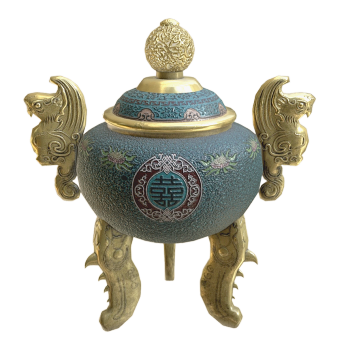
Chinese vases are outstanding representatives of traditional Chinese craftsmanship, usually made of materials such as ceramics, jade, lacquerware, or metal, with a long history and profound cultural heritage. These vases are not only elegant and exquisite in shape, but also highly distinctive in decorative arts, often depicting patterns such as mountains, waters, flowers, birds, and figures, reflecting the aesthetic taste and painting skills of ancient China. The production skills of antique Chinese vases are exquisite, especially the porcelain of the Ming and Qing dynasties, such as Jingdezhen's blue and white porcelain, pink porcelain, etc., which are famous for their delicate painting, rich colors, and unique shapes.
L é cito Ancient Greek Ceramic Container - Metropolitan Museum of Art

L é cito Ancient Greek Ceramic Container - Metropolitan Museum of Art

It is a container used in ancient Greece to store oil, especially olive oil. This type of container typically has a slender body, a handle connecting the neck and body, and a narrow mouth without a pouring port. In ancient Greek culture, it was not only a daily necessity, but also commonly used as burial objects. Now collected in the Metropolitan Museum of Art, it is a red painted pottery belonging to the painter Tithonus, made around 480 BC. The scene depicts Athena holding a spear and helmet, showcasing the exquisite craftsmanship of ancient Greek art.
Calix Ancient Greek Shallow Bowl - Madrid

Calix Ancient Greek Shallow Bowl - Madrid

It is a type of liquid used in ancient Greece for drinking, usually for drinking wine, and is commonly seen in banquets. This container is characterized by two horizontal side handles and a large-diameter shallow bowl. The Calix created by the "Hipocontista" painter is classified as a "handleless cup". This Calix depicts scenes in Greek mythology where Pelops and Hippodamia are pulled by winged carriages, and Ennomarus and Myrtilos are pulled by another carriage. Made around 520-510 BC. Currently collected in Madrid.
Anfu Lagu Greek Ceramic Container - Baltimore

Anfu Lagu Greek Ceramic Container - Baltimore

It is a container from ancient Greece, named after the Greek words "Amphi" (meaning "both sides") and "Pero" (meaning "to carry"). This container has two vertical handles on each side, connecting the bottle mouth or neck to the bottle body. It is mainly used for storing and transporting solids and liquids, especially closely related to the transportation of wine and olive oil. In the Attica region around 400 to 375 BC, an Athenian painter created an artwork depicting the struggle between Poseidon and Athena for Attica land. This work is currently stored in Baltimore.
Hidria Ancient Greek Ceramic Container - Paul Getty Museum

Hidria Ancient Greek Ceramic Container - Paul Getty Museum

Greek for ὑδρία, it is an ancient Greek ceramic container primarily used for storing and transporting water. The characteristic of this ceramic is that it has three handles: two horizontal side handles for lifting the container, and a vertical rear handle for pouring the contents. Around 550 BC, a hidria was produced in the Attica region, depicting scenes of Dionysus, Ariadne, and Poseidon. This artwork is currently housed in the Paul Getty Museum. This ancient Greek ceramic work not only showcases the craftsmanship of the time, but also reflects Greek mythology and religious beliefs.
CopticVessel Ancient Egyptian Coptic pottery - Metropolitan Museum of Art

CopticVessel Ancient Egyptian Coptic pottery - Metropolitan Museum of Art

It is a pottery from the Coptic period in Egypt, belonging to the cultural product of the Byzantine Egyptian period. Produced in the 4th to 7th centuries, specifically in the Kaga Oasis of Egypt. Made of homemade materials, it belongs to the category of ceramic artworks. This artwork is currently housed in the Metropolitan Museum of Art and is part of the medieval art and monastery collections. It showcases the artistic style and ceramic production techniques of the Copts at that time, providing valuable physical evidence for us to understand the culture and lifestyle of this period.
Antique brass vase

Antique brass vase

Antique brass vases are decorative items with historical value and artistic charm. Brass material, due to its durability and the exquisite craftsmanship of these vases, such as carving, hollowing out, or hammering, demonstrates superb metalworking skills. The design of brass vases may include classical patterns, geometric patterns, or natural elements, reflecting the artistic styles and aesthetic characteristics of different historical periods. The unique luster is highly favored, and over time, the brass surface gradually forms a charming antique bronze color, adding a retro charm.
L é cito Ancient Greek Ceramic Small Bottle Container - Yale University

L é cito Ancient Greek Ceramic Small Bottle Container - Yale University

It is a term used in ancient Greece to refer to various types of small bottles, which share the common feature of being used as containers for holding oil. It is a jar with a narrow bottleneck and a deep mouth. This container is not only used to store oil, ointment and perfume in the family, but also the l é cito decorated with a white background is used as a sacrifice to the dead. This work was produced in the Attica region around 500 BC and belongs to the Athenian painter. The scene depicts the sea god Poseidon riding a seahorse. Now collected at Yale University.
P í xie Ancient Greek Small Container

P í xie Ancient Greek Small Container

It is a small container from ancient Greece, usually used to store personal belongings. During the period of 490-480 BC, this container was decorated with the technique of "black pattern". It depicts a mythological scene of Athena and Poseidon competing for land in Attica. In the scene, Kekropus serves as a witness, accompanied by two knights, while a female figure runs towards the olive tree created by Athena. This scene not only showcases the mythological stories of ancient Greece, but also reflects the identity and cultural values of the Athenians.
Quadrupedal pottery jar

Quadrupedal pottery jar

This ceramic style is characterized by three color painted decorations (black and red on a white or beige background). The Lagarto style pottery has a wide variety of types, including whistles, pots, jars, as well as sculptures in human and animal forms, such as the stylized quadrupedal animal image shown in this example. These pottery not only have practical functions, but also reflect the aesthetic taste and cultural characteristics of the society at that time.
Ancient pottery jars in Panama

Ancient pottery jars in Panama

It is a type of ceramic container commonly found in Panamanian archaeology, whose history can be traced back to multiple cultural stages before Columbus. These pottery pieces are renowned for their diverse shapes, decorations, and uses, including for storage, cooking, or ceremonial purposes. It usually has unique aesthetic features, such as three legged design, circular base or mouth closure, and rich decorative patterns, which may include geometric shapes, shaping and carving of human or animal forms. These ceramic works not only reflect the skills of ancient craftsmen, but also reflect the culture and religious beliefs of the society at that time.
Ancient Greek Cantalos ceramic wine vessel

Ancient Greek Cantalos ceramic wine vessel

It is a common ceramic wine vessel in ancient Greece, with a unique design that features double ear handles and a wide mouth, making it easy to pour and drink. The design aims to facilitate drinking, while its artistic and decorative qualities also reflect the aesthetic pursuit of ancient Greek culture. Often used in banquets and religious ceremonies, it was an indispensable part of ancient Greek social life. The decorative patterns are rich and diverse, including mythological stories, battle scenes, and daily life scenes. These patterns not only beautify wine vessels, but also convey the culture and values of ancient Greece.
Amphibian Tripod Ceramic Jar

Amphibian Tripod Ceramic Jar

It is a three legged ceramic jar, made around 500 to 800 AD. This ceramic style features hollow three legged pottery jars, decorated with shaping and carving techniques. Especially, it showcases the shaping of human and animal forms, possibly representing a certain type of amphibian and reptile. The discovery of this ceramic style indicates a connection between the Gran Chiriqu í region and the Gran Cocl é region, as Cubit á and Conte style ceramics related to it have been found in the background of Gran Chiriqu í.
Iberian painted pottery jar - Waldpenias Museum

Iberian painted pottery jar - Waldpenias Museum

Iberian painted pottery jar, from the Cerrodela Cabezas archaeological site in Vald é Penias, Castile La Mancha region, Spain. This pottery jar is decorated with horizontal lines and seal patterns, belonging to the Iron Age (4th century BC to 3rd century BC). Currently housed in the Waldpenias Museum. Not only does it showcase the daily life of Iberians, but it also reflects their aesthetic and craftsmanship level.
Iberian Orinoco Ceramic Wine Pot - Waldpenias Museum

Iberian Orinoco Ceramic Wine Pot - Waldpenias Museum

Iberian Oenochoe, also spelled as oenochoe, is a ceramic wine jug with a finely curved handle and a clover shaped mouth. This type of wine pot comes from the archaeological site of Cerrodela Cabezas in Vald é Penias, Castile La Mancha region of Spain, dating back to the Iron Age (3rd century BC). This cultural relic is collected in the Waldpenias Museum. Not only is it a practical container, but it is also a showcase of art and craftsmanship. Its intricate curves and unique mouth design reflect the aesthetic concepts and pottery making techniques of ancient Iberians.
Iberian High Foot Plate - Waldpenias Museum

Iberian High Foot Plate - Waldpenias Museum

It is a pottery from the ancient Iberian cultural period, characterized by high foot support. A Iberian high footed plate dating back to the Iron Age (4th century BC to 3rd century BC) was discovered at the Cerrod de las Cabezas archaeological site in the Vall é e Pe ñ as region of Castile La Mancha, Spain. This cultural relic is currently housed in the Waldpenias Museum.
Spherical pottery jar

Spherical pottery jar

It is a type of spherical pottery jar discovered in Panamanian archaeology, with unique aesthetic and cultural significance. This type of pottery jar is known for its rounded shape and decorative details, usually with a flat bottomed or slightly raised base. There are various decorative techniques, which may include painting, carving, or additional decorative elements such as small protrusions. These pottery jars are not only used for daily purposes such as storing and transporting water, but may also play an important role in religious ceremonies or social activities. In some cultures, similar spherical pottery jars are believed to be closely related to water and life, and may be used in worship or rituals to pray for rain and harvest.