Ancient Greek Red Statue Pottery - Igleio Archaeological Museum

Ancient Greek Red Statue Pottery - Igleio Archaeological Museum

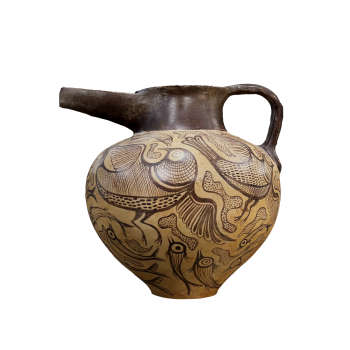
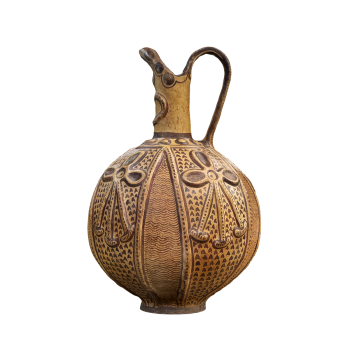
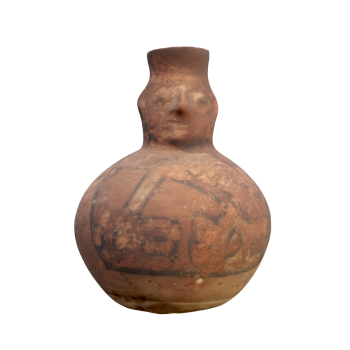
It is a decorative style of ancient Greek pottery that replaced the early black figure pottery style in the 5th century BC. The characteristic of red pottery is that the background is painted black, while the characters and details are retained in the red color of the pottery. This technique makes the picture more vivid and three-dimensional. It is a red clay jar from the Kamarina site. This type of pottery jar was used in ancient Greece as a container for mixing water and wine, and its design typically included a wide bottom, a short neck, and two low circular handles. It is currently housed in the Igleio Archaeological Museum in Ragusa. This pottery is an important witness to ancient Greek culture and history.
Small indigenous double ear bottle - Igleio Archaeological Museum
Small indigenous double ear bottle - Igleio Archaeological Museum

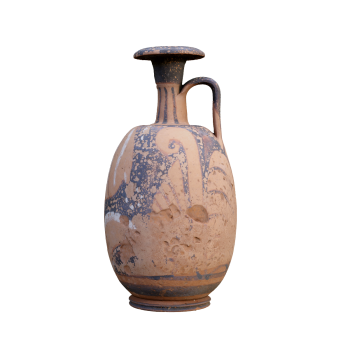
It is an ancient ceramic container used for storing and transporting liquids, especially wine and olive oil. In classical times, especially in the 6th century BC, this type of container was very common in the Mediterranean region. The ancient city ruins in the province of Ragusa on the island of Sicily, Italy, where small indigenous double eared vases were unearthed, bear witness to the commercial and cultural exchanges of that era. It is a product of the classical era, and its design usually includes two portable handles, a narrow neck, and a wide body, making it very suitable for long-distance liquid transportation. Now it is collected in the Igleio Archaeological Museum in Ragusa.
Small Ceramic Containers from Ancient Greece - Collected by the Ragusa Archaeological Museum

Small Ceramic Containers from Ancient Greece - Collected by the Ragusa Archaeological Museum

It is a small container in ancient Greece, usually used to hold perfume or oil, especially when athletes are bathing. Compact in shape, spherical or spherical in shape, with a narrow neck. The origin can be traced back to the classical period, around the 5th century BC. In the city of Ragusa on the island of Sicily, Italy, there is an archaeological site called Camarina, where a ceramic container belonging to the classical period has been unearthed and is now housed in the Ragusa Archaeological Museum. Featuring exquisite craftsmanship and possible decorative patterns, it reflects the artistic style and aesthetics of ancient Greece. It is a daily item in ancient Greek culture and a reflection of art and craftsmanship.
Ancient Greek Athens Double Eared Vase - Igleio Archaeological Museum

Ancient Greek Athens Double Eared Vase - Igleio Archaeological Museum

The Athenian binaural vase created by Antimenes painter is a ceramic artwork from ancient Greece, depicting scenes of Hercules fighting against the Nemean lion, with Athena and Iolaus present, as well as Dionysus with the mad woman and Satir. The work is from the Kamarina ruins in Sicily, Italy, belonging to the classical era and was made around the second half of the 6th century BC. Collected in the Igleio Archaeological Museum in Ragusa, Italy. Not only does it showcase the exquisite craftsmanship of ancient Greek art, but it also reflects the society's worship and artistic expression of mythological stories at that time.
Ancient Greek ceramic containers - Castello Banfi collection

Ancient Greek ceramic containers - Castello Banfi collection

It is a ceramic container originating from ancient Greece, named after the Greek word "lekythos" which means "oil bottle". This type of container was very popular between the 6th and 4th centuries BC, mainly used for storing oil and ointment. Known for its elegant form and decorative art, it reflects the cultural and artistic level of the society at that time. Collected by Castello Banfi, it depicts a naked male figure holding his ancient Greek cloak. It is a product of the 4th century BC, possibly used in religious ceremonies or funerals as a tribute or offering to the deceased.
Ancient Greek ceramic jars - Castello Banfi collection

Ancient Greek ceramic jars - Castello Banfi collection

It is a ceramic jar from ancient Greece, named after the Italiote region in southern Italy, which was a Greek colony in ancient times. Renowned for its vibrant orange red clay and red orange paintings, as well as detailed decorations in white and ochre colors. Decoration usually includes character images, such as male and female images, as well as male images draped in cloaks. This work belongs to the painter of Verona and was made around 340 to 330 BC. Collected by Castello Banfi. It is one of the representatives of ancient Greek ceramic art, showcasing the exquisite craftsmanship of ancient Greek ceramic technology.
Ancient Greek pottery - Castello Banfi collection

Ancient Greek pottery - Castello Banfi collection

It is a type of pottery from the ancient Greek period, named after the Etruscan region in southern Italy. Known for its unique manufacturing process and decorative style. Collected by Castello Banfi, it is characterized by the use of orange yellow clay, coated with red talcum powder on the surface, as well as black painted and white and ochre detailing. The decorative pattern depicts a wedding scene, depicting a female bride and the winged love god Eros. Discovered in PoggioalleMura, Montalcino, Italy, it reflects the artistic style of 340 BC.
Ancient Etruscan civilization pottery - Castello Banfi collection

Ancient Etruscan civilization pottery - Castello Banfi collection

The Etruscan bowl is a common type of pottery in the ancient Etruscan civilization. This type of bowl usually has a single horizontal handle, covered with dark brown mud glaze on the surface, and characterized by carved linear decorations. This type of bowl is commonly used as a lid for urns and is very common in funeral settings during the Iron Age. It originated in the second half of the 8th century BC. It is one of the collections of CastelloBanfi. The Etruscan civilization flourished and developed in central Italy from the 8th century BC to the 3rd century BC, renowned for its vivid murals and colorful artistic styles.
Etruscan Foot Bowl - Castello Banfi Collection

Etruscan Foot Bowl - Castello Banfi Collection

Also known as the "Etruscanfootedbowl", it is a ceramic artifact that began to be widely popular in the southern Etruscan region in the early 7th century BC, particularly in Veii, Cerveteri, and Vulci. The characteristics of this bowl are a polygonal body, ribbed edges, and a trumpet shaped bottom, usually made using black coating techniques. Very important in Etruscan culture, possibly used for religious rituals or as burial objects. It is one of the collections of CastelloBanfi. The production time is approximately in the first half of the 7th century BC.
Etruscan pottery wine vessels - Castello Banfi collection
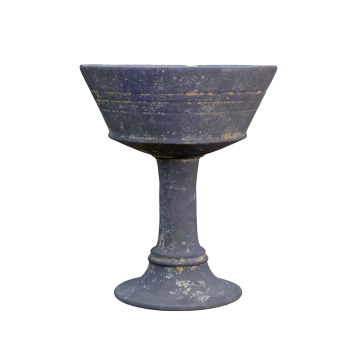
Etruscan pottery wine vessels - Castello Banfi collection

It is an ancient pottery wine vessel characterized by a mouth shaped like a clover. The surface is usually coated with black Bukailuo glaze, giving it a unique luster and deep color tone. There are horizontal grooves on the neck and ridges at the bottom, which add artistic beauty to the decorative details. It was produced in the Volsey region in the mid-6th century BC and has also been discovered in the Kiusi region. It is one of the collections of CastelloBanfi.
Etruscan Holy Grail - Castello Banfi Collection

Etruscan Holy Grail - Castello Banfi Collection

It is an Etruscan Holy Grail from the Castello Banfi collection, featuring a high trumpet shaped base and concave sides decorated with horizontal grooves and foot ridges. It is a product from the central Italian city of Wolsey, made around the mid-6th century BC, possibly during the middle to last quarter of the 6th century BC. This Holy Grail was discovered in the PoggioalleMura region of Montalcino. Their existence proves the Etruscans' superb skills in ceramic craftsmanship and their important role in cultural exchange in the ancient Mediterranean region.
Etruscan pottery jars - Castello Banfi collection
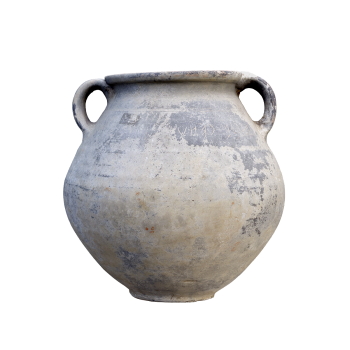
Etruscan pottery jars - Castello Banfi collection

It refers to Etruscan pottery jars. The Etruscan civilization was an ancient civilization that existed in the central part of the Italian peninsula from the 8th century BC to the 1st century BC. The Etruscan pottery jar is a typical pottery of this civilization period, with a unique artistic style and craftsmanship. The pottery jar from Castello Banfi's collection is made of brown coarse clay, which was very common in the production of coarse pottery in the late Iron Age, around the 8th to 7th century BC. This pottery jar was unearthed in Montalcino as a relic of the Etruscan civilization, showcasing the exquisite craftsmanship and aesthetic features of ancient pottery.
Ancient Etruscan civilization double ear bottle - Castello Banfi collection

Ancient Etruscan civilization double ear bottle - Castello Banfi collection

It is a type of pottery made by the ancient Etruscan civilization, with unique cultural and artistic value. This type of double ear bottle is commonly used for storing and transporting liquids, and is also commonly used as a burial accessory at funerals. In the Castello Banfi collection, it is made of orange clay and coated with red talc, with the inscription "tinalnania" engraved on its body, which has been confirmed in funeral backgrounds in the Kiusi region. It can be traced back to the 2nd century BC and was unearthed at PoggioalleMura in Montalcino.
Ancient Etruscan civilization pottery - Castello Banfi collection

Ancient Etruscan civilization pottery - Castello Banfi collection

It is an ancient Etruscan pottery with a unique single handle design and a black glossy surface decoration. This single handled cup was produced in Etruria in the mid-6th century BC, particularly in the Vulci region. It is a piece from the Castello Banfi collection, made of black clay and decorated with plastic on the handle. This cup was not only very important in Etruscan culture, but also had an impact on later Greek pottery, with design and production techniques adopted by the Greeks and used for export to Etruscan.
Ancient Greek Red Pottery Vase - Yibelo Archaeological Museum

Ancient Greek Red Pottery Vase - Yibelo Archaeological Museum

It is an ancient Greek pottery named after its red background and black patterns. The red painted pottery vase unearthed in Camarina, Sicily, is a product of the classical period (5th century BC) and is currently housed in the Ibero Archaeological Museum in Ragusa, Italy. This kind of pottery bottle is usually used to contain oil or perfume, as burial objects at funerals, and also used in religious ceremonies. The bottle depicts a four horse chariot, which is a type of chariot pulled by four horses and commonly seen in ancient Greek mythology and art works. This demonstrates the ancient Greeks' emphasis on war and sports, as well as their worship and artistic expression of mythological stories.
Ancient Greek Black Statue Pottery Bottle - Ibero Archaeological Museum

Ancient Greek Black Statue Pottery Bottle - Ibero Archaeological Museum

It is an ancient Greek pottery characterized by patterns painted with black pigment on the surface of the pottery, with a white background. The black statue pottery vase unearthed at the Kamarina site is from Ragusa, Sicily, Italy. It belongs to the classical period and was made around the 5th century BC. Currently housed in the Ibero Archaeological Museum in Ragusa. The decorative style reflects the characteristics of ancient Greek black pottery, which is to draw black patterns on a white background. It reflects the ancient Greeks' pursuit of beauty and their worship of mythological stories. It showcases the superb craftsmanship of ancient Greek pottery making and provides us with valuable materials for studying ancient Greek culture and art.
Owl Red Painted Pottery Bottle - Igleio Archaeological Museum

Owl Red Painted Pottery Bottle - Igleio Archaeological Museum

It is a type of pottery from ancient Greece, characterized by the use of red to depict patterns and scenes on a black background of the pottery. The production technology originated in the 6th century BC and remained popular until the 4th century BC. It is often used to contain oil, perfume or other liquids, and it is also often used as burial goods, and sometimes used in religious ceremonies. This pottery bottle is from the Kamarina region of Sicily, Italy, and belongs to the classical period. It was made around the 5th century BC. The surface depicts the image of an owl, which has important symbolic significance in ancient Greek culture and is often used in art and literary works. It is currently housed in the Igleio Archaeological Museum in Ragusa.
Ceramic containers from ancient Andean civilization

Ceramic containers from ancient Andean civilization

It is a common ceramic container in ancient Andean civilization, especially popular during the late middle period (around 1000-1470 AD). It usually has unique designs and decorations that reflect the culture and aesthetics of the society at that time. In 2021, a citizen named Laura Balllini initiated a cultural property return campaign in Germany and successfully returned the artifact from Germany. This behavior is not only a respect for cultural heritage, but also a contribution to the inheritance of history and culture. Enriched our understanding of ancient Andean civilization and reminded us of the importance of protecting and respecting cultural heritage.
Late Horizon style ceramic container

Late Horizon style ceramic container

It is a late horizon style ceramic artwork that appeared approximately between 1476 and 1532 AD. Horizon style is an art style in ancient Central America, particularly related to the Aztec civilization, characterized by the expression of a horizontal horizon element in pottery, sculpture, and other works of art, often associated with gods, myths, and cosmology. The voluntary return from the United States in 2021 reflects the international community's emphasis on cultural heritage protection and respect for the ownership of cultural heritage in the country of origin.
C á ntaro Ancient Andean Ceramic Container

C รก ntaro Ancient Andean Ceramic Container

It is a ceramic container unique to the ancient Andean region, commonly used to hold liquids. It holds significant social and ceremonial importance in Andean culture. The Intermedio Tardio period (approximately 1000-1470) showcased the characteristics of ceramic craftsmanship during this period, including exquisite craftsmanship and unique artistic styles. The ceramic craftsmanship during this period underwent significant technological and stylistic changes. It usually has a dual function of practicality and ceremony. Formally, it may be relatively simple, but in terms of decoration and production techniques, it is very complex, reflecting the needs and aesthetic trends of society at that time.
Thai pear shaped covered pottery jar - Hunter Museum in Limerick

Thai pear shaped covered pottery jar - Hunter Museum in Limerick

It is a ceramic artwork from Thailand. Made of earthenware material, it is currently housed in the Hunter Museum in Limerick, Ireland. Shaped like a pear, with a lid at the top. The lid design is unique, with a stepped shape and a spherical handle on top. The decoration of the jar is very exquisite, with blue lines surrounding the bottom, middle, and neck of the jar. Between these lines, the can body is decorated with curved leaf patterns, adding a natural and elegant beauty. Not only does it showcase the exquisite craftsmanship of Thai ceramic art, but it also reflects the traditional aesthetics and cultural characteristics of Thailand.
Ceramic containers from the Late Horizon period in Peru

Ceramic containers from the Late Horizon period in Peru

It is a ceramic container made during the late horizon period in Peru (approximately 1470 to 1532). Not only is it a practical container, but it is also a symbol of art and culture. It usually has a unique shape and decoration that reflects the aesthetic and religious beliefs of the society at that time. In 2022, a ceramic container voluntarily returned from France was received by the Association of Friends of Heritage. This voluntary return behavior reflects respect and protection for cultural heritage, and also demonstrates the international community's emphasis on the return of cultural relics and the protection of cultural property. It holds an important position in the pre Columbian culture of Peru, showcasing the ceramic making techniques of that time.
Duck shaped ceramic container

Duck shaped ceramic container

Ceramic containers with duck like features were very popular in ancient Peruvian culture, especially during the Mochica culture period. The Mochika culture existed approximately between the 1st century and 800 AD, and its artistic works are renowned for their intricate sculptures and paintings, reflecting the social life, religious beliefs, and agricultural activities of the time. During this period, ceramic art experienced significant development, resulting in many representative works. Not only as daily necessities, but also as works of art, showcasing the craftsmanship and aesthetic style of the time. This ceramic container returned from the United States in 2022.
Late intermediate ceramic containers

Late intermediate ceramic containers

It is a ceramic container from the late middle period (approximately 1000-1470 AD). This type of ceramic is often associated with ancient cultures in South America, especially in the Peruvian region. During this period, local potters made various ceramic vessels for daily life and ceremonial purposes. In 2022, a late intermediate period ceramic container was successfully retrieved from the United States and returned to its legal owner James Englehorm. This reflects the international community's emphasis on the protection of cultural heritage and the crackdown on illegal trade in cultural relics. It is also a respect and protection for cultural heritage.
Late middle period humanoid ceramic bottle

Late middle period humanoid ceramic bottle

The humanoid ceramic vase from the late middle period (approximately 1000-1470 AD) is a historically significant artwork, with its origins dating back to ancient American civilization. This specific ceramic bottle was returned from the Dutch Republic and sold at an auction in Vendu Rotterdam in 2022. It is an important physical evidence for studying ancient culture, craftsmanship, and trade exchanges. During this period, pottery exhibited diversity in shape, decoration, and usage. Ceramic bottles, as representatives of that era, not only reflected the daily needs of people at that time, but also showcased their artistic aesthetics and cultural characteristics.
Tiger patterned Stone Wine Pot - Hunter Museum in Limerick

Tiger patterned Stone Wine Pot - Hunter Museum in Limerick

It is called tiger patterned stone tool due to its mottled surface. There is a circular bottom, spherical body, long neck, and single handle, without decorative accessories. It is a Laelen product from the Rhineland region of Germany, made in the 16th century. Currently housed in the Hunter Museum in Limerick. The surface is mottled, presenting a unique tiger pattern effect, which is caused by the special glaze and firing techniques used in the production of stone tools. It showcases the ceramic production techniques and artistic styles of that time, and also provides us with an understanding and research of people's daily lives and social habits during that era.
Late Middle Period Ceramic Cup

Late Middle Period Ceramic Cup

The products of the late middle period civilization (1000-1470 AD) returned by France in 2022 represent the high level of ceramic craftsmanship at that time. It is a historical stage between the late Middle Ages and the early Renaissance, during which ceramic art had significant developments in both technology and aesthetics. The ceramic front end is in the shape of a cat's head, and the tail end is a short tail. This unique shape reflects the cultural characteristics and social life of that time. The return by France also demonstrates the international emphasis on the protection and return of cultural heritage, as well as the respect and protection of historical relics.
Green glazed Islamic pottery jar - Real City Museum

Green glazed Islamic pottery jar - Real City Museum

It is a precious medieval Islamic ceramic artwork unearthed from the Alarcos archaeological site in the Castile La Mancha region of Spain. This pottery jar is a witness to the spread and influence of Islamic culture in the region, and has significant historical and cultural value. The shape is round and covered with a smooth layer of green glaze, which is very common in Islamic art and symbolizes life and prosperity. The surface decoration is simple and elegant, without excessive ornamentation, reflecting the aesthetic concept of pursuing simplicity and harmony in Islamic art. Currently housed in the Real City Museum, it is a masterpiece in the museum's collection of Islamic ceramics.
Ancient Greek style pottery - Igleio Archaeological Museum

Ancient Greek style pottery - Igleio Archaeological Museum

It is an ancient Greek style wine glass, characterized by a red patterned decoration on the cup body. Originating from classical Greece, around the 5th century BC. The red painted wine cup discovered at the Kamarina site in Sicily is a product of the classical era, specifically from the Kamarina region, located in the province of Ragusa, Italy. Currently housed in the Igleio Archaeological Museum in Ragusa. It provides us with a window to understand ancient Greek culture and art, and also showcases the connection between ancient Sicily and Greek culture. It is a valuable resource for studying ancient civilizations.
Setriel Ceramic Container - Mansa Museum

Setriel Ceramic Container - Mansa Museum

It is a ceramic oil pot from the early 14th century, decorated mainly in green and manganese colors. The spout is designed in the shape of a deer's head, which may indicate that it was once used as an oil pot for pharmacists. This precious ceramic work is now preserved in the Mansa Museum. Exquisitely crafted, the green and manganese decorations on the pot body present a classical beauty, while the deer head shaped spout adds a lively and artistic touch. It is an artwork that showcases medieval craftsmanship techniques. It reflects a part of medical practice at that time, as well as people's pursuit of beauty and imitation of natural elements. It is a part of Catalonia and even the entire European cultural heritage.
Mayolinca Potion - Hunter Museum in Limerick

Mayolinca Potion - Hunter Museum in Limerick

It is a Majorica medicine jar from the 16th century in Italy, currently housed in the Hunter Museum in Limerick. The medicine jar is made of Majorica material, equipped with a pair of gorgeous handles shaped like seahorses and a short nozzle. The jar is decorated with the emblem of the Franciscan Order, surrounded by patterns of fruits and flowers. The back is decorated with stylized pine cones, which are in the form of Persian palm leaves. Majorica is a type of pottery that was very popular during the Italian Renaissance, known for its exquisite decoration and colors. It showcases the artistic style and aesthetic taste of that time.
Maiolica Medicine Jar - Hunter Museum in Limerick, Ireland

Maiolica Medicine Jar - Hunter Museum in Limerick, Ireland

Also known as albarello, it is a ceramic container with a long history. Made of Maiolica material, it has a cylindrical shape with a slightly contracted waist, gradually narrowing at the bottom and neck, and curling outward at the mouth. The decoration is very exquisite, with blue as the main color tone and various floral patterns painted. The central position is engraved with the inscription "COMM7", which is related to the purpose or contents of the medicine jar. The decorative style is similar to the medicine cans imported from Spain in the 15th century, indicating that it may have been influenced by trade and cultural exchanges at that time. The Hunter Museum in Limerick, Ireland, is a precious heritage of ceramic art and decorative art.
Nazca Painted Cup - American Collection, University of Bonn

Nazca Painted Cup - American Collection, University of Bonn

It is a pottery artwork from the Nazca culture period in Peru, currently collected in the American Collection series at the University of Bonn in Germany. The Nazca culture is located on the southern coast of present-day Peru, around the early middle period of 200 BC to 600 AD. Known for its colorful paintings, typically using four or more colors. Early pottery in Nazca was typically limited to open bowl shaped or double mouthed pots with flat handles and relatively simple yet bold painted designs; The later style included other forms of vessels, including some sculptural shapes, incorporating more intricate details into the design.
Chullpavessel pottery - Bonn American Collection, University of Bonn

Chullpavessel pottery - Bonn American Collection, University of Bonn

It is a double conical spherical pottery with human morphological characteristics, which was donated as a gift to A. in the American Collection of the University of Bonn in 2005 Elmer's collection. This pottery comes from the Chuquisaca region of Bolivia and has been painted with colorful colors. It is an important material for studying ancient culture and religious beliefs. Known for its unique double conical spherical design and decorative figures, this design may be related to funeral towers in ancient Andean regions. As part of the American collection at the University of Bonn, it provides us with a unique perspective on understanding ancient Andean civilization.
Nazca Double Mouth Bridge Pottery - American Collection, University of Bonn

Nazca Double Mouth Bridge Pottery - American Collection, University of Bonn

It is an ancient pottery with unique design and decoration, representing the artistic achievements of the Nazca culture in Peru. Made of clay, it is characterized by two cylindrical pipes connected by a flat middle horizontal bar, forming a double mouth structure. This design is not only practical, but also has high artistic value. The surface decoration is rich and colorful, using multi-color paintings, which indicates that the Nazca culture has superb painting and decoration skills in pottery production. The Nazca culture existed approximately between 200 BC and 700 AD, mainly distributed in the Nazca Valley region of southern Peru. It is currently housed in the American Collection at the University of Bonn.