Maya pottery from the classical period

Maya pottery from the classical period

This pottery belongs to the Maya culture, originating from the late classical period of the 7th to 10th centuries AD in Central America, the region of Nibaha. It is made of ceramic and talc, with an overall size of 16.9 x 15.3 x 15.3 centimeters. This pottery may have been used as a political gift, depicting scenes of captured prisoners after battle. The pictographic characters surrounding the edges are specifically designed for this container, used for drinking high-quality beverages made from cocoa beans. This container is currently housed in the Cleveland Museum of Art.
Xinghou Gui during the reign of King Kang of the Western Zhou Dynasty

Xinghou Gui during the reign of King Kang of the Western Zhou Dynasty

Xinghou Gui, also known as Zhou Gongyi, is a national treasure level cultural relic and a first-class national cultural relic. It was unearthed in Xingtai City, Hebei Province in 1921 and is now housed in the British Museum in the UK. This box is a utensil with four animal hanging ears, a luxurious mouth and bulging belly, decorated with elephant patterns on the belly and feet, and has early Western Zhou characteristics. There is an inscription with 68 characters that reads: "In the third month of the month, Wang Lingrong, an imperial censor, was appointed as the Marquis of Jing. He was promoted to the rank of third grade official and was a native of the state, a high-ranking official, and a mediocre official. He was appointed as the Chief Inspector, and the Emperor of Lu was on the verge of prosperity. He was forced to travel up and down, but the Emperor did not have a winter order to investigate on the right side of the Zhou Dynasty. However, he dared not do so. Shao Zhenfu League, I am a vassal of the Emperor, and I have issued a.
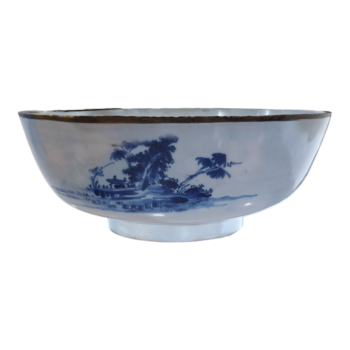
Porcelain from the Wanli period of the Ming Dynasty, titled 'Silver Gold Plated Inlaid Blue and White Porcelain Bowl'

Porcelain from the Wanli period of the Ming Dynasty, titled 'Silver Gold Plated Inlaid Blue and White Porcelain Bowl'

The blue and white porcelain bowl made during the Wanli period of the Ming Dynasty (1573-1619) is currently preserved in the Hunt Museum in England. The outer edge of the bowl is decorated with a Pegasus frame, and the bowl wall is decorated with flower spray.
Lacquerware box, produced in the late 18th century during the Qianlong period

Lacquerware box, produced in the late 18th century during the Qianlong period

Chinese lacquerware is an important invention in ancient China in the fields of chemical technology and arts and crafts. It originated in the Neolithic Age, usually painted with red and decorated with black, or painted with black and decorated with red, forming a beautiful colorful world on the surface of objects with beautiful patterns. This lacquerware box is currently housed in the University of Jamaica Museum.
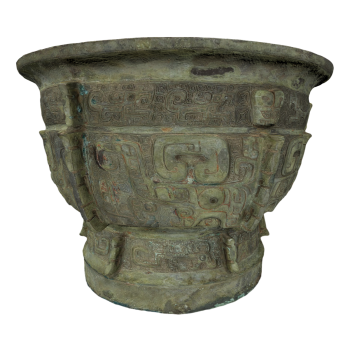
Fang Ding from the Late Shang Dynasty

Fang Ding from the Late Shang Dynasty

This Fangding (food container) from the late Shang Dynasty in the 11th century BC is now in the collection of the Minneapolis Museum of Art in the United States. This square tripod, also known as the 'square tripod', showcases an interesting development in tripod design. Although it is still a square box shaped container standing on four columnar legs, the decoration shows a tendency towards abstraction, which may have been influenced by contemporary textile design.
Changxin Palace Lantern of the Western Han Dynasty

Changxin Palace Lantern of the Western Han Dynasty

The Changxin Palace Lantern of the Western Han Dynasty was unearthed in 1968 from the tomb of Dou Wan, wife of Prince Jing of Zhongshan, Liu Sheng, in Mancheng County, Hebei Province. It was exhibited as an exhibit at the 2010 Shanghai World Expo in China. The body of the palace lantern is a gilded whole, and the palace maid sits with both hands holding the lantern, with a peaceful and elegant expression. The lamp body is 48 centimeters high and weighs 15.85 kilograms. The design of the Changxin Palace Lantern is very clever. The palace maid holds the lantern in one hand and the sleeve in the other hand seems to be blocking the wind, which is actually a rainbow tube used to absorb oil fumes. It not only prevents air pollution but also has aesthetic value. This palace lantern is named after its placement in the Changxin Palace of Empress Dowager Dou (grandmother of Liu Sheng) and is now housed in the Hebei Museum.
Cloisonn é teapot from the late Qing Dynasty

Cloisonn é teapot from the late Qing Dynasty

This teapot is a cloisonn é craft from the late Qing Dynasty in the 19th century, currently housed in the Bleschunov Municipal Personal Collection Museum in Odessa, Ukraine. Cloisonn é, officially known as "Copper Cloisonn é Enamel" and commonly referred to as "Enamel Cloisonn é", is one of China's famous special metal crafts. During the Ming Dynasty's Jingtai period, this craftsmanship reached its peak, producing the most exquisite and famous crafts. Therefore, later generations referred to this type of metal artifact as "Cloisonn é".
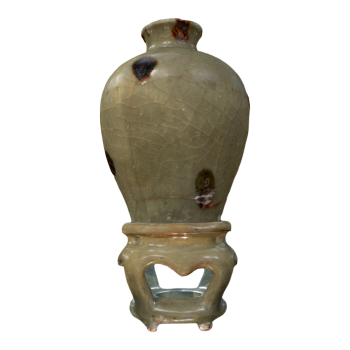
During the Northern Song Dynasty, Ru Kiln Tianqing Glazed Bowl

During the Northern Song Dynasty, Ru Kiln Tianqing Glazed Bowl

Ru porcelain, originated in the mid Tang Dynasty and gained great fame in the Northern Song Dynasty, ranking first among the "Five Famous Ceramics" of the Song Dynasty. It was named after its production in Ruzhou City and has formed a prosperous scene of "a hundred miles of scenery on both sides of the Ru River, with continuous fire everywhere". It occupies a significant position in the history of Chinese ceramics. Ru porcelain's sky blue glazed porcelain contains agate in the glaze, with a green and vibrant color. The glaze is rich and shiny, like a pile of grease, and looks like jade. The sound of clasping is like a fragrance, and the texture is very good. There is a saying that "it looks like jade, not jade, but better than jade". The color is elegant and natural, and it is known as "the rain falls on the sky and the clouds break through".
Porcelain from the Kangxi period of the Qing Dynasty: "Porcelain Salt Bottles from the Kangxi Period of the Qing Dynasty"

Porcelain from the Kangxi period of the Qing Dynasty: "Porcelain Salt Bottles from the Kangxi Period of the Qing Dynasty"

This Chinese cultural relic is a porcelain called "Porcelain Salt Bottle from the Kangxi Period of the Qing Dynasty". It was fired during the Kangxi period of China (1662-1722) and is currently housed in the Krakow Salt Mine Museum in Poland. Before the development of porcelain production technology in Europe, porcelain from foreign countries had already been imported since the Middle Ages, and their prices often exceeded those of similar silverware. For many years, they have only been used for decoration, while their fashion trends continue to spread. These products have aroused the curiosity of European buyers due to their rich and exotic patterns.
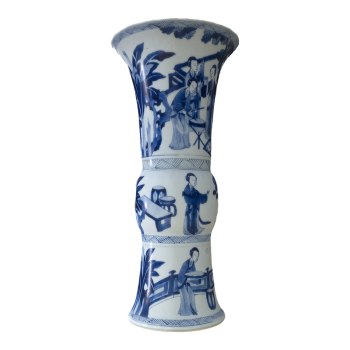
Jingdezhen Blue and White Porcelain Vase "from the Kangxi period of the Qing Dynasty

Jingdezhen Blue and White Porcelain Vase "from the Kangxi period of the Qing Dynasty

This Chinese cultural relic is a porcelain vase from the Kangxi period of the Qing Dynasty (1662-1722). The vase is made of transparent and colorless underglaze blue and white porcelain with cobalt pigment, fired in Jingdezhen, and is now collected in the Smithsonian Museum.
Porcelain from the Kangxi period of the Qing Dynasty: Painted pottery bowls during the Kangxi period

Porcelain from the Kangxi period of the Qing Dynasty: Painted pottery bowls during the Kangxi period

Bronze vessels from the Eastern Zhou Dynasty, such as the Bronze Shengding

Bronze vessels from the Eastern Zhou Dynasty, such as the Bronze Shengding

This Chinese cultural relic is a bronze vessel called "Shengding", which was cast around 575 BC. Shengding "refers to a type of tripod with a flat bottom and a prominent waist. The word 'sheng' refers to the offerings provided within it. There are six Kui dragons climbing towards the lid in high relief around the body of the Ding. The surface is decorated with interwoven dragons, engraved with scale patterns, and overlapping feather like patterns. Although most of the decorations are made using traditional block casting bronze techniques, the six dragons, with their complex, perforated shapes, were individually crafted using the lost wax method. This cauldron is currently housed in the Minneapolis Museum of Art in the United States.
Bronze ware from the Shang Dynasty, known as the 'Bronze Pavilion'

Bronze ware from the Shang Dynasty, known as the 'Bronze Pavilion'

This Chinese cultural relic is a wine vessel called "斝", produced in the 13th to 12th centuries BC. It is collected at the Minneapolis Museum of Art in the United States. 斝 is a ceremonial vessel used for ancestor worship, which is made of both pottery and copper. It can be quadrupedal or quadrupedal, with two cylindrical protrusions on the mouth edge, which may be used to hang the vessel above a heat source. Yan first appeared in the Neolithic Age (5000-2000 BC) and was very common in the Shang and early Western Zhou dynasties, but disappeared in the mid Western Zhou period.
Bronze vessels from the Western Zhou Dynasty, "Western Zhou Bronze Tripod"

Bronze vessels from the Western Zhou Dynasty, "Western Zhou Bronze Tripod"

This Chinese cultural relic is a tripod (food utensil) from the 12th to 11th centuries BC, currently housed in the Minneapolis Museum of Art in the United States. This tripod is a vessel designed by craftsmen during the Western Zhou Dynasty in the form of the Shang Dynasty. The main body of the tripod is a standard tripod, deep bowl shaped, while the circular handles on both sides are innovatively presented in the shape of elephant heads and trunks. Li is a type of food utensil in ancient China, mainly used for cooking and worship. This Li is a masterpiece from the Western Zhou Dynasty, with exquisite craftsmanship.
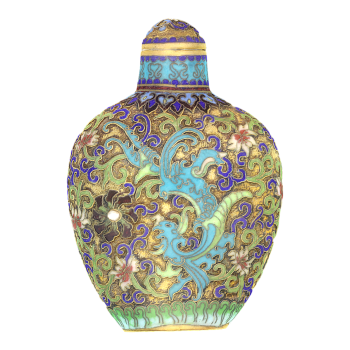
Enamel snuff bottles from the Yongzheng period of the Qing Dynasty in the 18th century

Enamel snuff bottles from the Yongzheng period of the Qing Dynasty in the 18th century

A snuff bottle is a container for holding snuff, which is delicate, compact, and easy to carry. During the Qing Dynasty, inhaling snuff became a popular trend among all social classes, and the pursuit of the material and craftsmanship of snuff bottles was even more extreme. The National Palace Museum in Taipei has a large collection of the most exquisitely crafted snuff bottles from the Qing Dynasty. This Yongzheng style enamel snuff bottle is made of milky white glass in the shape of bamboo nodes, with a color resembling spotted bamboo. There are brown spots on the green and yellow ground, and two small insects on the bamboo nodes. The bottom is painted with Lingzhi Kai Guang, and the red version of the regular script "Made in Yongzheng Year" is inside.
Late Shang Dynasty Bronze Square Cup

Late Shang Dynasty Bronze Square Cup

This square cup is a cultural relic from the late Shang Dynasty (13th century BC to 12th century BC), currently housed in the Minneapolis Museum of Art in the United States. Cup is one of the earliest Chinese bronze wares, dating back to the Erlitou period (2000 BC to 1600 BC). Archaeological excavations have found that there are more toasts and cups (another type of wine cup) than cauldrons (vessels used to hold food). Drinking was popular during the Shang Dynasty and early Western Zhou Dynasty (1600 BC to 977 BC), but gradually lost favor in the late Western Zhou Dynasty (885 BC to 771 BC) and eventually disappeared.
Late Shang Dynasty Bronze Cup

Late Shang Dynasty Bronze Cup

This bronze wine vessel is a relic from the late Shang Dynasty (13th century BC to 12th century BC) and is currently housed in the Minneapolis Museum of Art in the United States. This deep boat shaped decanter showcases almost perfect craftsmanship.
Song Dynasty Ru Kiln Fenghua Paper Hammer Bottle, housed in the National Palace Museum in Taipei

Song Dynasty Ru Kiln Fenghua Paper Hammer Bottle, housed in the National Palace Museum in Taipei

This paper hammer bottle has a total height of 22.4 centimeters, a diameter of 4.4 centimeters, and a bottom diameter of 8.6 centimeters. Round mouth slightly luxurious, with embedded copper buckle, slender neck, sloping shoulders, cylindrical belly, flat bottom without feet. The entire vessel is coated with sky blue glaze, and there are five small burn marks on the outsole. A circle of glaze has been removed from the bottom and coated with brown juice, revealing a yellowish color in the center, which may be caused by a cushion mark. The bottom of the paper hammer bottle is engraved with a poem by Emperor Qianlong titled 'Ru Kiln Pink Green Offering Hua Paper Hammer Bottle'. This cultural relic was produced in the second half of the 11th century to the early 12th century of the Northern Song Dynasty and is classified as a national treasure. It is currently housed in the National Palace Museum in Taipei.
Ming Dynasty Chenghua Year old Blue and White Infant Play Chess Jar

Ming Dynasty Chenghua Year old Blue and White Infant Play Chess Jar

The Ming Chenghua Dynasty (1465-1487 AD, reign name of Emperor Xianzong Zhu Jianshen) lasted for 23 years, and the production of Jingdezhen Imperial Kiln Factory fully resumed normal, which was an important historical period in the history of Han Chinese ceramic firing. Chenghua blue and white porcelain can be regarded as the representative of blue and white porcelain art in the mid Ming Dynasty. Its outstanding features are exquisite and exquisite, with delicate and delicate ends, which have been highly praised by later generations.
Qing Dynasty Ge glazed colorful character bottle

Qing Dynasty Ge glazed colorful character bottle

Ge Kiln is one of the five famous kilns of the Song Dynasty. The characteristics of Ge kiln porcelain are glazed inside and outside, uniform and smooth, crystal clear and moist. Not only does it have a clear porcelain sound, but it also has a tall and elegant shape with soft and smooth contours.
Lucky Beast (Foot End) Bronze Incense Burner

Lucky Beast (Foot End) Bronze Incense Burner

This cultural relic is one of a pair of lion incense burners, produced in the 17th century. Now collected at the Minneapolis Museum of Art in the United States. These lions look like guardian lions, known as auspicious beasts (Lu Duan), each with a unicorn. They are mythical animals endowed with the ability to distinguish between good and evil. These legendary animals appear in pairs and are used to stand on both sides of the imperial throne in the Forbidden City, symbolizing the dignity, virtues, and wisdom of the royal family. The size of this pair of incense burners is 57.2 x 33 x 61 centimeters, made of bronze and decorated with splashed gold.
Cloisonne

Cloisonne

Cloisonn é, one of the famous special metal crafts in China, reached its peak in production during the Jingtai period of the Ming Dynasty, producing the most exquisite and famous crafts. Therefore, later generations referred to this metal artifact as "Cloisonn é". Cloisonn é, officially known as "Copper Cloisonn é Enamel" or "Enamel Cloisonn é", is a type of utensil made of soft flat copper wire that is cut into various patterns and welded onto a copper mold. The enamel is then filled into the patterns and fired. Due to its popularity during the Jingtai period of the Ming Dynasty and mature production techniques, the enamel glaze used was mostly blue, hence the name "Jingtai Blue".
Vietnamese vase, produced in the late 15th century

Vietnamese vase, produced in the late 15th century

This is a late 15th century artifact collected at the Minneapolis Museum of Art. Its decorative patterns include peonies, lotus flowers, birds, flowers, animals, fish, and even landscapes. These patterns are all painted in underglaze blue with a wavy background. The bottleneck is decorated with cloud vortices, there are banana leaves below the bottle mouth, and lotus leaves around the bottom of the bottle. The inspiration for Vietnamese blue and white porcelain comes from China. However, Vietnamese ceramic artists are not just imitators, they have developed a series of decorative patterns. This elegant pear shaped bottle is closely related to the Chinese prototype in both shape and decoration.
During the Qing Dynasty, Kangxi's Five Colored Tiangong created the "Silkworm friendly" Tianqiu Bottle

During the Qing Dynasty, Kangxi's Five Colored Tiangong created the "Silkworm friendly" Tianqiu Bottle

The shape of the Tianqiu bottle is small mouth, straight neck, ample shoulder, false ring foot, and slightly concave sand bottom. Because the belly of the round ball is huge, as if descending from the sky, it is named
Tianqiu Bottle, a Five Colored Public Case Figure of Kangxi in the Qing Dynasty

Tianqiu Bottle, a Five Colored Public Case Figure of Kangxi in the Qing Dynasty

The function of the Tianqiu vase in the Qing Dynasty was to display porcelain. During the Kangxi period of the Qing Dynasty, Tianqiu vases were fired, but they were mainly popular during the Yongzheng and Qianlong dynasties. They were mostly fired by royal kiln factories for display in the palace and reward to ministers. In the early Qing Dynasty, Kangxi and Yongzheng had relatively thick and short necks, and the mouth was mostly straight. Moreover, the height of the Tianqiu vase was around 50-60cm.
Qing Dynasty Qianlong Blue and White Pink Baby Play Lucky Celebration More than Eight Square Vases

Qing Dynasty Qianlong Blue and White Pink Baby Play Lucky Celebration More than Eight Square Vases

The Qing Dynasty Qianlong Blue and White Pink Baby Play Lucky Celebration Eight Square Vase was sold for HKD 55 million at Sotheby's 2015 Spring Auction "Chinese Art Treasures" in Hong Kong on April 7, 2015, with a transaction price of HKD 63.48 million.
Ming Dynasty Xuande Glazed Red Wheel Flower Embracing Moon Vase

Ming Dynasty Xuande Glazed Red Wheel Flower Embracing Moon Vase

Baoyue Bottle is a type of porcelain from the Qing Dynasty, also known as the "Baoyue Bottle". Its characteristics are small mouth, straight neck, and two ears on the neck side. It is named after the round moon like belly of the bottle. The Jingdezhen kiln during the Yongle and Xuande periods of the Ming Dynasty was the main production site for holding moon vases.
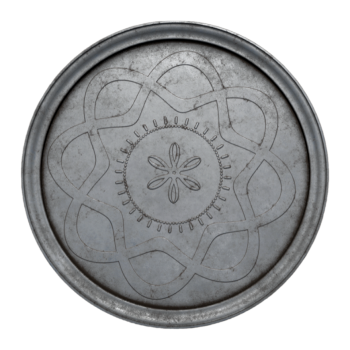
The Plate with Winged Griffon

The Plate with Winged Griffon

The 'Plate with Winged Griffin' is a cultural relic located at the Crancliff Art Museum, made of silver and measuring 4 x 32 centimeters (1 9/16 x 12 5/8 inches) in diameter. This work was made during the Hephtalite period (6th to 7th centuries) in the Soghdia region, around 500-600 AD. This work depicts a winged griffin, a mythical creature often depicted as a mixture of lion and eagle, symbolizing strength and nobility.
Ancient Egyptian Pulp Mummy Mask

Ancient Egyptian Pulp Mummy Mask

This artifact is a complete pulp mask, including the mask and three chest patches. It was excavated by the Egyptian Exploration Society in Abidos. This ancient Egyptian artifact can be traced back to the Ptolemaic period between 323-30 BC. The golden color reflects the ancient Egyptians' belief that the skin of gods was made of that material. This artifact is currently located at the National Museum of Scotland.
Pharmacist's bottle for Byzantine syrup

Pharmacist's bottle for Byzantine syrup

This pharmacist's bottle is used to hold Byzantine syrup. Made in early 17th century Italy. The bottle is made of baked clay and covered with tin lead glaze, with a height of 21 cm. They are manufactured using technology originating from the Middle East. Over time, this technology also spread in the Iberian Peninsula and later in Italy. During the Renaissance, these regions' Magiolicas were particularly popular and became artistic symbols of that period. It is now housed in the Pharmacy Museum at the Jagiellonian University School of Medicine in Krakow.
The human shaped coffin lid of the ancient Egyptian mummy Irthorru

The human shaped coffin lid of the ancient Egyptian mummy Irthorru

This wooden humanoid coffin lid comes from the ancient Egyptian mummy Irthorru, who was a priest of the Min and other divine sects of Akhmim's family. This coffin lid is 26 centimeters high, 183.50 centimeters long, and 54.50 centimeters wide. The inscription on the coffin lid includes the title of 'Priest of Min'. This coffin lid is housed in the British Museum but has not been exhibited in any exhibitions.
Boxes from My ś lenice's leather goods store

Boxes from My ś lenice's leather goods store

This artifact belongs to the Leather Goods Guild of My ś lenice, a centuries old institution whose presence in the town can be traced back to the Middle Ages. The guild box is a beautifully decorated item with symbolic elements typically associated with specific crafts. Boxes also have practical uses: storing valuable items such as celebration cups, documents, and seals. This cultural relic is currently on display at the "The Greek House" regional museum in My ś lenice.
Bronze incense burners during the Qianlong period

Bronze incense burners during the Qianlong period

This incense burner was commissioned by Emperor Qianlong and bears the words' Made in the Qianlong Year of the Qing Dynasty ', possibly originating from a magnificent royal temple. Approximately 14 centimeters in height and 26.7 centimeters in diameter. This incense burner is a cultural relic from the Qianlong period of the Qing Dynasty (1736-95). Now it is collected in the British Museum.
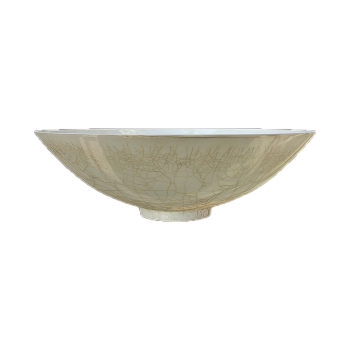
The limestone urn of the ancient Etruscan civilization, also known as the Etruscan urn

The limestone urn of the ancient Etruscan civilization, also known as the Etruscan urn

This artifact is an Etruscan limestone urn made in Italy. The urn was made between the 2nd century BC and the 1st century BC. Now, this urn of ashes is housed in the Umbria National Archaeological Museum in Italy. In ancient Etruscan culture, urns of ashes were a very important part. These urns are used to collect the ashes of the deceased
Colorful ceremonial tray from the lobby of Tomb No. 2 in the state of Oaxaca, southern Mexico

Colorful ceremonial tray from the lobby of Tomb No. 2 in the state of Oaxaca, southern Mexico

This is a cultural relic located at the National Museum of Anthropology in Mexico. This artwork is a colorful ceremonial plate from the front chamber of the second tomb in Zaachila, Oaxaca state. This type of ceremonial plate is usually used in special ceremonies or celebrations, and may be used to worship deities or ancestors, or as a symbolic gift.