Cast iron statue of Jo ã o Cidade

Cast iron statue of Jo ã o Cidade

Jo ã o Sidade devoted all his energy to caring for the poor and sick as an adult. Jo ã o Sidade, contrary to all the customs of his time, established two hospitals where patients received humane treatment. According to today's nursing standards, these hospitals are considered modern hospitals, dedicated not only to nursing but also to treatment. They have doctors, pharmacists, nurses, and priests, and patients are divided by disease, with each person assigned a bed. Several of his companions joined his ranks, thus forming the founding core of the Hospital Knights, which was first approved in 1572.
John William Medal

John William Medal

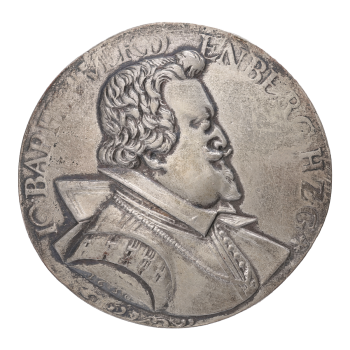
John William Medal (1658-1716). This medal from 1711 was awarded by P H. M ü ller's design was created for the Imperial Archdiocese after the death of Emperor Joseph I. On the front is the Elector wearing armor, wearing an Elector hat, holding a Marshal's baton, and riding a horse to the right. On the other hand, Hercules and Atrant shoulder the earth together. This medal is silver, with a diameter of 66 millimeters and a weight of 152.26 grams
Athenian Tradrachm silver coin, made between 450-430 BC

Athenian Tradrachm silver coin, made between 450-430 BC

The obverse of this silver coin bears the portrait of Athena, while the reverse features a small owl. This silver coin was minted in Athens and weighs 17.13 grams. The Athenian Tradrachm silver coin is a classic work in the collection of ancient coins. These silver coins were produced on a large scale in the mid to late 5th century BC, combining the image of the helmet wearing goddess Athena with her owl standing figure
The Roman Limestone Coffin from the Ancient Roman Empire Period

The Roman Limestone Coffin from the Ancient Roman Empire Period

This Roman limestone sarcophagus was discovered in Hayden Square, London. It was made in the 4th century AD, during the period of the Roman Empire. This sarcophagus is now preserved in the British Museum in London.
Marble sculpture of horse head from ancient Greek classical period

Marble sculpture of horse head from ancient Greek classical period

This marble horse head sculpture was discovered from a tomb monument or temple located in Taranto, Italy. It can be traced back to 350-300 BC, which is the classical period of ancient Greece. This sculpture is now preserved at the British Museum in London.
Mocking Medal, made in 1544

Mocking Medal, made in 1544

The Mock Medal was created by Hans Reinhardt at the Council of Trent in 1544. The obverse of this medal is engraved with the portraits of a cardinal and a clown, surrounded by the Latin inscription 'EFFIGIES CARDINVM MUNDI HR'. The reverse side is engraved with five elements of text and the year. This medal is silver and plated with gold, with a diameter of 28 millimeters and a weight of 5.58 grams.
Lion Skull Specimen from Auckland Museum

Lion Skull Specimen from Auckland Museum

The Mocking Medal of the Catholic Church

The Mocking Medal of the Catholic Church

The mocking medal of the Catholic Church. In the mid-16th century, the Reformation (Church Restoration Movement) created medals to mock the prominent figures of the Catholic Church. These medals have two patterns on the front and back. If you rotate the medal 180 degrees, the Pope will become a devil and the Cardinal will become a fool with donkey ears. The medal is made of silver and has a diameter of about 3. 7 centimeters.
Bronze Statue of Korsabad's Bronze Lion from the Neo Assyrian Period

Bronze Statue of Korsabad's Bronze Lion from the Neo Assyrian Period

This artifact is exhibited in the Oriental Antiques Department of the Louvre Museum in France. The statue is made of bronze. It is a lion statue in a lying position, with its mouth open to display its teeth. The lion's fur and facial details are carefully carved, displaying its vivid and realistic appearance. There is a circular handle above the statue, which may be used to carry or hang this item. The place where the statue was made was Korsabad, an important city in ancient Assyria located in northern Iraq today. The Neo Assyrian period was an important stage in Assyrian history, during which the Assyrian Empire reached its maximum territory.
Saint George Dragon Slaying Sculpture

Saint George Dragon Slaying Sculpture

This sculpture is located in the courtyard of the Archbishop's Palace in Bratislava and is part of the Saint George Fountain. The Archbishop's Palace is a neoclassical palace located in the old town of Bratislava, the capital of Slovakia. This sculpture depicts the scene of Saint George riding a horse and fighting against a dragon. This depiction is based on a legend that emerged in the 12th century and was recorded in the medieval text collection 'Legenda aurea'.
Iron Buddha Statue of Shakyamuni during the Goryeo Dynasty in Korea

Iron Buddha Statue of Shakyamuni during the Goryeo Dynasty in Korea

This artifact is a cast iron Buddha statue from the Goryeo Dynasty in Korea. It is now housed in the British Museum in London. Its production date is from 918 AD to 1392 AD 1234. This Buddha statue is made of cast iron. The Buddha statue was discovered at a temple site in Hasachangli, Gwangju, buried to the waist. Many features are similar to the main Buddha statue in Shiku Temple, such as the outer robe covering only one shoulder, fan-shaped folds in front of the crossed legs, and a right hand lowered towards the ground. This statue was made in the early Goryeo period of the 10th century.
Bratislava Angel Sculpture

Bratislava Angel Sculpture

This statue is in the image of an angel, holding a wreath and an inverted torch, with a skull on its pedestal. This statue is located in Gaistor Cemetery in Bratislava, a former Protestant cemetery that is now classified as an ancient building and was built in 1783.
Lammasu sculpture

Lammasu sculpture

Lammasu is a god in Mesopotamian mythology, typically depicted with the body of a bull or lion, wings of an eagle, and a human head. In art, Lammasu is depicted as a hybrid, a winged bull or lion with the head of a human male. This sculpture is located at the Pergamon Museum in Berlin. Lammasu's sculptures originated in the Sumerian period and later developed during the Asuro Akkadian period.
Granite stone pillar from the 18th Dynasty of ancient Egypt, carved with inscriptions on papyrus paper

Granite stone pillar from the 18th Dynasty of ancient Egypt, carved with inscriptions on papyrus paper

This cultural relic is a papyrus column made of gray granite. Its style suggests that its production date may have been in the early 18th dynasty, and all inscriptions were carved later. In ancient Egyptian religion, a papyrus pillar was a talisman symbolizing freshness, youth, vitality, and the continuation of life. This talisman is made of glazed pottery or various types of stones, shaped like the stem and bud of papyrus paper. Its significance may stem from its pictographic value, as, just like plants themselves, they have vitality and growth, so people wearing papyrus paper pillar amulets will also possess these qualities. The papyrus columns are collected in the National Museum of Egypt.
A humanoid sculpture in a clinic in Vienna

A humanoid sculpture in a clinic in Vienna

This sculpture is located in the Otaklin Clinic in Vienna's 16th arrondissement and depicts a seated humanoid figure.
The marble statue of the Byzantine Empire in ancient Rome, known as the "Marble Maiden Statue"

The marble statue of the Byzantine Empire in ancient Rome, known as the "Marble Maiden Statue"

This artifact is a small Eastern Roman marble statue depicting a young girl. Its production date is around 525 BC to 500 BC, and the statue is made of marble. The posture and attire of this young girl statue are the same as the famous Kore statue found in the Acropolis of Athens. Her left leg moved slightly forward, and her left hand grabbed her thin linen jacket, pulling it tightly over her leg; The right hand may have once held an offering. Her short cloak slanted over her right shoulder and then hung down from her left arm, forming vertical, stacked folds. The surface of the statue becomes vivid due to the variations in clothing layers and textures.
Granite Statue of the 25th Dynasty of Ancient Egypt, "The Sanctuary of Amun: King Tahaka and the Ram Statue"

Granite Statue of the 25th Dynasty of Ancient Egypt, "The Sanctuary of Amun: King Tahaka and the Ram Statue"

This artifact is a statue of the god Amun, known as the protector of Amun: the statue of King Tahaka and the ram, appearing in the image of a ram, protecting King Tahaka. It was discovered at the T Temple in Kava, Sudan and is now housed in the British Museum. It was made between 690 BC and 664 BC, during the 25th Dynasty of ancient Egypt. The ram lay on its belly, with its front legs folded underneath, and the three-dimensional statue of King Tahaka stood between them. There is a hieroglyphic inscription around the base, declaring from front to back that Tahakha was the son of Amun and Mutt, and he "completely satisfied the heart of his father Amun".
Bronze incense burners during the Qianlong period

Bronze incense burners during the Qianlong period

This incense burner was commissioned by Emperor Qianlong and bears the words' Made in the Qianlong Year of the Qing Dynasty ', possibly originating from a magnificent royal temple. Approximately 14 centimeters in height and 26.7 centimeters in diameter. This incense burner is a cultural relic from the Qianlong period of the Qing Dynasty (1736-95). Now it is collected in the British Museum.
Limestone reliefs from the ancient Etruscan civilization, titled 'Relief Tomb Inscription Base'

Limestone reliefs from the ancient Etruscan civilization, titled 'Relief Tomb Inscription Base'

This artifact is a tombstone pedestal, discovered in Chios, Italy, and currently housed in the British Museum in London. It was made between 490 BC and 470 BC. The base is made of limestone, with a height of 44.45 centimeters, a length of 58.42 centimeters, and a width of 58.42 centimeters. The tombstone pedestal is a product of the Etruscan culture period, which was an important culture in ancient Italy and existed from the 8th century BC to the 3rd century BC. The art and architectural style of the Etruscans had a profound impact on later Roman culture.
The Limestone Coffin of Ancient Etruscan Civilization "Painted Etruscan Coffin"

The Limestone Coffin of Ancient Etruscan Civilization "Painted Etruscan Coffin"

This artifact is a stone Etruscan limestone coffin discovered in a painted cave in Italy, and is now housed in the British Museum in London. The production date of this coffin is between 325 BC and 250 BC. This coffin was once covered with white plaster and painted. The lid of the coffin was carved into the roof of a temple or house and decorated with curled patterns, lion and human faced beasts, snakes, female heads, and rows of tiles.
The limestone urn of the ancient Etruscan civilization, also known as the Etruscan urn

The limestone urn of the ancient Etruscan civilization, also known as the Etruscan urn

This artifact is an Etruscan limestone urn made in Italy. The urn was made between the 2nd century BC and the 1st century BC. Now, this urn of ashes is housed in the Umbria National Archaeological Museum in Italy. In ancient Etruscan culture, urns of ashes were a very important part. These urns are used to collect the ashes of the deceased
Fragment of a statue from the Gallic Roman period titled 'The God of Ophigny'

Fragment of a statue from the Gallic Roman period titled 'The God of Ophigny'

This is a fragment of a limestone statue, known as the god of Ophiene, with a pig image on it and a twisted necklace around its neck. The fragments were made during the 1st century BC, Roman Empire period, and Gaul Roman period (58 BC -5th century AD). This fragment was discovered in Ophiene. The fragments are made of limestone. The dimensions of the fragments are: height of 25.8 centimeters, width of 10.5 centimeters, and depth of 7.5 centimeters. The fragments are now collected at the National Archaeological Museum in London.
Honduras' stone monument 'Chronometer Stele of Copan Square'

Honduras' stone monument 'Chronometer Stele of Copan Square'

This statue is a replica of a stone monument in Copan Plaza, Honduras. The image of the statue is Vasacarahorn Ubaa Cavell. The statue is now housed in the British Museum in London. The original stone tablet was made in 730 AD. Archaeological investigations have shown that wooden pillars and stone tablets may have been used to measure time and perform related rituals in the north of the main square of Copan Archaeological Park. The shadow of this stone tablet can be used as a marker for different dates of the year, such as to, to, and from the point of direct sunlight, as well as for the size and direction of its projection at different times of the day. The residents of Copan use it to accurately track tropical years.
The marble statue 'Giant Half body of Zeus' from Lazio, Italy

The marble statue 'Giant Half body of Zeus' from Lazio, Italy

This statue is a marble bust of Zeus. It was discovered in the Villa Hadrian in Tivoli, Lazio, Italy. Now, the statue is housed in the British Museum in London.
Bronze statue of a praying woman from the Hellenistic period in Etruria

Bronze statue of a praying woman from the Hellenistic period in Etruria

This statue was made in the 2nd century BC, named "Bronze Prayer of Young Women Statue", belonging to the Hellenistic period of Etruria in Italy. The statue is the image of a young woman, possibly a priestess, with a height of 95 centimeters. The surface decoration of the statue is rich, including fine carving details on hair, jewelry, sewn seams, decorative edges, and shawl folds. Her shoes have exquisite shoelaces and floral decorations, which are typical Etruscan style. The left foot of the statue is a modern restoration. The statue is currently on display at the British Museum in London.
The Bronze Bell "Niu Zhong" from the Eastern Zhou Dynasty in China

The Bronze Bell "Niu Zhong" from the Eastern Zhou Dynasty in China

This bronze bell is a cultural relic from the Eastern Zhou Dynasty in China, made in the 5th century BC. The name of this clock is "Niu Zhong", which was discovered in Henan Province, China. This clock is housed in the British Museum. During the Eastern Zhou Dynasty, bronze bells were a very important part. Clocks did not have bell tongues and needed to be struck with wooden hammers to produce sound. This type of clock has excellent quality in music, such as clear sound, fast attenuation, clear and focused tones. The height of the clock is 38.3 centimeters and the width is 24.4 centimeters. There are three rows of snake shaped decorations on each side, further divided by trapezoidal panels with faint dragon patterns.
The marble statue of Apollo from the Hellenistic period of ancient Rome

The marble statue of Apollo from the Hellenistic period of ancient Rome

This marble statue is Apollo, holding a qin and quiver in his hand. He was naked except for the cloak around his waist. The right arm that was originally raised, as well as the left wrist and hand, are now missing. This statue is a work from the Hellenistic period of Rome, made in the 2nd century AD. This statue was excavated by an archaeological team led by Sir Robert Murdoch Smith and Edwin A. Borcher at the Temple of Apollo (Cyrene) in Libya. Now, this statue is housed in the British Museum in London. The height of the statue is 2.28 meters. This statue is a Roman replica of the original Greek work dating back to 200-150 BC.
Fossil specimens of Southern Ape skulls from the Oxford Museum of Natural History

Fossil specimens of Southern Ape skulls from the Oxford Museum of Natural History

Southern apes, some researchers refer to as hominids, lived on the newly formed African savannah 1.5 million years ago. The skull features of this species are related to a diet primarily based on hard fruits, bark, and some roots. We can notice that it has a thick and protruding zygomatic arch, with a very large muscle passing through it and ending at the sagittal crest located in the upper part of the skull. Its dental arch is very sturdy and can be seen in very wide and pointed molars.
The currency of ancient Greek classical period, Alexander the Great silver tetradrachma

The currency of ancient Greek classical period, Alexander the Great silver tetradrachma

Alexander the Great's silver tetradrachm coin was made between 325 BC and 320 BC. Coins were minted in Side (now Türkiye). The obverse of this coin features the portrait of a young Hercules wearing a lion skin helmet. Hercules is a hero in Greek mythology known for his strength and courage. On this coin, he is depicted as a young man wearing lion skin, which is his emblem. Coins are made of silver. In ancient times, the tetradrachma was the most commonly used large denomination coin, usually made of silver. The weight of the coin is about 17 grams and the diameter is about 24 millimeters.
The igneous rock statue of Yoga Buddha, a cultural relic from the Chola period in India

The igneous rock statue of Yoga Buddha, a cultural relic from the Chola period in India

Yoga Buddha is a very important deity in Indian history, and his story and image occupy a significant position in Indian yoga culture. Archaeologists have discovered a large number of stone sculptures and pottery seals in the Harappan and Mohenjodaro cultures of the Indus Valley civilization, featuring figures in yoga and meditation postures. There are many cross legged (described as yoga sitting posture) human figures on the Harappa seal, and the statues are now collected at the Minneapolis Museum of Art.
The clay statue of the Virgin and Child from the Capetian dynasty in France

The clay statue of the Virgin and Child from the Capetian dynasty in France

The name of this statue is the Virgin and Child (Vierge à l'Enfant). It was made in the 14th century AD, between 1300 and 1400 AD. This cultural relic was made in France. The statue is made of clay painted with golden colors. Its dimensions are: 93 centimeters high, 27.8 centimeters wide, and 17.5 centimeters deep. This statue is currently housed in the Cluny Medieval National Museum in France.
The bronze statue of the Casagrande civilization, 'Pachime Rattlesnake Turtle'

The bronze statue of the Casagrande civilization, 'Pachime Rattlesnake Turtle'

The name of the cultural relic is Pachime Rattlesnake Turtle, which is made of copper and was made in Pachime, Chihuahua, Mexico. This place is the political center of the Casagrande civilization, which is one of the most prominent and complex cultures in northern Mexico and southwestern United States. The production period of this cultural relic was around 1200 AD. This period was the peak of the Casagrande culture, which had a widespread influence in northern Mexico and southwestern United States. The statue is made by the lost wax method, which requires the destruction of the mold, so there are no two identical works. The statue is now part of the collection of the National Museum of Anthropology in Mexico.
Bronze statue from the Sultanate of Delhi, India, depicting the Buddha's achievement without impurities

Bronze statue from the Sultanate of Delhi, India, depicting the Buddha's achievement without impurities

This statue, named the Pure Accomplishment Buddha, is one of the Five Wisdom Tathagatas in Tibetan Buddhism. It is related to the achievements of the Buddhist path and the destruction of poison. His name means' pure achievement '. His spouse is Tara, meaning the one who liberates, and his mount is Garuda. He belongs to the business family, whose family emblem is the Double Diamond Rod. This statue is made of copper and is currently housed in the Minneapolis Museum of Art in the United States. It was made in the 13th century AD, between 1200 and 1300 AD. This statue is a representative work of Tibetan Buddhist art, showcasing the artistic style and techniques of that period.
Clay slabs from the Assyrian period in Babylon, titled 'Intentions of the Babylonian World'

Clay slabs from the Assyrian period in Babylon, titled 'Intentions of the Babylonian World'

This is a Babylonian clay tablet written in Akkadian. It was created no earlier than the 9th century BC (more likely in the 8th or late 7th century BC). This map is centered around the Euphrates River, flowing from the north to the south. The map is marked with "Babylon" and is located in the northern half of the map. The outlet of the Euphrates River is marked with "swamp" and "outflow outlet". Susa, the capital of Elam, is located in the south, with Urartu in the northeast,. Mesopotamia is surrounded by a circular "river" called the "Bitter River" or the ocean, with seven or eight "regions" depicted as triangular areas outside the ocean.
Babylonian Cyrus Cylinder

Babylonian Cyrus Cylinder

The Cyrus Column is one of the most famous icons in the ancient world. It was excavated in Babylon in 1879. This cylinder was ordered to be inscribed in Babylonian cuneiform script by King Cyrus the Great of Persia after occupying Babylon in 539 BC. This cylinder records in detail how Cyrus the Great conquered Babylon, how he restored various temple statues removed by the former Babylonian king Nabonidus, and his work in Babylon. This cylinder is now preserved in the British Museum.