Commemorative Medal of the Austrian Republic in the 20th Century: Honorary Citizen Medal

Commemorative Medal of the Austrian Republic in the 20th Century: Honorary Citizen Medal

The plaque of Alois Richter Honorary Citizen. On the front is a side image of Alois Richter. On the back is a stylized eagle, depicted in the full body of two boys, facing each other, holding hands, with a vine wreath behind it. The emblem of Leitz Town is located in the lower left corner, while the emblem of the Alliance of Krems is located in the lower right corner. Danube in front of the flower belt. Medal winner: Arnold Hatig. Bronze; 7,6 x 5 centimeters; Around 1910. Alois Richter (1849-1919) was a numismatist and the mayor of Leitz.
Spartacus marble sculpture

Spartacus marble sculpture

This is a marble sculpture created by Denis Foyatier, measuring 2.12 meters in height, 0.63 meters in width, and 0.97 meters in length. This work depicts the scene of Spartacus breaking his chains. The work was completed in 1830 and exhibited at a salon exhibition in 1831. From October 1832 to 1877, this work was kept in the Tuileries Garden, and on December 3, 1877, it was moved to the Louvre.
Statue of Ar é thuse's Nymphe

Statue of Ar é thuse's Nymphe

This sculpture was created by Claude Poirier (1656-1729) and is known as the 'Nymphe of Ar é thuse'. It is made of marble, with a height of 0.99 meters, a length of 1.66 meters, and a width of 0.68 meters. This sculpture is now housed in the Louvre Museum in Paris, France. This sculpture was created between 1706 and 1711 and is exhibited alongside Jacques Prou's sculpture Amphitrite. In Greek and Roman mythology, Nymphes (fairies or nymphs) usually reside in mountains, forests, and rivers.
Granite altar of the 26th Dynasty of Egypt "Ancient Egyptian hieroglyphic altar"

Granite altar of the 26th Dynasty of Egypt "Ancient Egyptian hieroglyphic altar"

Human Anatomy Statues

Human Anatomy Statues

This small statue was carved by Pierre Franqueville (also known as Pietro Francavilla or Petrus a Francvilla) and was one of the three models recorded in the Jagiellonian Library collection as early as 1783. Pietro Francavilla (1547-1615) was a Flemish French sculptor working in Italy. The statue is currently located in the Jagiellonian University Museum in Poland.
Commemorative Medal of the Republic of Austria in the 20th Century: "Herzogenburg City Upgrading Commemorative Medal"

Commemorative Medal of the Republic of Austria in the 20th Century: "Herzogenburg City Upgrading Commemorative Medal"

This medal was made to celebrate the 1927 exhibition in the city of Herzog. On the front, there is a view of the monastery and the college church, the emblem of the alliance, oak leaves, grapevines, and the words "EXEHIBITION HERZOGENBURG STADTERHEBUNG 1927" written on it, which means "Exhibition 1927 in Herzogenburg City". In the foreground on the back, a farmer and a blacksmith are in front of a plow, with a town and monastery in the background. It says' FOR EXCELLENT PERFORMING ', which means' excellent performance'.
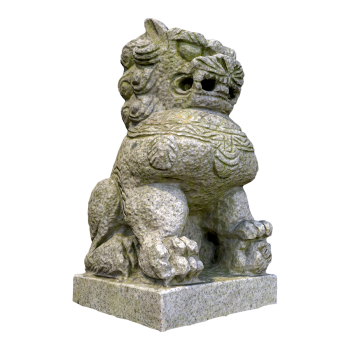
Exquisite bronze carved lion statue sculpture in front of the Chinese style door

Exquisite bronze carved lion statue sculpture in front of the Chinese style door

Roman marble statue of Hera Borgese

Roman marble statue of Hera Borgese

This statue represents the goddess of love Aphrodite, originating from MonteCalvo in the 2nd century AD, and is currently housed in the Nie Karlsberg Sculpture Museum in Copenhagen, Denmark. This sculpture is a Roman marble replica of a classical Greek bronze statue.
17th century Austrian Holy Roman Empire Medal "Half body of Johann Battista Werda"

17th century Austrian Holy Roman Empire Medal "Half body of Johann Battista Werda"

This medal was made for John Baptiste Verda, Count of Verdenberg. This medal is replicated through electroplating, lead casting, welding, and silver plating. The front displays a bust of the Count with the words "IO: BAP: FHV. VERDENBERGH: ZG 1630" written on it. On the back, a snake ring surrounds a hexagonal star, suspended above a patch of grass. It is currently housed in the State Museum of Lower Austria.
Half body portrait of Mark Twain

Half body portrait of Mark Twain

This bust of Mark Twain is located at the Hermitage Museum and Sculpture Garden in Santa Barbara, California. This is a bronze, life size bust created by artist HermiTed. Mark Twain (November 30, 1835- April 21, 1910), originally named Samuel Langhorne Clemens, was an American humorist, novelist, writer, and renowned orator.
The marble statue of Leonardo da Vinci on Mount Pinzio in Italy

The marble statue of Leonardo da Vinci on Mount Pinzio in Italy

Mount Pianzio is a mountain located in the northeast quadrant of the historical center of Rome. This mountain is located to the north of Quirinal Mountain, overlooking the Place of Matthias. It is located outside the original boundaries of ancient Roman cities and is not one of the seven mountains of Rome, but it is situated within the city walls built by Roman Emperor Aurelian between 270 and 273. Villas and Gardens In the late Roman Republic, several important families owned villas and gardens on the southern slope, including the Lucius Garden created by Lucius, the Saluste Garden created by historian Saluste, the Pompeian Garden, and the Archillion Garden. This mountain was called Garden Mountain during the Roman era.
The Egyptian statue of Horus from the Roman period, known as the "Horus Sitting Statue"

The Egyptian statue of Horus from the Roman period, known as the "Horus Sitting Statue"

This artifact, named the "Horus Sitting Statue," is a limestone sculpture depicting Horus dressed in Roman military uniform. It was made around the 1st to 2nd century AD and is currently housed in the British Museum. The arm of the sculpture has been lost, and there was originally a crown on top of the head, which may have been made of other materials. The details of the feathers on the falcon's head are finely crafted, and the eyes are humanoid with the pupils depicted. The feathers of the falcon god also serve as scales for the carapace, with its sleeves ending below the shoulders.
Gypsum portrait of East German politician Wilhelm Pick

Gypsum portrait of East German politician Wilhelm Pick

William Pick was born in 1876 into a poor working-class family in Guben. Joined the German Social Democratic Party in 1895. Due to disappointment with the cooperation between the party leadership and conservative forces during World War I, he became an early member of the Spartak League and participated in the establishment of the German Communist Party. In 1933, he was forced to flee from Germany under Hitler's rule. In April 1946, the Social Democratic Party of Germany merged with the Communist Party of Germany to form the Socialist Unity Party of Germany, and was elected as one of the two chairpersons of the Socialist Unity Party along with Otto Grotiver. When the German Democratic Republic was established in 1949, he became the only president of East Germany.
The marble statue "Weeping Angel" created by William Wetmore Stoy

The marble statue "Weeping Angel" created by William Wetmore Stoy

The Weeping Angel "is a sculpture created by American sculptor William Wetmore Storey in 1894 for the grave of his wife, Emmeline Storey, in the Protestant cemetery in Rome. The full name given to it by William Wetmore Stoy is' The Sad Angel Weeps on the Demolished Altar of Life '. This is Stori's last important work before his death, one year after his wife passed away. The Metropolitan Magazine, published in 1896, documented the creation process of this statue: according to this account, the death of his wife had such a great impact on Stori that he lost interest in sculpture.
Porcelain from the Han Dynasty and Eastern Han Dynasty: "Han Dynasty Ceramic Fish Pond"

Porcelain from the Han Dynasty and Eastern Han Dynasty: "Han Dynasty Ceramic Fish Pond"

This cultural relic called "Han Dynasty Fish Pond Porcelain" is a ceramic product belonging to the cultural heritage of the Han Dynasty in China. It was made around the period from the 1st century BC to the 2nd century AD. The diameter of this cultural relic is 39.40 centimeters and the height is 35.50 centimeters. This artifact is collected by the British Museum.
The commemorative medal of the Austrian Empire in the 20th century, the Vienna Baden Medal of Honor

The commemorative medal of the Austrian Empire in the 20th century, the Vienna Baden Medal of Honor

This medal was awarded to celebrate the Royal Fire Equipment Exhibition held in Baden near Vienna in September 1908. On the front is a half body portrait of the emperor and laurel leaves, with the words "IMPERIAL JUBILEE EXEHIBITION FOR FIRE-FIGHTING EQUIPMENT" written on it, which is the "Royal Fire Equipment Exhibition Commemorative Exhibition". On the back are the emblem of Baden and oak leaves. The medal is made by Reinemer&Spiegel and measures 4.45 x 4 centimeters. It is made of copper nickel zinc alloy.
Medal of Honor for the City of Berndorf during the Austrian Empire in the 20th century

Medal of Honor for the City of Berndorf during the Austrian Empire in the 20th century

The medal is the Medal of Honor of the city of Berndorf, with the city emblem of Berndorf on the front, which reads "Berndorf, Lower Austria, 1900" or "Berndorf, Lower Austria, 1900". On the back, there is a thank-you and floral decoration, engraved with the words' In recognition of the contributions of members over the years, awarded by the community of Berndorf City '. The medal is a ribbon with the national color, made of silver, with a diameter of 3.8 centimeters, and was made in 1900. The city of Berndorf is located in the Tristan Valley on the edge of the Vienna Forest in Lower Austria, Austria. Due to its historical development in the 19th century, it is also known as the city of Krupp.
The marble statue of Lady Elche from the Iberian Peninsula in medieval Spain

The marble statue of Lady Elche from the Iberian Peninsula in medieval Spain

The Iberian sculpture is located at the National Archaeological Museum in Madrid, Spain. The museum is located on Serrano Street, adjacent to Cologne Square, and shares a building with the National Library of Spain. The museum's collection mainly comes from the Iberian Peninsula, from prehistoric times to early modern times. However, it also has different collections from outside Spain, especially from ancient Greece, whether from Greater Greece or ancient Egypt, and even a small portion from the Near East.
Statue of a Young Man in Limestone from the Classical II Period in Cyprus

Statue of a Young Man in Limestone from the Classical II Period in Cyprus

This youth portrait sculpture was made during the Cyprus Classical II period from 600-475 BC. The statue is made of limestone and was created around 530-520 BC. The hair of the sculpture is divided into large horizontal curls, forming an arched shape at the back. The details are represented by small triangles. The facial features are very delicate, with red marks on the lips. The nose is slightly curved and the eyes are wide open. The eyebrow lines are long and thin, and the ears are depicted very delicately. There is a row of curly hair above the forehead. The statue is currently on display at the Metropolitan Museum of Art in New York, located in Hall 171.
Statue of Aphrodite of Syracuse

Statue of Aphrodite of Syracuse

This statue is made of Parian marble, 1.8 meters high, and can be traced back to the second century AD. The sculpture initially lacked a head, neck, and right arm, and was later created by sculptor Antonio Canova
Torso sculpture, created by Czech artist Miloslav Chlup áč

Torso sculpture, created by Czech artist Miloslav Chlup áč

Torso "is an artwork created by Czech artist Miloslav Chlup áč, currently housed in the Kamp Museum in Prague.
Gypsum model of terror elephant skull

Gypsum model of terror elephant skull

This artifact is a plaster model of an elephant skull located at the Goldfoss Museum at the University of Bonn. The terror elephant is an extinct large mammal that looks a bit like an elephant, but its long teeth curve downward and inward, extending from its lower jaw.
The bronze statue of "Bronze Moses" at Augustana University

The bronze statue of "Bronze Moses" at Augustana University

The 'Bronze Moses' at Augustana University is a full-size bronze replica of Michelangelo's' Moses' statue created by Felix de Verden. This work was donated by Fenwick, a Cleveland industrialist and former resident of Sioux Falls, in 1974. It was originally completed around 1964 and was exhibited at the Cleveland Museum in Fenwick. This statue is currently located on the campus of Augustana University.
The marble statue of Alexander the Great from the ancient Greek Empire period

The marble statue of Alexander the Great from the ancient Greek Empire period

The statue was made between the 2nd and 1st centuries BC and came from Alexandria, Egypt. The head of the statue has been cut to accommodate a separately made body. The back of the statue has been processed to receive the remaining parts of hair made from other materials. Alexander the Great was the king of the ancient Greek kingdom of Macedonia, located in present-day northern Greece and neighboring countries. Under his leadership, from 336 BC to 323 BC, Alexander the Great conquered Greek city states, the Persian Empire, and established over 70 cities, creating an empire spanning three continents and covering approximately two million square miles.
Ancient Egyptian Pulp Mummy Mask

Ancient Egyptian Pulp Mummy Mask

This artifact is a complete pulp mask, including the mask and three chest patches. It was excavated by the Egyptian Exploration Society in Abidos. This ancient Egyptian artifact can be traced back to the Ptolemaic period between 323-30 BC. The golden color reflects the ancient Egyptians' belief that the skin of gods was made of that material. This artifact is currently located at the National Museum of Scotland.
Statue of Ganesha, the dancing elephant head god

Statue of Ganesha, the dancing elephant head god

This statue was made in North India around 750 AD, and the elephant headed god Ganesha is one of the most popular deities in Hinduism. He is the son of Parvati, revered as the Lord of the Beginning, as well as the creator and remover of obstacles. The statue is currently housed in the British Museum.
Pharmacist's bottle for Byzantine syrup

Pharmacist's bottle for Byzantine syrup

This pharmacist's bottle is used to hold Byzantine syrup. Made in early 17th century Italy. The bottle is made of baked clay and covered with tin lead glaze, with a height of 21 cm. They are manufactured using technology originating from the Middle East. Over time, this technology also spread in the Iberian Peninsula and later in Italy. During the Renaissance, these regions' Magiolicas were particularly popular and became artistic symbols of that period. It is now housed in the Pharmacy Museum at the Jagiellonian University School of Medicine in Krakow.
The wooden carving "Johannes Sudder" created by Gus

The wooden carving "Johannes Sudder" created by Gus

Johannes Sudel woodcarving was created by an artist named Gus, who was an art sculptor from Dresden, Germany. This wooden carved figure has long flowing hair and beard, giving it an ancient or mythical appearance. His eyes were closed, and his expression was calm and peaceful. The details of the hair and beard are handled very delicately.
Pink granite statue of Ankhkirednefer in ancient Egypt

Pink granite statue of Ankhkirednefer in ancient Egypt

This statue has a beetle on its head, the symbol of Osorkon II engraved on its arm, and the image of Osiris inside the shrine. The edge of the shrine and the back pillar of the spire are both engraved with hieroglyphs. This statue was discovered in Ter Mashuta, Egypt, and is 62 centimeters high, 28 centimeters wide, and 38 centimeters long. It is now housed in the British Museum. Ankhkirednefer served as the Grand Inspector of the Palace and an excellent secretary of the Temple of Artum under the rule of Osorkon II, the fifth king of the 22nd Dynasty of Egypt.
Male statue from Cyprus

Male statue from Cyprus

This statue is the upper half of a huge limestone statue depicting a bearded man, possibly an worshipper or priest. The statue depicts a standing figure wearing a pleated robe, with a cloak draped over his left shoulder and a serrated fold at the edge. This statue can be traced back to 450 BC to 425 BC, with a height of 1.04 meters. The complete statue is at least 2 meters high. The statue comes from Cyprus, possibly from the Temple of Apollo, and is now located in the British Museum.
The sandstone statue of the Aztec civilization, "Sitting Mithrant Kutli"

The sandstone statue of the Aztec civilization, "Sitting Mithrant Kutli"

The statue of Mithrant Kutli, the Aztec god of death, is currently housed in the British Museum in London. This statue is carved from sandstone, which has not been found in the highlands of Mexico and may have been collected and transported from the coastal areas of the Gulf in northern Mexico. The back of this statue is engraved with three pictographic characters: 'Two skulls',' Five vultures', and 'Four houses'. Mithrant Kutli is the god of death in Aztec mythology, often depicted as a figure with a skull face.
Athena's Shield in the Parthenon during the Roman Empire

Athena's Shield in the Parthenon during the Roman Empire

This is a small marble statue from the Roman period, which is the Athena shield in the Parthenon temple. This artwork is currently housed in the British Museum in London. The statue was made between 100-150 AD. This shield showcases Athena's shield, which was originally part of the Parthenon temple.
During the period from the Northern Song Dynasty to the Dao Dynasty, the currency was represented by Dao Yuanbao copper coins

During the period from the Northern Song Dynasty to the Dao Dynasty, the currency was represented by Dao Yuanbao copper coins

Zhidao Yuanbao "is a currency minted by Emperor Taizong of Song, Zhao Guangyi, in the first year of Zhidao (995 AD). The diameter of this coin is about 2.5 centimeters and its weight is about 3.8 grams. Qian Wen has three types of writing styles: regular script, running script, and cursive script. It is said to have been handwritten by Emperor Taizong of Song, Zhao Guangyi, and is known as the "Imperial Script". Zhidao Yuanbao held an important position in the ancient currency system. As a currency of the Song Dynasty, Zhidao Yuanbao played an important role in circulation. At the same time, the casting and circulation of Zhidao Yuanbao also reflected the economic prosperity and social stability of the Song Dynasty.
During the Xuanhe period of the Northern Song Dynasty, the currency was Xuanhe Tongbao copper coins

During the Xuanhe period of the Northern Song Dynasty, the currency was Xuanhe Tongbao copper coins

Xuanhe Tongbao "is a year name coin minted by Emperor Huizong of Song, Zhao Ji, during the Xuanhe period (1119-1125 AD). Xuanhe Tongbao is a combination of seal script and clerical script for coins, with direct reading. The currency values include Xiaoping, Fen Er, Fen San, and Fen Wu, with differences in coin diameter. Xiaoping generally has a diameter of about 2.4 centimeters, Fen Er is about 2.7 centimeters, Fen San is about 2.9 to 3 centimeters, and Fen Wu has a diameter of about 3.2 centimeters. Emperor Huizong of Song personally inscribed the inscriptions "Chongning Tongbao", "Daguan Tongbao", and "Xuanhe Tongbao" with his unique "thin gold body". The fonts were dignified and beautiful, and the strokes were straight and handsome, earning him the nickname "iron strokes and silver hooks".
Inscribed clay tablets from the Third Dynasty of Ur

Inscribed clay tablets from the Third Dynasty of Ur

The length of this mud board is 14.10 centimeters and the width is 2.80 centimeters. There are four columns of inscriptions on this clay tablet, which come from the Third Dynasty of Ur. The Third Dynasty of Ur, also known as the Neo Ur Empire, was established by the Sumerian city-state of Ur and ruled over the entire Mesopotamia from 2112-2004 BC. The two corners and left side of the mud board have been broken. This mudboard may have been found in the Umma area of Ur city. The inscription on this clay tablet may be related to the Shulgi of the Drehem calendar.