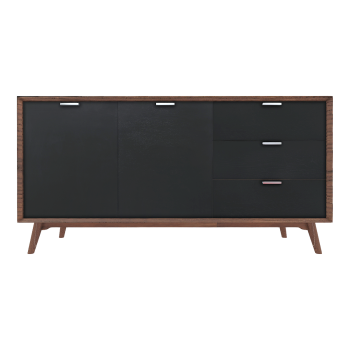
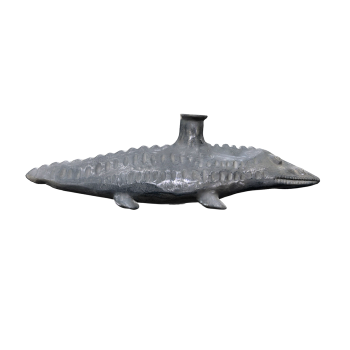
Countryside Pool Lakeside Simulation White Swan Ornament Outdoor Garden Courtyard Decoration Flower Pot

Countryside Pool Lakeside Simulation White Swan Ornament Outdoor Garden Courtyard Decoration Flower Pot

Maya style pottery engraved with golfers

Maya style pottery engraved with golfers

This is a Maya style pottery from Yucatan, Mexico, made around 600-1000 AD. The diameter of this pottery is 18.1 x 15.6 centimeters, and the overall height is 18 centimeters. This pottery depicts the image of a Maya player wearing heavy protective gear to prevent injury during the game. This pottery is currently housed in the Cleveland Museum of Art.
Ornament Crafts Xi'an Tourist Souvenirs Qin Terracotta Warriors Qin Shi Huang Clay Figurines Clay Sculptures Single Terracotta Warriors

Ornament Crafts Xi'an Tourist Souvenirs Qin Terracotta Warriors Qin Shi Huang Clay Figurines Clay Sculptures Single Terracotta Warriors

Xi'an Cultural and Creative Tourism Souvenir Terra Cotta Warriors, Terracotta Warriors and Horses, General Terracotta Warriors, Kneeling Shooting, Mercenary Sand and Stone Table Decoration

Xi'an Cultural and Creative Tourism Souvenir Terra Cotta Warriors, Terracotta Warriors and Horses, General Terracotta Warriors, Kneeling Shooting, Mercenary Sand and Stone Table Decoration

Maya pottery from the classical period

Maya pottery from the classical period

This pottery belongs to the Maya culture, originating from the late classical period of the 7th to 10th centuries AD in Central America, the region of Nibaha. It is made of ceramic and talc, with an overall size of 16.9 x 15.3 x 15.3 centimeters. This pottery may have been used as a political gift, depicting scenes of captured prisoners after battle. The pictographic characters surrounding the edges are specifically designed for this container, used for drinking high-quality beverages made from cocoa beans. This container is currently housed in the Cleveland Museum of Art.
Silver Bowl from the Sassanid Dynasty

Silver Bowl from the Sassanid Dynasty

This bowl is a cultural relic from the Sassanid Dynasty (224-651 AD), originating from Iran. It is made of silver and has an overall size of 5 x 13.4 centimeters. The people of the Sassanid dynasty attached great importance to the enjoyment of life. It is said that a good Zoroastrian should divide his day into three parts: farming, philosophical thinking, and eating, resting, and enjoying. The abundance of luxury goods in the Sassanid dynasty proves their emphasis on the last part of life. This bowl is currently housed in the Cleveland Museum of Art in the United States.
Cape of Saint Blaise

Cape of Saint Blaise

This ivory carved Cape of Saint Blaise was discovered in the 12th century in southern Italy or Sicily. Ivory as a whole: 12 centimeters. It is currently housed at the Cleveland Museum of Art. Its shape is exquisite, with a series of six carved bands, and the outer ring depicts a hunting scene. The earliest existing inventory of St. Blaise Church from 1482-85 lists an olivine decorated with silver rings and gemstones, known as the 'Cape of St. Blaise'. By the 17th century, it was said that Saint Bryce used this horn to summon believers to worship.
Xinghou Gui during the reign of King Kang of the Western Zhou Dynasty

Xinghou Gui during the reign of King Kang of the Western Zhou Dynasty

Xinghou Gui, also known as Zhou Gongyi, is a national treasure level cultural relic and a first-class national cultural relic. It was unearthed in Xingtai City, Hebei Province in 1921 and is now housed in the British Museum in the UK. This box is a utensil with four animal hanging ears, a luxurious mouth and bulging belly, decorated with elephant patterns on the belly and feet, and has early Western Zhou characteristics. There is an inscription with 68 characters that reads: "In the third month of the month, Wang Lingrong, an imperial censor, was appointed as the Marquis of Jing. He was promoted to the rank of third grade official and was a native of the state, a high-ranking official, and a mediocre official. He was appointed as the Chief Inspector, and the Emperor of Lu was on the verge of prosperity. He was forced to travel up and down, but the Emperor did not have a winter order to investigate on the right side of the Zhou Dynasty. However, he dared not do so. Shao Zhenfu League, I am a vassal of the Emperor, and I have issued a.
The Divine Wood Statue of Shintoism in Japan

The Divine Wood Statue of Shintoism in Japan

This sculpture represents a god of Shintoism, produced during the Heian period in Japan (794-1185). It is carved from a piece of wood and represents the image of a courtier during the Heian period. At that time, the royal family was endowed with divinity, to the extent that some nobles were deified and revered as gods after their death. This sculpture measures 53.3 x 47 cm and was purchased from the Cleveland Museum of Art in 1978.
Ming Dynasty gilded bronze Buddha statue of Medicine Buddha

Ming Dynasty gilded bronze Buddha statue of Medicine Buddha

This Buddha statue is currently housed in the Santa Barbara Museum of Art in the United States. This Medicine Buddha statue can be traced back to the Ming Dynasty in the 16th or 17th century and was auctioned at Christie's in Paris in 2022.
18th century Chinese gold-plated bronze statue of Bodhisattva

18th century Chinese gold-plated bronze statue of Bodhisattva

Porcelain from the Wanli period of the Ming Dynasty, titled 'Silver Gold Plated Inlaid Blue and White Porcelain Bowl'

Porcelain from the Wanli period of the Ming Dynasty, titled 'Silver Gold Plated Inlaid Blue and White Porcelain Bowl'

The blue and white porcelain bowl made during the Wanli period of the Ming Dynasty (1573-1619) is currently preserved in the Hunt Museum in England. The outer edge of the bowl is decorated with a Pegasus frame, and the bowl wall is decorated with flower spray.
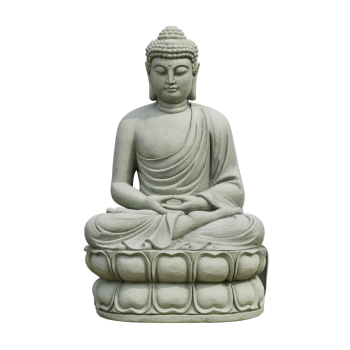
Shakyamuni Lotus Base Ornament, Great Sun Buddha, Golden Body Buddha Statue

Shakyamuni Lotus Base Ornament, Great Sun Buddha, Golden Body Buddha Statue

Lacquerware box, produced in the late 18th century during the Qianlong period

Lacquerware box, produced in the late 18th century during the Qianlong period

Chinese lacquerware is an important invention in ancient China in the fields of chemical technology and arts and crafts. It originated in the Neolithic Age, usually painted with red and decorated with black, or painted with black and decorated with red, forming a beautiful colorful world on the surface of objects with beautiful patterns. This lacquerware box is currently housed in the University of Jamaica Museum.
The Mausoleum of the First Qin Emperor Vertical Shooting Figurine

The Mausoleum of the First Qin Emperor Vertical Shooting Figurine

The standing shooting terracotta warriors are a relatively special type of soldier among the Qin terracotta warriors, unearthed in the eastern part of Pit 2. They carry crossbows and bow weapons, and together with kneeling shooting terracotta warriors, form a crossbow army formation. The standing shooting figurine is located on the formation table, dressed in light military robes, tied up in a bun, with a leather belt tied around the waist, and square toed pointed shoes on the feet. The attire is light and flexible.
Terracotta Warriors of the Mausoleum of the First Qin Emperor General

Terracotta Warriors of the Mausoleum of the First Qin Emperor General

The Terracotta Warriors of the General, also known as the Terracotta Warriors of the Army and Officials, are pottery terracotta warriors, which were unearthed in Pit 1 and Pit 2 of the Terra Cotta Warriors and Horses in Lintong District, Xi'an, Shaanxi Province.
Tang Dynasty female figurines

Tang Dynasty female figurines

The custom of burying with terracotta figures has a long history and was popular in the Tang Dynasty for its lavish burial. The craftsmanship of making terracotta warriors has also become more mature, with lifelike depictions of terracotta warriors, gorgeous clothing, and the emergence of Tang Dynasty tri colored pottery craftsmanship, which resulted in a large number of pottery artifacts being buried in noble tombs at that time. Among them, the terracotta warriors of noble women were one of the essential accompanying burial terracotta warriors.
Stone lion

Stone lion

Common anti evil items in traditional Chinese culture. A sculpture of a lion made of stone as raw material, which has artistic and ornamental value. There is usually a pair of stone lions or bronze lions outside the gate, which are usually used to match with buildings for exorcism or decoration. The earliest surviving stone lion is the one in front of Gao Yi's tomb during the Eastern Han Dynasty.
18th century Qing Dynasty copper doll "Qing Dynasty Mechanical Doll"

18th century Qing Dynasty copper doll "Qing Dynasty Mechanical Doll"

This cultural relic is an 18th century Chinese mechanical doll from the Qing Dynasty, depicting a man sitting on a lion. This man holds a spear and sits on a mythical lion (also known as the guardian lion of China). The exquisite craftsmanship of this doll is astonishing, and it is a testament to the professional skills and artistic talent of its creator or creator. The uniqueness of this doll lies in its spring driven mechanism, which allows you to appreciate the mobility of these small statues and marvel at the exquisite craftsmanship of past craftsmen even after being restored by the managers of the Krakow National Museum.
Fang Ding from the Late Shang Dynasty

Fang Ding from the Late Shang Dynasty

This Fangding (food container) from the late Shang Dynasty in the 11th century BC is now in the collection of the Minneapolis Museum of Art in the United States. This square tripod, also known as the 'square tripod', showcases an interesting development in tripod design. Although it is still a square box shaped container standing on four columnar legs, the decoration shows a tendency towards abstraction, which may have been influenced by contemporary textile design.
Ghost baboon skull specimen

Ghost baboon skull specimen

The Japanese macaque is a short tailed monkey that can grow up to 70 centimeters (28 inches) in length. It has a similar appearance to the Japanese macaque, but lacks the bright blue and red colors on its face. It has a high gender dimorphism in weight, with males weighing up to 20 kilograms (44 pounds) and females weighing up to 12.5 kilograms (28 pounds). The overall color is dark gray brown. Mature male has a pink lower lip, a white chin, a dark gray to black face, and a raised groove on the nose. The buttocks are pink, light purple, and blue. Female macaques do not have a pink chin.
Changxin Palace Lantern of the Western Han Dynasty

Changxin Palace Lantern of the Western Han Dynasty

The Changxin Palace Lantern of the Western Han Dynasty was unearthed in 1968 from the tomb of Dou Wan, wife of Prince Jing of Zhongshan, Liu Sheng, in Mancheng County, Hebei Province. It was exhibited as an exhibit at the 2010 Shanghai World Expo in China. The body of the palace lantern is a gilded whole, and the palace maid sits with both hands holding the lantern, with a peaceful and elegant expression. The lamp body is 48 centimeters high and weighs 15.85 kilograms. The design of the Changxin Palace Lantern is very clever. The palace maid holds the lantern in one hand and the sleeve in the other hand seems to be blocking the wind, which is actually a rainbow tube used to absorb oil fumes. It not only prevents air pollution but also has aesthetic value. This palace lantern is named after its placement in the Changxin Palace of Empress Dowager Dou (grandmother of Liu Sheng) and is now housed in the Hebei Museum.
The "Cloisonn é Incense Burner" produced during the Kangxi period of the Qing Dynasty

The "Cloisonn é Incense Burner" produced during the Kangxi period of the Qing Dynasty

This Chinese cultural relic is a type of incense burner, belonging to the category of metal handicrafts. It was made by craftsmen in Jingdezhen and is part of a set of altar equipment, using cloisonn é craftsmanship. This artifact is currently located on the staircase of Gallery 17 at the Fitzwilliam Museum, University of Cambridge. This artifact was donated by John McClane. It was made around the 18th century, specifically during the Kangxi period.
Maitreya Buddha Stele

Maitreya Buddha Stele

This is an artwork created in 563 AD and is currently housed in the Minneapolis Museum of Art in the United States. Although this work is relatively small in scale, its exquisite carvings showcase the complete image found on larger Buddha statues. In addition to the Maitreya statue in the center, the engraved halo, and the bodhisattvas on both sides, flying heavens and dragons also appear on the flame shaped mandalas at the top and bottom. The back of the stone tablet is engraved with a 69 character inscription, which records the name of the donor who commissioned the production of this work and dedicated it in 563.
The stone carved Buddha statue on the pagoda is located in Kathmandu, Nepal

The stone carved Buddha statue on the pagoda is located in Kathmandu, Nepal

The four Buddha statues carved on the pagoda are located in a temple in the Swayambunat complex in Kathmandu, the capital of Nepal, and were built in the 16th century. The architectural complex of Swayambunat includes a pagoda, various temples and shrines, as well as Tibetan monasteries, museums, and libraries.
Panlong Pillar Stone Carving, located in Zhonghe Guangji Palace, Xinbei City, Taiwan, China, China

Panlong Pillar Stone Carving, located in Zhonghe Guangji Palace, Xinbei City, Taiwan, China, China

Shilongzhu is a traditional form of Chinese architecture that has been carved from natural stone throughout history. It is commonly used in ancient palaces, corridors, tombs, and other places. In modern times, it is often installed in squares, temple corridors, and ancestral halls to provide load-bearing and decorative effects. Due to the carving of dragon patterns on its pillars, it is called a stone dragon pillar or a stone carved coiled dragon pillar. The stone dragon pillar is usually carved from lapis lazuli, with a circular or square base, known as the Sumeru or Lotus Seat. The pillar is engraved with a coiled dragon rising and falling to look at each other, and decorated with auspicious cloud patterns. The bottom of the pillar is engraved with water patterns or mountains, symbolizing auspiciousness, wealth, and prosperity.
The statue of Gandhara Buddha Head from the fourth century Gandhara civilization

The statue of Gandhara Buddha Head from the fourth century Gandhara civilization

This Chinese cultural relic is a sculpture called "Gandarafo Head", which was created between 300-399 AD. This sculpture is currently housed in the National Museum of the Netherlands. The characteristics of this sculpture are the raised or bun on the head (ushnisha) and the raised point on the forehead (urna), which are standard features of Buddhism. The wavy hair combed back from the face is a characteristic of the Gandhara Buddha statue. In the early decades of the 1st century AD, the first batch of Buddha statues began to emerge. The dimensions of this sculpture are 24.0 centimeters high, 15.0 centimeters wide, and 11.8 centimeters deep.
Shanru Dragon King Stone Statue

Shanru Dragon King Stone Statue

Shanru Dragon King, also known as Shannu Dragon King, is one of the eight Dragon Kings in Japanese mythology - Rain God Dragon. According to legend, the monk Konghai brought about the appearance of the benevolent Dragon King during a famous rain seeking competition in 824 AD. This statue is located at Longquan Temple on Mount Daifeng in Japan.
Buddhist Gatekeeper Stone Statue

Buddhist Gatekeeper Stone Statue

The statue of the gatekeeper god from the 8th century is now housed in the Minneapolis Museum of Art in the United States. This type of statue is usually located at the entrance of Buddhist cave sanctuaries and temple complexes, with the purpose of obstructing any forces opposing Buddhist thought. Therefore, they are vividly depicted as energetic postures, threatening facial expressions, exaggerated muscle structures, and ready to face all threats. The basic posture of this rare Tang Dynasty work, with its surrealism and complete plasticity, represents a style that had a huge impact on the Buddhist guardian image carved during the Kamakura period in Japan (1185-1333).
Bodhidharma statue

Bodhidharma statue

Bodhidharma was a Buddhist monk who lived in the 5th or 6th century. Traditionally, he is considered the successor of Zen Buddhism to China and is regarded as the first patriarch of China. According to Chinese legend, he also began physical training for Shaolin monks, leading to the birth of Shaolin Kung Fu. In Japan, he is called Damo. Regarding the artistic depiction of Bodhidharma, he is depicted in Buddhist art as a non Chinese with a hot temper, thick beard, and wide eyes. He is referred to as' blue eyed Hu 'in Zen texts.
Nirvana Buddha statue

Nirvana Buddha statue

Nirvana Buddha is a Buddha statue depicting the Buddha's entry and death, also known as Sleeping Buddha, Sleeping Buddha, or Sleeping Buddha. It is manifested in the form of a Buddha statue depicting the appearance of Shakyamuni entering and disappearing.
Cloisonn é teapot from the late Qing Dynasty

Cloisonn é teapot from the late Qing Dynasty

This teapot is a cloisonn é craft from the late Qing Dynasty in the 19th century, currently housed in the Bleschunov Municipal Personal Collection Museum in Odessa, Ukraine. Cloisonn é, officially known as "Copper Cloisonn é Enamel" and commonly referred to as "Enamel Cloisonn é", is one of China's famous special metal crafts. During the Ming Dynasty's Jingtai period, this craftsmanship reached its peak, producing the most exquisite and famous crafts. Therefore, later generations referred to this type of metal artifact as "Cloisonn é".
The Louvre Museum in Paris, France, 1686 "Four Captive Sculptures"

The Louvre Museum in Paris, France, 1686 "Four Captive Sculptures"

These prisoners were taken from the pedestal of the Victory Square statue, representing the country defeated by the Treaty of Nijmegen (1679). Everyone expressed different reactions to imprisonment: resistance, hope, resignation, or sadness. They were created by Martin Desjardins, a renowned Dutch sculptor who was active during the reign of Louis XIV. Four defeated countries: symbolizing the four countries that were defeated at the time of the signing of the Treaty of Nijmegen. Each represents a different era of humanity and a different attitude towards imprisonment.
Porcelain from the Yongzheng period of the Qing Dynasty, titled 'Flat bottomed Oval Vase from the Yongzheng Period'

Porcelain from the Yongzheng period of the Qing Dynasty, titled 'Flat bottomed Oval Vase from the Yongzheng Period'

The vase is exquisitely painted, with a flat bottom, an oval shaped body, a cylindrical neck, and a flat, trumpet shaped mouth. The Qing Dynasty of China (1644-1912). Collected by the National Military Museum of Spain (Toledo, Spain).
During the Northern Song Dynasty, Ru Kiln Tianqing Glazed Bowl

During the Northern Song Dynasty, Ru Kiln Tianqing Glazed Bowl

Ru porcelain, originated in the mid Tang Dynasty and gained great fame in the Northern Song Dynasty, ranking first among the "Five Famous Ceramics" of the Song Dynasty. It was named after its production in Ruzhou City and has formed a prosperous scene of "a hundred miles of scenery on both sides of the Ru River, with continuous fire everywhere". It occupies a significant position in the history of Chinese ceramics. Ru porcelain's sky blue glazed porcelain contains agate in the glaze, with a green and vibrant color. The glaze is rich and shiny, like a pile of grease, and looks like jade. The sound of clasping is like a fragrance, and the texture is very good. There is a saying that "it looks like jade, not jade, but better than jade". The color is elegant and natural, and it is known as "the rain falls on the sky and the clouds break through".