Late Shang Dynasty Bronze Square Cup

Late Shang Dynasty Bronze Square Cup

This square cup is a cultural relic from the late Shang Dynasty (13th century BC to 12th century BC), currently housed in the Minneapolis Museum of Art in the United States. Cup is one of the earliest Chinese bronze wares, dating back to the Erlitou period (2000 BC to 1600 BC). Archaeological excavations have found that there are more toasts and cups (another type of wine cup) than cauldrons (vessels used to hold food). Drinking was popular during the Shang Dynasty and early Western Zhou Dynasty (1600 BC to 977 BC), but gradually lost favor in the late Western Zhou Dynasty (885 BC to 771 BC) and eventually disappeared.
The Buddha Stele from the Eastern Wei Dynasty

The Buddha Stele from the Eastern Wei Dynasty

This stone monument is a cultural relic from the Eastern Wei Dynasty in China (534-550 AD) and is currently housed in the Cleveland Museum of Art in the United States. According to the inscription, this stone tablet was commissioned by King Yuanning of Gaoping in 537 AD to commemorate his deceased concubine, hoping that it could take her to the Western Paradise. Here, the Buddha's robe displays carefully arranged decorative patterns (large U-shaped folds and scallop shaped folds at the hem), combining linear rhythm and ordered symmetry. The mandala (almond shaped halo) on the edge of the flame echoes the linear eloquence of Chinese painting.
Late Shang Dynasty Bronze Cup

Late Shang Dynasty Bronze Cup

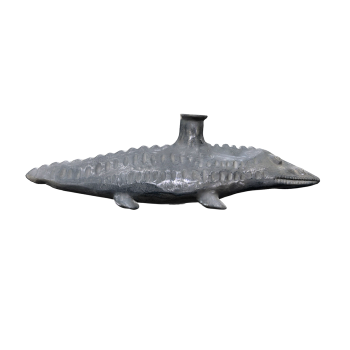
This bronze wine vessel is a relic from the late Shang Dynasty (13th century BC to 12th century BC) and is currently housed in the Minneapolis Museum of Art in the United States. This deep boat shaped decanter showcases almost perfect craftsmanship.
Bronze pole top decoration from 12th to 11th century BC

Bronze pole top decoration from 12th to 11th century BC

This bronze ware is an ancient Chinese pole top decoration, featuring a combination of four masks on its pointed tip. It was originally decorated at the end of a pole. A powerful taotie (composite animal) mask appears on one side of the top, with a downward facing C-shaped angle. The monster's face formed a mask on the human head; It has a wide nose typical of early masks. On the other side, a ram's head, with its horns pointing downwards, was biting a head resembling a taupe. This artifact can be traced back to the 12th to 11th centuries BC and is now housed in the Minneapolis Museum of Art in the United States.
Terra Cotta Warriors in the the Mausoleum of the First Qin Emperor in Xi'an

Terra Cotta Warriors in the the Mausoleum of the First Qin Emperor in Xi'an

The Terra Cotta Warriors, namely the Terra Cotta Warriors in the the Mausoleum of the First Qin Emperor, also referred to as the Terra Cotta Warriors or the Terracotta Warriors, are the first batch of national key cultural relics protection units and the first batch of Chinese world heritage sites. They are located in the Terra Cotta Warriors pit 1.5 kilometers east of the the Mausoleum of the First Qin Emperor in Lintong District, Xi'an, Shaanxi Province. Terra Cotta Warriors is a category of ancient tomb sculptures. In ancient times, human sacrifice was practiced, and slaves were considered as accessories of the slave owner during their lifetime. After the slave owner's death, the slaves were buried as sacrificial objects with the slave owner. The Terra Cotta Warriors are burial objects in the shape of soldiers and horses (chariots, horses, soldiers).
Terra Cotta Warriors and Horses in the the Mausoleum of the First Qin Emperor in Xi'an - Terracotta Horses

Terra Cotta Warriors and Horses in the the Mausoleum of the First Qin Emperor in Xi'an - Terracotta Horses

The Mausoleum of the First Qin Emperor Terra Cotta Warriors is the tomb of Ying Zheng, the first feudal emperor in Chinese history (259-210 BC), located at the north foot of Lishan Mountain, 3.5 kilometers east of Lintong District, Xi'an, Shaanxi Province. The horse figurine is the same size as a real horse, with straight ears and wide open eyes, and full of energy. According to the archaeological survey, the Terra Cotta Warriors were arranged into an array, simulating the military establishment and fighting patterns during the period when Qin Shihuang unified the six countries. This array of Terra Cotta Warriors includes thousands of terracotta warriors, cavalry, generals and horses.
Terra Cotta Warriors in the the Mausoleum of the First Qin Emperor in Xi'an - Terra Cotta Warriors kneeling

Terra Cotta Warriors in the the Mausoleum of the First Qin Emperor in Xi'an - Terra Cotta Warriors kneeling

The Terra Cotta Warriors, namely the Terra Cotta Warriors in the the Mausoleum of the First Qin Emperor, also referred to as the Terra Cotta Warriors or the Terracotta Warriors and Horses of the Qin Dynasty, are among the first batch of national key cultural relics protection units, the first batch of Chinese world heritage sites, and are also known as one of the world's top ten rare treasures of ancient tombs. It is located in the Terra Cotta Warriors pit 1.5 kilometers east of the the Mausoleum of the First Qin Emperor in Lintong District, Xi'an, Shaanxi Province. Terra Cotta Warriors is a category of ancient tomb sculptures. In ancient times, human sacrifice was practiced, and slaves were considered as accessories of the slave owner during their lifetime. After the slave owner's death, the slaves were buried as sacrificial objects with the slave owner. The Terra Cotta Warriors are burial objects in the shape of soldiers and horses (chariots, horses, soldiers).
Song Dynasty Ru Kiln Fenghua Paper Hammer Bottle, housed in the National Palace Museum in Taipei

Song Dynasty Ru Kiln Fenghua Paper Hammer Bottle, housed in the National Palace Museum in Taipei

This paper hammer bottle has a total height of 22.4 centimeters, a diameter of 4.4 centimeters, and a bottom diameter of 8.6 centimeters. Round mouth slightly luxurious, with embedded copper buckle, slender neck, sloping shoulders, cylindrical belly, flat bottom without feet. The entire vessel is coated with sky blue glaze, and there are five small burn marks on the outsole. A circle of glaze has been removed from the bottom and coated with brown juice, revealing a yellowish color in the center, which may be caused by a cushion mark. The bottom of the paper hammer bottle is engraved with a poem by Emperor Qianlong titled 'Ru Kiln Pink Green Offering Hua Paper Hammer Bottle'. This cultural relic was produced in the second half of the 11th century to the early 12th century of the Northern Song Dynasty and is classified as a national treasure. It is currently housed in the National Palace Museum in Taipei.
Ming Dynasty Chenghua Year old Blue and White Infant Play Chess Jar

Ming Dynasty Chenghua Year old Blue and White Infant Play Chess Jar

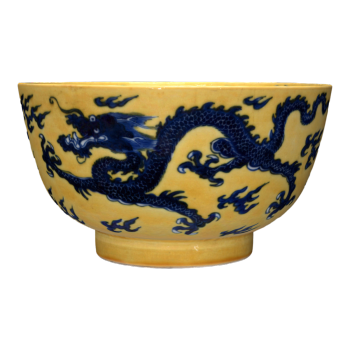
The Ming Chenghua Dynasty (1465-1487 AD, reign name of Emperor Xianzong Zhu Jianshen) lasted for 23 years, and the production of Jingdezhen Imperial Kiln Factory fully resumed normal, which was an important historical period in the history of Han Chinese ceramic firing. Chenghua blue and white porcelain can be regarded as the representative of blue and white porcelain art in the mid Ming Dynasty. Its outstanding features are exquisite and exquisite, with delicate and delicate ends, which have been highly praised by later generations.
Qing Dynasty Ge glazed colorful character bottle

Qing Dynasty Ge glazed colorful character bottle

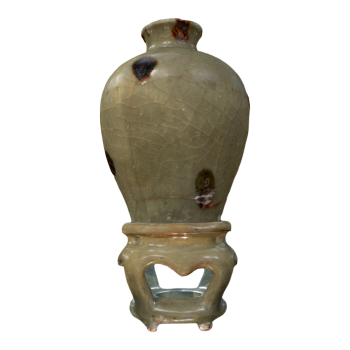
Ge Kiln is one of the five famous kilns of the Song Dynasty. The characteristics of Ge kiln porcelain are glazed inside and outside, uniform and smooth, crystal clear and moist. Not only does it have a clear porcelain sound, but it also has a tall and elegant shape with soft and smooth contours.
The stone lion statue in front of Datsan Gunzechounei in St. Petersburg, Russia

The stone lion statue in front of Datsan Gunzechounei in St. Petersburg, Russia

Datsan Gunzechounei is a large Buddhist temple in St. Petersburg, Russia, and also the northernmost Buddhist temple in Russia. The Chinese guardian lion in front of this temple is an important decorative and symbolic element. In Chinese culture, these stone lions are usually placed in front of important buildings such as palaces, official residences, temples, and cemeteries to symbolize power and status, and to protect buildings from evil and negative energy.
Guan Yu on horseback

Guan Yu on horseback

This is a 16th century artwork, currently housed in the Minneapolis Museum of Art in the United States. The statue is made of gold-plated bronze and measures 51.4 x 41.9 x 18.7 centimeters. Guan Yu (? -220 AD), also known as Yunchang and Changsheng, also known as Meiran Gong, Guan Gong, Wusheng, and Zhuangmu Hou, was born in Jiexian County, Hedong Commandery (now Jiezhou Town, Yanhu District, Yuncheng City, Shanxi Province). A famous general in the late Eastern Han Dynasty.
Lucky Beast (Foot End) Bronze Incense Burner

Lucky Beast (Foot End) Bronze Incense Burner

This cultural relic is one of a pair of lion incense burners, produced in the 17th century. Now collected at the Minneapolis Museum of Art in the United States. These lions look like guardian lions, known as auspicious beasts (Lu Duan), each with a unicorn. They are mythical animals endowed with the ability to distinguish between good and evil. These legendary animals appear in pairs and are used to stand on both sides of the imperial throne in the Forbidden City, symbolizing the dignity, virtues, and wisdom of the royal family. The size of this pair of incense burners is 57.2 x 33 x 61 centimeters, made of bronze and decorated with splashed gold.
Buddha seated statue, produced in the late 19th century

Buddha seated statue, produced in the late 19th century

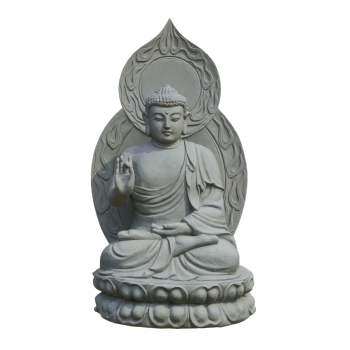
This piece is made of gold-plated bronze and measures approximately 53.3 centimeters in size. This work was created by an unknown Thai artist in the late 19th century. This Buddha statue depicts the Buddha dressed in the attire of a prince, sitting on a carpet on a beautiful throne. This depiction became widely circulated after King Rama I (reigned 1782-1809) defeated the Burmese invasion and established the Chakri dynasty that ruled present-day Thailand. In 1917, this sculpture was collected at the Mia Museum. This is the first Asian art piece to enter the museum's collection.
Terra Cotta Warriors in the the Mausoleum of the First Qin Emperor in Xi'an

Terra Cotta Warriors in the the Mausoleum of the First Qin Emperor in Xi'an

The Terra Cotta Warriors, namely the Terra Cotta Warriors in the the Mausoleum of the First Qin Emperor, also referred to as the Terra Cotta Warriors or the Terracotta Warriors and Horses of the Qin Dynasty, are among the first batch of national key cultural relics protection units, the first batch of Chinese world heritage sites, and are also known as one of the world's top ten rare treasures of ancient tombs. It is located in the Terra Cotta Warriors pit 1.5 kilometers east of the the Mausoleum of the First Qin Emperor in Lintong District, Xi'an, Shaanxi Province. Terra Cotta Warriors is a category of ancient tomb sculptures. In ancient times, human sacrifice was practiced, and slaves were considered as accessories of the slave owner during their lifetime. After the slave owner's death, the slaves were buried as sacrificial objects with the slave owner. The Terra Cotta Warriors are burial objects in the shape of soldiers and horses (chariots, horses, soldiers).
Cloisonne

Cloisonne

Cloisonn é, one of the famous special metal crafts in China, reached its peak in production during the Jingtai period of the Ming Dynasty, producing the most exquisite and famous crafts. Therefore, later generations referred to this metal artifact as "Cloisonn é". Cloisonn é, officially known as "Copper Cloisonn é Enamel" or "Enamel Cloisonn é", is a type of utensil made of soft flat copper wire that is cut into various patterns and welded onto a copper mold. The enamel is then filled into the patterns and fired. Due to its popularity during the Jingtai period of the Ming Dynasty and mature production techniques, the enamel glaze used was mostly blue, hence the name "Jingtai Blue".
Vietnamese vase, produced in the late 15th century

Vietnamese vase, produced in the late 15th century

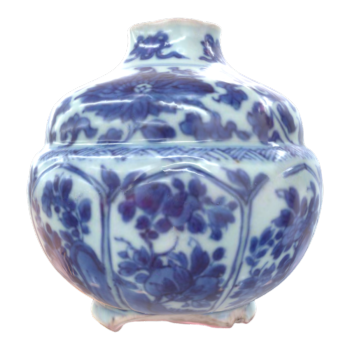
This is a late 15th century artifact collected at the Minneapolis Museum of Art. Its decorative patterns include peonies, lotus flowers, birds, flowers, animals, fish, and even landscapes. These patterns are all painted in underglaze blue with a wavy background. The bottleneck is decorated with cloud vortices, there are banana leaves below the bottle mouth, and lotus leaves around the bottom of the bottle. The inspiration for Vietnamese blue and white porcelain comes from China. However, Vietnamese ceramic artists are not just imitators, they have developed a series of decorative patterns. This elegant pear shaped bottle is closely related to the Chinese prototype in both shape and decoration.
During the Qing Dynasty, Kangxi's Five Colored Tiangong created the "Silkworm friendly" Tianqiu Bottle

During the Qing Dynasty, Kangxi's Five Colored Tiangong created the "Silkworm friendly" Tianqiu Bottle

The shape of the Tianqiu bottle is small mouth, straight neck, ample shoulder, false ring foot, and slightly concave sand bottom. Because the belly of the round ball is huge, as if descending from the sky, it is named
Folding Fan of Bull Bone Paper during the Qing Dynasty

Folding Fan of Bull Bone Paper during the Qing Dynasty

Ceramic rooster, produced in ancient Chinese Tongguan kiln

Ceramic rooster, produced in ancient Chinese Tongguan kiln

Tongguan Kiln is one of the five famous kilns in ancient China, located in Tongguan Street, Wangcheng District, Changsha, Hunan Province. Due to its unique porcelain painting skills, it opened up a new era in the history of ceramics and became an important pivot on the "Maritime Ceramic Road" of the Tang Dynasty. During its peak, its products were exported to 29 countries and regions. This ceramic is currently collected at the Changsha Tongguan Kiln Ceramic Research Institute.
Bronze artifact from Sanxingdui during the ancient Shu Kingdom period, titled 'Bronze Beast Head Crown Portrait'

Bronze artifact from Sanxingdui during the ancient Shu Kingdom period, titled 'Bronze Beast Head Crown Portrait'

The cultural relic is a bronze artifact from Sanxingdui, measuring 40.2 centimeters in height, 23.3 centimeters in width, and weighing 3 kilograms. It was produced in Sanxingdui between 1250-1100 BC. This cultural relic was excavated in the second pit of Sanxingdui and is now collected in the Sanxingdui Museum with the collection number 0028. The Sanxingdui Museum is located in Guanghan City, Sichuan Province and is a public heritage museum. The museum is located at the northeast corner of the Sanxingdui site, near the Duck River in the western part of Guanghan City. The museum is 38 kilometers away from Chengdu. The infrastructure of the museum began construction in August 1992 and was officially opened to the public in October 1997.
Tianqiu Bottle, a Five Colored Public Case Figure of Kangxi in the Qing Dynasty

Tianqiu Bottle, a Five Colored Public Case Figure of Kangxi in the Qing Dynasty

The function of the Tianqiu vase in the Qing Dynasty was to display porcelain. During the Kangxi period of the Qing Dynasty, Tianqiu vases were fired, but they were mainly popular during the Yongzheng and Qianlong dynasties. They were mostly fired by royal kiln factories for display in the palace and reward to ministers. In the early Qing Dynasty, Kangxi and Yongzheng had relatively thick and short necks, and the mouth was mostly straight. Moreover, the height of the Tianqiu vase was around 50-60cm.
Poseidon, the ancient Greek sea king, is depicted in blue bronze with a full body

Poseidon, the ancient Greek sea king, is depicted in blue bronze with a full body

Poseidon (Greek: ∋οσειδῶν, English: Poseidon) is a Greek mythological sea god and one of the twelve Olympian gods. He was also the god in charge of horses. Legend has it that he gave humans the first horse, which was a golden chariot driven by a white horse. He was the brother of Zeus and Hades. Poseidon's image is usually described as a strong man wearing a sea god robe, holding a trident. He is in charge of the ocean, waves, marine life, and navigation, possessing strong power and the ability to control the ocean.
Qing Dynasty Qianlong Blue and White Pink Baby Play Lucky Celebration More than Eight Square Vases

Qing Dynasty Qianlong Blue and White Pink Baby Play Lucky Celebration More than Eight Square Vases

The Qing Dynasty Qianlong Blue and White Pink Baby Play Lucky Celebration Eight Square Vase was sold for HKD 55 million at Sotheby's 2015 Spring Auction "Chinese Art Treasures" in Hong Kong on April 7, 2015, with a transaction price of HKD 63.48 million.
During the Qianlong period of the Qing Dynasty, the currency was Qianlong Tongbao copper coins

During the Qianlong period of the Qing Dynasty, the currency was Qianlong Tongbao copper coins

Qianlong Tongbao is a copper coin minted during the reign of Emperor Qianlong of the Qing Dynasty (1736-1795). The Manchu script on the back is quite complex. You can refer to Huaguangpu's "Catalogue of Ancient Chinese Coins", which provides detailed prices and coin rubbings. The production bureaus of Qianlong Tongbao include 20 bureaus such as Baoquan, Baoyuan, Baozhi, and Baozhe, with materials including brass, bronze, and red copper. The Qianlong Tongbao coin is written in Manchu as "Qianlong Tongbao", with a value of "one", meaning auspicious. This coin has a small face value, a small circulation range, fine and even strokes, and smooth writing.
Ming Dynasty Xuande Glazed Red Wheel Flower Embracing Moon Vase

Ming Dynasty Xuande Glazed Red Wheel Flower Embracing Moon Vase

Baoyue Bottle is a type of porcelain from the Qing Dynasty, also known as the "Baoyue Bottle". Its characteristics are small mouth, straight neck, and two ears on the neck side. It is named after the round moon like belly of the bottle. The Jingdezhen kiln during the Yongle and Xuande periods of the Ming Dynasty was the main production site for holding moon vases.
Qing Dynasty boxwood carving "Dao Xian He Xian Gu"

Qing Dynasty boxwood carving "Dao Xian He Xian Gu"

This is a sculpture called 'Taoist Immortal He Xiangu', made in the 1700s during the Qing Dynasty of China (1644-1911). This sculpture is made of boxwood, with a base of colored ivory and an overall height of 13.5 centimeters. He Xiangu is one of the Eight Immortals of Taoism. It is said that she was a real person during the Tang Dynasty, originally named He Qiong. In this exquisite carving, He Xiangu sits calmly on a twisted and multi jointed raft surrounded by green ivory waves. In front of her was a bamboo basket filled with items related to Taoist immortality, while she held a branch of Ganoderma lucidum.
Marble bust of the ancient Greek god Hercules

Marble bust of the ancient Greek god Hercules

Hercules (Ancient Greek: Ἡρακλῆς, Modern Greek: Iraklis, English: Heracles, also translated as Heracles, Heracles, Hercules, Hercules) is the greatest hero and demigod in ancient Greek mythology. After birth, he was initially named Alcides. The son of King Zeus and Alcmene, born with infinite strength.
Terra Cotta Warriors in the the Mausoleum of the First Qin Emperor

Terra Cotta Warriors in the the Mausoleum of the First Qin Emperor

The Terra Cotta Warriors, namely the Terra Cotta Warriors in the the Mausoleum of the First Qin Emperor, also referred to as the Terra Cotta Warriors or the Terracotta Warriors, are among the first batch of national key cultural relics protection units, the first batch of Chinese world heritage sites, and are known as one of the world's top ten rare treasures of ancient tombs. It is located in the Terra Cotta Warriors pit 1.5 kilometers east of the the Mausoleum of the First Qin Emperor in Lintong District, Xi'an, Shaanxi Province. Terra Cotta Warriors is a category of ancient tomb sculptures. In ancient times, human sacrifice was practiced, and slaves were considered as accessories of the slave owner during their lifetime. After the slave owner's death, the slaves were buried as sacrificial objects with the slave owner. The Terra Cotta Warriors are burial objects in the shape of soldiers and horses (chariots, horses, soldiers).
The sculpture of "Terpsichore" (Goddess of Song and Dance)

The sculpture of "Terpsichore" (Goddess of Song and Dance)

Terpsichore "is an ancient Roman statue. In Greek mythology, Terpsichore is one of the nine Muses and the goddess of dance and choir. Her name comes from ancient Greek, meaning 'joy of dance'. She is usually depicted sitting, holding strings, and accompanying dancers and choirs with her music. This statue is currently housed in the Vatican Museums in Italy.
The 18th century cultural relic seal "The Annunciation Seal of the Virgin Mary" in Bratislava

The 18th century cultural relic seal "The Annunciation Seal of the Virgin Mary" in Bratislava

This artifact is an 18th century seal of the Annunciation of the Virgin Mary from the Bratislava Monastery. This seal is made of silver and is installed on an iron device for a sealing machine. The height of the seal is 5.1 centimeters. Visit this cultural relic at the Franciscan Church of the Annunciation in Bratislava. The church is the oldest religious building in Bratislava, originally Gothic in style, but after multiple damages and reconstructions, the current nave arch is Renaissance style. Inside the church, you can see the Baroque style main altar with a glass painting of the Virgin Mary on it. I hope this information is helpful to you!
Statue of Gandhi and the Goat

Statue of Gandhi and the Goat

This sculpture is an exhibit located at the Gandhi Museum in Delhi, India. This exhibit depicts a scene of Gandhi and a goat. Gandhi once swore not to consume milk and buffalo milk as a protest against animal abuse. But under the persuasion of his wife and doctor, he eventually agreed to drink goat milk.
The statue of King Vishnu

The statue of King Vishnu

This model depicts Visravana, also known as the Heavenly King, in Japan. In Buddhism, the Bodhisattva Samantabhadra is one of the Four Heavenly Kings and is often depicted as a deity protecting Buddhism and the Buddhist world. This sculpture is currently located at the Guimet Museum in France.
The head of the sarcophagus of Vice King Merimose, a cultural relic from the 18th Dynasty of Egypt, is a limestone coffin

The head of the sarcophagus of Vice King Merimose, a cultural relic from the 18th Dynasty of Egypt, is a limestone coffin

Cultural relics from the 18th Dynasty of the New Kingdom of Egypt, consisting of fragments of the head of the sarcophagus of Vice King Merimose, were made during the reign of Amenhotep III from 1390 BC to 1352 BC and are currently housed in the British Museum.
The Plate with Winged Griffon

The Plate with Winged Griffon

The 'Plate with Winged Griffin' is a cultural relic located at the Crancliff Art Museum, made of silver and measuring 4 x 32 centimeters (1 9/16 x 12 5/8 inches) in diameter. This work was made during the Hephtalite period (6th to 7th centuries) in the Soghdia region, around 500-600 AD. This work depicts a winged griffin, a mythical creature often depicted as a mixture of lion and eagle, symbolizing strength and nobility.