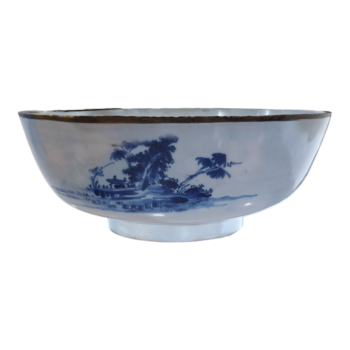
Porcelain from the Kangxi period of the Qing Dynasty: "Porcelain Salt Bottles from the Kangxi Period of the Qing Dynasty"

Porcelain from the Kangxi period of the Qing Dynasty: "Porcelain Salt Bottles from the Kangxi Period of the Qing Dynasty"

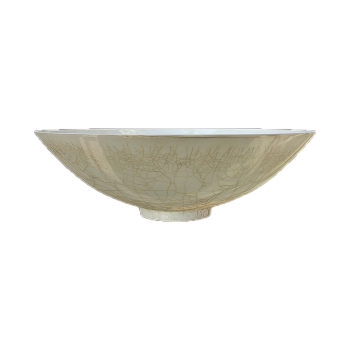
This Chinese cultural relic is a porcelain called "Porcelain Salt Bottle from the Kangxi Period of the Qing Dynasty". It was fired during the Kangxi period of China (1662-1722) and is currently housed in the Krakow Salt Mine Museum in Poland. Before the development of porcelain production technology in Europe, porcelain from foreign countries had already been imported since the Middle Ages, and their prices often exceeded those of similar silverware. For many years, they have only been used for decoration, while their fashion trends continue to spread. These products have aroused the curiosity of European buyers due to their rich and exotic patterns.
Bronze ware from the Six Dynasties period, 'Six Dynasties Bronze Chicken shaped Incense Burner'

Bronze ware from the Six Dynasties period, 'Six Dynasties Bronze Chicken shaped Incense Burner'

This cultural relic is a bronze vessel called "Censer, bird shaped", which was created during the Six Dynasties period in China (220-589 AD). This incense burner is currently housed in the British Museum. The shape of this incense burner is a rooster with a chick. It is made of bronze and the size of this incense burner is 6 inches in height.
Jingdezhen Blue and White Porcelain Vase "from the Kangxi period of the Qing Dynasty

Jingdezhen Blue and White Porcelain Vase "from the Kangxi period of the Qing Dynasty

This Chinese cultural relic is a porcelain vase from the Kangxi period of the Qing Dynasty (1662-1722). The vase is made of transparent and colorless underglaze blue and white porcelain with cobalt pigment, fired in Jingdezhen, and is now collected in the Smithsonian Museum.
The Tiberius Monument at the Niejmegenwalhof Museum in the Netherlands

The Tiberius Monument at the Niejmegenwalhof Museum in the Netherlands

The Tiberius Pfeiler Monument in Nijmegen is a historical monument located in the Dutch city of Nijmegen. This monument was built in memory of Emperor Tiberius of the ancient Roman Empire. Built in the 1st century, it is one of the ruins of the Roman era. It is built of stone and sandstone, with a height of about 4.5 meters. The monument was originally part of a temple, dedicated to commemorating the achievements and reign of Emperor Tiberius. It is the largest and oldest Roman monument in the Netherlands, and can now be seen at the Warhof Museum.
Marble lion statue

Marble lion statue

Since the Han Dynasty (206 BC to 220 AD), lion statues have traditionally stood in front of Chinese imperial palaces, royal tombs, government offices, temples, as well as the residences of government officials and wealthy people, and are considered to have a strong mythological protective effect. They are also used in other art fields, such as door knockers and pottery. Paired lion statues are still a common decorative and symbolic element at the entrances of buildings such as banks, government agencies, and police stations.
Gold Coin Bitcoin Foreign Coin Commemorative Coin

Gold Coin Bitcoin Foreign Coin Commemorative Coin

Porcelain from the Kangxi period of the Qing Dynasty: Painted pottery bowls during the Kangxi period

Porcelain from the Kangxi period of the Qing Dynasty: Painted pottery bowls during the Kangxi period

Colorful glazed statue of Wei Tuo painted in the Ming Dynasty

Colorful glazed statue of Wei Tuo painted in the Ming Dynasty

This artifact is a Bodhisattva named "Weituo", a statue from the Ming Dynasty (1368-1644) in China. This ceramic artifact is currently housed in the National Museum of Scotland. The prototype of Weituotian is Shijiantuotian, the son of Brahmanism's Great Self in Heaven. Shijiantuo has over twenty names. In addition to Shijiantuo, common ones include Kumaraj, Kajiya, Shanfan, Nengzhou, and the Six Faced Child. The common image is a two armed young male war god, and there are also six sided images.
Terracotta Warriors and Horses of the Qin Dynasty

Terracotta Warriors and Horses of the Qin Dynasty

The Terra Cotta Warriors, namely the Terra Cotta Warriors in the the Mausoleum of the First Qin Emperor, also referred to as the Terra Cotta Warriors or the Terracotta Warriors, are among the first batch of national key cultural relics protection units and the first batch of Chinese world heritage sites. A charioteer refers to a soldier on a chariot, excluding the rider and driver. There are usually two soldiers on a chariot, namely the left chariot figurine and the right chariot figurine. The figurine on the left side of the carriage is dressed in a long robe, covered in armor, with leg guards on the shin and a crossbeam on the head. It holds weapons such as spears, spears, and halberds in its left hand, and presses the carriage in its right hand. The attire of the figurine on the right side of the car is the same as that of the figurine on the left side, but the posture is opposite. They are both the main force of tank warfare, but according to literature records, they have certain differences in weapon configuration and combat responsibilities.
Standing Arhat, a statue in the Song Dynasty

Standing Arhat, a statue in the Song Dynasty

This Chinese cultural relic is a sculpture named "Upright Arhat", which is a Chinese work in the 6th century AD. This sculpture is currently housed in the Minneapolis Museum of Art in the United States.
Bronze vessels from the Eastern Zhou Dynasty, such as the Bronze Shengding

Bronze vessels from the Eastern Zhou Dynasty, such as the Bronze Shengding

This Chinese cultural relic is a bronze vessel called "Shengding", which was cast around 575 BC. Shengding "refers to a type of tripod with a flat bottom and a prominent waist. The word 'sheng' refers to the offerings provided within it. There are six Kui dragons climbing towards the lid in high relief around the body of the Ding. The surface is decorated with interwoven dragons, engraved with scale patterns, and overlapping feather like patterns. Although most of the decorations are made using traditional block casting bronze techniques, the six dragons, with their complex, perforated shapes, were individually crafted using the lost wax method. This cauldron is currently housed in the Minneapolis Museum of Art in the United States.
Bronze artifact from the Qin Dynasty, 'Qin Yangling Tiger Talisman'

Bronze artifact from the Qin Dynasty, 'Qin Yangling Tiger Talisman'

The Qin Yangling Tiger Talisman, a bronze artifact of the Qin Dynasty, was a military talisman issued by Emperor Qin Shi Huang to the guards of Yangling. It is said to have been unearthed in Lincheng, Zaozhuang City, Shandong Province and is now housed in the National Museum of China. The Qin Yangling Tiger Talisman is 8.9 centimeters long, 2.1 centimeters wide, and 3.4 centimeters high, in the shape of a lying tiger, which can be divided into two parts. The left and right neck backs of the tiger each have the same 12 character engraved gold seal script: "The talisman of the armored soldiers is on the right side of the emperor and on the left side of Yangling." Due to its age, the mating area has rusted to death and cannot be separated.
Bronze ware from the Shang Dynasty, titled 'Fuhao Haozun'

Bronze ware from the Shang Dynasty, titled 'Fuhao Haozun'

This cultural relic is a bronze vessel called "Fuhao Haozun", which is one of the two owl shaped statues from the Shang Dynasty. This owl shaped statue was discovered in 1976 at the Fuhao Tomb in Anyang City, Henan Province, China. The owl shaped statue is divided into two parts: the detachable owl head and the hollow body of the bird. Animal shaped vessels are almost the only known bronze sculptures from the Shang Dynasty. This owl is one of the oldest and most naturalistic surviving owl shaped statues. Its form showcases the influence of Anyang, the capital of the Shang Dynasty, in the north, but the style and casting techniques of the vessels indicate that it is related to the bronze tradition of the Yangtze River region in southern and central China. The cultural relics are currently collected in the National Museum of China.
19th century Japanese ivory root sculpture "Mother of Ghosts Capturing Ghosts"

19th century Japanese ivory root sculpture "Mother of Ghosts Capturing Ghosts"

This artifact is an ivory root sculpture called "Ghost Mother Capturing Ghosts", created by a Japanese artist in the 19th century. This is a small Japanese root knot sculpture, usually made of ivory, used to decorate and secure the waistband of a kimono. It is currently housed at the Minneapolis Museum of Art in the United States. This piece depicts a ghost mother catching a ghost with a hat. Guizimu is a deity in traditional Chinese culture, believed to be the god who drives away ghosts. His image is usually depicted as a agile warrior holding a sword, with a stern face, chasing or capturing demons.
Bronze ware from the Shang Dynasty, known as the 'Bronze Pavilion'

Bronze ware from the Shang Dynasty, known as the 'Bronze Pavilion'

This Chinese cultural relic is a wine vessel called "斝", produced in the 13th to 12th centuries BC. It is collected at the Minneapolis Museum of Art in the United States. 斝 is a ceremonial vessel used for ancestor worship, which is made of both pottery and copper. It can be quadrupedal or quadrupedal, with two cylindrical protrusions on the mouth edge, which may be used to hang the vessel above a heat source. Yan first appeared in the Neolithic Age (5000-2000 BC) and was very common in the Shang and early Western Zhou dynasties, but disappeared in the mid Western Zhou period.
Knight Henry IV, created by Alfred Emilian de Newell

Knight Henry IV, created by Alfred Emilian de Newell

A sculpture created by Alfred Emilian de Newell, named Knight Henry IV, created in 1843. This artwork is made of bronze with a brown luster. Its dimensions are: height 56 centimeters, width 56 centimeters, height 27 centimeters. Alfred Emilian de Newerck was a French sculptor known for his love of ancient art and academia. This artwork is currently housed in the National Museum of Beaufort in Paris, France.
Bronze vessels from the Western Zhou Dynasty, "Western Zhou Bronze Tripod"

Bronze vessels from the Western Zhou Dynasty, "Western Zhou Bronze Tripod"

This Chinese cultural relic is a tripod (food utensil) from the 12th to 11th centuries BC, currently housed in the Minneapolis Museum of Art in the United States. This tripod is a vessel designed by craftsmen during the Western Zhou Dynasty in the form of the Shang Dynasty. The main body of the tripod is a standard tripod, deep bowl shaped, while the circular handles on both sides are innovatively presented in the shape of elephant heads and trunks. Li is a type of food utensil in ancient China, mainly used for cooking and worship. This Li is a masterpiece from the Western Zhou Dynasty, with exquisite craftsmanship.
Limestone relief Buddha statues from the Shunzhi period of the Qing Dynasty in the 17th century

Limestone relief Buddha statues from the Shunzhi period of the Qing Dynasty in the 17th century

Enamel snuff bottles from the Yongzheng period of the Qing Dynasty in the 18th century

Enamel snuff bottles from the Yongzheng period of the Qing Dynasty in the 18th century

A snuff bottle is a container for holding snuff, which is delicate, compact, and easy to carry. During the Qing Dynasty, inhaling snuff became a popular trend among all social classes, and the pursuit of the material and craftsmanship of snuff bottles was even more extreme. The National Palace Museum in Taipei has a large collection of the most exquisitely crafted snuff bottles from the Qing Dynasty. This Yongzheng style enamel snuff bottle is made of milky white glass in the shape of bamboo nodes, with a color resembling spotted bamboo. There are brown spots on the green and yellow ground, and two small insects on the bamboo nodes. The bottom is painted with Lingzhi Kai Guang, and the red version of the regular script "Made in Yongzheng Year" is inside.
Painted ivory sculptures from the Qing Dynasty

Painted ivory sculptures from the Qing Dynasty

Qing Dynasty handmade sculpture of peacock stone horse

Qing Dynasty handmade sculpture of peacock stone horse

This cultural relic is a Chinese horse carved from peacock stone, dating back to the 19th century, and is currently housed in the British Museum.
Greek King Heraeus IV Drachma Silver Coin

Greek King Heraeus IV Drachma Silver Coin

The drachma silver coin of King Heraeus of ancient Greece, a half crown bust of King Heraeus from around 40 BC to AD 0, with the left hand holding a long scepter. Drachma is the most commonly used large denomination coin, typically made of silver. The weight of the coin is about 17 grams and the diameter is about 24 millimeters.
The circulating currency of the ancient Greek Macedonian period was the Macedonian Shield and Silver Coin

The circulating currency of the ancient Greek Macedonian period was the Macedonian Shield and Silver Coin

This silver coin was minted in the city of Amphipolis in Macedonia under Roman control. The diameter of this silver coin is 3.3 centimeters. Artemis is a hunting goddess in Greek mythology, whose image is embedded in a delicate Macedonian shield. On the reverse side is a stick, surrounded by a wreath, with a line of inscriptions indicating that this coin belongs to the first region of the Roman vassal state. This Macedonian shield silver coin is in the collection of the Minneapolis Museum of Art.
The currency of the classical period in ancient Greece, the drachma silver coin

The currency of the classical period in ancient Greece, the drachma silver coin

The obverse of this coin features the portrait of a young Hercules wearing a lion skin helmet. Hercules is a hero in Greek mythology known for his strength and courage. On this coin, he is depicted as a young man wearing lion skin, which is his emblem. Coins are made of silver. In ancient times, the ten drachma was the most commonly used large denomination coin, usually made of silver. The weight of the coin is about 17 grams and the diameter is about 24 millimeters.
The Ten Drachma Silver Coin, a currency from the classical period of ancient Greece

The Ten Drachma Silver Coin, a currency from the classical period of ancient Greece

The obverse of this coin features the portrait of a young Hercules wearing a lion skin helmet. Hercules is a hero in Greek mythology known for his strength and courage. On this coin, he is depicted as a young man wearing lion skin, which is his emblem. Coins are made of silver. In ancient times, the ten drachma was the most commonly used large denomination coin, usually made of silver. The weight of the coin is about 17 grams and the diameter is about 24 millimeters.
The tetradrachma silver coin, a currency from the classical period of ancient Greece

The tetradrachma silver coin, a currency from the classical period of ancient Greece

The obverse of this coin features the portrait of a young Hercules wearing a lion skin helmet. Hercules is a hero in Greek mythology known for his strength and courage. On this coin, he is depicted as a young man wearing lion skin, which is his emblem. Coins are made of silver. In ancient times, the tetradrachma was the most commonly used large denomination coin, usually made of silver. The weight of the coin is about 17 grams and the diameter is about 24 millimeters.
Commemorative Medal for the Opening of Jubilee Kindergarten during the Austrian Empire in the 20th Century

Commemorative Medal for the Opening of Jubilee Kindergarten during the Austrian Empire in the 20th Century

The plaque of Emperor Franz Joseph Jubilee's kindergarten opening. On the front is a scene of a kindergarten teacher and four children, with Emperor Franz Joseph presenting a bouquet of flowers. Franz Joseph Jubilee Emperor Kindergarten. On the back, five children gather around a sitting Christ, with a view of Leitz in the background. First collected in the State Museum of Lower Austria.
The Solidus gold coin issued by the Byzantine Empire in 641 AD

The Solidus gold coin issued by the Byzantine Empire in 641 AD

During the reign of Heraclius, the portrait of "Hekgram" and Jesus Christ from the reign of Justinian II appeared on coins. At first, attempts to use the portrait of Christ on coinage did not last until the latter half of the 9th century, when the images of Jesus Christ and subsequently the Virgin Mary became more common. By the end of the 10th century, Byzantium had produced a series of unnamed bronze coins and new Ginomismas, which lasted for a long time. In the late period, Byzantine coins gradually deteriorated in terms of metal composition and style, to the point where extremely rough coins of Emperor John VIII Palaiologogus appeared.
The Solidus gold coin issued by the Byzantine Empire in 610 AD

The Solidus gold coin issued by the Byzantine Empire in 610 AD

During the reign of Heraclius, the portrait of "Hekgram" and Jesus Christ from the reign of Justinian II appeared on coins. At first, attempts to use the portrait of Christ on coinage did not last until the latter half of the 9th century, when the images of Jesus Christ and subsequently the Virgin Mary became more common. By the end of the 10th century, Byzantium had produced a series of unnamed bronze coins and new Ginomismas, which lasted for a long time. In the late period, Byzantine coins gradually deteriorated in terms of metal composition and style, to the point where extremely rough coins of Emperor John VIII Palaiologogus appeared.
The Solidus gold coin issued by the Byzantine Empire in 582 AD

The Solidus gold coin issued by the Byzantine Empire in 582 AD

During the reign of Heraclius, the portrait of "Hekgram" and Jesus Christ from the reign of Justinian II appeared on coins. At first, attempts to use the portrait of Christ on coinage did not last until the latter half of the 9th century, when the images of Jesus Christ and subsequently the Virgin Mary became more common. By the end of the 10th century, Byzantium had produced a series of unnamed bronze coins and new Ginomismas, which lasted for a long time. In the late period, Byzantine coins gradually deteriorated in terms of metal composition and style, to the point where extremely rough coins of Emperor John VIII Palaiologogus appeared.
The Solidus gold coin issued by the Byzantine Empire in 535 AD

The Solidus gold coin issued by the Byzantine Empire in 535 AD

During the reign of Heraclius, the portrait of "Hekgram" and Jesus Christ from the reign of Justinian II appeared on coins. At first, attempts to use the portrait of Christ on coinage did not last until the latter half of the 9th century, when the images of Jesus Christ and subsequently the Virgin Mary became more common. By the end of the 10th century, Byzantium had produced a series of unnamed bronze coins and new Ginomismas, which lasted for a long time. In the late period, Byzantine coins gradually deteriorated in terms of metal composition and style, to the point where extremely rough coins of Emperor John VIII Palaiologogus appeared.
The Solidus gold coin issued by the Byzantine Empire in 565 AD

The Solidus gold coin issued by the Byzantine Empire in 565 AD

During the reign of Heraclius, the portrait of "Hekgram" and Jesus Christ from the reign of Justinian II appeared on coins. At first, attempts to use the portrait of Christ on coinage did not last until the latter half of the 9th century, when the images of Jesus Christ and subsequently the Virgin Mary became more common. By the end of the 10th century, Byzantium had produced a series of unnamed bronze coins and new Ginomismas, which lasted for a long time. In the late period, Byzantine coins gradually deteriorated in terms of metal composition and style, to the point where extremely rough coins of Emperor John VIII Palaiologogus appeared.
The Solidus gold coin issued by the Byzantine Empire in 527 AD

The Solidus gold coin issued by the Byzantine Empire in 527 AD

During the reign of Heraclius, the portrait of "Hekgram" and Jesus Christ from the reign of Justinian II appeared on coins. At first, attempts to use the portrait of Christ on coinage did not last until the latter half of the 9th century, when the images of Jesus Christ and subsequently the Virgin Mary became more common. By the end of the 10th century, Byzantium had produced a series of unnamed bronze coins and new Ginomismas, which lasted for a long time. In the late period, Byzantine coins gradually deteriorated in terms of metal composition and style, to the point where extremely rough coins of Emperor John VIII Palaiologogus appeared.
The Solidus gold coin issued by the Byzantine Empire in 498 AD

The Solidus gold coin issued by the Byzantine Empire in 498 AD

During the reign of Heraclius, the portrait of "Hekgram" and Jesus Christ from the reign of Justinian II appeared on coins. At first, attempts to use the portrait of Christ on coinage did not last until the latter half of the 9th century, when the images of Jesus Christ and subsequently the Virgin Mary became more common. By the end of the 10th century, Byzantium had produced a series of unnamed bronze coins and new Ginomismas, which lasted for a long time. In the late period, Byzantine coins gradually deteriorated in terms of metal composition and style, to the point where extremely rough coins of Emperor John VIII Palaiologogus appeared.
World's top art sculpture, broken arm Venus plaster statue

World's top art sculpture, broken arm Venus plaster statue

The Venus de Milos, also known as the "Broken Arm Venus", was discovered on Milos Island in 1820 and immediately caused a sensation throughout Europe. It was contested by several countries and the arms of the sculpture were unfortunately destroyed during the chaos. After many twists and turns, it was finally purchased by France as a birthday gift to King Louis XVIII of France, who then gave it to the Louvre. Venus also became a broken arm goddess from then on. However, the lost arms instead interpret a flawed beauty.