
Exquisite lotus ceramic made by Zhou Haiqing

Exquisite lotus ceramic made by Zhou Haiqing

Zhou Haiqing is a ceramic artist from Hebei Province, specializing in the technique of making clear mud pottery, which has been listed as a municipal intangible cultural heritage. He not only inherited the traditional tire making techniques of his ancestors, but also had the courage to innovate, forming his own unique artistic style. There is a wide variety of works, including clay pots, pottery bottles, pen holders, etc., and I am particularly skilled in making clear mud cricket jars. The work is known for its rustic and natural style, smooth lines, and jade luster, and has received widespread praise from peers and collectors. This work embodies the beauty of lotus flowers, with a hollow design on the top flower ball and three small rabbits on the base. Highlighting Zhou Haiqing's superb skills.
Japanese Ghost Warrior Mask

Japanese Ghost Warrior Mask

It is a part of traditional Japanese samurai culture, often associated with Noh drama and warrior battle scenes. These masks typically depict images of ghosts or evil spirits, playing important roles in traditional Japanese theatrical art. One of the most famous ghost masks is the "Prajna" mask, which symbolizes jealous and resentful female monsters, transformed into ghosts due to jealousy. The production of masks is very particular, usually carved from wood and colored, and this process is called "face slapping". These masks are an important part of Japanese culture and history, reflecting the Japanese people's reverence for supernatural phenomena and their unique pursuit of beauty.
Musashino Plain Six Curve Screen

Musashino Plain Six Curve Screen

It is one of the classic themes in Japanese art. In Japanese painting, there is a specific category called "Meisaku" that specifically depicts places famous for their poetry or literary stories. Musashino is such a place, mentioned in "Ise Monogatari" as a collection of lyrical stories from the 10th century. It usually consists of a pair and is colored with gold foil paper, showcasing the Japanese art style from the 17th to the 18th century. These screens are not only renowned for their beautiful natural landscapes, but also appreciated for their rich cultural and historical significance. It usually depicts Mount Fuji and the surrounding autumn grass, showcasing the peaceful beauty of autumn in Japan
Vienna Belvedere Palace Stone Vase

Vienna Belvedere Palace Stone Vase

This vase is a stone vase located in the garden of the Belvedere Palace in Vienna, featuring two busts and two masks. This decorative stone vase may reflect the artistic style of the Rococo period, during which artworks often contained rich decorative elements and sculptural details. The Belvedere Palace is one of Vienna's iconic buildings, showcasing Austria's rich cultural heritage and history through its gardens and decorative artworks.
Japanese mythology legend: The Great Tengu Mask

Japanese mythology legend: The Great Tengu Mask

It is a traditional Japanese mask art with distinct cultural characteristics and profound historical background. Da Tian Gou is a creature in Japanese mythology, often depicted as a mysterious being with a long nose, a red face, and wings. In folklore, Tengu is the guardian of the mountains and forests, possessing supernatural powers. Sometimes it is considered a mischievous elf, while other times it is seen as a symbol of wisdom and power. The design is usually very exaggerated, with a long and curved nose being its most prominent feature, representing the arrogance and conceit of Tengu. Symbolizing the reverence for nature and supernatural forces in Japanese culture. It has also become one of the symbols of Japanese culture.
Chinese bronze incense burner

Chinese bronze incense burner

It is a traditional Chinese incense burner, not only a religious ritual tool, but also an important component of Chinese traditional culture. Usually made of bronze, it has high artistic and collectible value. Bronze incense burners come in various shapes, including tripod, round cauldron, square cauldron, etc. Their surfaces are often carved with exquisite patterns, symbolizing auspiciousness and sacredness. In ancient times, bronze incense burners were mainly used for religious ceremonies, sacrificial activities, and the daily lives of the court and nobles. People express their admiration for the gods and pray for their protection by burning incense. It also reflects the ancient Chinese people's reverence for the nature of heaven and earth and their yearning for a better life.
Chinese camphor wood box

Chinese camphor wood box

It is a traditional furniture known for its unique fragrance and insect repellent properties. Usually made from the wood of camphor tree, which is a widely distributed evergreen tree in China. This type of wood contains natural camphor components, which have the characteristics of insect prevention, mold prevention, and deodorization. The design is usually very exquisite, and the surface may be carved with various traditional patterns such as dragons, phoenixes, flowers, birds, etc. These patterns are not only beautiful, but also full of auspicious meanings. In traditional Chinese culture, it is not just a piece of furniture, but also carries the memories and emotions of the family. Many families pass on camphor wood boxes to the next generation as part of their family inheritance.
Bird shaped incense burners from the Six Dynasties period in China

Bird shaped incense burners from the Six Dynasties period in China

Also known as bird shaped aromatherapy or bird shaped incense burners, it is an ancient tool used for burning incense. Usually made of metal materials such as bronze, it mimics the shape of birds and has unique artistic beauty and practical functions. In Chinese history, the bird shaped incense burners during the Six Dynasties period (220-589 AD) are particularly famous. During this period, incense burners not only pursued exquisite and meticulous design, but also reached a considerable level of craftsmanship. The production and use are closely related to the religious beliefs and cultural customs of ancient China. In Buddhist rituals, incense burners are often used for worship and worship, with cigarettes swirling around them, symbolizing the devotion of believers and their reverence for the Buddha.
Japanese antique lacquer box

Japanese antique lacquer box

It is a unique artwork with Asian style, usually used to store tea or other precious items. Known for its exquisite craftsmanship and unique cultural significance. It is usually made of high-quality wood and coated with multiple layers of paint on the surface. After careful polishing, it presents a smooth texture and deep colors. Decorations are usually very intricate and may include traditional patterns, landscape paintings, or calligraphy, reflecting the creator's superb skills and ultimate pursuit of details. Antique lacquer boxes are highly favored by collectors due to their historical value, artistic value, and scarcity. Not only a collection, but also a window to understand and appreciate traditional Asian art and crafts.
Edo Scene Screen - Edo Tokyo Museum

Edo Scene Screen - Edo Tokyo Museum

This screen painting collected by the Edo Tokyo Museum depicts Edo (now Tokyo) before the Great Fire of the Ming Dynasty in 1657. In addition to depicting the scenery of Edo, the painting also showcases daily life in Edo and specifically depicts traditional activities related to General Tokugawa Iemitsu, such as the groom's head ceremony in Kawagoe and eagle hanging and pig hunting activities in the suburbs. These activities reflected the social culture and the life of the samurai class at that time. There are various speculations in the academic community about the creation time of this screen painting, but there is still no consensus.
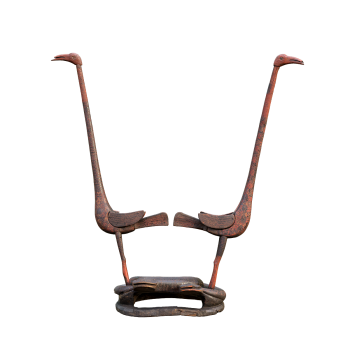
Crane and Snake from the Warring States Period in China - Cleveland Museum of Art

Crane and Snake from the Warring States Period in China - Cleveland Museum of Art

It is a painted wooden carving from 475 BC to 221 BC, during the Warring States period of China, in the state of Chu (approximately 1046 BC to 223 BC). This work is said to come from Changsha, Hunan Province, China. Made of lacquered wood and using multi-color painting technology. Currently housed in the Cleveland Museum of Art, it was acquired by J. in 1938 H. Purchased by Wade Fund. Not only does it showcase the exquisite lacquerware craftsmanship and painting art of ancient China, but it also reflects the cultural characteristics and aesthetic style of the Chu state at that time, making it a valuable material for studying the history of ancient Chinese art.
Jerusalem Ceramic Pomegranate

Jerusalem Ceramic Pomegranate

It is a traditional handicraft with Middle Eastern characteristics, originating from ancient Eastern culture, especially in the region centered around Jerusalem. This type of handicraft is usually based on pomegranates and handmade using ceramic materials. The surface is often painted with exquisite patterns and colors, representing the beautiful meaning of prosperity and many children and blessings. Pomegranate is a highly symbolic fruit in Middle Eastern culture, representing not only the continuation of life and the reproduction of families, but also health and longevity. Therefore, ceramic pomegranate has become a popular decoration, often placed in homes and public places to express wishes for a better life.
Chinese snuff bottles from the Qianlong period of the Qing Dynasty - Cleveland Museum of Art

Chinese snuff bottles from the Qianlong period of the Qing Dynasty - Cleveland Museum of Art

It is a precious collection of the Cleveland Museum of Art, belonging to the Qianlong period of the Qing Dynasty in China (1736-1795). Emperor Qianlong is one of the famous emperors in Chinese history. This snuff bottle is made of copper and features painted enamel craftsmanship, which was highly valued at the time and typically only possessed by royalty and nobility. It is depicted with European figures, indicating that it may have been influenced by Western art or catered to the European market. This work is not only a practical container, but also a witness to the exchange of Chinese and Western cultures. By Noah L Mrs. Butkin donated it as a gift for the 75th anniversary of the museum's establishment.
Portable Altar from the Roman Era - Cleveland Museum of Art

Portable Altar from the Roman Era - Cleveland Museum of Art

It is an 11th century Romanesque art piece, produced around 1045, possibly from Lower Saxony, Germany. Made of precious materials such as gold, enamel, porphyry, gemstones, pearls, black lacquer, and wood cores, it is collected at the Cleveland Museum of Art and is a gift from the John Huntington Institute of Art and Technology Trust Fund. It was commissioned by Countess Gertrude to commemorate her husband, Count Leopold, shortly after his death. There are four apostles worshiping the cross on the front, seven apostles on each side, and five apostles at the back. There is also a mechanism at the bottom to open and store items.
Silver Raft Cup - Cleveland Museum of Art

Silver Raft Cup - Cleveland Museum of Art

Made around 1345. This work is attributed to Zhu Bishan, welded from hammered silver pieces and decorated with chisels. It is now collected at the Cleveland Museum of Art. By JohnL Severance Fund was acquired in 1977. The figure on the cup is believed to be the messenger Zhang Qian. Legend has it that he got lost in the Milky Way and met the Weaver Girl, who gave him a stone from a loom. Zhang Qian actually holds a stone tablet with the inscription 'Weaving Machine Stone'. The production date, inscription, and seal of silversmith Zhu Bishan are all clearly visible on this silverware, demonstrating its historical and artistic value.
Augsburg Gorgeous Silver Vase

Augsburg Gorgeous Silver Vase

A beautifully decorated silver vase from the collection of the Heiligenkreis Abbey Museum. Handmade and hand chased vases are used to hold silk flowers. The silver vase bears the owner's mark of David Weinold, which is DW. The emblem on the vase is the Augsburg coat of arms.
Iberian Colored Pottery Valdepenas Museum

Iberian Colored Pottery Valdepenas Museum

It is an important discovery at the Vald é Penias archaeological site in the Castile La Mancha region of Spain. Made in the Iron Age, approximately from the 4th century BC to the 3rd century BC, it is known for its decorative patterns of bands, circles, and seals. These painted pottery not only showcase the daily life of Iberians, but also reflect their artistic aesthetics and cultural characteristics. The pattern design is diverse, including horizontal lines, geometric shapes, and animal images, with bright colors and exquisite craftsmanship. Collected in the Valdepernias Museum, it provides valuable physical materials for studying the lifestyle, religious beliefs, and social structures of ancient Iberians
The Holy Sepulchre of the Cross - Accordion City and Cultural Heritage Center in Thule, France

The Holy Sepulchre of the Cross - Accordion City and Cultural Heritage Center in Thule, France

Made of wood, copper, gold-plated iron, and enamel. It was manufactured around 1200 in the Limousin region and exhibited at the Saint Pierre Church in Tours. It is a precious medieval artwork, whose design and production reflect the religious beliefs and artistic level of the time. It is usually used to preserve relics of saints or other religious relics, and the design of human form may symbolize the image of saints or some religious symbol related to saints. It is an important collection of the Saint Pierre Church in Toulouse, Limousin region, France. Collected in the accordion city and cultural heritage center of Toulouse, France.
Ancient American culture humanoid stirrup jar - Bonn Collection, America

Ancient American culture humanoid stirrup jar - Bonn Collection, America

It is a type of pottery in ancient American culture, characterized by a tank shaped like a human, usually with facial features or the entire body shape of a person. Design not only embodies the artistic creativity of ancient craftsmen, but also reflects the profound understanding of human nature, religious beliefs, and daily life in ancient society. They have significant value in archaeology as they provide us with a window to understand the lifestyle and cultural characteristics of ancient civilizations. It is a precious historical artifact in the Bonn Collection of the Americas.
Japanese silver enamel vase

Japanese silver enamel vase

Japanese silver enamel vase is a traditional handicraft that combines art and craftsmanship. This type of vase is usually made of copper or silver and covered with a layer of enamel glaze. After high-temperature firing, it forms a smooth and shiny surface. Enamel has rich colors and diverse patterns, commonly featuring traditional Japanese elements such as flowers, birds, landscapes, and figures. Silver wire craftsmanship outlines delicate lines on enamel, adding a sense of three dimensionality and artistic beauty. The Meiji era (1868-1912) was the peak period of the development of enamel craftsmanship in Japan, and works from this period were particularly favored by collectors.
Humanoid pottery - Bonn Collection of the Americas

Humanoid pottery - Bonn Collection of the Americas

The humanoid pottery is a unique artwork in the collection of American cultural relics, held at the Bonn Collection in the Americas. This painted humanoid pottery has a narrow opening and a slender spout. Its exact place of origin is still unclear. This pottery not only showcases the exquisite craftsmanship of ancient American civilization in pottery, but also reflects the artistic expression and cultural understanding of character images in society at that time.
Marble low polygonal vase

Marble low polygonal vase

The low polygonal marble vase is a reflection of modern art and design trends, combining classical materials with modern technology. Low polygon design typically refers to using fewer geometric polygons to create a 3D model of an object's surface. This design style is visually simple and modern, often used in games, graphic design, and modern art. Marble is a popular material for sculpture and architectural decoration, known for its unique texture, color, and texture. Marble low polygonal vases may mimic the appearance of marble in design, but presented in a low polygonal style.
Curved bowl with geometric patterns

Curved bowl with geometric patterns

It is a representative work of the Mimblesmogolon culture in Cameron Creek Village, New Mexico, created between 1000 and 1130 AD. It is made of ceramics and talc. The characteristic is its unique geometric design, which showcases the exquisite craftsmanship of the Mimbules Mogolon culture in ceramic art. The surface of the bowl is decorated with exquisite geometric patterns, which may have specific cultural or symbolic meanings. This artwork is part of the collection of the Charles Hackney Endowment Fund at the Cleveland Museum of Art. It is currently housed in the Cleveland Museum of Art.
Long Tongguan Kiln Ceramic Research Institute

Long Tongguan Kiln Ceramic Research Institute

Dragon "is a ceramic artwork collected by the Tongguan Kiln Ceramic Research Institute, showcasing the image of the dragon in traditional Chinese culture with its exquisite craftsmanship and unique design. As an important representative of Chinese ceramic art, Tongguan Kiln is renowned for its long history and exquisite craftsmanship. Cleverly combining the majesty of dragons with the delicacy of ceramics, through the artist's skillful hands, the form, scales, hair and other details of dragons are vividly depicted. The dragon symbolizes power, nobility, and good luck in Chinese culture, and is a symbol of auspiciousness. This artwork is not only a work of art, but also an inheritance of traditional Chinese culture.
Colored Pottery Cup - American Bonn Collection Series

Colored Pottery Cup - American Bonn Collection Series

The colored pottery cup with painted face is a colorful pottery item in the Bonn Collection of America. This cup shaped vessel has two vertically mounted handles. The opening edge of the vessel is irregular, with a wreath composed of vertical lines drawn alternately in ochre, red, and black colors. The ochre colored face placed between the two handles is painted with X-shaped eyes and a mouth with a well-defined nose. This face looks clear and cheerful, with wide open eyes, a bean shaped smile, and dimples. The diamond shaped eyes are framed by black C-shaped lines, with prominent eyebrows on top. Belonging to Teddy Hahn's collection.
The Complete Picture of Lanting Yaji Bamboo Tube

The Complete Picture of Lanting Yaji Bamboo Tube

It is an artwork carefully created by Zhang Zongfan, inheritor of Baoqing's intangible cultural heritage of bamboo carving, and his students using bamboo spring carving techniques. Known for its exquisite craftsmanship and profound artistic expression, the "Lanting Yaji" is an important work in the history of Chinese calligraphy, and its content and spirit are cleverly integrated into the carving of bamboo tubes. It showcases the calligraphic charm of Wang Xizhi's "Preface to the Orchid Pavilion" and may also reproduce the scene of literati gathering in the elegant Orchid Pavilion through carving techniques, including the postures, expressions, and surrounding natural landscapes of the characters. The fine texture and vivid details of bamboo spring carving make the entire work full of cultural atmosphere and historical sense
Green glazed brown green colorful flower and bird bowl

Green glazed brown green colorful flower and bird bowl

It is one of the representative works of Tongguan Kiln, carefully created by the famous Chinese arts and crafts master Peng Wangqiu. Tongguan Kiln is a famous ceramic kiln series in Chinese history, renowned for its unique glaze color and decorative art. Master Peng Wangqiu's work showcases the exquisite craftsmanship and profound heritage of Tongguan Kiln ceramic art. With its fresh and elegant blue glaze as the base color, it is painted with brown green flower and bird patterns, with vivid and realistic color contrast. Flower and bird patterns symbolize beauty and harmony in traditional Chinese culture, often used to express longing for a happy life and praise for the beauty of nature.
Old Candlestick - Copper Official Kiln

Old Candlestick - Copper Official Kiln

It is a work by Master Hu Wuqiang, produced by Tongguan Kiln and currently collected at Changsha Tongguan Kiln Research Institute. This work showcases the charm of Tongguan kiln ceramic art with its unique design and exquisite craftsmanship. As a representative figure of the Tongguan Kiln, Hu Wuqiang's works often blend traditional and modern elements, showcasing a unique artistic style. An old candle holder is not only a practical lighting tool, but also an artistic decoration. Cleverly combining the functionality and artistry of candle holders, through exquisite ceramic craftsmanship, the traditional form of candle holders is combined with modern aesthetics, presenting a quaint and elegant beauty.
Lion candle holder

Lion candle holder

The outstanding works of Chinese arts and crafts master Hu Wuqiang were carefully crafted by Changsha kiln. The clever combination of the majestic image of lions and the practical function of candlesticks showcases the unique charm and profound cultural heritage of Chinese ceramic art. With its exquisite craftsmanship and profound understanding of traditional culture, this lion shaped candlestick was created. Lions symbolize majesty and strength in Chinese culture and are often used as totems for protection and decoration. Not only does it give people a strong artistic impact visually, but it also conveys a positive and uplifting spirit culturally. Changsha kiln, as an important representative of Chinese ceramic art, is renowned for its long history and exquisite craftsmanship.
White bottomed Lequitos bottle

White bottomed Lequitos bottle

It is an ancient Greek pottery collected in the Academic Art Museum of the University of Bonn in Germany. It can be traced back to 50-460 BC and was likely made in the workshop of Thanatos painter in Athens. It is a container with a narrow body and a handle connecting the shoulders and neck, with the lid unfolding outward. This collection belongs to the Shoulder Legitos Bottle Group, a type of bottle produced since the mid-5th century BC. There is a naked young man painted on the bottle, holding a piece of wood, a stone, and a clock hanging above his left arm, chasing a wild rabbit on the hillside.
Bonn University Academic Art Museum Ancient Greek Pottery

Bonn University Academic Art Museum Ancient Greek Pottery

A piece of ancient Greek pottery collected in the Academic Art Museum of Bonn University. This bowl is said to have been discovered at the Diplon Gate in Athens, around 750 BC to 735 BC, and was produced in the Attica region. This vessel is characterized by steep edges and a horizontal band like handle. The upper wall is divided into panels with stars, Capricorn, swastika, and checkerboard patterns. The wide stripes between the handles are divided into three panels: a display zigzag band in the middle and birds on both sides. The handle itself is also decorated with a zigzag band. It is an outstanding representative of ancient Greek pottery art and an important physical evidence for studying ancient Greek culture and artistic style
Weird Statues - Bonn Collection Series in the Americas

Weird Statues - Bonn Collection Series in the Americas

The bizarre statue in the American Bonn Collection series is an artwork made of clay, characterized by two faces stacked on top of each other. The origin of this statue is unknown. Usually refers to sculptures with strange and fantastical qualities, which may depict mythical creatures, monsters, or supernatural phenomena, often used for decoration or symbolic purposes. This type of statue plays an important role in art and culture, inspiring people's imagination and curiosity to explore the unknown.
The flower bed made by Edward Knopfflin

The flower bed made by Edward Knopfflin

The flower bed made by Edward Knopfflin is a ceramic artwork decorated with a duck pattern, created between 1902 and 1916 and produced in Palatine, France. Not only is it a practical gardening container for growing flowers and plants, but it is also an artwork showcasing Knopfflin's exquisite craftsmanship. The duck decoration on its surface adds natural beauty, reflecting the artist's love for natural themes and attention to details. As one of the collections of the Peltier Museum of Art and History, it not only enriches the museum's collection, but also showcases the tradition and charm of Peltier ceramic art to visitors.
Prototype Geometric Lequitos Bottle

Prototype Geometric Lequitos Bottle

It is an ancient Greek pottery, collected in the Academic Art Museum of Bonn University. This Lechitos bottle can be traced back to the prototype geometry period of the 9th century BC and was made in the Athens region. Known for its simple geometric patterns and decorative style, these patterns typically include lines, circles, and simple shapes. As a typical representative of this period, it showcases the skills and artistic aesthetics of ancient Greek ceramic artists. These pottery bottles are not only practical containers, but also valuable materials for studying ancient Greek culture and religious customs.
Terracotta railing vase

Terracotta railing vase

It is an oval shaped red clay pottery with carved images of women and Cupid on the surface, and the base is made of white marble. This work is a rare and pure masterpiece by French sculptor Claude Michel, also known as "Clodion". Clodion is known for the provocative nature of his classical style works. It was one of the last items purchased by Sir James Erskine during his great trip to Italy from 1821 to 1822. Erskine's collection now forms part of the Denimare Collection, which is exhibited at the Duff Mansion. The Dufu Mansion is a historic building that houses a rich collection of artworks.