Panda ashtray ceramic artwork

Panda ashtray ceramic artwork

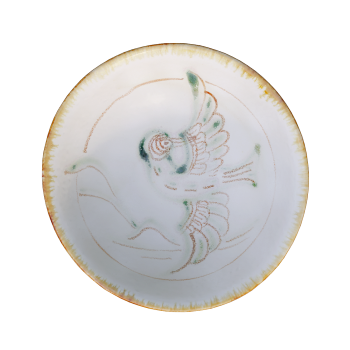
A ceramic artwork produced by the Chinese Tongguan Kiln is currently collected at the Changsha Tongguan Kiln Research Institute. With its unique design and exquisite craftsmanship, it showcases the image of China's national treasure panda, while also reflecting the profound ceramic production tradition and artistic style of Tongguan Kiln. Tongguan Kiln is one of the famous ceramic kiln series in Chinese history, renowned for its exquisite ceramic products and unique glaze colors. Not only is it a practical daily item, but it is also an artistic decoration. Cleverly combining the adorable nature of pandas with the functionality of ashtrays, it is both practical and aesthetically pleasing.
Dragon Ball - Bamboo Root Carving

Dragon Ball - Bamboo Root Carving

The bamboo root carving artwork created by Chinese arts and crafts master Liang Fengzhu in 1998 was inspired by the "Dragon Jaw Pearl" or Dragon Ball in the ancient Chinese legendary story "Zhuangzi: Qi Wu Lun". This work not only showcases Liang Fengzhu's exquisite carving skills, but also contains profound cultural connotations. Through exquisite bamboo root carving techniques, the form and charm of dragon balls are vividly portrayed. Bamboo root carving is one of the traditional forms of Chinese arts and crafts. Through the skillful carving of artists, artworks with unique beauty and cultural connotations are created. It is currently collected in the Liangfengzhu Arts and Crafts Museum in Nanyue, Hengyang, China.
Tongguan Kiln Ceramic Research Institute Pottery Lion

Tongguan Kiln Ceramic Research Institute Pottery Lion

The pottery lion produced by the Tongguan Kiln Ceramic Research Institute is an artwork that combines traditional ceramic craftsmanship with cultural symbolism. Lions symbolize power, majesty, and courage in Chinese culture, often used as the image of guardians, placed at the entrance of important buildings or as home decorations to ward off evil spirits and avoid harm. Made from high-quality clay through manual shaping, carving, and meticulous craftsmanship. By utilizing the profound ceramic production techniques of Tongguan Kiln, the majestic form and vivid expressions of lions are vividly portrayed. It showcases the exquisite craftsmanship and innovative spirit of Tongguan kiln ceramic art, while also reflecting the profound heritage of Chinese arts and crafts.
Vase during the Cultural Revolution

Vase during the Cultural Revolution

Vases from the Cultural Revolution period (1966-1976) usually refer to ceramic vases produced during the Chinese Cultural Revolution. The ceramic art works of this period have distinct characteristics of the times, often adorned with portraits of Mao Zedong, quotes from Chairman Mao, revolutionary slogans, or patterns related to socialist construction, reflecting the political atmosphere and social life of that era. In terms of artistic style, it is often relatively unified, with bright colors and direct and powerful patterns, reflecting the concise and vivid artistic expression advocated during the Cultural Revolution. Due to the particularity of this period, it has also become an important material for studying modern Chinese history and culture.
Ceramic Decorations from Tongguan Kiln Ceramic Research Institute

Ceramic Decorations from Tongguan Kiln Ceramic Research Institute

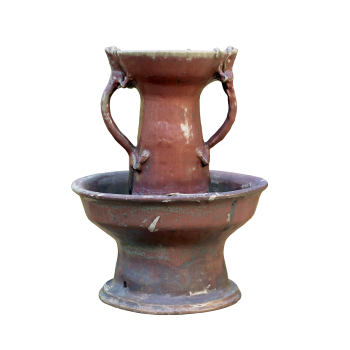
The ceramic decorations produced by the Tongguan Kiln Ceramic Research Institute represent the profound ceramic production tradition and artistic achievements of China's Tongguan Kiln. Tongguan Kiln is one of the famous ceramic kiln series in Chinese history, renowned for its exquisite craftsmanship, unique glaze colors, and exquisite decorations. It is usually handmade with high-quality clay, carefully designed and fired multiple times, and finally presents an artistic effect of bright colors and exquisite patterns. Every piece of work is the result of the craftsman's unique craftsmanship. These decorations, as carriers of culture, are not only favored domestically but also exported overseas, becoming an important way to spread Chinese ceramic art.
Er Long Xi Zhu - Dark Wood Carving

Er Long Xi Zhu - Dark Wood Carving

The gloomy wood carving work created by Chinese arts and crafts master Liang Fengzhu in 2005 is currently collected at the Liang Fengzhu Arts and Crafts Museum in Nanyue, Hengyang, China. The theme of "Two Dragons Playing with a Pearl" in traditional Chinese culture depicts a vivid scene of two dragons circling and playing around a precious pearl. It is a traditional Chinese auspicious pattern that symbolizes power, strength, and good luck. In Chinese culture, the dragon is a symbol of auspiciousness, representing supreme power and wisdom; And pearls symbolize wealth and light. This pattern is commonly seen in ancient architecture, art, and celebratory events, symbolizing national peace and prosperity.
Longfeng Chengxiang - gloomy wood carving

Longfeng Chengxiang - gloomy wood carving

It is a wooden carving work by Chinese master of arts and crafts Liang Fengzhu, created in 2002. It is currently collected at the Liang Fengzhu Arts and Crafts Museum in Nanyue, Hengyang, China. This work is made using traditional Chinese gloomy wood carving techniques, showcasing the images of dragons and phoenixes that symbolize auspiciousness in Chinese traditional culture. In China, dragon and phoenix respectively represent authority and dignity, as well as beauty and virtue. Often used together, it symbolizes harmony, happiness, and a happy relationship between husband and wife. The theme of 'Dragon and Phoenix Bringing Auspiciousness' is extremely common in Chinese culture, often used in important occasions such as weddings and celebrations, symbolizing prosperity and the arrival of good luck.
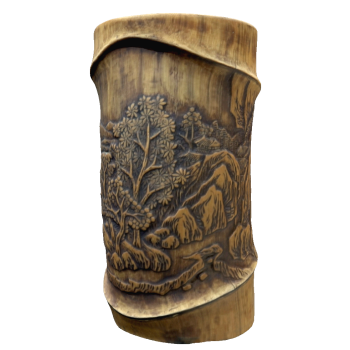
Bamboo tube seen in the mountains

Bamboo tube seen in the mountains

It is an artwork created by Zhang Zongfan, inheritor of the intangible cultural heritage of Baoqing bamboo carving, and his students using bamboo carving techniques. Baoqing bamboo carving is a traditional handicraft in Shaoyang City, Hunan Province, China, known for its exquisite carving techniques and unique artistic style. The unique cultural charm and artistic expression showcase the tranquility and harmony of the mountain scenery. The work has a novel concept, atmospheric composition, sharp knife technique, and exquisite knife skills. Through more than ten years of learning and practice, I have proficiently mastered various key techniques of Baoqing bamboo carving. It is not only a continuation of traditional handicrafts, but also a praise for natural beauty and cultural significance, with high artistic value and collection significance.
The wedding box made by Umbriach

The wedding box made by Umbriach

The wedding box made by Umbridge is a 14th century artwork currently housed in the Minneapolis Museum of Art in the United States. This piece is a wedding box made by Baldasaray Deli Umbriach. The Umbriaci Workshop was an important ivory and bone carving workshop in northern Italy from around 1375 to possibly as late as 1433. They are now known as wedding boxes, which are approximately one foot wide with lids rising in the center. Their products may have been made for inventory rather than individual commissions, meeting the market demand for engagement and wedding gifts.
Elegant Fun "bamboo tube

Elegant Fun "bamboo tube

The bamboo green carving handicraft carefully created by Zhang Zongfan, inheritor of the intangible cultural heritage of Baoqing bamboo carving, and his students. Under the name of "elegance and fun", it reflects the pursuit of refined lifestyle in traditional Chinese culture. Adopting the unique bamboo carving technique of Baoqing bamboo carving, the outer layer of green skin of bamboo is used for detailed carving. Depicting elements such as mountains, waters, flowers, birds, calligraphy, or poetry that literati and scholars love, vivid natural landscapes or cultural images are presented through exquisite knife techniques and profound expressive power. It is not only a practical object, but also a collectible with profound cultural significance and artistic value.
Aztec vase

Aztec vase

The Aztec vase is one of the rich cultural heritages of the Aztec civilization, which was particularly prominent in the post classical period of central Mexico. The Aztecs were skilled in pottery art, and their vases were both practical and ceremonial, often depicting complex patterns of black, red, and orange, depicting myths, wars, or everyday life scenes. These vases are not only containers, but also carry important cultural and religious meanings, often used in ceremonies and celebrations. The Aztecs had advanced ceramic technology, using the "sliding" technique to coat the surface of pottery with colored mud before firing, in order to achieve precise pattern design.
Autumn Pond Dew Flowers "Bamboo Green Slices

Autumn Pond Dew Flowers "Bamboo Green Slices

It is a traditional handicraft created by Zhang Zongfan, inheritor of the intangible cultural heritage of Baoqing bamboo carving, and his students. Baoqing bamboo carving is renowned for its exquisite bamboo green carving technique, which utilizes the outer layer of green skin of bamboo for artistic creation. It is appreciated for its delicate texture and vivid expressive power. With the theme of "Autumn Pond Dew Flowers", the serene beauty of the lotus pond in autumn is showcased through exquisite carving techniques. Depicting elements such as lotus flowers, lotus leaves, and dewdrops, the carving on bamboo leaves conveys the freshness and tranquility of lotus ponds in autumn mornings, as well as the vitality and tenderness of flowers nourished by dew.
Bamboo spring carved hat bucket

Bamboo spring carved hat bucket

Baoqing bamboo carving is a traditional handicraft in Shaoyang City, Hunan Province, known for its exquisite bamboo and green carving techniques. As the inheritor of intangible cultural heritage of this technique, Zhang Zongfan and his students jointly completed an exquisite bamboo spring carved hat barrel work. The technique of bamboo spring carving is adopted, which is a craft of carving on bamboo springs (the inner layer of bamboo skin). Through fine manual carving, complex patterns and perspective effects are created as decorations. It showcases the exquisite craftsmanship of Baoqing bamboo carving and a profound understanding of traditional culture. The carved patterns are exquisite and detailed, with distinct layers. Light and shadow penetrate through the gaps of the carving, creating a unique visual effect.
Chinese cloisonn é vase

Chinese cloisonn é vase

Cloisonn é vase is one of the traditional Chinese handicrafts, known for its exquisite enamel craftsmanship and rich colors. The cloisonn é vase is made using the copper body cloisonn é enamel process, which involves using fine copper wire to create a pattern on the copper body, then filling it with enamel glaze, and undergoing high-temperature firing, polishing, and other processes. Its characteristics are bright colors, fine patterns, and luxurious texture. Cloisonn é vases not only have high artistic value, but also contain rich cultural connotations. It integrates various traditional Chinese art forms such as painting, sculpture, and metalworking, and is a treasure of Chinese traditional arts and crafts.
Ancient vases

Ancient vases

Ancient Chinese ceramic vases also have rich cultural significance. They not only demonstrated the superb skills of ancient craftsmen in technology, but also reflected the social trends and aesthetic tastes of the time in art. For example, the cloisonn é vases of the Qing Dynasty are famous for their exquisite enamel craftsmanship and rich colors. Ancient vases are not only witnesses of history and culture, but also the crystallization of art and craftsmanship. They provide us with important perspectives on understanding ancient societies and are still cherished by museums and private collectors around the world.
Dragonfly and Lotus Pond Theme Bamboo Green Slices

Dragonfly and Lotus Pond Theme Bamboo Green Slices

Baoqing bamboo carving is a traditional handicraft in Shaoyang City, Hunan Province, China, known for its exquisite carving skills and unique artistic style. As the inheritor of the intangible cultural heritage of Baoqing bamboo carving, Zhang Zongfan and his students jointly completed this work, which is an outstanding representative of this traditional craft. The bamboo green carving technique is adopted, which involves carving on the green outer skin of bamboo, using the natural color and texture of bamboo green to create lively dragonfly and lotus pod patterns. Dragonflies symbolize agility and change, while lotus pods symbolize holiness and vitality. The combination of the two showcases the beauty of harmony in nature and is also rich in auspicious meanings of traditional Chinese culture.
Pine Forest Landscape Bamboo Spring Carving

Pine Forest Landscape Bamboo Spring Carving

Baoqing bamboo carving is a traditional handicraft in Shaoyang City, Hunan Province, China, known for its exquisite carving skills and unique artistic style. This technique uses bamboo springs (the inner layer of bamboo skin) as carving materials, and through meticulous manual carving, creates works with rich cultural connotations and artistic value. As the inheritor of the intangible cultural heritage of Baoqing bamboo carving, Zhang Zongfan and his students jointly completed this work, demonstrating superb carving skills and a profound understanding of natural landscapes. The fine lines and clear layered composition vividly depict the natural beauty of the pine forest, including the towering trees, lush branches and leaves, and the tranquil atmosphere of the forest
amphora

amphora

AmFora (double eared jar) is an ancient container used as a storage jar and is one of the main shapes in Greek pottery, with two handles and a neck narrower than the bottle body. They are used for storing and transporting olives, grains, oil, and wine, and sometimes for funerals and as tombstones. As a container, Amfora Vase also holds a place in culture and art, with rich cultural significance and artistic value in both ancient and modern times.
Peruvian Lambayeque style ceramic bottle

Peruvian Lambayeque style ceramic bottle

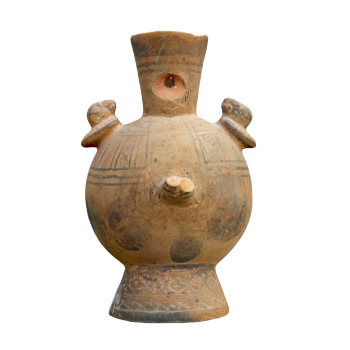
It is an artwork representing the pre Columbian culture of Peru. This type of ceramic bottle usually has exquisite technical and aesthetic features, as well as rich cultural symbolic significance. Known for its technical quality and aesthetic features, it reflects the development of the region's culture and the evolution of its style. It showcased the superb craftsmanship of the craftsmen at that time and conveyed profound cultural and religious messages through its designs and patterns. In the late middle period, techniques such as molding, application, and etching were used. Returned by Swiss authorities in 2023 and successfully recognized as a Peruvian national treasure. The return of ceramic bottles is not only a respect for cultural heritage, but also a recognition of historical continuity.
Qing Dynasty Jade Carving Autumn Mountain Traveler

Qing Dynasty Jade Carving Autumn Mountain Traveler

In this mountain view, an official riding a donkey is followed by his attendant, holding an umbrella; They crossed a simple bridge over the waterfall. Above them, a smaller similar group seemed to be crossing another bridge in a distant place. This type of Yushan originated in the late Ming Dynasty. The characters, trees, bridges, and animals in the background represent the traditional translation of jade carving in orthodox landscape painting. In the paintings of this period, many similar depictions of scholars traveling or contemplating mountain scenery can be found. The theme of harmonious coexistence between humans and nature is favored by Taoists and literati. The sculpture is currently collected in
Tibetan auspicious beast Mani Wheel

Tibetan auspicious beast Mani Wheel

The "Mani Wheel" is a scripture turner in Xizang, a cylindrical device for Buddhist practice, used to spread spiritual blessings and evoke good karma. The prayer wheel is composed of cylindrical wheels mounted on a shaft made of metal, wood, stone, leather, or coarse cotton. Sutra turning tubes are common in Xizang and Xizang culture dominated areas.
Bamboo spring dressing box

Bamboo spring dressing box

Bamboo spring dressing box, also known as dressing case, is a traditional handicraft that not only has practicality but also high artistic value. Although modern dressing boxes may differ in functionality from ancient times, they are still an important part of women's daily lives, and their exquisite craftsmanship and design make them objects of collection and appreciation. The bamboo spring dressing box is a work of art that combines traditional craftsmanship with modern aesthetics. It not only carries rich cultural significance, but also showcases the exquisite skills of craftsmen.
Plum Blossom and Bamboo Charm "Bamboo Root Carving

Plum Blossom and Bamboo Charm "Bamboo Root Carving

Mei Xiu Zhu Yun "is a bamboo root carving work, which was completed by Zhang Zongfan, the inheritor of Baoqing bamboo carving intangible cultural heritage, and his students. The dimensions of this work are 18 centimeters wide and 25 centimeters high. Bamboo root carving is a traditional carving art that utilizes the natural shape of bamboo roots. Bamboo root carving art has a long history in China, and it is not only a handicraft, but also a cultural heritage. From the search results, it can be seen that bamboo root carving art is still highly valued by many artists and inheritors in modern times, and is constantly innovating and developing. Through the artist's clever conception and exquisite skills, create art with unique beauty and cultural connotations
Harrogate Museum Roman period bizarre faces oil lamp

Harrogate Museum Roman period bizarre faces oil lamp

Named after its bizarre face design, it features a handle with a loop at the top and a small ring below. The central opening is semi-circular, resembling a face shaped mouth, surrounded by decorations representing beards, and each endpoint has a ring. It has three nozzles and a seal with a Greek inscription on the base. It can be traced back to the Greco Roman period. It was once part of the Kent Collection and was bequeathed to the Harrogate Museum in 1968. Items from Gaza. Not only did it meet the practical needs of ancient people, but it also demonstrated the cultural characteristics of the time in terms of artistry and decoration.
Eastern Zhou copper bronze bell

Eastern Zhou copper bronze bell

This cultural relic is a copper musical instrument called the "Chinese Bronze Bell", made from the late 6th century BC to the early 5th century BC, and is now collected at the Minneapolis Museum of Art in the United States. The shape of this bell is called "xi", which is one of the two common bell shapes found in tombs of the Eastern Zhou Dynasty. The "Liu" clock has a flat bottom, slightly convex sides, and a decorative hanging device at the top, usually featuring stylized animal images that can emit a single tone. The decoration of this clock is very rich. There are 36 evenly distributed protrusions on the clock body, shaped like coiled snakes. The suspension device is a pair of tigers wrapped around a snake.
The relief bamboo tube of "Wen Cai Feng Liu"

The relief bamboo tube of "Wen Cai Feng Liu"

The relief bamboo tube of "Wen Cai Feng Liu" is an artwork with profound cultural heritage. This work may have used traditional relief techniques, combining literature and art, and showcasing the charm of Chinese traditional culture through the bamboo tube as a carrier. Relief is an art form that involves carving patterns or images on the surface of materials to create protrusions on the background, often used for decoration and commemorative buildings. The relief bamboo tube in "Wencai Fengliu" is not only a reflection of traditional Chinese handicrafts, but also an important carrier of cultural inheritance. It combines literature, art, and natural materials, showcasing the profound heritage and unique charm of traditional Chinese culture.
Cambridge Fitzwilliam Museum Ancient Egyptian "Frog" Pottery Oil Lamp

Cambridge Fitzwilliam Museum Ancient Egyptian "Frog" Pottery Oil Lamp

The pottery oil lamp is a molded product of the ancient Egyptian "frog" type, with a circular oil storage tank, a hole in the center of the top, and concentric ring decorations around it. The top of the oil storage tank is decorated with a concave "frog and corn" pattern, and the base has a concave ring around the raised pottery mark. The nozzle extends from the main body of the oil lamp and also has a concave decoration. Burning spots with traces of use left on them. The oil lamp is made of brown Nile silt with a gray core inside. It can be traced back to the 2nd to 4th centuries AD. From the Fayum region. Now part of the collection of the Fitzwilliam Museum in Cambridge
Ancient Rhyme "Brass Round Vase

Ancient Rhyme "Brass Round Vase

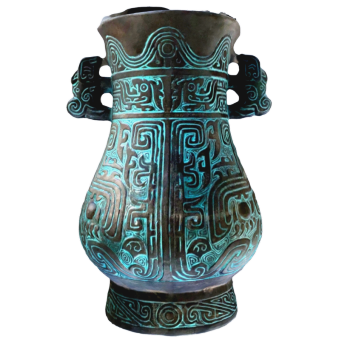
The "Ancient Rhyme" brass round vase is a decoration that combines traditional craftsmanship with modern design elements. Brass vases are commonly used to make various handicrafts and decorations due to their corrosion resistance and beautiful color. In Chinese culture, brass crafts are often combined with "ancient charm" to showcase the beauty of blending classical and modern elements. The design of the brass round vase in "Ancient Rhyme" may have incorporated traditional elements, presented in the form of 3D models. This not only reflects the combination of traditional craftsmanship and modern technology, but also enables the digital preservation and dissemination of this traditional artwork.
During the Qianlong period, a copper gilded incense burner with inlaid gemstones and auspicious beasts was used

During the Qianlong period, a copper gilded incense burner with inlaid gemstones and auspicious beasts was used

This incense burner is made using copper gilding technology and is shaped like a mythical beast. The incense burner has an open mouth, with the neck and back of the beast integrated into one. The animal body is the main body of the incense burner, with the tail curled up and the head looking up. The mouth is open and the teeth are exposed. The details are carved using intaglio and relief techniques, decorated with red, white, green and other colored gemstones. The beast is magnificent and colorful, with a majestic expression. The carving is exquisite, the image is realistic, and it exudes a sense of elegance and wealth. The history of incense burning has a long history in China, and the famous Boshan furnace in the Han Dynasty was designed by people for incense burning. Produced between 1736-1795, it is now housed in the Minneapolis Museum of Art in the United States.
Harrogate Museum Ancient Egyptian Ceramic Oil Lamp

Harrogate Museum Ancient Egyptian Ceramic Oil Lamp

A molded Egyptian pottery oil lamp with a goat pattern painted on its decorative plate. The shoulder of the oil lamp is decorated with a row of embossed oval patterns and marked with a vent hole. There are two circular dot patterns on both sides of the nozzle, with a protruding point at the chamfer. There is a circular handle at the back. There is also a circular dot pattern in the center of the raised base. The surface is covered with a coating ranging from yellow to reddish brown, with a white coating underneath. The side of the oil lamp is damaged. It was once part of the Kent Collection and was bequeathed to the Harrogate Museum in 1968. It was produced in Ephesus, Türkiye, between AD 98 and 192.
Shabuti Coffin (First Half)

Shabuti Coffin (First Half)

It is a container used for funerals in ancient Egypt, specifically designed to hold Shabuti figurines, which are small wooden or ceramic figurines representing the servants of the deceased in the afterlife. The design inspiration comes from Osiris, the god of resurrection and afterlife in ancient Egypt, usually presented in the form of a mummy. The surface usually features exquisite paintings and pictographic inscriptions, taken from the Book of the Dead, to protect and guide the souls of the deceased. The shape and decoration vary by period and region, but they are usually humanoid or rectangular, sometimes with arched lids. Not only is it a part of funeral customs, but it is also a concrete manifestation of ancient Egyptians' concept of the afterlife.
Canopic jar from ancient Egypt

Canopic jar from ancient Egypt

It is a ceramic or stone container used in ancient Egyptian funeral customs to preserve the internal organs of the deceased. In the mummification process of ancient Egypt, the heart was considered the dwelling place of the soul and therefore remained in the body, while other internal organs were removed and stored separately in canopic jars to prevent the body from rotting. These jars are usually accompanied by four different head sculptures representing the four guardian gods of ancient Egyptian mythology, namely the Kanopik god: Imseti with a human head, Hapi with a baboon head, Douamutiv with a jackal head, and Kebshannav with a falcon head. Each god guards a specific organ: the liver, lungs, stomach, and intestines.
The Peony Dance Vase

The Peony Dance Vase

The vase of 'Sparrow Dance Peony' is an artwork made using Baoqing bamboo carving techniques. Baoqing bamboo carving is a traditional art form in Hunan Province, with a complete range of carving techniques, rich themes, unique techniques, and high artistic value and cultural connotations. This technique not only requires artists to have superb artistic expression skills, but also needs to be able to integrate the aesthetic taste of literati with the artistic conception of classical Chinese painting and calligraphy. The themes of Baoqing bamboo carving are diverse, ranging from anecdotes about characters to religious stories, from landscape customs to flowers, birds, grass, and insects. It is a work of art with complex craftsmanship, rich themes, and strong color expression.
Great Fortune "gourd shaped plaque

Great Fortune "gourd shaped plaque

The magnificent royal decorative lapis lazuli "Da Ji" double gourd shaped plaque from the Qianlong period.
Cloisonn é vase during the Kangxi reign of the Qing Dynasty

Cloisonn é vase during the Kangxi reign of the Qing Dynasty

This is a Qing Dynasty cloisonn é vase, now collected at the Minneapolis Museum of Art in the United States. Cloisonn é technology was introduced to China from Byzantium (now Istanbul) between 1200 and 1400 AD, but Chinese craftsmen endowed it with unique Chinese characteristics. During the reigns of Emperor Kangxi (1662-1722) and Emperor Qianlong (1736-95) of the Qing Dynasty, the craft of cloisonn é was perfected and reached its artistic peak. At the bottom of the vase, there is a delicate moire band. Each moire is like Ruyi's head, and there is a narrow lotus curl.