
The relief bamboo tube of "Wenguang Shooting Dou"

The relief bamboo tube of "Wenguang Shooting Dou"

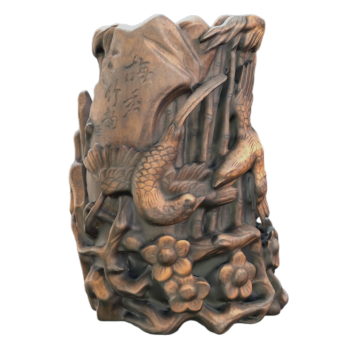
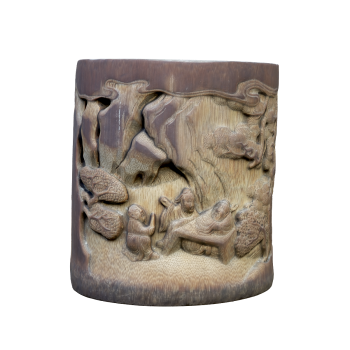
The relief bamboo tube of "Wen Guang She Dou" is an artwork completed by Zhang Zongfan, the inheritor of Baoqing bamboo carving intangible cultural heritage, and his students. This work showcases the exquisite craftsmanship of Baoqing bamboo carving, with dimensions of 8 centimeters wide and 13 centimeters high. Baoqing bamboo carving is a traditional handicraft in Shaoyang City, Hunan Province, China, known for its exquisite carving techniques and unique artistic style. The idiom 'Wen Guang Shi Dou' is usually used to describe articles with literary charm, shining brightly like shooting towards the Big Dipper. The relief bamboo tube of "Wen Guang She Dou" is not only a handicraft that showcases traditional skills, but also a carrier that conveys cultural value and artistic beauty.
Qing Dynasty relief dragon patterned vase
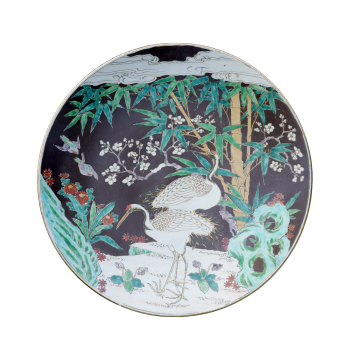
Qing Dynasty relief dragon patterned vase

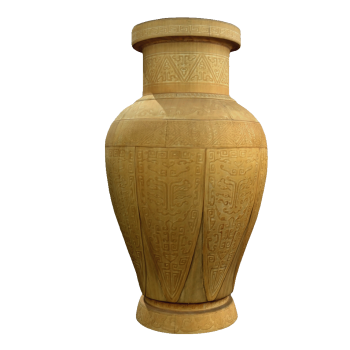
This Chinese cultural relic is a porcelain vase from the Kangxi period of the Qing Dynasty (1662-1722), which is now collected in the Smithsonian Museum.
Japanese Crane and Bamboo Pattern Porcelain Plate

Japanese Crane and Bamboo Pattern Porcelain Plate

A richly decorated piece of Japanese porcelain. This work shows the landscape of two cranes and blooming cherry trees with fine hand-painted craftsmanship. Bamboo branches, roses and shrubs are also painted in the background, full of natural beauty and the charm of oriental art. The pattern on the porcelain plate not only reflects the pursuit of natural and harmonious beauty in Japanese culture, but also shows the superb skills of traditional Japanese painting art.
University Museum of Tübingen Rome Oil Lamp

University Museum of Tübingen Rome Oil Lamp

Roman oil lamp characterized by a triangular wick hole and decorated with spiral patterns. The decorative style embodies the refinement and pragmatism of Roman art. Its design is not only beautiful, but also takes into account the efficiency of lighting. Three concentric circles inside depict a pegasus, a winged horse in Roman mythology that symbolizes power and speed. It is a lighting tool in the daily life of the Roman period, and it is also the crystallization of art and technology. It not only provides a light source, but also reflects the cultural and religious beliefs of the society at that time to a certain extent. Originated in Sardinia and donated by EduardToda.
University Museum of Tubingen Pomegranate Pottery
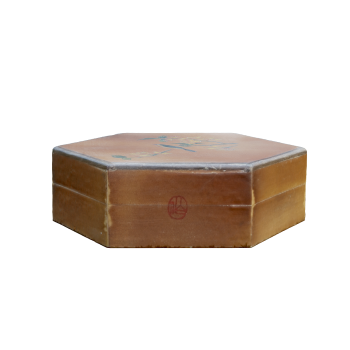
University Museum of Tubingen Pomegranate Pottery

The University Museum of Tubingen has a collection of pottery art with a pomegranate theme. An ancient ceramic work of art, the pomegranate is a symbol of prosperity and harvest in many cultures. It is a cultural relic with a long history. Its fine craftsmanship and vivid modeling not only show the superb skills of ancient artists, but also reflect the important status and symbolic significance of pomegranate in history. The University Museum of Tubingen is located in Tubingen, Baden-Württemberg, Germany. The university was founded in 1477 and is one of the oldest universities in the world. Its museum may have a collection of various cultural relics and works of art from ancient times to the present.
Bamboo spring hexagonal food box

Bamboo spring hexagonal food box

The bamboo spring hexagonal food box carved by Baoqing is a work of art that combines traditional craftsmanship with practical functions. The works completed by Zhang Zongfan, the inheritor of Baoqing bamboo carving intangible cultural heritage, and his students show the exquisite bamboo spring carving craftsmanship of Baoqing bamboo carving. The hexagonal design is not only beautiful in appearance, but also stable in structure, suitable for storing food. Bamboo spring carving is a special technique in Baoqing bamboo carving. Through meticulous carving on the spring surface of bamboo (I. e., the inner wall of bamboo), the work presents a unique texture and three-dimensional sense. The design is ingenious and the carving is fine, which reflects the aesthetic taste of Chinese traditional culture.
The theme of "Gao Shi under the pine tree" is bamboo tube (I)

The theme of "Gao Shi under the pine tree" is bamboo tube (I)

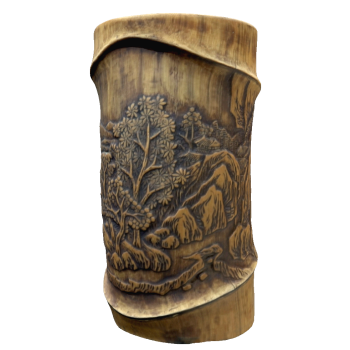
Baoqing bamboo carving is a traditional bamboo carving art originated from Shaoyang City, Hunan Province, China. It is famous for its exquisite craftsmanship and profound cultural connotation. The theme bamboo tube of "Gao Shi under the Pine Tree" is a work carefully created by Zhang Zongfan, the inheritor of the intangible cultural heritage of Baoqing bamboo carving, and his students, showing the ideal image of Gao Shi in traditional Chinese culture. The bamboo green carving process, that is, carving on the green skin of bamboo, maintains the natural color and texture of bamboo. It is not only a handicraft showing skills, but also a work of art containing philosophical thinking and aesthetic pursuit.
"Under the Pine Tree" Theme Bamboo Tube (Part 2)

"Under the Pine Tree" Theme Bamboo Tube (Part 2)

Baoqing bamboo carving is a traditional bamboo carving art originated from Shaoyang City, Hunan Province, China. It is famous for its exquisite craftsmanship and profound cultural connotation. The theme bamboo tube of "Gao Shi under the Pine Tree" is a work carefully created by Zhang Zongfan, the inheritor of the intangible cultural heritage of Baoqing bamboo carving, and his students, showing the ideal image of Gao Shi in traditional Chinese culture. The bamboo green carving process, that is, carving on the green skin of bamboo, maintains the natural color and texture of bamboo. It is not only a handicraft showing skills, but also a work of art containing philosophical thinking and aesthetic pursuit.
Bamboo Root Carving with Cattle Theme

Bamboo Root Carving with Cattle Theme

Baoqing bamboo carving is a traditional handicraft in Shaoyang City, Hunan Province, China, which is famous for its fine carving skills and unique artistic style. The bamboo root carving with the theme of cattle grazing is one of the representative works of this traditional craft, which was jointly completed by Zhang Zongfan, the inheritor of Baoqing bamboo carving intangible cultural heritage, and his students. The natural form of bamboo roots is skillfully combined with the scene of cattle herding, showing the tranquility and harmony of pastoral style. The carving details are rich, whether it is a child herding cattle or a leisurely grazing cattle, they are lifelike, full of movement and vitality. With high artistic value and collection value, it is a treasure of Chinese traditional arts and crafts.
Bamboo springs imitating bronze artifacts

Bamboo springs imitating bronze artifacts

It is a traditional handicraft made using Baoqing bamboo carving technique, which was carefully completed by Zhang Zongfan, inheritor of intangible cultural heritage, and his students. Baoqing bamboo carving is a traditional handicraft in Shaoyang City, Hunan Province, China, known for its exquisite carving and unique artistic expression. The size is 10 centimeters wide and 34 centimeters high, imitating the texture and color of ancient bronze ware in appearance. Through the exquisite craftsmanship of bamboo spring carving, it showcases the exquisite patterns and historical charm of bronze ware. It is a technique that uses the internal reeds of bamboo for multi-level carving, which requires craftsmen to have superb skills and precise control over details
Carved vase of 'Blossoming in a Prosperous Age'

Carved vase of 'Blossoming in a Prosperous Age'

It is an artwork made using Baoqing bamboo carving techniques, carefully carved by Zhang Zongfan, inheritor of intangible cultural heritage, and his students. Baoqing bamboo carving is a traditional handicraft in Shaoyang City, Hunan Province, China, known for its exquisite craftsmanship and unique artistic style. This work is 50 centimeters wide and 118 centimeters high, showcasing the theme of "blooming flowers in a prosperous era" with its exquisite carving techniques, symbolizing prosperity and beauty. Bamboo spring carving technology is a traditional technique that uses the internal spring leaves of bamboo to carve at multiple levels. It requires craftsmen to possess superb skills and precise control over details.
Ancient stone tablet sculpture

Ancient stone tablet sculpture

It is a replica of an ancient stone tablet collected in the Louvre Museum in Paris, France. This replica is made of hand colored resin material by Rmn-PP (Louvre and Osay Museum Picture Agency), with dimensions of 106 centimeters high, 34 centimeters wide, and 33.5 centimeters thick. The surface with inscriptions is 35 centimeters high. The original material of the stone tablet is marble. The decoration of the stone tablet includes lotus leaves and inscriptions. There are inscriptions in Greek and Phoenician on it, which mention Hercules of Tyrian and offer a dedication to the gods.
Ancient Egyptian Fish Shaped Palette

Ancient Egyptian Fish Shaped Palette

It is an ancient Egyptian artifact that can be traced back to the Nagada II period from 3500 BC to 3300 BC. Discovered in El Amrah (located on the west coast from Asgard to Thebes) and currently housed in the Louvre Museum in Paris, France. This color palette is made of sandstone and features carving techniques. It measures 16 centimeters in length, 8.6 centimeters in width, and 1.1 centimeters in thickness. Unique design, often associated with ancient Egyptian makeup culture, as it was used to grind and mix pigments for body painting. It may also have ceremonial or symbolic significance, closely linked to the religious and cultural customs of ancient Egypt
Madonna and Child Relief

Madonna and Child Relief

It is a sculpture depicting the Virgin Mary and the young Jesus. This type of theme is very common in Christian art, usually depicting the Virgin Mary embracing the little Jesus, conveying maternal love and divine care. Relief sculpture, as a form of sculpture, represents works by carving raised images on a flat surface, giving the image a sense of three dimensionality while maintaining a connection with the background. This image of the Virgin and Child was particularly popular in European art during the Middle Ages and Renaissance, often used as a decoration for churches or as an object of private prayer. Not only does it have significant religious significance, but it also reflects the social, cultural, and aesthetic tendencies of the time.
Sleeping Tagra Girl Sculpture

Sleeping Tagra Girl Sculpture

It is a replica of an ancient Greek style terracotta statue, originally created by an ancient Greek artist between the late 5th century BC and the 3rd century BC, and now housed in the Louvre Museum in Paris, France. These statues are known for their naturalistic features, preserved pigments, diversity, and charm, and are commonly referred to as Tanagra statues, named after the large number of such statues discovered in the ancient city of Tagra in the state of Viotia in central Greece. Most of them depict fashionable women or girls elegantly wrapped in sheer cloaks, sometimes wearing wide brimmed hats, holding flower garlands or fans.
White Bone Top Chicken Bronze Statue

White Bone Top Chicken Bronze Statue

Foulque is a replica of a bronze sculpture, the original of which is housed in the Fine Arts Museum in Dijon, France. This replica was made of resin material by Rmn-P (Louvre and Osay Museum Picture Agency) and belongs to the studio of the art museum. The dimensions of this artwork are a height of 27 centimeters, a width of 18.5 centimeters, and a depth of 9.5 centimeters.
Little Royal Sphinx

Little Royal Sphinx

It is a 3D model replica collected in the Louvre Museum in Paris, France. Originally made of plaster material, it was jointly completed by the National Museum Art Studio and Rmn-P (Louvre and Osay Museum Picture Agency). This small sphinx is 13 centimeters high, 18 centimeters wide, and 5.3 centimeters deep. It is one of the representatives of ancient Egyptian art, showcasing the pursuit of mystery and symbols of power in ancient Egyptian civilization. The replica has not only been adjusted in size for easier exhibition and research, but also strives to be faithful to the original in details, allowing the public to experience the charm of ancient Egyptian art up close.
Sleeping Bull Sculpture

Sleeping Bull Sculpture

3D printable sculpture of a sitting person

3D printable sculpture of a sitting person

A sculpture of a sitting person, made of ceramic and cast in bronze, with a height of 28 centimeters.
Ancient Maya Ruins Statues

Ancient Maya Ruins Statues

Maya ruins refer to the sites and buildings left by the Maya civilization located in Central America. The Maya civilization is one of the most glorious civilizations in ancient America, with its prosperity period approximately between 250 and 900 AD. One of the characteristics of Maya ruins is their magnificent architecture and exquisite carving art. The buildings in the ruins include pyramids, temples, palaces, and sports fields. These buildings are usually constructed of stone, using precise geometric design and complex decorations. The Mayans also carved rich reliefs and murals on buildings, depicting their religion, history, and daily life. These relics are important for us to understand the history of the Maya civilization.
Rural style hedgehog resin floor to ceiling ornament, rooftop garden decoration, small courtyard layout

Rural style hedgehog resin floor to ceiling ornament, rooftop garden decoration, small courtyard layout

Smart Heart Gathering Indian Boy Decoration Living Room Entrance TV Cabinet Decoration Doll Decoration

Smart Heart Gathering Indian Boy Decoration Living Room Entrance TV Cabinet Decoration Doll Decoration

The Chu musical instrument "Tiger Seat Phoenix Frame Hanging Drum" from the Warring States period

The Chu musical instrument "Tiger Seat Phoenix Frame Hanging Drum" from the Warring States period

Tiger Phoenix Frame Hanging Drum, also known as Tiger Phoenix Frame Hanging Drum or Tiger Bird Frame Drum. Excavated from Tomb No. 2 of the Warring States Chu Dynasty in Jiuliandun, Hubei, it is a typical representative artifact of Chu musical instruments. This is one of the largest tiger shaped phoenix frame drums excavated from a Chu tomb in China. Its height is about 1 meter, with symmetrically arranged double phoenixes and double tigers as the drum frame. The base consists of two crouching tigers with their backs facing each other, with a phoenix standing on each tiger's back. The Tiger Seat Phoenix Frame Hanging Drum was an important type of musical instrument in the Chu state during the Warring States period. It is a lacquerware from the Eastern Zhou Dynasty, unearthed from Tomb No. 2 of Jiuliandun in Zaoyang City, Hubei Province. It is an exquisite handicraft that combines lacquer, carving, and painting techniques organically.
Changsha Kiln Lion Candlestick "created by Hu Wuqiang

Changsha Kiln Lion Candlestick "created by Hu Wuqiang

The Tang Dynasty Changsha kiln blue glazed brown green colored lion shaped candle holder has a height of 13.2 centimeters, a diameter of 2.2 centimeters, and a base diameter of 9.8 centimeters. The device is in the shape of a sheep, with vertical ears, closed mouth, rolled tail, and a horizontal view. Carrying a cylindrical candle tube, crouching on the carved throne with bent limbs. Round seat, flat bottom. The front, left, and right sides of the abdomen each have pointed leaf shaped doors, which resemble the shape of a lion. The tire is gray and white in color, with light brown green stripes on the body and a light yellow green glaze on the outer cover. The device has a stable shape, a gentle and cute animal image, and colorful glaze decoration. Early celadon candle holders were mostly shaped like animals. During the Three Kingdoms period, there were also sheep shaped candlesticks.
Qing Dynasty Qianlong period vase "Carving Peacock Stone Vase"

Qing Dynasty Qianlong period vase "Carving Peacock Stone Vase"

The Qianlong seal is located within the square border on the bottom. In the form of a water basin decorated with character patterns and dragons, surrounded by flower branches.
The Terracotta Disc "Festus Disc" on the Greek island of Crete

The Terracotta Disc "Festus Disc" on the Greek island of Crete

The Festus disk, also known as the Festus disk, Festus disk, Festus disk, or Festus disk, is a clay disk from the 17th century BC. It is a 6.5-inch diameter terracotta disk with 241 hieroglyphs engraved on both sides, arranged in a spiral pattern from the outside to the inside. The Festus disk is a clay disk discovered on the island of Crete, dating back to around 2000 BC. However, its origin, meaning, and purpose remain a mystery. There are a total of 241 imprints on the disc representing 45 different symbols, some of which represent people, animals, plants, and tools.
Black, orange, yellow vase from the ancient Roman Empire period

Black, orange, yellow vase from the ancient Roman Empire period

Late Shang Dynasty marble sculpture "Double sided bird faced tube of marble carving"

Late Shang Dynasty marble sculpture "Double sided bird faced tube of marble carving"

This pole decoration with two owl heads is the same as R005055. The owl faces on opposite sides are identical and separated by carved lines. The shape of the head is a top heavy, top light trapezoid. The curved beak of an owl is presented in deep relief and decorated with raised lines and jagged edges. The owl's horns, ears, and chin are depicted in low relief. The owl has eyes engraved in the shape of "chen". The top and bottom of the cultural relic are not decorated, with a diamond shaped top and an oval shaped bottom. Passing through the middle of the artifact is a tubular hole with parallel grinding tool marks on its inner wall, and it is suspected that the hole was created using tubular drilling technology.
The Tang Dynasty musical instrument "Five stringed Pipa"

The Tang Dynasty musical instrument "Five stringed Pipa"

The pipa originated in China and is generally a four stringed instrument. The five stringed instrument is specifically called the five stringed instrument. The "Book of Rites and Music" in the Old Book of Tang states: "The pipa, five stringed instrument, and Kabuki have been loved since Wenxiang, and have been particularly popular since the Heqing period." The five stringed pipa was a plucked string instrument played by a few ethnic groups in northern China in ancient times. Abbreviated as Wuxian. With a long history and unique design, it was popular in the vast Central Plains region of China during the Tang Dynasty and spread eastward to Japan, becoming a historical witness to cultural exchanges between China and Japan.
Ceramic "Three Colored Double Dragon Zun" from the Tang Dynasty

Ceramic "Three Colored Double Dragon Zun" from the Tang Dynasty

This statue is a vessel used by Tang Dynasty nobles to serve alcoholic beverages. The authentic product was created during the prosperous Tang Dynasty and was unearthed from a Tang tomb in Luoyang. It has now been circulated among the people. The upper half of the statue is glazed with yellow, green, and white spots, while the lower half is plain. Pankou, neck tied, round shoulder, bulging belly, flat bottom, with symmetrical double dragon handles carved between the shoulder and the mouth, symbolizing "two dragons playing in the water". The shape is full and vivid. This exhibit is currently housed in the Luoyang Tang Sancai Ceramics Museum. First stored in the Tang Sancai Ceramics Museum in Luoyang.
Ceramic Tile at the Top of the White Tower at Zhakou during the Song Dynasty

Ceramic Tile at the Top of the White Tower at Zhakou during the Song Dynasty

The Zhakou White Pagoda is entirely carved and built with white stone, and is a carved tower in the style of a wooden tower. At the bottom of the tower is the pedestal, carved with patterns such as mountain peaks and waves, symbolizing the "Nine Mountains and Eight Seas", with a Sumeru pedestal standing on top. The waist of the tower seat is engraved with Buddhist scriptures, and the tower body is decorated with reliefs of Buddha, Bodhisattva, and stories of sutras, with vivid character images. The Zhakou White Pagoda is a typical example of a wooden tower architecture from the late Northern Song Dynasty, and therefore has high research value.
Vase "Vase - Women and Fish" made by Jean Coulon

Vase "Vase - Women and Fish" made by Jean Coulon

Coarse ceramic made by Jean Coulon in 1902. 27 centimeters high; The bouquet vase with a diameter of 15.8 centimeters depicts a naiad holding a fish and opening its mouth in her arms. Yellow, brown, and green spots cover the entire area. This is a strange female figure, twisted, embracing this sea monster with an open mouth. Here, the artist created a statue without hesitation, cleverly utilizing the plasticity of coarse pottery. Collected in the Sant Museum,
The "Monchanen Vase" produced by the S è vres National Manufacturing Plant

The "Monchanen Vase" produced by the S è vres National Manufacturing Plant

The size of this vase is quite slender and simple, with a blue white background and white flowers with blue stems on top. At the base, there is a blue large leaf decoration with fine lines, while the long stem rises towards the neck and blooms with small white flowers. The simplified floral decoration, while appropriately reminiscent of soapberry flowers, emphasizes the slender lines of the vase, with the bouquet blooming on the shoulders. Currently collected at the Saints City Museum.
Late Shang Dynasty Bronze Cup Three Cup

Late Shang Dynasty Bronze Cup Three Cup

The bronze goblet of the late Shang Dynasty is one of the important representatives of ancient Chinese bronze ware. One of the most famous ones is the San Jue Cup from the Shang Dynasty. The Sanjue Cup is a type of wine vessel made of bronze, typically featuring a long neck, round belly, and flat bottom. Its name "San Jue" comes from the three prominent jue ears on the body of the vessel, which usually present the image of animals or divine beasts, such as dragons, sheep, birds, etc., symbolizing auspiciousness and good fortune. The Sanjue Cup represents the prosperity and development of bronze culture in the late Shang Dynasty, and shows the wisdom and artistic achievements of the ancient Chinese people. It is one of the treasures of ancient Chinese bronze ware and a precious witness to the civilization of the Shang Dynasty.
The ceramic "Fengxiang Pink Porcelain" from the Jiaqing period of the Qing Dynasty

The ceramic "Fengxiang Pink Porcelain" from the Jiaqing period of the Qing Dynasty

This Chinese cultural relic is a porcelain vase from the Jiaqing period of the Qing Dynasty (1796-1820). The vase is made of transparent and colorless underglaze powder colored porcelain, fired in Jingdezhen, and is now collected in the Patna Museum of Art and History.