Ceramic Vase

Ceramic Vase

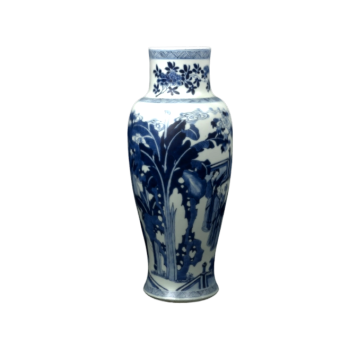
Adapt to the requirements of various decorative scenes-can be used as home soft clothes (placed on tea tables, bookshelves, porches), still life sketch props or traditional craft display models; The style is compatible with classical (with Chinese furniture and ink painting) and modern (with simple home and green plants); The detailed design supports separate display or combined scenes (such as vases with flowers inserted and combined display with other ceramic utensils); The overall soft tone, glaze luster is not dazzling, passing "quiet, elegant" decorative atmosphere, at the same time through high-precision reduction, showing the artistic value of ceramic technology in material, shape and decoration.
railing vase

railing vase

The edge of the bottle mouth may have a delicate lip design, and the bottom of the circle foot may be marked with a piece of knowledge (such as the production age, kiln mouth mark, etc., and the original information of the re-engraved cultural relics). Each part of the bottle body is connected naturally without stiff turning, reflecting the exquisite level of classical craftsmanship.
Tutankhamun's sandboat (supports 3D printing)

Tutankhamun's sandboat (supports 3D printing)

Antique telephone in the twenties

Antique telephone in the twenties

El Canio Shark Tooth Perforated Pendant

El Canio Shark Tooth Perforated Pendant

"El Canio Shark Tooth Perforated Pendant" is a representative handicraft of the indigenous culture of the El Canio region (El Caño) on the Caribbean coast of Panama. It uses shark teeth as the core material and is perforated by traditional craftsmanship to make pendants. It is not only the material carrier of Panama's "marine culture", but also the spiritual symbol of the symbiosis between the aborigines and nature, carrying the historical memory and cultural identity of the local tribes.
Gold-inlaid pendant of the Jinba sub-culture

Gold-inlaid pendant of the Jinba sub-culture

Kimba culture (Quimbaya culture) is one of the most representative ancient civilizations in western Colombia during the pre-Columbian period (about 1000 BC-16th century AD). It is famous for its highly developed metallurgical technology, exquisite artistic achievements and unique religious beliefs. Its name comes from the "Cementerio de los Quimbayas" (Cemetery of Kimbaya) in (Cauca), Colombia, where 19th century archaeologists discovered a large number of well-preserved gold artifacts and tombs, which for the first time systematically revealed the glory of this civilization.
Flat iron at the Stranraer Museum

Flat iron at the Stranraer Museum

This seemingly simple tool is not only a practical object of daily life, but also a "micro window" to observe the folk culture of Victorian (1837-1901) Scotland ". Flat iron (Flat Iron) is the most mainstream clothes finishing tool in the 19th century before the industrial revolution, its design is simple but the function of the key-by heating the metal surface, the use of pressure to remove clothing wrinkles. Before the popularity of steam irons (invented at the end of the 19th century), flat irons were the "essential artifact" for housewives, tailors and laundryers ".
Bégat del Poso Family Heraldry

Bégat del Poso Family Heraldry

The "Vega del Pozo" (Vega del Pozo) is an aristocratic family with local influence in Spanish history, mainly active in the Iberian Peninsula in the 15th and 18th centuries, and its coat of arms (Coat of arms) is the core symbol of family identity, honor and social status. Although the family is not as well known as Spain's top royal family (e. g. Habsburg) or prominent family (e. g. Mandoza, Enriquez), its heraldry design combines regional culture, family history and chivalry, which is an important clue to understand Spain's local aristocratic culture.
The coat of arms of Juan Pérez Carpentello

The coat of arms of Juan Pérez Carpentello

"Juan Pérez Carpentero" (Juan Pérez Carpintero, about 1550-1620) is a little-known but representative wood carving artist and architectural decoration craftsman of the Spanish Golden Age (15th-17th century), active in Catalonia in northeastern Spain (around Barcelona today). His coat of arms is not only a symbol of his family identity and social status, but also an important clue to understand the culture of Spanish craftsmanship in the 16th and 17th centuries.
The coat of arms of the Spanish Emperor Charles V.

The coat of arms of the Spanish Emperor Charles V.

The coat of arms of Spanish Emperor Charles V (Charles V, Holy Roman Emperor,1500-1558) is one of the most representative royal coats of arms in Europe in the 16th century. Its design combines the multi-national territories, family lineage and power symbols he ruled. It is not only a visual epitome of Charles V empire, but also the pinnacle of European heraldry art during the Renaissance.
Pasqualino Choir Clock in West Quinsa Cathedral

Pasqualino Choir Clock in West Quinsa Cathedral

The Catedral de Sigüenza is a landmark Catholic church in the city of Sigüenza in the Castilla-La Mancha, in northeastern Spain, dating back to the 12th century and combining Romanesque, Gothic and Baroque architectural styles.
Marseille culture bone mortar

Marseille culture bone mortar

The "Masai culture mortar" is a common traditional tool in East Africa and is closely related to the nomadic life, dietary traditions and cultural beliefs of the Maasai. The Masai people are the main indigenous people in Kenya and Tanzania. They take animal husbandry (cattle and sheep) as the core economic model. Their culture emphasizes the dependence on nature and the inheritance of traditional skills. As an indispensable tool in Masai's daily life, bone mortar is not only a practical "grinder", but also a cultural symbol carrying national memory.
A thousand-year-old olive tree trunk

A thousand-year-old olive tree trunk

Cyprus is known as the "Olive Island", its olive tree cultivation history can be traced back to the Bronze Age (about 3000 years ago), there are many ancient olive trees. Collected in the Medieval Museum of Limassol.
Iranian Minai Pottery Depicting Sitting King's Bowl

Iranian Minai Pottery Depicting Sitting King's Bowl

Mina' I ware is a very famous ceramic craft in Iran in the 12th century, famous for its exquisite decoration and rich painted patterns. This pottery combines the unique aesthetic of the Islamic world with superb craftsmanship and is used to show social status or religious stories. Minay pottery depicting the bowl of a seated king, 12th century AD, currently in the collection of the Minneapolis Institute of Art.
Iranian cultural heritage Minai pottery depicting bowls of a woman riding an elephant

Iranian cultural heritage Minai pottery depicting bowls of a woman riding an elephant

This is a Minai pottery "Bowl depicting a woman riding an elephant", created in the 12th to 13th century AD, currently collected at the Minneapolis Institute of Art. Minai pottery, which originated in Iran, is a fine piece of medieval Persian ceramic art and is famous for its exquisite colorful decoration. This bowl depicts the scene of a woman riding on an elephant, showing the high integration of life and art. This work reflects the social style and artistic level of the time, and is an important material evidence for the study of medieval Islamic art and culture.
Thailand Lanna Kingdom period artifacts Karon vase

Thailand Lanna Kingdom period artifacts Karon vase

The Caron vase is one of the representative works of ceramic art in Thailand's Lanna Kingdom (about 14th to 16th century AD). Archaeologists have discovered about 200 kiln sites in the Karon area, indicating that the area was once a production center for high-temperature pottery. Caron pottery is known for its elegant shape and unique glaze color, which usually takes on a pale gray or rain cloud-like tone. The body of this vase is decorated with patterns of fish and aquatic plants, showing the vivid images of nature, as well as the superb skills of Thai ceramic art. It is currently collected at the Minneapolis Art Institute.
Vietnam's Li Dynasty Cultural Relics with Lid Celadon Pot

Vietnam's Li Dynasty Cultural Relics with Lid Celadon Pot

This is a celadon pot with a lid, dating from the 13th to 14th century AD. The description is as follows: During the Li and Chen dynasties, the design of the holding pot used to hold wine, water or tea was common. The pot body was usually spherical with a short molded spout. Celadon of this period showed a variety of colors, people by adding traces of iron oxide in the glaze, so that its color from light yellow, green to olive green and blue-green. The body of this vessel is carved with floral patterns, which make the celadon glaze thicker in the concave pattern, thus showing a slightly darker olive green color, which contrasts with other parts of the body.
Yixing art plum branch purple sand pot

Yixing art plum branch purple sand pot

The design is in the shape of plum blossom branches, showing the combination of traditional Chinese purple sand technology and natural elements. Plum blossom symbolizes tenacity, nobleness and elegance in Chinese culture, so the design inspired by plum branches not only embodies practicality, but also has rich cultural significance. Yixing is famous for its purple clay pots, which are usually made of special unglazed clay, which can not only maintain the original taste of tea, but also have good air permeability.
Vietnam An Lantern

Vietnam An Lantern

Eighteenth Century European Porcelain Imitation Twelve Horned Porcelain Bowl

Eighteenth Century European Porcelain Imitation Twelve Horned Porcelain Bowl

This porcelain was made in Meissen, Germany, between 1730 and 1734. Meissen Porcelain Workshop is inspired by oriental porcelain, especially Chinese and Japanese styles. This work is modeled after the traditional Japanese twelve-horn bowl. It uses exquisite underglaze blue, overglaze and gold decoration, which is a good example of early European porcelain making process.
eighteenth-century european porcelain imitation twelve-horn bowl

eighteenth-century european porcelain imitation twelve-horn bowl

This porcelain was made in Meissen, Germany, between 1730 and 1734. Meissen Porcelain Workshop is inspired by oriental porcelain, especially Chinese and Japanese styles. This work is modeled after the traditional Japanese twelve-horn bowl. It uses exquisite underglaze blue, overglaze and gold decoration, which is a good example of early European porcelain making process.
Ming Dynasty Cultural Relics Orchid Pavilion Blue and White Porcelain Bowl

Ming Dynasty Cultural Relics Orchid Pavilion Blue and White Porcelain Bowl

A Cargo Ship Loading Jingdezhen Porcelain in Qianlong Period of Qing Dynasty

A Cargo Ship Loading Jingdezhen Porcelain in Qianlong Period of Qing Dynasty

Eighteenth-century European artifacts gilded painted teapot

Eighteenth-century European artifacts gilded painted teapot

On-glaze painted pot of Jingde carp, a cultural relic of the Qianlong period

On-glaze painted pot of Jingde carp, a cultural relic of the Qianlong period

Eighteenth Century Qing Dynasty Relics Lioness and Cub Jingde overglazed porcelain
Eighteenth Century Qing Dynasty Relics Lioness and Cub Jingde overglazed porcelain

This artwork is from Jingdezhen, China, and was made between 1700 and 1720. This is a porcelain statue, its special feature is the use of "glazed" decoration technology, painted on the unglazed body (also known as "green color").
Eighteenth Century European Porcelain Blue and White Porcelain Cover Jar

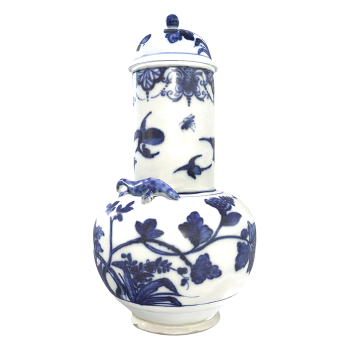
Eighteenth Century European Porcelain Blue and White Porcelain Cover Jar

This work of art is a blue and white porcelain covered pot (Deckelvase), which was made by the German Meissen Porcelain Factory (Meissen) and was completed between 1725 and 1726. It is a piece of porcelain as the material of art, its decoration using the underglaze blue (Unterglasurblau) technique. The special feature of this covered jar is that it has a lizard decoration attached to its shape, which adds a unique beauty of the combination of nature and art.
Eighteenth Century European Porcelain Golden Lion Soup Bowl Porcelain

Eighteenth Century European Porcelain Golden Lion Soup Bowl Porcelain

This mason porcelain bowl is made in imitation of a chinese design. The Mason Porcelain Factory began to imitate Chinese porcelain in the early 18th century to cater to the European market's fondness for oriental art. This porcelain soup bowl with a lid is decorated with a yellow lion pattern and uses superb porcelain craftsmanship. This decorative style combines European baroque art and oriental decorative elements, reflecting the artistic achievements of Meissen porcelain factory at that time.
Eighteenth Century European Porcelain Mason Porcelain Blue and White Porcelain Vase

Eighteenth Century European Porcelain Mason Porcelain Blue and White Porcelain Vase

This vase is one of the representative works of Mason porcelain. Mason Porcelain Factory was one of the first manufacturers of hard porcelain in Europe, founded in Germany in 1710. This vase was made between 1722 and 1723 and was decorated with blue and white. Blue and white decoration is a method of drawing a pattern with blue pigment on porcelain and then firing it under the glaze.
Early Twentieth Century Antique ETH Zurich Aircraft Model C- 35

Early Twentieth Century Antique ETH Zurich Aircraft Model C- 35

The model airplane C- 35 in the collection of ETH Zurich is a historic model of aviation. The model was produced around 1934 and represents an important stage in aviation technology at that time. The C- 35 model shows the design features and technical details of the early aircraft and is an important source of information for the study of aviation history and technological development.
On-glaze painted pot of Jingde carp, a cultural relic of the Qianlong period

On-glaze painted pot of Jingde carp, a cultural relic of the Qianlong period

19th century instrument portable travel theodolite

19th century instrument portable travel theodolite

Nineteenth Century Instrument Orthogonal Plane Meter

Nineteenth Century Instrument Orthogonal Plane Meter

Orthogonal planer is an instrument for measuring the area of a plane, invented around 1851. Its design is based on the principle of orthogonality, and its area is calculated by measuring the boundary of the plane figure. Orthogonal planometers usually consist of a rod with a scale and a moving pointer. The user can record the measurement data by moving the pointer along the boundary of the figure.
Twenties measuring instrument cup cross anemometer

Twenties measuring instrument cup cross anemometer

Fourth Century Artifacts Colombia Philandia Gold Urn

Fourth Century Artifacts Colombia Philandia Gold Urn

This gold urn is made of lost wax casting, polishing, welding and embossing. From the archaeological site of La Soleda in Fillandia, Colombia, belonging to the Kimba culture (4th-5th century AD). It is currently housed in the Museum of America in Madrid, Spain.
1 2 3 4 5 6 7 8 Next