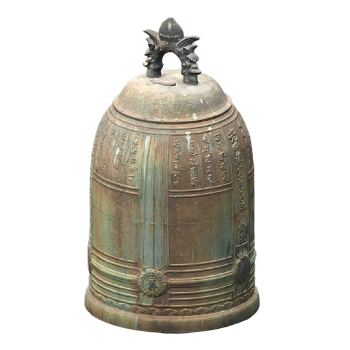
Ancient Bronze Van Bell (Buddhist Temple Bell)
Ancient Bronze Van Bell (Buddhist Temple Bell)

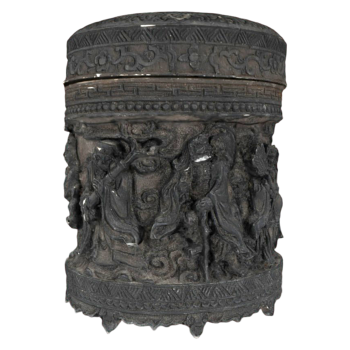
This is a well-preserved ancient bronze Brahma bell (Buddhist temple bell) with important religious and historical value. The inscription on it is key information for studying the age and background of its casting. This large bronze bell with inscriptions of Buddhist scriptures is very common in East Asian Buddhist cultural circles such as China, Japan and South Korea.
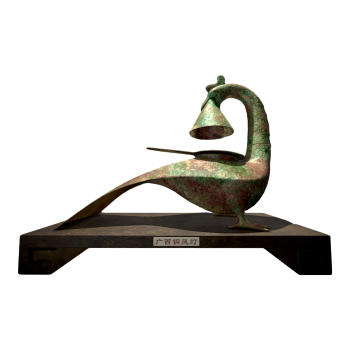
Copper Phoenix Lantern in the Late Western Han Dynasty

Copper Phoenix Lantern in the Late Western Han Dynasty

In 1971, a pair of bronze phoenix lanterns, 33cm high, 42cm long and 15cm wide, were unearthed in the No. 1 Han tomb bell of the late Western Han dynasty in Guangxi Zhuang autonomous region. their appearance was similar to that of a phoenix bird. they stood side by side with their feet, looked back with their heads raised, and their tails drooped behind them to support the whole body with their feet. they looked very stable. Fengtong body fine carved feathers, head, crown, neck, wings, tail, foot, well-proportioned, clear outline, lifelike. When the lamp is lit, the soot from the wax torch enters the neck through the phoenix's mouth, and the phoenix's abdominal cavity dissolves into the water to eliminate pollution and purify the indoor air so as not to affect human health. It is a product with similar environmental protection function in the earlier period.
Spanish Antique Toner Box

Spanish Antique Toner Box

the "spanish tinder box" was a gunpowder storage and transportation container widely used in the spanish kingdom (and subsequent spanish empire) in the 15-18th century. it was not only a key carrier of military strategic materials, but also an important witness of the development of spanish gunpowder technology and the expansion of the empire. It is not only a practical "gunpowder warehouse", but also a microcosm of the military, industrial and cultural strength of Spain's Golden Age (1492-1700).
Golden Horn of Kimbayah

Golden Horn of Kimbayah

The "Golden Horn of Golden Baya Culture" is one of the most mysterious golden ceremonial artifacts of the ancient Colombian Golden Baya Culture (Quimbaya culture, about 1000 BC-16th century AD). It is famous for its unique shape, exquisite craftsmanship and profound religious connotation. It is not only the "sound medium" in the sacrificial ceremony of the Kimbayas, but also a vivid witness of the "golden worship" and "natural belief" of the South American civilization in the pre-Columbian period. It is called the "golden totem that can make a sound".
Golden incense burner of Jinba culture

Golden incense burner of Jinba culture

"Golden incense burner of Jinbaya culture" is one of the most representative golden religious artifacts of ancient Jinbaya culture in Colombia. It is famous for its exquisite craftsmanship, mysterious decoration and profound religious connotation. The Kimba culture is mainly distributed in the western Andes of Colombia and is one of the earliest civilizations in South America to master complex metallurgical technology. Its name comes from the 19th century Colombian archaeologist's discovery of the "Kimbaya Cemetery", a culture known for its highly developed gold casting, pottery making and agriculture.
Panamanian Laccano Decorative Paintplate

Panamanian Laccano Decorative Paintplate

"Panama Laccano Decorative Painted Plate" is one of the most representative traditional handicrafts in Laccano, Chiriqui Province, western Panama. It is famous for its colorful painted patterns and unique regional cultural connotations. Lakano is a small town in the Chiriqui province of Panama. It is located in the fertile plains of the Pacific coast. Historically, it was an important area where indigenous Indians and Spanish colonists mingled. Since the pre-Columbian period, the local aborigines have been making pottery for a living; during the colonial period, the Spanish introduced European pottery technology, combined with indigenous craftsmanship, and combined with indigenous craftsmanship, forming a "indigenous-Spanish mixed style" painting tradition.
Attica red painted jug unearthed in Camarina, Sicily

Attica red painted jug unearthed in Camarina, Sicily

"Attic red-figure hydra" (Attic red-figure hydra) is a classic red-painted pottery produced in the ancient Greek Attica region (centered on Athens), while "Sicily" (Camarina, Sicily) was unearthed in an ancient Greek colony in southern Sicily, Italy.
Classical period artifacts Klatt wine
Classical period artifacts Klatt wine

Glass-shaped Kratt wine ware decorated with red figures, Sicily La Gusa. Front: The warrior bids farewell to his family (wife and son in the arms of a nanny); Back: The man, armed with a stick and Himatian, stands between two women. From the site of Kamarina, Lagusa Province, Sicily, Italy. Classical period, 5th century BC. Collected in the Parco Archeologico di Kamarina e Cava d'Ispica Archaeological Park.
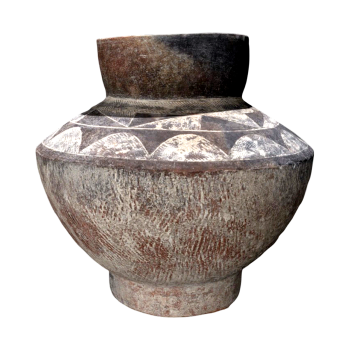
Thailand prehistoric period artifacts Thailand prehistoric pottery jar

Thailand prehistoric period artifacts Thailand prehistoric pottery jar

This clay pot is a typical artifact of Thailand's prehistoric period, reflecting the daily life and craftsmanship of human beings in the Neolithic or Bronze Age at that time. This type of pottery is mainly used to store food, liquid or grain, reflecting the needs and skills of an agricultural society.
A pair of Khmer pottery artifacts from early Khmer civilization

A pair of Khmer pottery artifacts from early Khmer civilization

This pottery is one of the representative works of early ceramic art of Khmer culture. It is made of glazed pottery, showing the level of craftsmanship and artistic style at that time. Khmer pottery is usually used in daily life or religious ceremonies, reflecting the exchange and integration of Khmer civilization with surrounding cultures. The design of this pottery is simple and elegant and may be used to hold liquids. It was created from the 1st century BC to the 1st century AD and is currently in the collection of the Minneapolis Art Institute.
Eighteenth Century European Porcelain Blue and White Porcelain Box with Lid

Eighteenth Century European Porcelain Blue and White Porcelain Box with Lid

The blue and white porcelain box with lid is a piece of exquisite porcelain made by the German Meissen Porcelain Factory (Meissen), created in about 1730. This work is a porcelain box with a lid, and its design is inspired by Japanese art style, reflecting the European imitation of East Asian art at that time.
18th Century European Porcelain Taoist Theme Bowl

18th Century European Porcelain Taoist Theme Bowl

This mason porcelain bowl is made in imitation of a chinese design. The Mason Porcelain Factory began to imitate Chinese porcelain in the early 18th century to cater to the European market's fondness for oriental art.
Eighteenth Century European Porcelain Porcelain Bowl

Eighteenth Century European Porcelain Porcelain Bowl

This mason porcelain bowl is made in imitation of a chinese design. The Mason Porcelain Factory began to imitate Chinese porcelain in the early 18th century to cater to the European market's fondness for oriental art.
Ancient Greek Pottery Kraut

Ancient Greek Pottery Kraut

A Krater is a large pottery from ancient Greece, often used to mix wine and water. A kraut with a red patterned column refers to a column with a red pattern painted on the pottery. This pottery was made in the Camarina (Camarina) region of Sicily between about the 5th century BC and the 4th century BC. This Klatt style of decoration is known as the Red-figure style, which was very popular in ancient Greek pottery. The red painting style is characterized by the use of red paint to draw patterns on a black background, making the patterns more vivid and detailed.
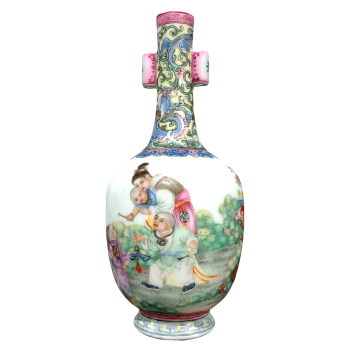
18th Century European Porcelain Chinese Style Fine Neck Vase

18th Century European Porcelain Chinese Style Fine Neck Vase

This thin-necked vase of Mason porcelain was made by Mason porcelain factory in 1721. Mason Porcelain Factory is one of the earliest hard porcelain factories in Europe, established in 1710. Mason porcelain is famous for its exquisite craftsmanship and unique design, especially its blue and white underglaze decoration. The porcelain was made by Johann Gregorius Höroldt, a German painter and porcelain painter. Holdert is known for his Chinese style decoration (Chinoiserie) designs.
Qing Dynasty Yongzheng Cultural Relics Hollow Golden Overglaze Color Porcelain Bowl

Qing Dynasty Yongzheng Cultural Relics Hollow Golden Overglaze Color Porcelain Bowl

This porcelain is an antique from the Yongzheng period of the Qing Dynasty (1723-1735) and was produced in Jingdezhen. Yongzheng period porcelain is famous for its exquisite craftsmanship and unique aesthetic style. Yongzheng period porcelain glaze color variety, including pastel, enamel, fighting color and so on. Enamel porcelain has been greatly developed in the Yongzheng period and has become a work of art integrating poetry, calligraphy, painting and printing.
Eighteenth Century European Porcelain Chinese Style Decorated Gold Plated Cup

Eighteenth Century European Porcelain Chinese Style Decorated Gold Plated Cup

The porcelain was made by Johann Gregorius Höroldt, a German painter and porcelain painter. Holdert is known for his Chinese style decoration (Chinoiserie) designs. Holdert's work includes many pieces of porcelain with Chinese decorations, such as a tea set and chocolate service made in 1725 for Victor Amadeus II, King of Sardinia. These decorative styles reflect the romanticized fantasy of the East in Europe in the 18th century.
Nineteenth Century Cream Jar from Antique Wigtown County Creamery

Nineteenth Century Cream Jar from Antique Wigtown County Creamery

Wigtown County Creamery was established in 1888 on Sheuchan Street in Stranraer, Scotland. The creamery was founded by James McHarrie and Stranraer's mayor, Provost Young. The cream pots produced by the Wigtownshire Creamery were manufactured by the Caledonian Ceramics Company of Glasgow (Caledonian Pottery Company). These cream jars used black transfer logos after 1912 and brown transfer dye before that.
Ginger beer

Ginger beer

Ginger beer from the 1987 s, this item is in the collection of the Stranraer Museum
Jingde glazed painted carp fish tank during the Kangxi period of the Qing Dynasty

Jingde glazed painted carp fish tank during the Kangxi period of the Qing Dynasty

This fish tank is from Jingdezhen, China, and was made during the Kangxi period of the Qing Dynasty (1700-1720). It features glazed painting and gold decoration, showing the exquisite craftsmanship of Jingdezhen porcelain at that time. The fish tank is decorated with plants and carp patterns, implying auspiciousness and prosperity, and is a common symbol in traditional Chinese culture.
Medieval period medicine pot in Europe
Medieval period medicine pot in Europe

It is a medicine jar (Albarello) used to hold wax ointments. The canister is in the collection of the Medical Museum of the Jaguellón University School of Medicine in Krakow. A medicine pot (Albarello) is a hollow ceramic vessel commonly used to store medicines, especially in medieval Europe. They are usually beautifully decorated with a variety of painted patterns. The design of this jar makes it easy to take out the ointment from above, while preventing the medicine from getting damp and deteriorating.
Qianlong Ancient Yuexuan Porcelain

Qianlong Ancient Yuexuan Porcelain

This porcelain vase was made between 1736 and 1795. It belongs to China's Qing Dynasty (1644-1911) and Qianlong (1736-1795). The porcelain vase is decorated with colored franc glaze and belongs to "ancient yuexuan porcelain". The overall height of the porcelain vase is 15.4cm (6 and 1/16 inches). This porcelain vase is currently in the collection of the Cleveland Museum of Art, funded by the John L. Severance Foundation (collection number: 1963.514).
Seventeenth Century Crafts King Solomon's Beer Mug

Seventeenth Century Crafts King Solomon's Beer Mug

This beer mug depicting the Queen of Sheba and King Solomon was made in Königsberg (Königsberg) between 1686 and 1689 by Schwerdfeger nigsberg. The Queen of Shabba visits King Solomon. The main body of the beer glass is a double-layered, smooth cylindrical container covered with a shell decorated with relief, showing the scene of the Queen of Sheba in front of King Solomon. The Queen's entourage can be seen in the background, including men wearing ancient armor, women camels carrying gifts, and the Queen of Sheba kneeling before King Solomon.
Gold-plated Dragon Carving Tripod Furnace with Hollow Cover

Gold-plated Dragon Carving Tripod Furnace with Hollow Cover

The dragon-shaped stove with a hollow lid and handle is a precious object stored in the National Museum of Krakow, Poland. The lid of this tripod stove is carved with a delicate openwork pattern, while the handle is designed in a stylized dragon shape. This design not only reflects the superb craftsmanship, but also reflects the symbolic meaning of the dragon in traditional Chinese culture.
Spice ware with cut-out lid

Spice ware with cut-out lid

This utensil with a cut-out lid was displayed by the Marvolpolska Museum. The cutouts have unique cutouts for placing spices or fragrance combinations. It is an exquisite vessel made of porcelain and metal, showing superb craftsmanship and design beauty. This kind of utensil is not only practical, but also a combination of art and craftsmanship, reflecting the fashion and taste of the time.
Carved jar with lid

Carved jar with lid

Souvenir Carved Jar with Lid from Guangzhou Antique Market, Guangdong
Ray's Vase

Ray's Vase

The "Lei vase" (Lei vase) was made around 1580 and is now in the collection of the Cernuschi Museum. This vase is famous for its unique design and exquisite craftsmanship.
Cloisonne enamel vase

Cloisonne enamel vase

Japanese-style Cast Iron Teapot

Japanese-style Cast Iron Teapot

Jingdezhen Blue and White Porcelain Cup-shaped Vase
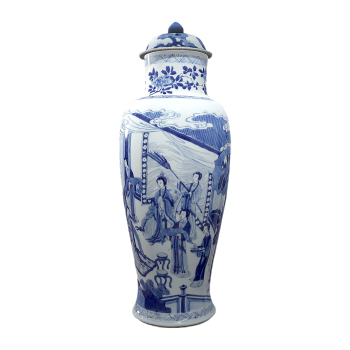
Jingdezhen Blue and White Porcelain Cup-shaped Vase

This Chinese cultural relic is a porcelain vase from the Kangxi period of the Qing Dynasty (1662-1722). The vase process is a transparent colorless blue and white porcelain with cobalt pigment under the glaze, which was fired by Jingdezhen.
Jingdezhen Blue and White Porcelain Mallet Vase with Lid
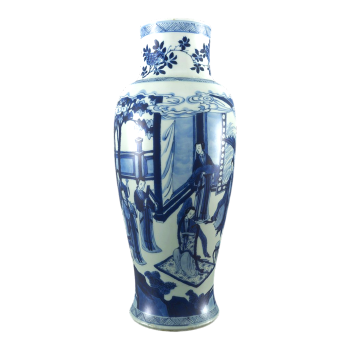
Jingdezhen Blue and White Porcelain Mallet Vase with Lid

This Chinese cultural relic is a porcelain vase from the Kangxi period of the Qing Dynasty (1662-1722). The vase process is a transparent colorless blue and white porcelain with cobalt pigment under the glaze, which was fired by Jingdezhen.
Jingdezhen Blue and White Porcelain Mallet Vase

Jingdezhen Blue and White Porcelain Mallet Vase

This Chinese cultural relic is a porcelain vase from the Kangxi period of the Qing Dynasty (1662-1722). The vase process is a transparent colorless blue and white porcelain with cobalt pigment under the glaze, which was fired by Jingdezhen.
Peony pattern water container

Peony pattern water container

This artwork called "Peony Pattern Water Container" was created by Japanese artist Seif ū Yohei III (1851-1914), and was made between 1900 and 1914. It is made of porcelain, with a molded and carved design on the surface, and a green glaze. The overall height is 17.8cm (7 inches) and the diameter is 16cm (6 5/16 inches). The artwork is currently in the collection of the Cleveland Museum of Art and was donated by James and Christine Hoysinger.
18th Century Chinese Cloisonne Vase

18th Century Chinese Cloisonne Vase

Cloisonne, also known as cloisonne enamel, is a traditional Chinese metal handicraft. It originated in the Ming Dynasty and reached its peak in the Qing Dynasty. Cloisonne products are usually bright colors, exquisite patterns, common themes are flowers, birds, auspicious patterns and so on. It is not only practical, but also has a high artistic value, known as the "mother of porcelain".
clay pot

clay pot

An earthenware jar found in northern Motala, Sweden. About 105mm tall.
1 2 3 4 5 6 7 8 9 ... 12 Next